HUB / INDOOR
Indoor Saunas
Traditional Finnish rock-stove kits and indoor cabins that fit a basement, garage or spare room. Ranked on footprint, wiring and cost.
Indoor saunas split two ways: a traditional Finnish room built around a rock stove (loyly — you can throw water on the rocks) and prefab indoor cabins. The traditional kits are the real-sauna experience and the pricier, wiring-heavier option — most need a dedicated 240V circuit and an electrician. Screen carefully: a lot of Amazon 'indoor sauna room' listings are actually infrared cabins wearing the word 'traditional'. We filter for real Harvia-stove kits and flag the hybrids.
We earn a commission when you buy through our Amazon links, at no extra cost to you. It never affects our rankings, and we say so when the cheaper product is the better buy. How this works.
What to buy first
For a real indoor sauna — the hot, throw-water-on-the-rocks kind — the value pick is the ZONEMEL 2-person hemlock, a compact cabin built around a genuine 3.5kW Harvia rock stove. It gives you actual loyly (steam off the stones) for a fraction of a custom build. If you can't add a 240V circuit, the honest alternative is a plug-in infrared cabin like the Dynamic Andora — cooler, no steam, but it runs on the outlet you already have.
Traditional vs indoor infrared
This is the fork that decides everything else. A traditional indoor sauna has an electric rock stove: it runs hot (170-190F), lets you pour water for steam, and needs a 240V circuit plus proper ventilation and a vapor barrier in the wall. An indoor infrared cabinheats your body with panels instead: it runs cooler (120-140F), makes no steam, and most 1-2 person models plug straight into a standard 120V outlet. Neither is "better" — they are different experiences with very different install demands. If the Finnish steam ritual is the point, buy traditional; if the easiest possible install is the point, buy infrared.
What decides the price
Three levers. First, traditional vs infrared — a rock-stove kit costs more than a comparable infrared cabin and adds an electrician to the bill. Second, the wood: hemlock and Nordic spruce are the value woods, red cedar is the premium upgrade for aroma and rot resistance. Third, heater size— a 6kW stove for a 3-person room is a heavier (and pricier) electrical job than a 3.5kW stove for two. Watch for Amazon listings that call themselves "traditional sauna rooms" but ship infrared panels; a real traditional sauna always names a rock stove and its kilowatts.
The mistake buyers make
Underestimating the room, not the cabin. People compare cabins for weeks and forget that a traditional sauna needs a 240V circuit, a foil vapor barrier, and low-in/high-out ventilation to work and to last. Get the room right first — our install guide walks through it, and the kit roundup covers what each prefab actually includes. Then size the heater to the space with the heater size guide and budget the whole project with what a home sauna costs. For a genuine Harvia rock-stove cabin specifically, see the best Harvia sauna kits; putting one in a basement is its own project, walked through in basement sauna installation.
For a compact couple-sized room, the best 2-person indoor saunas are the sensible default; settle the wood with cedar vs hemlock; and if the sauna is going in the garage, our garage sauna conversion guide covers the concrete-floor, insulation and power specifics.
Set on the premium wood? The best red cedar saunas round up the cedar cabins, ZONEMEL hemlock vs cedar settles the same kit in two woods, and if you're weighing a kit against a built room, prefab vs custom sauna is the honest cost-and-effort call.
Not sure what size to buy? Start with our home sauna size guidefor the bench, floor and ceiling numbers, then settle a real cedar cabin's size and circuit with ZONEMEL 2-person vs 3-person.
More to explore: the best indoor saunas under $4,000 rank the real rock-stove cabins under that ceiling, best wood for a sauna compares cedar, hemlock, spruce and the pale low-aroma woods, and sauna ventilation covers the airflow an indoor room needs to stay comfortable and keep its wood dry.
Want the real rock-stove experience with steam you can make? best traditional saunas ranks the genuine Harvia-stove kits. Planning the room itself? indoor sauna flooring covers what goes under and inside a sauna for moisture and safety, and converting a closet into a sauna weighs a real build against simply placing a compact cabin.
Fitting a sauna into an awkward spot? can you put a sauna in a bathroom and can a sauna go upstairs tackle the space-and-structure questions, and sauna doors explained settles the outward-swing, glass-versus-wood door decision.
New in this update: the build details that decide whether a room is right — whether you need a vapor barrier (you do), the sauna bench guide on wood, height and layout, the sauna lighting guide for heat-rated fixtures, and how high the ceiling should be.
Start here
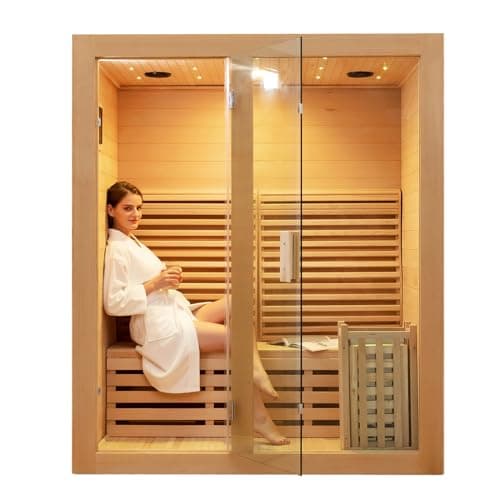
The Best Indoor Saunas for Home
Five indoor saunas ranked. The ZONEMEL hemlock is the value real-loyly pick; the infrared cabins are the plug-in alternative.
Everything in this hub
All indoor saunas
Roundup
The Best Indoor Saunas for Home
Five indoor saunas ranked. The ZONEMEL hemlock is the value real-loyly pick; the infrared cabins are the plug-in alternative.
Top pick$3,099.99AmazonRoundup
The Best Indoor Sauna Kits
Four prefab traditional sauna kits with real Harvia stoves. The ZONEMEL hemlock is the value pick.
Top pick$3,099.99AmazonRoundup
The Best Harvia Sauna Kits
Four indoor cabins with real Harvia rock stoves. The ZONEMEL hemlock is the value real-loyly pick; the Aston is the premium 1-2 person cabin.
Top pick$3,099.99AmazonRoundup
The Best 2-Person Indoor Saunas
Compact indoor traditional cabins with a real Harvia rock stove, ranked. The hemlock ZONEMEL is the value pick; cedar and size-up options round it out.
Top pick$3,099.99Amazon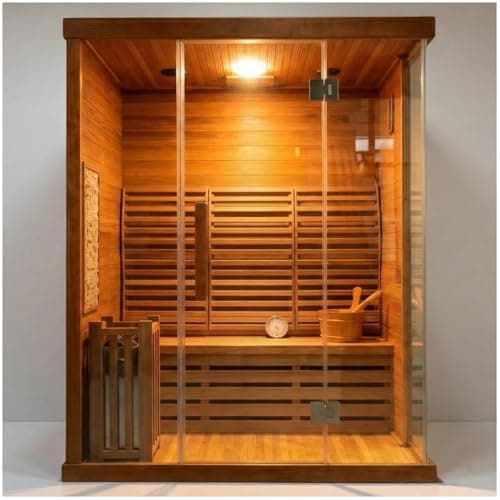
Roundup
The Best Red Cedar Saunas
Three red cedar saunas ranked: two traditional Harvia rock-stove cabins and a full-spectrum infrared alternative. The ZONEMEL 3-person cedar 6kW leads on real loyly and value.
Top pick$3,799.99Amazon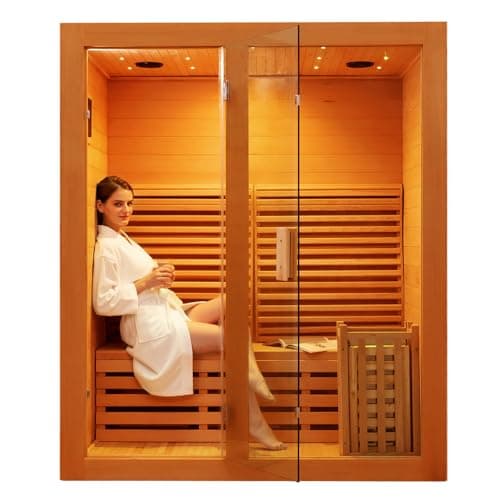
Head to head
ZONEMEL Hemlock vs Cedar Sauna
The two ZONEMEL 2-person traditional cabins, identical but for the wood. Red cedar wins on aroma and longevity; hemlock wins on price and heats exactly the same.
Top pick$3,399.99AmazonHead to head
ZONEMEL 2-Person vs 3-Person Cedar Sauna
The ZONEMEL 2-person 3.5kW against the 3-person 6kW cedar sauna. Most should take the 2-person for the lighter circuit and smaller footprint; size up only if you need three seats.
Top pick$3,399.99AmazonRoundup
The Best Indoor Saunas Under $4,000
The best real traditional indoor saunas under $4,000, ranked. All three ship with a genuine Harvia rock stove so you can throw water for steam — with honest notes on the 240V wiring, permit and ventilation each one needs.
Top pick$3,799.99AmazonRoundup
The Best Traditional Saunas
The best traditional rock-stove saunas, ranked. The ZONEMEL hemlock 2-person leads on value; the cedar 6kW is the step-up for three — all with a genuine Harvia stove for real loyly.
Top pick$3,099.99Amazon
Guide
How to Install a Home Sauna
The practical build: location, framing, foil vapor barrier, 120V vs 240V wiring, ventilation and the heater — plus when to call a pro.
Guide
Basement Sauna Installation
Putting a traditional or infrared sauna in a basement: vapor barrier, ventilation, drainage, the 240V and permit reality, and the plug-in shortcut.
Guide
Cedar vs Hemlock Sauna Wood
Cedar vs hemlock, settled: aroma, rot resistance, heat and cost compared. When cedar earns its premium, and when hemlock is the smarter buy.
Guide
Garage Sauna Conversion: The Practical Guide
Power, insulation, ventilation and moisture for a garage sauna, done right. Why the garage is often the best spot, and the permit and electrical questions to settle first.
Guide
Prefab vs Custom Sauna
Prefab kit or custom-built sauna room? An honest comparison of cost, time, skill, heater sizing, portability and the framing, vapor barrier and licensed wiring a custom build really needs.
Guide
How Big Should a Home Sauna Be?
How to size a home sauna: bench and floor space per person, ceiling height, the room and clearances you need, and how the size you choose sets the heater kW you must buy.
Guide
Sauna Ventilation: Why It Matters and How It Works
Why an indoor sauna needs ventilation and how it works — fresh-air intake near the heater, exhaust on the opposite wall, mechanical vs passive, and why exact placement should follow your heater manual and a pro.
Guide
The Best Wood for a Sauna
Which woods suit a sauna and why — cedar, hemlock, Nordic spruce, and pale low-allergen basswood and aspen — plus why cool-to-touch, warp-resistant softwoods beat resinous, knotty pine for benches and interiors.
Guide
Indoor Sauna Flooring: What Goes Under a Home Sauna
The right flooring for an indoor sauna — why tile or sealed concrete beats wood or carpet, how to handle moisture and drainage, and what protects the room below.
Guide
Converting a Closet Into a Sauna
Can you convert a closet into a sauna? What a real conversion needs — 240V, ventilation, moisture-safe surfaces — and when a compact prefab cabin is the smarter, cheaper route.
Guide
Can You Put a Sauna in a Bathroom?
Yes — a bathroom is a genuinely good spot for a home sauna. A plug-in infrared cabin is the easiest fit; a traditional rock stove needs 240V and stronger ventilation. Here's how to do it safely.
Guide
Can a Sauna Go Upstairs?
Yes, a sauna can go upstairs — a light plug-in infrared cabin is usually fine on a normal floor. A heavy traditional cabin with a rock stove and stones needs a structural check. Weight, leaks and wiring explained.
Guide
Sauna Doors Explained
Everything that matters about a sauna door — why it must open outward and never lock, glass vs wood trade-offs, the ventilation gap at the bottom, cool-touch handles, hinges and sizing.
Guide
Do You Need a Vapor Barrier in a Sauna?
Why a traditional sauna needs a vapor barrier, why foil is the standard over plastic, where it goes in the wall, and why an infrared cabin doesn't ask you to build one.
Guide
Sauna Bench Guide: Wood, Height and Layout
The wood, heights and layout that make a sauna bench comfortable — cool softwoods, tiered seating, depth for lying down, hidden fasteners, and air gaps for drainage.
Guide
Sauna Lighting Guide
Why sauna light fixtures must be rated for heat and humidity, why warm indirect light works best, low-voltage options, and why the wiring is a licensed electrician's job.
Guide
Sauna Ceiling Height: How High Should It Be?
Why around 7 ft is the common sauna ceiling target — head clearance on the upper bench without heating dead air above the bathers — plus minimums and heater clearance.