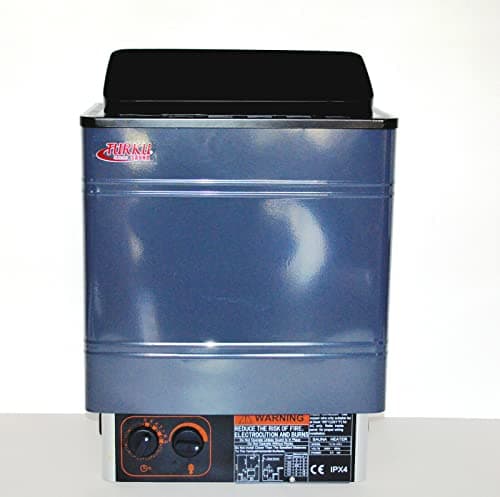
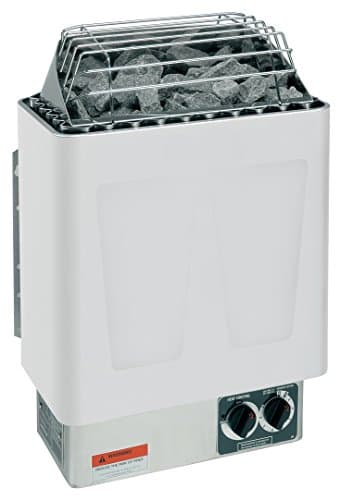
This is the classic buy-once-versus-buy-value heater decision, and both stoves reach the same temperature. At 4.5kW, the Harvia KIP and the Turku will each heat a 2-person cabin to a proper 170-190F — the difference is not performance, it is build quality, parts support and price. Harvia is the benchmark brand you buy to install once and forget; Turku is the value stove that covers the same room for meaningfully less. We rank the Harvia first because it is the safer long-term money, but the Turku is a genuinely good buy for the right person.
Where Harvia earns the premium
Harvia is the reference point every other sauna-heater brand is measured against, and the premium buys three real things (Harvia). Build: the KIP is a well-made, robust stove that stands up to years of heat-and-cool cycling. Stones: quality sauna rock is included, where budget heaters often make you buy it separately. The parts network: this is the quiet, decisive advantage — replacement elements, stones and parts for a Harvia will still be easy to source in a decade, so the heater stays serviceable rather than becoming e-waste the day something fails. For a traditional sauna you plan to keep, that longevity is the whole case.
Where Turku makes its case
The Turku 4.5kW does the core job for less money, and it does not feel like a punishment. It is wet/dry rated, so you can throw water on the stones for loyly — the reason to run a traditional heater at all (Finnish Sauna Society) — and it uses a lighter 240V load like any 4.5kW stove. What you give up is the depth of Harvia's track record and parts support: Turku is a newer name with a thinner network, so if a part fails years from now, sourcing it may be harder. For a buyer who wants the loyly and the right size at the lowest sensible price, and who is not planning fifteen years of heavy use, that is a fair trade.
Same install, same size, different sticker
Do not let the price gap mislead you about the project. Both are 4.5kW, both suit the same 2-person room, and both need the same dedicated 240V circuit and, for most people, the same licensed electrician. The install cost is essentially identical — it is the heater that varies — so compare them purely on the stove and what you value in it. If your room is larger than a 2-person cabin, neither 4.5kW model is right; size up using the heater size guide, and if you want the budget end of the spectrum instead, the Harvia vs VEVOR comparison pits the benchmark against the cheapest option.
The verdict
Buy the Harvia KIP 4.5kW if you want a heater you install once and never think about again, with stones included and parts guaranteed to stay available — the buy-once choice for a keep-forever sauna. Buy the Turku 4.5kW if you want the same heat and real loyly for less, and you are comfortable trading some long-term parts security for the saving. Both are honest heaters; the question is simply whether you are buying for the next five years or the next fifteen. See how they place against the budget field in our small-sauna heater roundup.
How to choose between them
Ask how long you'll keep the sauna
A keep-for-fifteen-years traditional sauna justifies Harvia's parts network and build — the heater will still be serviceable when a budget stove would have become landfill. A shorter horizon, or a first sauna you might upgrade, tilts toward the Turku's value.
Count the stones in the price
The Harvia includes stones; confirm what any heater ships with before you compare. Proper olivine-diabase sauna rock is not expensive, but if a cheaper stove omits it, add it to that stove's cost so you are comparing like for like.
Both give you loyly — that's not the differentiator
The Turku is wet/dry rated, so you are not sacrificing the water-on-stones ritual by going value. Loyly is not a reason to pay the Harvia premium; build quality and parts support are. Buy the premium for longevity, not for the steam.
Don't compare on install cost — it's the same
The 240V circuit and the electrician are identical for both 4.5kW stoves. The only variable is the heater and what you value in it, so ignore the install when weighing them and focus on build, parts and price.