HUB / INDOOR · Indoor Saunas
Can You Put a Sauna in a Bathroom?
A bathroom already has the tile, drainage and moisture-tolerant finishes a sauna wants — which makes it one of the most sensible rooms in the house for a compact cabin, if you respect the electrical and ventilation rules.
We earn a commission when you buy through our Amazon links, at no extra cost to you. It never affects our rankings, and we say so when the cheaper product is the better buy. How this works.
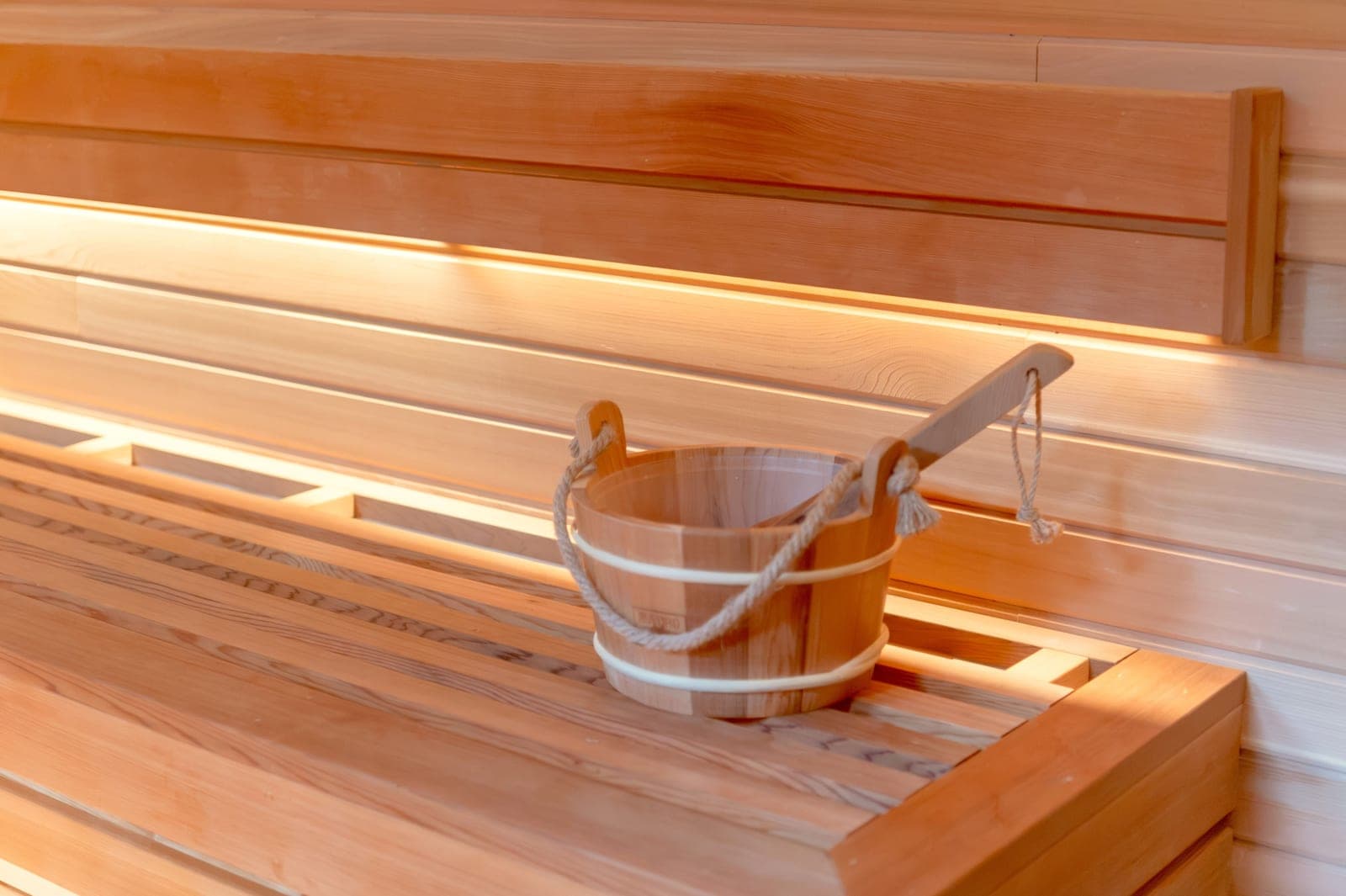
Yes, you can put a sauna in a bathroom, and it's one of the more sensible rooms to choose. A bathroom already has waterproof tile, a floor drain, moisture-tolerant finishes and an exhaust fan — exactly the infrastructure a sauna needs. A plug-in 120V infrared cabin is the easiest fit by far; a traditional rock-stove sauna is possible but means a 240V circuit, a licensed electrician and much stronger ventilation. The catch is that a bathroom is also a wet, tightly-packed room full of fixtures and water sources, so the electrical safety and clearances matter more here than almost anywhere else. Here's how to do it properly, and the honest reasons it might not be the right call.
Why a bathroom is actually a good place for a sauna
Most rooms in a house have to be adapted to survive a sauna nearby — you worry about moisture soaking into carpet, drywall and wood floors. A bathroom is the one room built from the ground up to get wet and shrug it off. It already has water-resistant tile or stone on the floor and often the walls, a floor or shower drain to carry away spilled water, an exhaust fan to pull humidity out, and finishes chosen precisely because they tolerate steam and splashing. That is a huge head start. Instead of waterproofing a bedroom or lining a closet, you're dropping a sauna into a room that already handles water for a living. That's why bathrooms — especially larger primary bathrooms — are a popular home-sauna location, and why the project is often simpler than people expect.
Infrared cabins: the easiest bathroom fit
If you want the lowest-effort route, a plug-in infrared cabin is the answer. Most 1- and 2-person infrared cabins run on a standard 120V household outlet, generate a dry, lower-temperature heat, and make no steam — so they add far less moisture to the room than a traditional sauna does. That means no new circuit, no rock stove, and much lighter demands on ventilation. You clear a corner, provide a nearby outlet, and stand the cabin in the space. For a bathroom that's already tight on room, a compact infrared cabin is usually the right tool; see infrared saunas for small spaces for the footprints that fit. The trade-off is honest: infrared is a gentler, lower-temperature heat and can't give you the loyly (steam on hot stones) of a traditional sauna. But for a bathroom install, the simplicity is hard to beat.
Traditional rock-stove saunas: possible, but a bigger job
You can put a traditional electric rock-stove sauna in a bathroom, but it's a real project rather than a plug-in. A rock stove hot enough for a genuine 170-190F sauna draws far more power than a wall outlet can supply, so it needs a dedicated 240V circuit run from your panel. That is licensed-electrician work under the National Electrical Code, and in a wet room the code's requirements around water are stricter, not looser. Pulling a 240V circuit into an existing bathroom can also mean opening walls, which raises the cost and scope. A traditional sauna also throws off real steam and much higher heat, so it demands substantially stronger ventilation than a bathroom's standard exhaust fan provides. It's doable — plenty of people build a compact traditional cabin into a bathroom — but be clear-eyed that you're signing up for electrical work and a ventilation upgrade. The wiring reality is laid out in sauna electrical requirements.
Steam, exhaust fans and ventilation
A bathroom's existing exhaust fan is a genuine asset, but understand its limits. A standard bath fan is sized to clear shower humidity from the room, not to feed and vent an active sauna. For a plug-in infrared cabin, which is dry and adds little moisture, running the bathroom's normal exhaust fan during and after sessions is usually enough to keep the room drying out. For a traditional sauna, it isn't — a rock stove needs a proper fresh-air intake low near the heater and an outlet higher up so the sauna itself breathes, which is separate from clearing the surrounding room. Whichever route you take, the principle is the same: the room has to dry fully between sessions, or you invite mildew even in a tile bathroom. The full approach is in sauna ventilation, and it's the single thing people underestimate most.
Electrical safety near water
This is where a bathroom demands more respect than a dry room. Bathrooms combine electricity and water in close quarters, so the safety rules are tighter. Any general-purpose outlet the cabin plugs into should be GFCI-protected (ground-fault protection that cuts power the instant it detects a leak to ground), and the cabin and any new wiring must keep the required clearances from the tub, shower and sink that the National Electrical Code specifies for wet locations. Don't run extension cords or power strips to a sauna, and don't site a cabin where it could be splashed by the shower. For a traditional 240V install, all of this is the electrician's job — which is exactly why it has to be a licensed one, working to code and pulling a permit. Electricity and standing water are the one place in this whole project you never improvise.
Footprint, clearances and moisture management
A bathroom is usually a crowded room, so measure before you fall in love with the idea. You need the cabin's footprint plusthe clearance the manufacturer wants around it for airflow and service access, and you need the door — the sauna's and the bathroom's — to still open fully. Watch the fixtures: a cabin can't block the toilet, encroach on the shower, or sit where it can't be serviced. The measuring method is in the home sauna size guide. On moisture, the good news is a tile floor and drain do most of the work, but don't assume the walls are safe — if the cabin sits against painted drywall rather than tile, that surface still needs to dry and shouldn't trap moisture behind it. Keep a gap for air, run the fan, and don't let a warm, damp corner stay warm and damp. The goal is a room that dries out completely after every session.
The honest cons
- Space is the real constraint. Most bathrooms are small and already full. Even a compact cabin eats floor area you may not have, and blocking a fixture is a non-starter.
- Traditional means electrical work.A rock stove's 240V circuit in a wet room is a licensed-electrician, permitted job — not a weekend project. Budget for it honestly.
- Ventilation may need upgrading. A standard bath fan handles an infrared cabin but not an active traditional sauna, which needs dedicated intake and outlet airflow.
- Moisture still has to be managed. Tile and a drain help, but a poorly-vented sauna can grow mildew even in a bathroom. The room must dry between sessions.
- Shared use. A sauna in the primary bathroom ties up the room while someone is bathing — fine for a couple, less so for a busy household.
The bottom line
A bathroom is genuinely one of the best rooms in the house for a home sauna, because the tile, drainage, moisture-tolerant finishes and exhaust fan are already there. For most people the smart move is a plug-in infrared cabin in a spacious bathroom: no new circuit, minimal added moisture, and a GFCI outlet plus the existing fan usually covers it. A traditional rock-stove sauna is possible and rewarding, but it's a real build — a 240V circuit from a licensed electrician and a proper ventilation upgrade. Measure the space including door swings and fixtures, respect the electrical rules near water, and make sure the room dries out fully after every use. If a bathroom is tight, the same logic that governs small shared rooms applies to a flat, covered in can you put a sauna in an apartment, and if you're weighing upper-floor spots read can a sauna go upstairs. When it comes to the cabin's door in a wet room, the safety rules in sauna doors explained apply here too.
Questions
Frequently asked
Can you put a sauna in a bathroom?
Do you need special wiring for a sauna in a bathroom?
Is a bathroom exhaust fan enough for a sauna?
Will a sauna damage my bathroom?
Keep reading
Related
More in Indoor Saunas
Receipts
Sources
We do not run a testing lab, and we do not pretend to. Product specs are transcribed from the manufacturer's own listing and cited as claims; health figures come from peer-reviewed studies, named and linked. Where we could not verify something, we say so on the page rather than quietly leaving it out. Read our full method.