HUB / INDOOR · Indoor Saunas
The Best Wood for a Sauna
Not all wood belongs in a hot, humid room. Here's the full range that does — cedar, hemlock, spruce, basswood and aspen — what each one is good and bad at, and why pine is the one to keep off the benches.
We earn a commission when you buy through our Amazon links, at no extra cost to you. It never affects our rankings, and we say so when the cheaper product is the better buy. How this works.
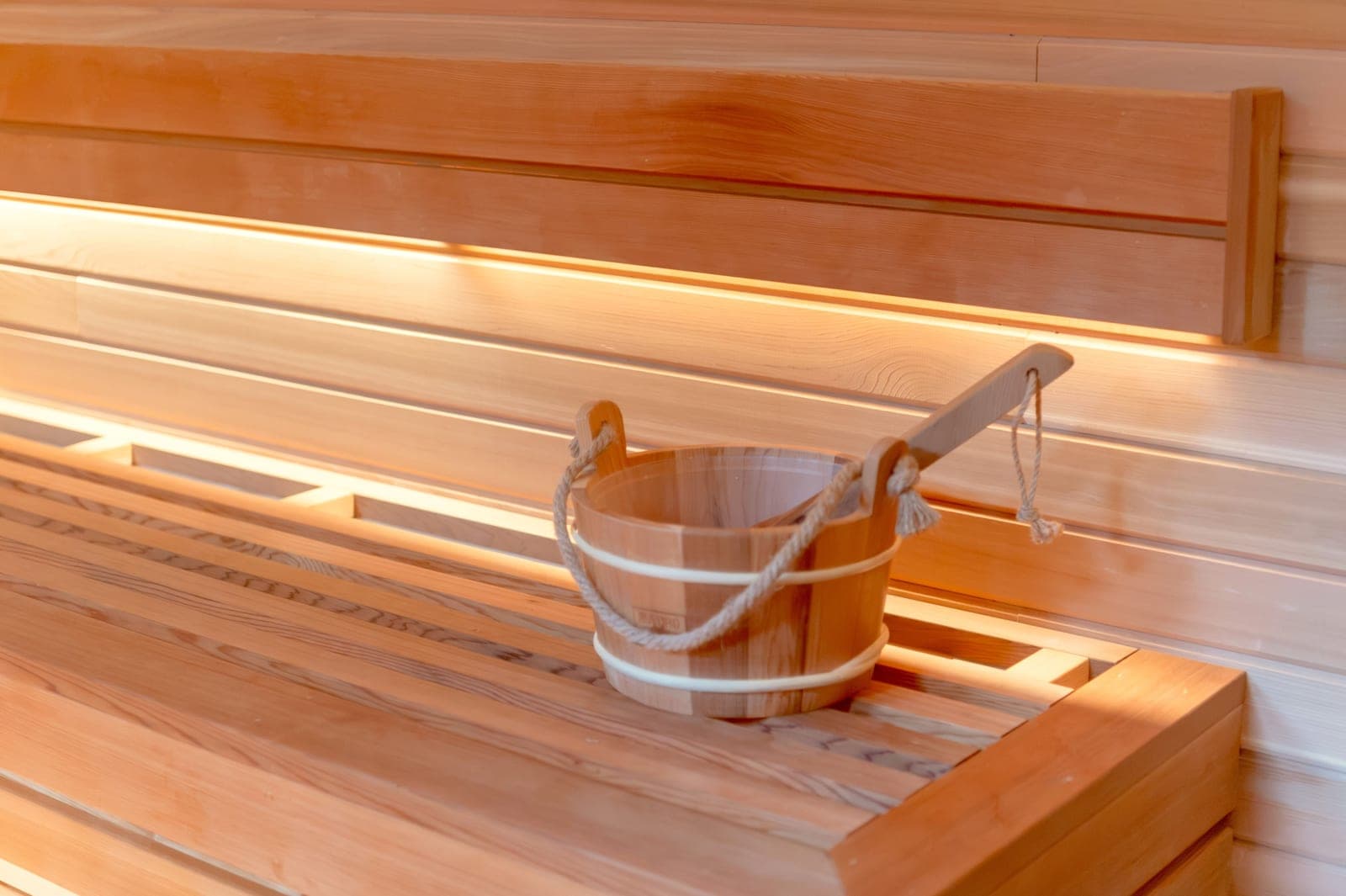
The best sauna woods are stable, low-resin softwoods that stay cool to the touch, resist warping in heat and humidity, and do not drip sap — western red cedar for aroma and longevity, hemlock for value, Nordic spruce for the classic Finnish look, and pale basswood or aspen for the scent-sensitive. A sauna is one of the most demanding environments you can put timber in: hot, repeatedly humid, and in constant contact with bare skin. The wood has to handle that without warping, without leaching sap, and without getting so hot it burns you when you sit on it. That rules out a lot of common lumber and points to a specific short list. Here is the full range that works, what each one is best and worst at, and the one wood to keep off the benches.
What makes a wood right for a sauna
Before the species, the properties. A good sauna wood is low in resin and sap, so it will not weep sticky pitch when the room gets hot. It is dimensionally stable, meaning it does not warp, cup or crack as it cycles through heat and humidity. It stays relatively cool to the touch — softwoods with low density conduct heat slowly, so a bench made of the right wood is comfortable to sit on at 180F while a dense hardwood or a metal fitting at the same temperature would scald you. And ideally it resists rot and holds up to repeated wetting. These are the reasons the sauna world settled on a handful of softwoods rather than the hardwoods prized for furniture — and why the traditional Finnish sauna has always been built from light, low-resin timber (Finnish Sauna Society).
Western red cedar — the aromatic premium choice
Cedar is the wood most people picture in a good sauna, and for reason. It is naturally rot-resistant and dimensionally stable, it stays pleasantly cool to sit on, and it carries a distinctive warm aroma that many people consider part of the experience. That aroma does mellow over years of use, and the wood is a premium price — those are the honest trade-offs. Some people are also sensitive to cedar's scent, which is exactly why the pale woods further down exist. But if you want the classic look, the longevity and the smell, cedar is the benchmark, and it is what our top indoor picks use — see the best red cedar saunas for the field.
Hemlock — the value workhorse
Hemlock is the wood you will see on most mid-priced cabins, and it earns its place. It is stable, strong, takes a clean finish, and it is noticeably cheaper than cedar — which is why so many good saunas are built from it. Its two honest shortcomings are that it has very little natural aroma (a plus if you dislike cedar's scent, a minus if you love it) and less natural rot resistance, so keeping it dry with good ventilation matters more. For a lot of buyers, hemlock is simply the sensible money: nearly all of the sauna, most of the durability, for less. The full head-to-head is in our cedar vs hemlock sauna guide.
Nordic spruce — the classic Finnish wood
If cedar is the North American premium and hemlock is the value default, Nordic spruce is the traditional Finnish original. It is a light, pale softwood with a subtle scent, and it is what a great many saunas in Finland are actually built from. It is stable and comfortable in the heat, and it gives that clean, bright Scandinavian look rather than cedar's reddish warmth. Spruce can show small resin pockets on cheaper grades, so grade quality matters, but well-selected spruce is a genuine classic for good reason — it is the wood the whole tradition grew up around.
Basswood and aspen — pale, low-allergen and near-odorless
These two deserve their own mention because they solve a specific problem. Basswood and aspen are very pale, fine-grained softwoods that are essentially odorless and low in allergens, which makes them the go-to choice for anyone who is sensitive to cedar's scentor has respiratory sensitivities. They stay cool to the touch, resist warping, and give a clean, bright, modern interior. The trade-off is simply that you give up cedar's aroma and its reddish character — but for a scent-sensitive user, that is the point, not a loss. Aspen in particular is prized for being knot-free and smooth, which makes it a favorite for benches where skin contact matters most.
Why pine is the wood to keep off the benches
The most common mistake is building a sauna, or at least its benches, from ordinary pine. Pine is cheap and everywhere, but it is resinous and knotty — and in a sauna both are problems. The resin can weep sticky, hot sap when the room heats up, and the knots get significantly hotter than the surrounding wood, so a pine bench can literally burn you where you least expect it. Pine also tends to be less dimensionally stable in the heat-and-humidity cycle than the woods above. There are heat-treated and knot-free grades that are used in some sauna construction, but standard construction-grade pine is the wrong choice for benches and any surface your skin touches. When in doubt, keep pine out of the hot room and use it, if at all, only where nothing rests against it.
A word on thermally modified wood
You will also see saunas advertised in thermally modified or heat-treated timber — often thermo-aspen or thermo-spruce. The process bakes the wood at high temperature, which drives out moisture and resin, darkens the color to a rich brown, and improves dimensional stability and rot resistance. In a sauna that is a genuinely useful set of properties, and the darker tone is a look some people prefer. The honest trade-offs are that thermally modified wood usually costs more and can be a little more brittle than the untreated version. It is not a must-have, but if you come across it, understand it as a legitimate upgrade of an already-suitable wood rather than marketing for its own sake.
Matching the wood to the job
One more useful distinction: the wood for the benches and backrests — the surfaces your bare skin touches — matters most, because that is where cool-to-touch, knot-free, splinter-free timber earns its keep. Aspen, basswood and clear cedar are all excellent here. The walls and ceiling have a slightly easier job and are where cedar, hemlock and spruce all shine for their looks and stability. Most cabins use one wood throughout for a consistent look, which is fine — just make sure whatever touches skin is one of the cool, smooth, low-resin options. If you are still deciding on the whole cabin rather than just the wood, our home sauna buying guide puts wood in the context of everything else that matters.
The honest bottom line
There is no single "best" sauna wood — there is the best one for you. Choose western red cedar if you want aroma, longevity and the classic premium look and do not mind paying for it. Choose hemlock for the best value with most of the durability. Choose Nordic spruce for the traditional Finnish look. And choose basswood or aspen if you are scent-sensitive or want a pale, near-odorless, low-allergen interior. Whatever you pick, make sure it is a stable, low-resin softwood that stays cool to the touch — and keep resinous, knotty pine off the benches. Get the wood right and the sauna is comfortable and long-lived; get it wrong and no amount of good building makes up for it.
Questions
Frequently asked
What is the best wood for a sauna?
Can you use pine to build a sauna?
What is the best wood if I am sensitive to cedar's smell?
Is cedar or hemlock better for a sauna?
Keep reading
Related
More in Indoor Saunas
Receipts
Sources
We do not run a testing lab, and we do not pretend to. Product specs are transcribed from the manufacturer's own listing and cited as claims; health figures come from peer-reviewed studies, named and linked. Where we could not verify something, we say so on the page rather than quietly leaving it out. Read our full method.