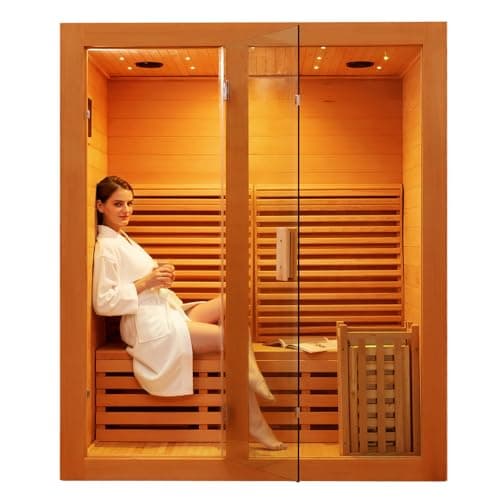
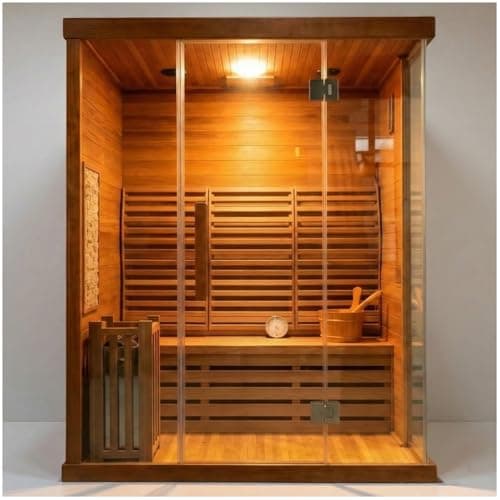
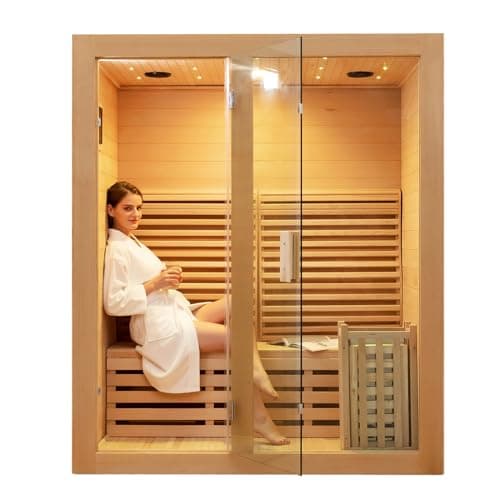
Buy the ZONEMEL 2-Person Hemlock with the 3.5kW Harvia stove. It is the cheapest cabin on this site that gives you real loyly — an actual Harvia heater and stones you can throw water on — and it is for the person who wants a genuine Finnish-style sauna in a basement or spare room without paying premium-kit money for it. Spend a little more for the cedar version of the same cabin if aroma and rot resistance matter to you; step up to the 3-person 6kW cedar if three of you will use it or you want WiFi preheating. The cube and the barrel are the same formula built for a backyard rather than a basement.
What ZONEMEL actually is
ZONEMEL is one of the direct-to-Amazon sauna brands, and it has become the most-tracked name on this site for one specific reason: it fits real Harvia rock stoves, or ETL-listed TOULE stoves, to cabins that cost a fraction of a premium kit. That is the whole proposition. A rock stove is what separates a sauna from a hot box: you ladle water onto hot stones and get the steam burst the Finnish Sauna Society calls loyly, which no infrared cabin at any price can do.
What you are not buying is a heritage brand with a dealer network. There is no showroom, no local installer and a thinner support trail than Harvia's or Almost Heaven's own cabinetry — the stove inside is the famous part, not the box around it. If the brand behind the wood matters to you as much as the stove, read best sauna brands before you commit, and best Harvia sauna kits for the stove-first way to shop the same decision.
One honest caveat on scope: ZONEMEL also sells portable steam tents and steamers, which is what a fair slice of the searches for this brand are after. We do not track those in our registry, so this page is the five wood cabins only. For the tent-and-steamer category we rank other brands in best portable steam saunas.
How the five models compare
Every number below is as the listing publishes it. We did not measure a stove, a temperature or a cabin — our methodology says exactly that — and the figures are manufacturer claims you can check against the listing yourself.
| Model | Seats | Stove | Wood | Sited | Who it is for |
|---|
| 2-Person Hemlock | 2 | 3.5kW Harvia | Canadian hemlock | Indoor | The cheapest route to real loyly |
| 2-Person Red Cedar | 2 | 3.5kW Harvia | Red cedar | Indoor | The same cabin, in the aromatic wood |
| 3-Person Red Cedar | 3 | 6kW Harvia + WiFi | Red cedar | Indoor | Three people, faster heat, preheat from a phone |
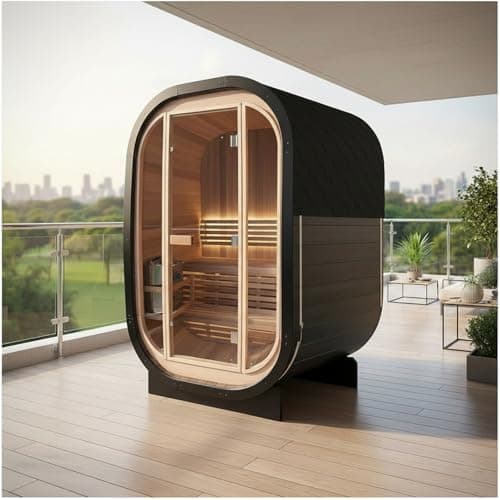
| 2-Person Cube | 2 | 4.5kW ETL TOULE | Canadian red cedar | Outdoor | A modern square shape that sits flat against a wall |
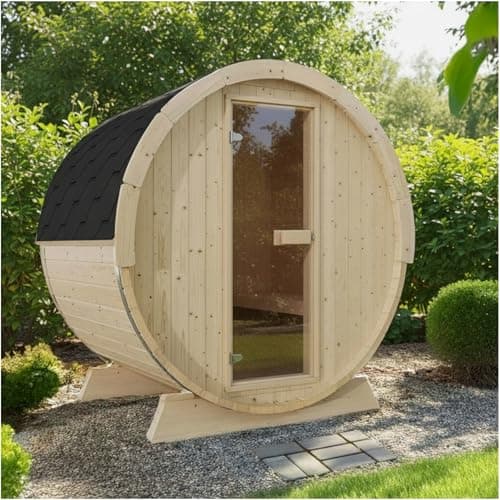
| 2-Person Barrel | 2 | 4.5kW ETL TOULE | Species not published | Outdoor | The lowest-cost way into a real outdoor rock-stove sauna |
Three things fall out of that table. First, the two indoor 2-person cabins are the same cabin in two woods — the choice is aroma and longevity, not performance, and our hemlock vs cedar head-to-head prices that trade. Second, the stove size tracks the air volume rather than the badge: 3.5kW for a compact indoor room, 4.5kW once the cabin goes outside, 6kW once a third person needs a bench — the heater size guide has the arithmetic. Third, only the barrel declines to name its timber, which is the single biggest reason it ranks last here despite being the cheapest way in.
What to check before you buy a ZONEMEL
- The circuit, before anything else. Every cabin on this page is 220-240V. A 3.5kW stove is the lightest electrical job in the range and a 6kW is a substantial one; both are work for an electrician under NFPA 70 and your local amendments. Confirm your panel can spare the circuit before you buy the bigger stove — see sauna electrical requirements and sauna heater breaker size.
- Whether the timber is named. Red cedar and Canadian hemlock are both stated on four of these five listings; the 2-person barrel says "wood sauna room" and stops there. A named species is checkable, an unnamed one is not, and outdoors the difference matters more because cedar's rot resistance is doing real work. Cedar vs hemlock is the full comparison.
- Ventilation, if it is going indoors. A traditional room runs at 170-190F and needs air moving through it, which is the part of an indoor install people skip. Sauna ventilation and basement sauna installation cover the inlet-and-outlet basics and the floor question.
- Stones in the box, or not. The Harvia-stove cabins list the heater with stones, and the TOULE outdoor models list volcanic stones included. Stones are cheap but they are not optional — a rock stove without them is a convection heater. The rock guide is what to buy if a listing omits them.
- Who assembles it. These are flat-packed panel cabins, not site-built rooms. Two people and an afternoon is the realistic figure, plus a plan for getting a heavy, awkward crate through your doorway. For the outdoor models, the ground comes first: barrel sauna foundation is the part that goes wrong years later if you get it wrong now.
Which ZONEMEL to buy
Indoors, on a budget: the 2-Person Hemlock. A real Harvia and stones in a compact hemlock room, on the lightest 240V circuit in the range. This is the model that makes the brand worth writing about, and it is the one we rank first in best 2-person indoor saunas on value grounds.
Indoors, with a little more to spend: the 2-Person Red Cedar. Identical heat, identical circuit, aromatic rot-resistant timber. Cedar is a comfort and longevity upgrade rather than a performance one, and we say so on the card.
Indoors, for three: the 3-Person 6kW Cedar. The extra bench changes the electrical job as much as the floor plan — 6kW is a real circuit. The WiFi controller earns its place here more than on the small cabins, because a 3-person room takes longer to come up to heat and preheating from your phone is the difference between a planned session and a spontaneous one. Check it against best 3-person indoor saunas and 3-person sauna dimensions before you measure the room.
Outdoors: the Cube or the Barrel. Both run the same 4.5kW ETL-listed TOULE stove, so the electrical job is identical and the choice is shape and timber. The cube is Canadian red cedar with flat walls that sit against a fence or a house wall and use a rectangular yard properly; the barrel is cheaper, rounder and does not name its wood. Barrel vs cube is the dedicated comparison, and best 2-person outdoor saunas ranks them against the rest of the market.
What it costs to run
Traditional saunas cost more to run than infrared cabins, and the arithmetic is simple enough to do on the back of an envelope: kilowatts times hours times your electricity rate. A 3.5kW stove held for a one-hour session is about 3.5 kWh including the warm-up, so at the residential averages published by the EIA that is a modest number per session — and a 6kW cabin is roughly the same per hour of use but reaches temperature faster. Home sauna running cost does the full calculation with the rate for your state, and 2-person sauna cost covers the purchase side including the electrician.