HUB / INDOOR · Indoor Saunas
Cedar vs Hemlock Sauna Wood
The wood question every sauna buyer hits, answered without the marketing: what cedar actually buys you over hemlock, where it matters most, and when paying for it is a waste.
We earn a commission when you buy through our Amazon links, at no extra cost to you. It never affects our rankings, and we say so when the cheaper product is the better buy. How this works.
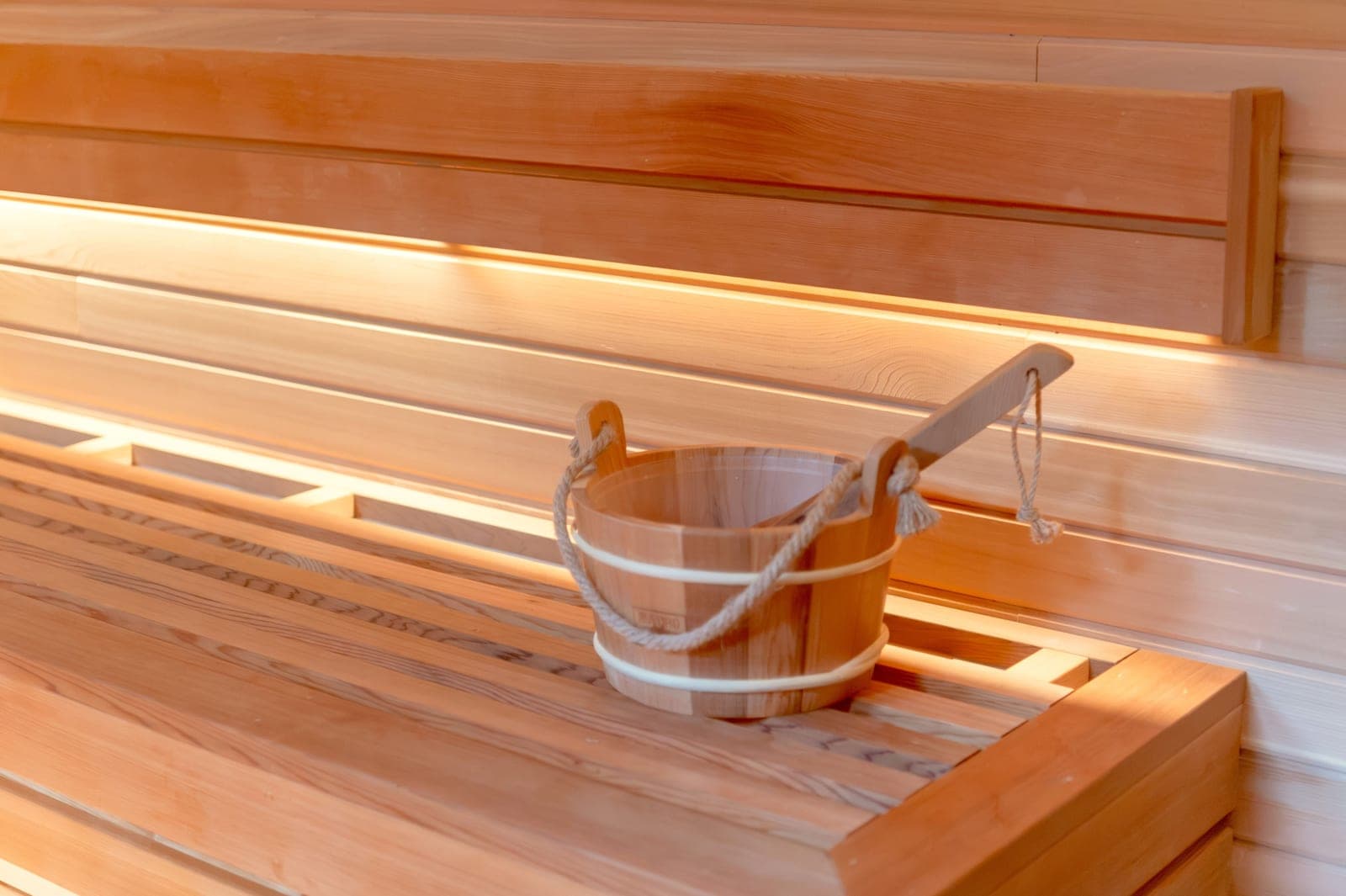
Cedar and hemlock heat you exactly the same — the difference is aroma, rot resistance and price. Neither wood makes a hotter or better-performing sauna; both are stable, low-resin softwoods that suit a hot, humid cabin. What separates them is sensory and structural: cedar smells like a sauna and shrugs off moisture, hemlock is the quieter, cheaper option that does the same core job. Whether the cedar premium is worth it comes down to two things — how much you value the aroma, and whether the cabin lives indoors or out.
What cedar actually buys you
Two real advantages, and one that matters more than people realize. The obvious one is aroma: western red cedar has that warm, distinctive sauna scent that many buyers associate with the whole experience, and it releases gently every time the cabin heats up. The one that matters more is natural rot and moisture resistance. Cedar contains natural oils that resist decay and insects, so it holds up to years of humidity and wet-dry cycling better than most woods. In a cabin that is repeatedly steamed and cooled, that longevity is not cosmetic — it is how long the sauna lasts. Cedar also stays dimensionally stable and does not warp easily, and it looks the part, with a rich color that ages well.
What hemlock does well — and it's more than you'd think
Hemlock is the budget-to-mid default for a reason: it is a perfectly good sauna wood. It is stable, low-resin (important — resinous woods like pine can weep sap and burn skin at sauna temperatures), takes heat well, and has a clean, pale, knot-light appearance many people actually prefer to cedar's ruddier tone. What it lacks is cedar's aroma and some of its natural rot resistance. Indoors, in a controlled environment that is dried out between uses, that rot-resistance gap shrinks a lot — a well-maintained hemlock cabin in a basement can last many years. The aroma gap is simply a matter of taste and budget.
The decision, by where the sauna lives
Location tips the balance more than anything else:
- Outdoors (barrel or cabin):lean cedar. An outdoor sauna faces rain, snow and year-round humidity with no help, and cedar's natural rot resistance is doing real structural work there. This is where paying for cedar most clearly pays off — see our best barrel saunas for the cedar-heavy outdoor field.
- Indoors, well-ventilated and dried out:hemlock is a smart, honest saving. The controlled environment does the moisture management cedar's oils would otherwise handle, so you are mostly paying cedar's premium for aroma. If the scent matters to you, buy cedar; if it doesn't, hemlock is the value pick — as in our best 2-person indoor saunas, where the hemlock cabin is our top value pick.
- Infrared cabins: the same logic applies, but the lower 120-140F heat and dry operation are gentler on the wood, so hemlock lasts well. Cedar remains the aroma-and-looks upgrade — the reason our higher-budget infrared picks are cedar.
Cost, and one wood to avoid
Cedar typically commands a meaningful premium over hemlock for an equivalent cabin — enough that it is a real line item, not a rounding error. That premium is the whole decision: you are buying aroma and longevity, not heat. One clear rule regardless of budget: avoid resinous woods like pine or spruce for the interior benches and walls of a hot cabin — they can weep sap and get uncomfortably hot to the touch. (Nordic spruce appears in some premium traditional cabins, kiln-dried and specified for the purpose, which is a different thing from generic construction pine.) Both cedar and hemlock are low-resin and safe; that is why they dominate the category.
The honest bottom line
Buy cedar if the sauna lives outdoors, if aroma is part of what you are paying for, or if this is a buy-once, keep-for-fifteen-years purchase where longevity justifies the premium. Buy hemlock if the cabin lives indoors in a ventilated, dried-out room and you would rather put the cedar money toward a better heater, more cabin, or simply keep it. There is no performance penalty either way — this is one of the few sauna decisions where the cheaper option is genuinely, not grudgingly, fine. How you care for the wood matters more than which wood it is; our maintenance guide is what actually determines how long either lasts.
Questions
Frequently asked
Is cedar or hemlock better for a sauna?
Is a hemlock sauna worth it, or should I pay for cedar?
Does cedar make a sauna hotter or better?
What sauna woods should you avoid?
Keep reading
Related
More in Indoor Saunas
Receipts
Sources
- Harvia — electric sauna heater specifications and room-size guidance (manufacturer)
- Finnish Sauna Society (Suomen Saunaseura) — traditional sauna bathing and loyly
We do not run a testing lab, and we do not pretend to. Product specs are transcribed from the manufacturer's own listing and cited as claims; health figures come from peer-reviewed studies, named and linked. Where we could not verify something, we say so on the page rather than quietly leaving it out. Read our full method.