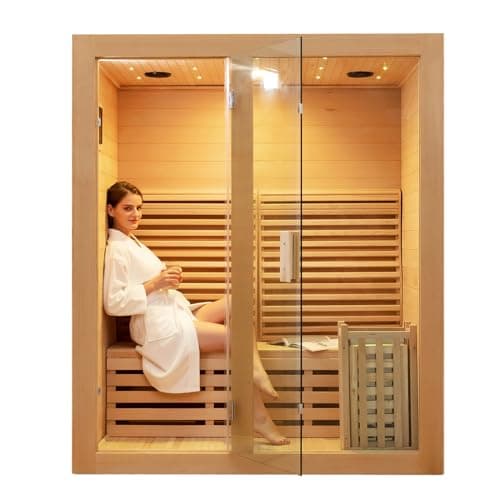
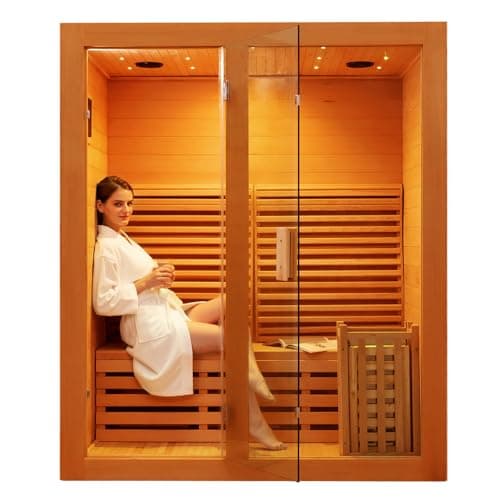
Same cabin, same stove, same steam — the wood is the whole question, and it's a question about aroma and longevity, not heat. ZONEMEL builds its 2-person traditional cabin in both Canadian hemlock and red cedar, each around a genuine 3.5kW Harvia rock stove. We give the nod to the red cedar for its aroma and rot resistance, but the hemlock is the value pick that saves you real money and delivers an identical sweat. Neither is a wrong answer — this is a straight premium-versus-value call decided entirely by how much the cedar experience is worth to you.
What they share — which is almost everything
Start with the common ground, because it's most of the product. Both are the same 2-person ZONEMEL cabin, both are genuine traditional saunas built around a real 3.5kW Harvia rock stove with stones, and both let you throw water for loyly — the water-on-stones ritual no infrared cabin can reproduce (Finnish Sauna Society). Both run hot the way a real sauna should, both need the same dedicated 240V circuit, and both ask for the same ventilation. Because the stove and stones are identical, the heat is identical— same temperature, same steam, same session. That's the single most important thing to understand here: you are not choosing a hotter sauna, you are choosing a nicer or a cheaper one.
It's worth pausing on whythe heat is identical, because it's the crux of the whole comparison. In a traditional sauna the warmth and the loyly come from the stove and the heated stones, not from the walls — the paneling is a liner, chosen for how it handles heat and moisture and how it feels against skin, not for any contribution to temperature. Swap cedar for hemlock and the same 3.5kW Harvia still drives the room hot and still flashes the water you ladle on into steam. So every genuine difference between these two cabins is a difference in the wood itself — which turns out to be a short and honest list.
Where red cedar pulls ahead
The cedar premium buys three things. First, aroma — western red cedar has the warm, resinous scent most people associate with a sauna, released a little more each time the wood warms; hemlock is comparatively neutral. Second, moisture and rot resistance— the same oils that give cedar its smell help it withstand the damp of a box that gets hot and humid several times a week, which pays off over the years. Third, cedar is a touch more dimensionally stableand simply looks the part — the premium article in a room you'll heat for a decade or more. If any of that matters to you, the cedar is worth its modest premium over the hemlock. None of these are dramatic, single-feature wins — they're the kind of small, everyday-quality differences that add up over years of use, which is exactly how premium materials tend to justify themselves. You feel them a little every session rather than all at once.
Where hemlock wins
The hemlock's case is short and strong: the same real-loyly sauna for less. It's a genuine Harvia rock-stove cabin — you throw water and make steam exactly as you would in the cedar — built in clean, light Canadian hemlock, at a price well under the cedar version. What you give up is aroma and the last increment of long-term moisture resistance, and that's it. For a lot of buyers, particularly anyone putting a first traditional sauna in a basement or spare room, that's an easy trade: you're buying the heat and the steam, both of which come from the stove, and the stove is the same. Hemlock is the value pick, not a compromise on the sauna itself.
Aroma and looks, honestly
Two of cedar's advantages are things you'll register every session, so it's worth being concrete about them. The aroma is the big one: red cedar releases its warm, resinous scent as it heats, and for a lot of people that smell isthe sauna. Hemlock is close to neutral by comparison — perfectly pleasant, just quiet. If you've loved the smell of a cedar sauna somewhere, that alone can justify the upgrade. The lookis the other: cedar's reddish, warmer tone reads as the premium article, where hemlock is paler and plainer. Neither changes the sweat, but you're looking at and breathing in the room every time you use it, so these aren't trivial — they're precisely what the premium pays for.
Which one lasts longer?
Over a decade of hot, humid sessions, cedar's natural oils give it a real edge in moisture and rot resistance— it's more forgiving of the damp a sauna generates, particularly in a basement or a room that doesn't dry out quickly. Don't overstate it, though: a hemlock cabin with proper ventilation, dried out between sessions, will also last a long time. Ventilation, not the wood, is the main thing that decides whether either cabin ages well. Cedar simply buys you a little more margin for a damper spot or a less-diligent drying routine — a longevity insurance policy, not a rescue from neglect. If your room is dry and well-aired, that margin matters less; if it's a humid basement, it matters more.
The install is identical — and it's a real one
Whichever wood you pick, the project is the same, and it isn't a plug-in. Both cabins need a dedicated 240V circuitrun from your panel — licensed-electrician work, and in many places a permit and inspection — plus proper ventilation because a traditional sauna runs hot and humid. The 3.5kW Harvia draws a lighter load than the bigger 6kW cedar cabin, so the circuit is more modest, but it's still 240V. Size and situate the stove per Harvia's guidance, and don't improvise the wiring to save a few dollars. Because the wood doesn't change any of this, the install cannot be a tiebreaker between them — it's the same either way.
The verdict
Buy the ZONEMEL red cedar if the aroma of a real cedar room and the better long-term moisture resistance are worth a modest premium to you — most people who can stretch to it are glad they did. Buy the ZONEMEL hemlockif you'd rather put the savings toward the electrician, the ventilation or simply your budget, because it delivers the exact same heat and the exact same loyly for less. If you want to see both against the wider cedar field, our best red cedar saunas roundup ranks the cedar version alongside the larger 6kW cabin and a full-spectrum infrared alternative.
How to choose between them
Decide what the cedar premium is worth to you
Both cabins heat identically, so this is purely a value judgment. If the smell of real cedar, better rot resistance and a cabin that ages more gracefully are worth the extra, pay for the cedar. If getting a genuine throw-water sauna at the lowest sensible price matters more, the hemlock is the buy. There is no wrong answer — just be honest about which one you are.
Both need a 240V circuit — plan it first
The wood changes nothing about the wiring: each cabin needs a dedicated 240V circuit for its 3.5kW Harvia, run by a licensed electrician and often permitted and inspected. Confirm your panel can spare the circuit and budget the electrician before you pick a wood, because the electrical is the part of a traditional-sauna project that most often causes delays.
Consider where the cabin will live
Cedar's edge in moisture resistance matters more in a damp basement or a less well-ventilated room, where the wood works harder against humidity over the years. In a dry, well-aired space the hemlock's slightly lower resistance is less of a factor. Match the wood to the room, not just to the price tag.
Weigh how long you'll keep it
Cedar's longevity edge and better looks matter more the longer you expect to own and use the cabin. If this is a sauna you'll heat for years in a home you're settled in, the premium amortizes nicely. If you're less certain — a first traditional sauna you're testing the habit with, or a place you might move on from — the hemlock's lower price is the lower-risk call, and it gives up nothing on the actual experience. Match the spend to how committed you already are.
Factor the long-term upkeep
A traditional sauna is a hot, humid box you'll use for a decade or more, and both woods want the same care — proper ventilation so the cabin dries between sessions, and the odd wipe of the benches. Cedar tolerates the moisture a little better over that lifespan, which is part of what you're paying for. Neither is high-maintenance; ventilation is what keeps either one lasting.