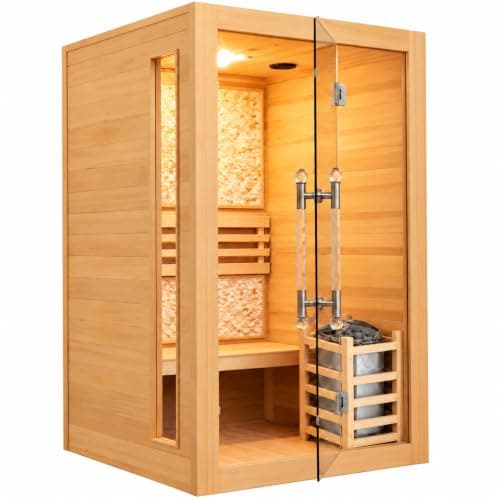
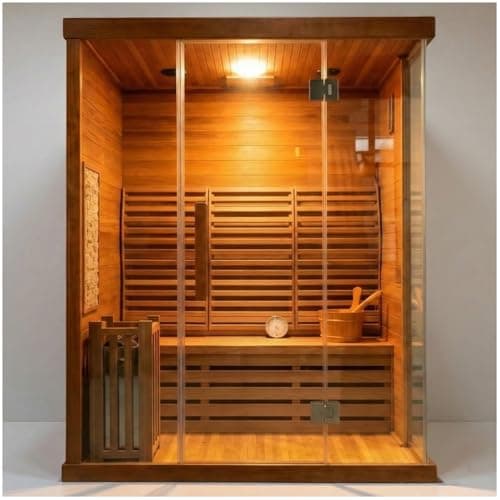
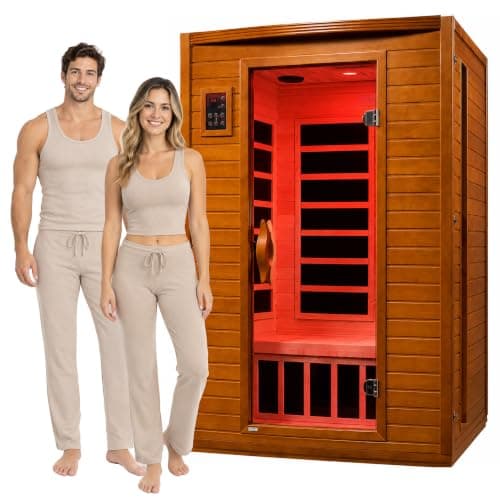
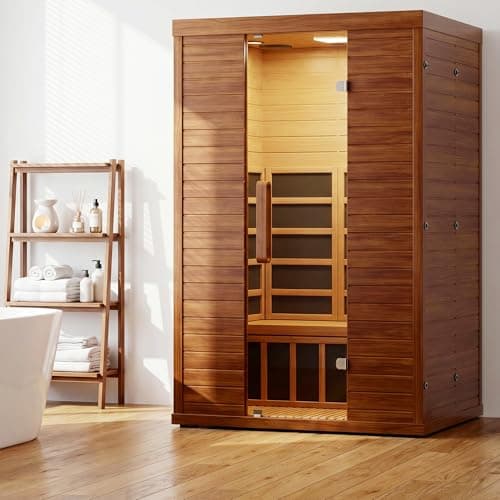
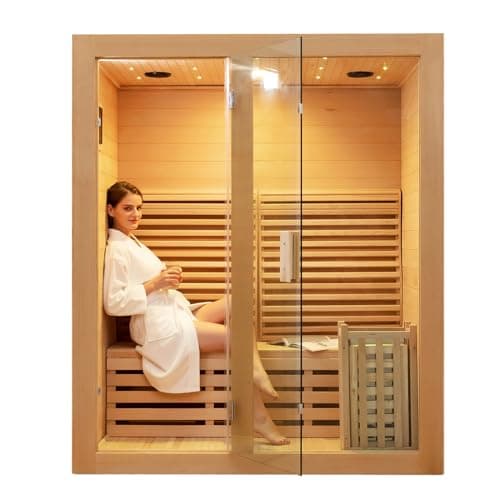
Buy the ZONEMEL 2-person hemlock if you want a real, hot, throw-water sauna without a custom-build budget. The AURGOD is the 1-2 person cabin with the biggest Harvia in it, the ZONEMEL cedar 6kW is the larger step-up, and the Dynamic Andora or EASYHAWK are the plug-in infrared alternative if you can't — or don't want to — add a 240V circuit.
Indoor saunas split into two very different machines
Before you compare models, decide which kind of indoor sauna you actually want, because they install differently. A traditional cabin (the ZONEMEL and AURGOD picks here) runs an electric rock stove: it reaches 170-190F, you throw water on the stones for loyly, and it needs a dedicated 240V circuit, a foil vapor barrier and real ventilation. An indoor infrared cabin (the Andora and EASYHAWK) heats your body with carbon panels instead — cooler at 120-140F, no steam, but most 1-2 person models plug into the 120V outlet you already have. See the full comparison in our infrared vs traditional guide.
Why the ZONEMEL hemlock leads
A genuine Harvia stove is the story. Plenty of Amazon "traditional" listings are actually infrared or hybrid boxes; the ZONEMEL ships a real 3.5kW Harvia rock heater and stones, so you get authentic steam in a cabin small enough for a basement or spare room, at a price well under a premium kit. If you want that same real-loyly experience with more stove behind it, the AURGOD puts a full 6kW Harvia in a Canadian-hemlock cabin the same size; if you need room for three and want cedar, the ZONEMEL 6kW cedar with WiFi pre-heat is the upgrade.
What we ranked on
- Real loyly vs plug-in convenience. Traditional cabins score on heat and steam; infrared cabins score on how painless they are to install.
- The electrical reality.Every rock stove here needs 240V and, honestly, an electrician. The infrared cabins don't — and that's a real point in their favor.
- Wood and build. Hemlock and Nordic spruce are the value woods; red cedar is the premium upgrade for aroma and rot resistance.
- Footprint. Indoor means fitting a hot box into a finished room — we favor cabins that suit a basement, garage or spare bedroom.
- Value at the live price.The Value score moves with the price, because "is it worth it?" is a question about money — and the money changes weekly.
How to choose an indoor sauna
Decide traditional or infrared before anything else
This one choice sets your budget, your install and your experience. Want the classic hot, humid, throw-water sauna? That's a traditional rock-stove cabin, and you should read our install guidebefore you buy. Want the lowest-effort install and don't mind a cooler, dry heat with no steam? An infrared cabin plugs into the wall. Everything below assumes you've made this call.
Check your wiring: 120V vs 240V
The 1-2 person infrared cabins (Andora, EASYHAWK) run on a standard 120V outlet. Every traditional rock stove here needs a dedicated 240V circuit — the 3.5kW ZONEMEL on a lighter one, and the 6kW cedar and the 6kW AURGOD on a heavier one — which realistically means hiring an electrician and possibly pulling a permit. Confirm your panel can spare the circuit before you fall for a bigger stove.
Ventilation and the vapor barrier are not optional
A traditional sauna is a hot, moist box inside your house. It needs a foil vapor barrier behind the cladding so steam can't reach the framing and rot it, and it needs airflow — an intake low near the heater and an exhaust high on the far wall. Skip either and you get mildew, uneven heat and a shorter-lived cabin. Infrared cabins are far more forgiving here because they don't generate steam, but even they want a little breathing room behind the panels.
Match footprint and heater to the room
Measure the space and the door swing, then size the heater to the cabin's volume rather than buying the biggest stove you can — an oversized heater overshoots and wastes energy, an undersized one never reaches temperature. Our heater size guide turns cubic feet into kilowatts, and the running-cost guide shows what each draw costs to run.
If the room you have in mind is smaller than anything on this page, there is one more option worth pricing: converting a closet into a sauna covers what that actually takes — ventilation, a vapor barrier and a stove sized to a very small volume — and when it is a better idea than a freestanding cabin.