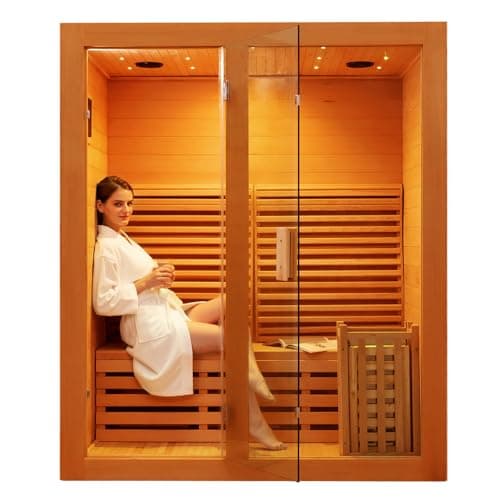
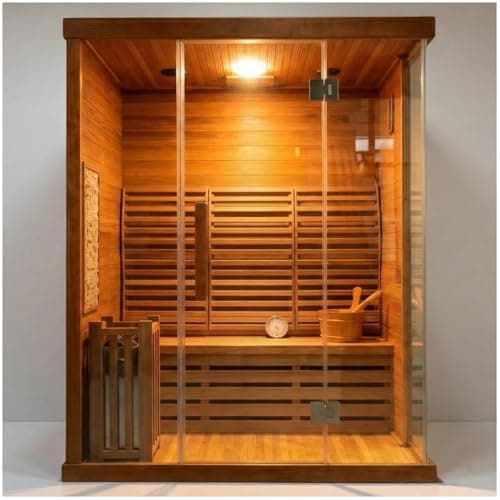
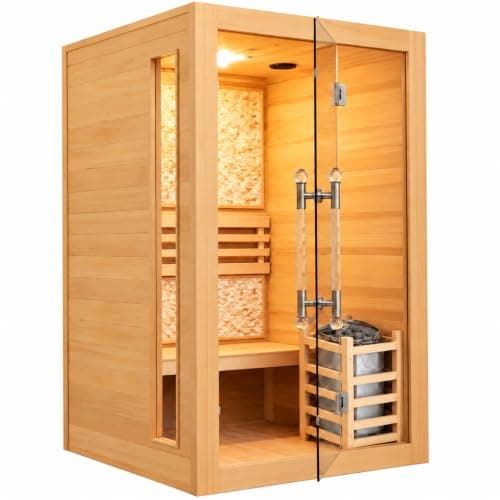
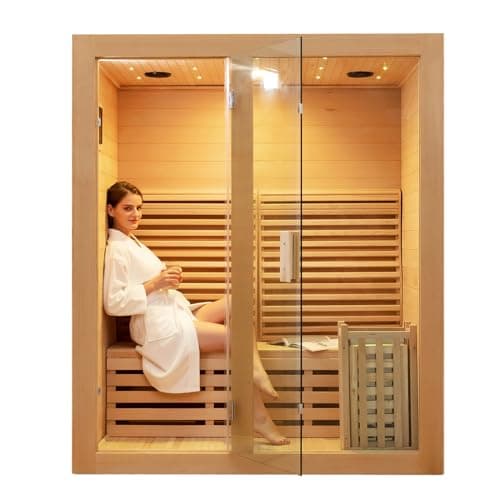
Buy the ZONEMEL 2-person hemlock if you want a genuine Harvia rock stove — and the real Finnish loyly that comes with it — for the least money. The cedar 2-person is the aroma upgrade at the same compact size, the cedar 6kW is the WiFi-controlled step-up for three, and the AURGOD is the 1-2 person cabin with the biggest Harvia in it. Every cabin here is built around a real Harvia stove, not an infrared panel wearing a "traditional" label. Buying the stove on its own for an outdoor barrel instead? That is best barrel sauna heaters.
Why the heater is the thing you're actually buying
A traditional sauna is only ever as good as its stove, and this is the one category where the brand on the heater genuinely earns its premium. Harvia is the Finnish benchmark for residential sauna stoves for concrete reasons: the elements are built to run hot for years, the stone baskets are shaped to hold enough rock to flash water into steam, and — the part budget stoves quietly cost you later — replacement elements, stones and controllers are easy to find. When a cabin ships a genuine Harvia rather than an unbranded factory element, you are buying the piece that decides how hot the room gets, how much loyly the stones can throw, and how many winters the whole thing survives. That is why we screened for the real Harvia stove first and judged the cabin around it second.
It also matters because the listings play games. Search "traditional sauna" on Amazon and a large share of the results are infrared cabins with a rock-look decal, or hybrid boxes that can never make real steam. A true Harvia kit always names the stove and its kilowatts— 3.5kW, 4.5kW, 6kW — and lets you ladle water on the stones. If a listing leads with carbon panels, "far infrared," or a 120V plug, it is an infrared cabin: a fine product, covered on our infrared vs traditional guide, but not the throw-water sauna these kits are.
The picks, in short
The ZONEMEL 2-person hemlock wins on value: a real 3.5kW Harvia stove and stones in a cabin compact enough for a spare room, at a price well under a bespoke build. The ZONEMEL 2-person cedar is the same real-Harvia formula in aromatic red cedar for a modest premium — the wood is the only real difference, and its 3.5kW stove still runs on a lighter 240V circuit. The ZONEMEL 3-person cedar steps up to a bigger 6kW Harvia and a WiFi controller so you can pre-heat the room before you walk down to it, though that heavier stove wants a more substantial circuit. And the AURGOD 1-2 person is the heat play: Canadian hemlock around a full 6kW Harvia, with the stones, bucket, scoop and hourglass in the box, if you want the most stove you can get in a small room.
Real loyly is the whole point
The reason to take on a traditional kit at all — the electrician, the vent, the extra cost over a plug-in cabin — is loyly: the burst of soft, enveloping steam you get when you ladle water onto hot stones. No infrared cabin can do it, because infrared has no stones and makes no steam; it heats your body directly with panels and stays dry. That is a genuinely different, gentler experience, and for some buyers it is exactly right. But if the hot, humid, throw-water Finnish ritual is what you picture when you think "sauna," only a real rock stove delivers it — and among rock stoves, Harvia is the one to insist on. If you specifically need this cabin in a tight, space-constrained spot, read the companion basement sauna installation guide before you commit to a location.
The traditional trade-off, stated honestly
It would be dishonest to sell you a rock stove without naming its costs. A traditional Harvia cabin asks more of you than a plug-in infrared box in three concrete ways: it needs a 240V circuit and an electrician, it runs hot enough (170-190F) that proper ventilation and a foil vapor barrier are non-negotiable, and it wants a 30-40 minute warm-up before the stones are truly ready. What you get in return is the one thing infrared can never offer — the loyly, the enveloping steam, the genuine Finnish heat that a body of Finnish research has spent decades studying. For the buyer who specifically wants that experience, the trade is worth every bit of the extra effort; for the buyer who mainly wants the least-hassle sauna, it is not, and that buyer is better served by a cabin that plugs into the wall. Be clear about which buyer you are before you spend on a stove you might resent installing.
How the four compare
Think of them as a ladder. The hemlock ZONEMEL is the ground floor — the cheapest honest way into real loyly, and the one we point most people at. The cedar ZONEMEL 2-person is the same cabin and the same 3.5kW Harvia with the wood swapped up to aromatic red cedar, a comfort upgrade rather than a hotter sauna. The cedar 6kW is the size-and-convenience step: a genuine third seat, a bigger stove, and WiFi pre-heat, at the cost of a heavier circuit. And the AURGOD sits off to the side as the hot small cabin — Canadian hemlock and a full 6kW Harvia, the one to buy when you sit alone or in a pair and want the stove to recover fast between ladles. Pick the rung that matches your space, your wiring and your budget, then let the bundled Harvia do its job.
What we ranked on
- The stove. A genuine Harvia rock heater, correctly sized to the cabin, is the entry requirement — everything else is secondary to whether it makes real loyly and lasts.
- kW matched to the room. A 3.5kW stove suits a compact 2-person cabin, a 4.5kW a well-heated single, a 6kW a genuine 3-person room. Under- or over-powering is the classic mistake.
- Wood and build. Hemlock and Nordic spruce are the value woods; red cedar is the premium upgrade for aroma and rot resistance. All are manufacturer-listed materials, not something we measured.
- Convenience. A WiFi controller that pre-heats the room is a real quality of life feature on a stove that needs a proper warm-up.
- Value at the live price.The Value score moves with the price, because "is it worth it?" is a question about money — and the money changes weekly.
How to buy a genuine Harvia sauna kit
The stove is the heart of the buy
Everything in a traditional sauna serves the stove. The walls insulate it, the stones store its heat, the vent feeds it air, and the water you throw turns its heat into steam. So start with the heater and let the cabin follow: confirm it is a real Harvia rock stovewith a stated kilowatt rating and a stone basket you can actually load. A named-brand stove is not badge vanity here — it is the difference between a heater whose elements and stones you can replace for a decade and a mystery element that strands you when it fails. If a "traditional" listing is coy about the heater, that is your answer.
Match the kW to your room
Sizing a sauna stove is arithmetic, not guesswork. The rule of thumb is roughly 1kW of heater for every 45 cubic feet of room, which is exactly why these kits pair the stove they do with the cabin they do: 3.5kW for the compact 2-person ZONEMEL cabins, and 6kW for both the generously heated AURGOD and the larger 3-person cedar. An undersized stove never reaches a proper 170-190F and just runs flat out forever; an oversized one overshoots, wastes energy and can trip the circuit. If you ever build a room to your own dimensions rather than buying a matched kit, run the volume through our sauna heater size guide before you pick a heater.
Hemlock or cedar
Once the size is settled, wood is the main choice, and it is a comfort-and-longevity call rather than a performance one. Hemlock (the entry ZONEMEL and the AURGOD) is the value wood: light, clean-looking, and perfectly good in a dry-warm sauna. Red cedar (the two cedar ZONEMEL kits) is the premium upgrade — it carries the classic sauna aroma, resists moisture and rot better, and simply looks the part. Be honest with yourself about it, though: cedar does not make a hotter or better-performing sauna, and the hemlock cabin delivers the same Harvia loyly for less. If the smell and the grain are worth a premium to you, take the cedar; if they are not, the hemlock is the sensible money.
WiFi pre-heat is a real convenience
A rock stove needs a proper warm-up — often 30-40 minutes to bring the air and stones up to temperature — which is the one genuine drawback of traditional heat versus a quick infrared cabin. The 6kW cedar ZONEMEL answers that with a WiFi controller: you start it from your phone so the room is hot by the time you get to it, instead of sitting on a cold bench waiting. It is not essential — you can run any of these on a wall timer or a built-in control — but on a heater that takes time to come up, being able to pre-heat remotely is the kind of small convenience you use every single session.
The honest install reality
No traditional sauna is plug-and-play, and it is only fair to say so before you buy. Every Harvia stove here runs on a dedicated 240V circuit — the 3.5kW and 4.5kW stoves on a lighter one, the 6kW on a heavier one — which realistically means hiring a licensed electrician to pull the circuit from your panel, and in most places a permit and inspection. On top of that, a hot, humid box inside your house needs a foil vapor barrier behind the cladding and real ventilation (an intake low near the heater, an exhaust high on the far wall) so the moisture cannot rot the framing or sit in the room and mildew. That is the price of real loyly, and it is worth budgeting for up front. Our basement sauna installation guide walks through the space-constrained version most people are actually working with.
Buy the size you'll actually fill
A 2-person cabin heats faster, costs less to run and needs a lighter 240V circuit than a 3-person one, so unless you genuinely have three regular bathers, the compact hemlock or cedar ZONEMEL is the smarter buy — you will heat less empty bench every session. Step up to the 6kW cedar only if that third seat truly earns its place. It is the same mistake buyers make across every sauna category: over-buying capacity, then paying for a heavier circuit and a longer warm-up to heat a bench nobody sits on. Size honestly, and put the money you save toward cedar or a better vent instead.
What a Harvia sauna costs to run
The reassuring part of the budget is the electricity. A rock stove draws its full kilowatts during the warm-up, then a thermostat cycles it to hold temperature, so even a 6kW Harvia works out to roughly a dollar a session at the U.S. average residential rate of about $0.18 per kWh, per the U.S. Energy Information Administration; the 3.5kW cabins cost less again. The up-front kit and the electrician are the real numbers to plan for — the running cost is small and predictable, and it should never be the thing that talks you out of the sauna.
If you want the stove without the premium cabinetry bill, most of the affordable Harvia-equipped cabins on Amazon come from a single brand — our ZONEMEL ranking compares them side by side, 3.5kW against 6kW, hemlock against cedar.