HUB / INDOOR · Indoor Saunas
Indoor Sauna Flooring: What Goes Under a Home Sauna
The floor is the part of a sauna install people plan last and regret first. Here's what to put under a prefab cabin and inside a built room — for moisture, safety and the room below.
We earn a commission when you buy through our Amazon links, at no extra cost to you. It never affects our rankings, and we say so when the cheaper product is the better buy. How this works.
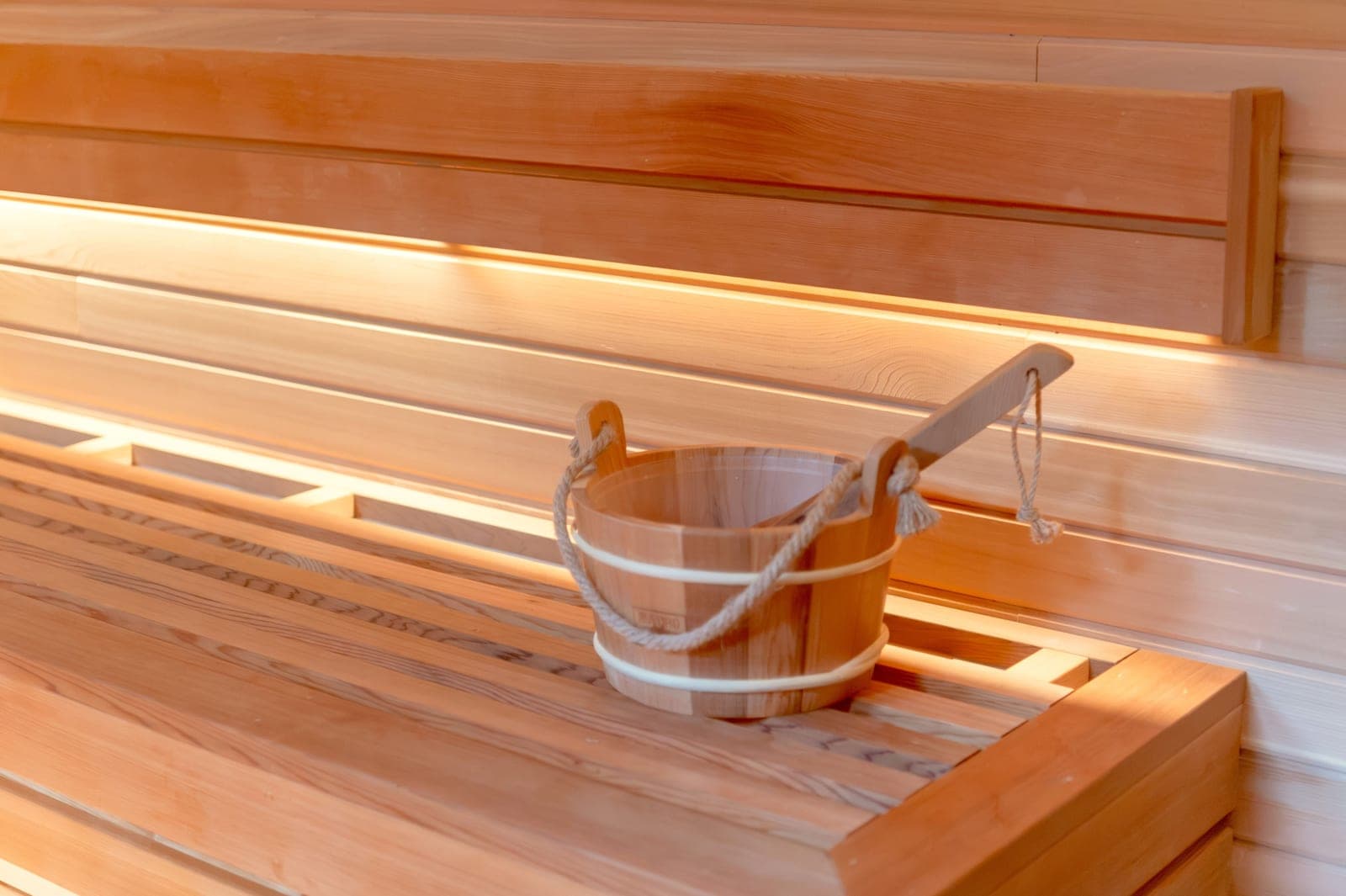
The best floor for an indoor sauna is a hard, water-resistant, non-slip surface — sealed concrete or tile is ideal — that can shrug off spilled water and sweat and be wiped clean. Carpet and unsealed wood are the wrong answers: they hold moisture, and moisture is what damages a sauna and the room around it. A duckboard slatted mat on top gives your feet comfort without trapping water. Flooring is the least glamorous part of a sauna install and the one people most often get wrong. Get it right and the sauna is safe, dry and easy to keep clean for years; get it wrong and you're fighting mildew and worrying about the subfloor.
Why the floor matters more than you'd think
A sauna floor deals with three things a normal floor doesn't: dripped sweat, spilled loyly water from ladling the stones, and the general humidity of a hot room. All of that has to go somewhere and not soak into anything that rots or grows mildew. The floor also has to be safe to stand on with wet, bare feet, and it has to protect whatever is underneath — especially if the sauna sits on an upper floor over a finished room. So the floor is doing moisture management, safety and structural protection at once. That's why "whatever's already there" is rarely the right answer.
The best surfaces
- Sealed concrete — the default in a basement or garage.If your sauna is going on a concrete slab, you're most of the way there. Concrete is hard, water-resistant and non-combustible; seal it so it doesn't stay damp, and it's an excellent sauna floor.
- Tile — the best for a built room or upper floor. Porcelain or ceramic tile over a proper waterproof membrane is the gold standard: fully water-resistant, easy to clean, and it protects the subfloor. Choose a textured, non-slip tile, because wet smooth tile is a fall risk.
- A slatted duckboard mat on top.Whatever the hard surface, a removable wooden duckboard (slatted mat) gives your bare feet a warmer, more comfortable surface while letting water drain straight through to the floor below and dry. It lifts out for cleaning. This is the traditional finish and it's worth having.
What to avoid
- Carpet. Never. It soaks up sweat and water, holds it, and grows mildew and odor in a warm, damp environment — the worst possible sauna floor.
- Unsealed or laid wood flooring.Solid wood floors and laminates swell, cup and rot with repeated moisture. The sauna's benches and walls are wood, but the floor you stand and spill on should be a hard, wipeable surface — not a wood floor.
- Anything slippery when wet. Polished stone or glossy tile without texture is a slip hazard with wet feet. Prioritize grip.
Drainage and moisture
Most home prefab cabins don't need a plumbed floor drain — you're not hosing them out — but you do need the water that drips and spills to be able to dry rather than pool. A hard, slightly-sloped-to-drain surface under a duckboard handles that for a typical home cabin. If you're building a bigger custom room where you'll rinse the floor, a proper drain and a waterproof membrane become worth it. Either way, the principle is the same: let moisture escape and dry, don't trap it. This ties directly into ventilation — a room that dries between sessions stays healthy — which we cover in sauna ventilation.
Protecting the room below and around
This is the part that saves you from an expensive surprise. If the sauna sits over a finished room, the floor assembly has to keep moisture from reaching the structure below — a waterproof membrane under tile is the reliable way. If it's on a slab in a basement or garage, you've got far less to worry about, which is exactly why basements and garages are such popular sauna locations — see basement sauna installation and garage sauna conversion. Also mind clearances: the stove has its own required distances to combustible surfaces, and the floor material near a hot stove should be non-combustible. When in doubt on a build, a tiled, membrane-backed floor over a solid subfloor is the safe, standard answer.
The honest bottom line
Put your indoor sauna on a hard, water-resistant, non-slip floor — sealed concrete in a basement or garage, tile over a waterproof membrane in a built or upper-floor room — and finish it with a removable duckboard mat for your feet. Skip carpet and wood floors entirely, prioritize grip over gloss, and make sure moisture can dry rather than pool. Get the floor right at install time and it disappears as a problem for the life of the sauna; get it wrong and it's the thing you fight forever. Plan it alongside your ventilation and your footprint, not as an afterthought.
Questions
Frequently asked
What kind of flooring do you put in a sauna?
Can you put a sauna on a wood floor?
Do indoor saunas need a floor drain?
Is tile or concrete better under a sauna?
Keep reading
Related
More in Indoor Saunas
Receipts
Sources
We do not run a testing lab, and we do not pretend to. Product specs are transcribed from the manufacturer's own listing and cited as claims; health figures come from peer-reviewed studies, named and linked. Where we could not verify something, we say so on the page rather than quietly leaving it out. Read our full method.