HUB / GUIDES · Sauna Guides
Sauna vs Steam Room: The Honest Difference
One is dry heat you can crank to 190F; the other is a 100%-humidity steam box that feels hotter at half the temperature. Here's how they really differ.
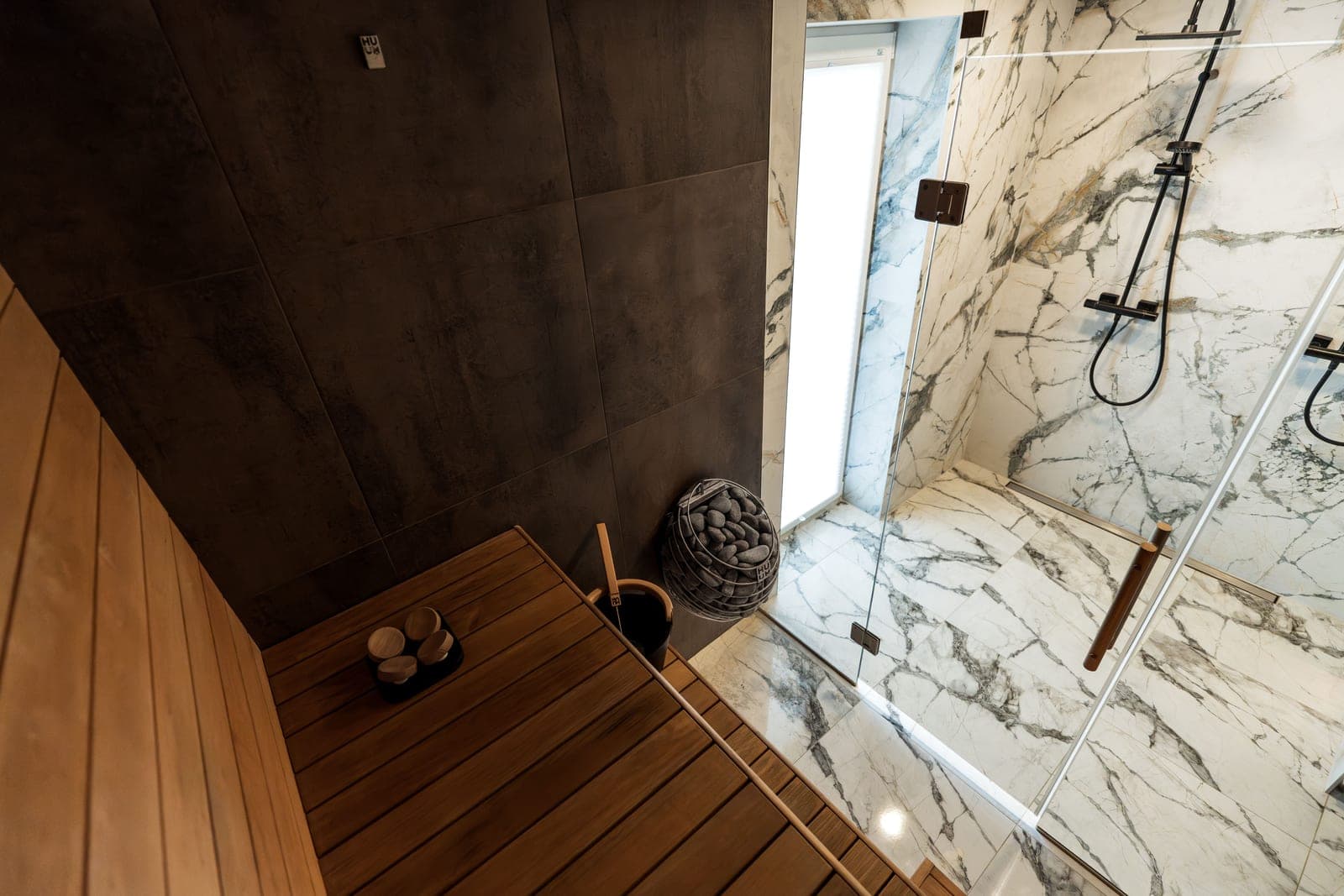
The short answer: a sauna is dry heat — hot air, run at 150-195F, with low humidity — while a steam room is wet heat, a sealed enclosure held near 100% humidity at a much cooler 110-120F. The sauna feels like intense, breathable dry heat; the steam room feels like being wrapped in a hot, wet towel. For a home install, a sauna is far easier and cheaper.
Sauna vs steam room, side by side
| Factor | Sauna (dry heat) | Steam room (wet heat) |
|---|---|---|
| Heat type | Dry — a heater warms the air and body (infrared warms you directly) | Wet — a steam generator fills the room with hot vapor |
| Temperature | 150-195F traditional; 120-140F infrared | 110-120F (feels hotter because of the humidity) |
| Humidity | Low — roughly 10-20%, with brief bursts if you throw water for loyly | Near 100% — saturated, visible steam |
| How it feels | Intense, breathable dry heat; sweat evaporates off the skin | Enveloping, heavy wet heat; condensation beads on your skin |
| Main benefits | Best-evidenced for cardiovascular health (JAMA/Mayo); relaxation | Relaxation; many find the moist air easy on breathing and sinuses |
| Maintenance | Low — keep the wood dry; occasional stone and heater checks | Higher — constant moisture invites mold and mildew; needs regular cleaning |
| Home install & cost | Prefab cabins and plug-in infrared are easy; traditional needs a 240V heater | Needs a steam generator, a fully sealed waterproof enclosure and drainage — pricier |
Why the steam room feels hotter at a lower temperature
This is the part that confuses people, and it's pure physics. Your body cools itself by evaporating sweat. In a dry sauna at 180F, sweat evaporates readily, so you can tolerate air that's well above body temperature. In a steam room the air is already saturated with water, so sweat can'tevaporate — your main cooling system is switched off, and even 115F feels oppressive and intense. That's why a steam room runs so much cooler on the thermometer yet can feel just as heavy as a hot sauna.
What each is actually good for
The health research is lopsided, and it's worth being straight about it. The strong cardiovascular evidence — the 20-year Finnish cohort and the Mayo Clinic Proceedings review — is about saunas, dry heat, not steam rooms. Steam rooms have their own appeal: many people find the warm, moist air soothing to breathe and pleasant for the skin, and both deliver the same core relaxation. But if you're choosing partly on the documented long-term benefits, the sauna is the one with the literature behind it. See the sauna benefits guidefor exactly what that evidence does and doesn't say.
The home-install reality
This is where the two really part ways. A sauna can be as simple as a plug-in infrared cabin that needs nothing but a wall outlet, or a prefab indoor kit or outdoor barrelwith a 240V heater. A steam room is a bigger project: you need a steam generator plumbed in, and — critically — a fully waterproofed, sealed and drained enclosure, because that 100% humidity will find its way into any surface that isn't built for it. Retrofitting a steam shower is real construction. That gap in effort and cost is, for most home buyers, the deciding factor before feel even enters the picture.
So which should you pick?
If you want the best-evidenced long-term benefits, the simplest install and the widest choice of buyable units, get a sauna — and if you want it easy, start with infrared. If your priority is the specific feel of warm, moist air on your lungs and skin and you're prepared for a waterproof build, a steam room delivers something a sauna can't. Many spas offer both because they genuinely do different things; at home, the sauna is the far easier one to own.
Questions
Frequently asked
Is a sauna or steam room better?
Which is hotter, a sauna or a steam room?
Is a steam room or sauna better for your lungs?
Can you have a steam room at home?
Do you sweat more in a sauna or steam room?
Keep reading
Related
More in Sauna Guides
Receipts
Sources
- Laukkanen T. et al., JAMA Internal Medicine 2015 — association between sauna bathing and fatal cardiovascular and all-cause mortality events
- Laukkanen J.A., Laukkanen T. & Kunutsor S.K., Mayo Clinic Proceedings 2018 — cardiovascular and other health benefits of sauna bathing (evidence review)
We do not run a testing lab, and we do not pretend to. Product specs are transcribed from the manufacturer's own listing and cited as claims; health figures come from peer-reviewed studies, named and linked. Where we could not verify something, we say so on the page rather than quietly leaving it out. Read our full method.