For a large sauna, the Turku 9kW is the value heater to buy — enough output for a big room at a mid price, wet/dry rated so you can throw water. The VEVOR 9kW is the cheapest way to that power and adds an external digital controller; the Harvia KIP 8kW is the premium benchmark if you want a buy-once stove. But get the kW right first — in a big room, undersizing is the mistake that never reaches temperature.
Large rooms mean 8-9kW — here's the math
A large home sauna is roughly 400-600 cubic feet — think a well-used 5-8 person room — and that volume is exactly where you cross from a mid-size 6kW stove into the 8-9kW class. The sizing rule is the same one that governs every heater: allow about 1kW for every 45 cubic feetof well-insulated space. A well-insulated room of roughly 360-400 cubic feet lands around 8kW on that rule; push toward 450-550 cubic feet and you're into the 9kW class. Then adjust up for anything that leaks heat — a big glass door or window (count the glass as extra volume), bare masonry or log walls, or a cold outdoor build that starts each session near freezing. In a large room those adjustments add up fast, which is why the biggest cabins so often want the full 9kW rather than 8. Walk the whole method through on the sauna heater size guide before you commit.
The heavy 240V load is the real project
This is the part big-room buyers underestimate. An 8-9kW stove is a serious electrical load — far more than a mid-size heater — and it needs a dedicated 240V circuit sized to its kW, the right breaker, and cable rated for the current. Before you fall for any 9kW heater, confirm your panel can actually spare that load; sometimes the honest answer is that your service can't, and the fix is a panel upgrade or a smaller sauna. This is a licensed-electrician jobfrom end to end — pulling a heavy circuit and landing it on a 240V stove is not DIY work, and getting it wrong is a fire and shock risk, not just a code violation. Budget the electrician in from the start; on a big heater the wiring is a real line item, not an afterthought. Once it's in, the running cost is modest and predictable — far less than most people fear, even for a big stove — and we work the full kWh math out on the home sauna running-cost guide.
The three picks, in one breath
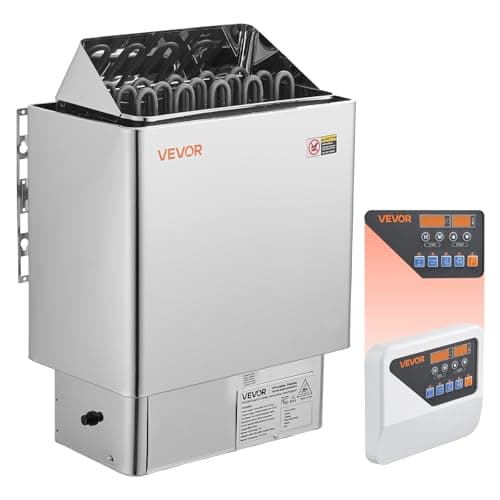
Turku 9kWis the value winner: a 9kW wet/dry stove at a mid price that handles a large room the 8kW Harvia would be stretched by, for less money than the premium brand — the trade-off is a parts and stone network that isn't as deep as Harvia's. VEVOR 9kW is the cheapest route to this power and throws in an external digital controller so you can set the temperature and a start timer from outside the hot room; you accept a basic build, thinner support, and usually buying stones separately. Harvia KIP 8kWis the benchmark: first-rate build, stones in the box, and the deepest support network, so it's the buy-once pick — just note 8kW sits at the lower end of the large-room band, so for the very biggest or leakiest rooms the 9kW units have the edge on raw output. If you want the premium-vs-budget philosophy laid out in detail, see the Harvia vs VEVOR comparison.
Turku 9kW — the value winner
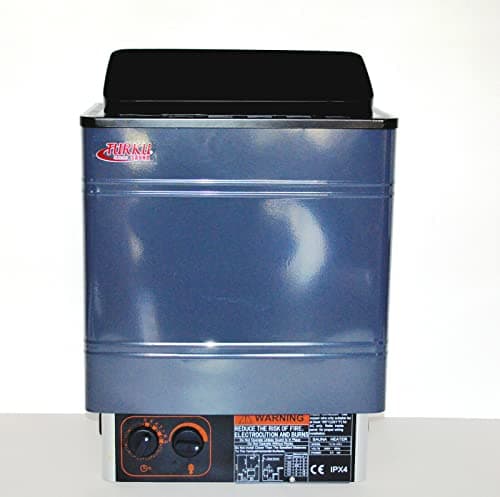
The Turku 9kW is the one we'd point most large-room buyers at first. It brings a full 9kW to bear on a big cabin — enough to reach and hold 175-190F in the 450-550-cubic-foot rooms where an 8kW stove starts to feel stretched — and it does it at a mid price that sits well below the premium brands. It's wet/dry rated, so loyly is on the table, and the built-in controls keep the install straightforward. The honest trade-off is support depth: Turku's parts and replacement-stone network isn't as deep as Harvia's, so it's a slightly bigger bet on the long term. For most people building a large sauna, though, the value it delivers at this size is the sensible middle between paying premium and buying bare-bones.
VEVOR 9kW — the cheapest big heater
If budget is the deciding factor, the VEVOR 9kW is the least expensive way to get large-room heat, and it doesn't pretend to be more than that. The standout feature at this price is the external digital controller: you mount it outside the sauna and set a target temperature and a start timer, so a big room can pre-heat while you're elsewhere and you walk in once it's hot. The trade-offs are the usual budget ones, stated plainly — a basic build with longevity as the compromise, thinner support if something fails, and stones that are often notincluded, so the real cost isn't the sticker until you've added a bag of rocks. Buy it knowing exactly what it is: a lot of heat for the least money, not a decade-long keeper.
Harvia KIP 8kW — the premium benchmark
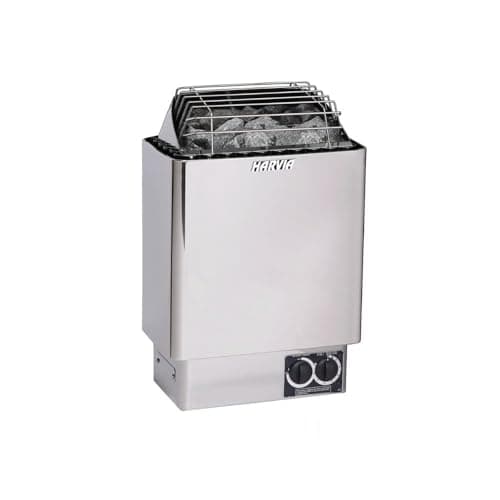
The Harvia KIP 8kW is the buy-once option for a large room: first-rate build, stones in the box, and the deepest parts and replacement-stone network of the three, so it's the stove worth repairing rather than replacing years down the line. The one caveat is size — at 8kW it sits at the lowerend of the large-room band (Harvia rates it for roughly 350-450 cubic feet), so for the biggest or leakiest rooms the 9kW Turku and VEVOR have the edge on raw output. If your large sauna lands nearer 400 cubic feet and is well insulated, the 8kW Harvia is the premium pick; if it's pushing 500-600 cubic feet, size up to a 9kW stove rather than ask the 8kW to fight above its weight.
Wet/dry rating, if you want loyly
Loyly — the burst of steam from ladling water over hot stones — is the heart of a big traditional sauna, and in a room this size you'll want it. But you can only throw water on a stove rated wet/dry; pouring water over a dry-only heater's elements can damage them. The Turku 9kW here is wet/dry rated, so it's built for water on the rocks. If loyly matters to you, confirm the wet/dry rating on any listing before you buy, and never splash a heater that isn't rated for it.
Why not just buy the biggest heater?
It's tempting to reason that if 9kW is good, more must be better — buy the biggest stove and never worry about running short. In a large room that logic is less punishing than it is in a small one, but it still costs you. An oversized heater overshoots your target temperature and cycles on and off hard to hold it, which wastes energy, can heat the air unevenly, and dries the room out faster than you'd like. It also drives up the electrical demand: a bigger stove needs a heavier circuit and breaker, so you may be paying an electrician for more capacity than your sauna actually uses. The goal isn't maximum kW, it's the right kW for your measured volume plus a small margin for glass and cold walls. Land in the 8-9kW band that matches your room, round up only slightly, and let the value or premium pick decide the rest.
The flip side is the one to fear more in a big room: undersizing. Because a large volume loses heat over a lot of surface area, a stove that's even a size too small can run at full power all session and never win against the heat loss. When you're genuinely between two sizes after adjusting for glass and insulation, round up — a slightly oversized heater reaches temperature and eases off, while an undersized one leaves you in a lukewarm box you can't fix without buying again.
What we ranked on
- Output for a big room, sized honestly. Enough kW to reach and hold 175-190F in 400-600 cubic feet — the whole point at this size.
- Value at the live price.The Value score moves with the price, because "is it worth it?" is a money question and the money changes weekly.
- Build and longevity. Harvia sets the bar; Turku and VEVOR trade some of it for price, and we say where.
- Wet/dry rating. Whether the stove is built to take water for loyly.
- Controls and install. Built-in knob versus external digital controller, and the weight of the 240V circuit each one demands.
How to choose a heater for a large sauna
Do the sizing math before anything else
Measure length by width by height for your cubic feet, divide by about 45 for the baseline kW, then add power for glass, uninsulated or log walls and cold or outdoor builds. In a large room those add-ups routinely push you from 8kW to the full 9kW, so don't round the glass door away. When you're between two sizes after adjusting, round up — in a big room an underpowered stove is the more painful failure by far. The full cubic-feet method and a room-size-to-kW table live on the size guide.
Don't undersize — and don't oversize either
Undersizingis the classic large-room mistake: a heater that's too small for the volume runs at full power the whole session and still never reaches a proper 175-190F, so you sit in a lukewarm box you can only fix by replacing the stove. Oversizing is less ruinous but still wasteful — an over-powered heater overshoots your target, cycles hard, and burns energy heating a room that was already hot. Aim to land squarely in the 8-9kW band for your measured volume, with only a small margin over your calculated size.
Confirm your panel can supply the amps
A 9kW stove pulls serious current, and the whole system has to carry it: a suitable 240V circuit, the right breaker, and cable sized for the load. It's no use specifying a 9kW heater if your electrical panel can't spare the circuit. Have a licensed electrician check your service capacity beforeyou buy the stove — occasionally the honest answer is a panel upgrade, and it's far better to learn that first than after a heavy heater is sitting in the garage.
Confirm wet/dry and pick your controls
If you want to throw water for loyly, buy a stove that's wet/dry rated (the Turku 9kW is) and never splash one that isn't. On controls, decide whether you want an external digital controller — the VEVOR 9kW ships with one, so you can pre-heat the room from outside the door — or whether a built-in knob you set from inside the sauna is fine. Neither changes how hot the room gets; it's purely how you'd rather run it.
Check whether stones are included
An electric stove heats a cage of stones, and those stones are what radiate the heat and hold the loyly. Harvia includes them; budget stoves like the VEVOR often ship the heater alone, so you add a bag of sauna stones separately. It's a small cost, but factor it in so a "cheaper" stove is actually cheaper once it can run — in a big room you'll need a fair few to fill the cage.