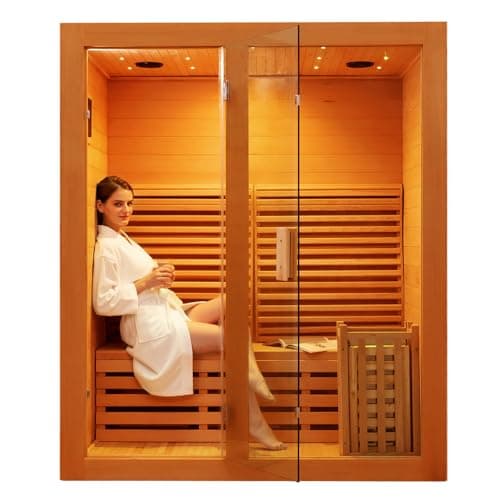
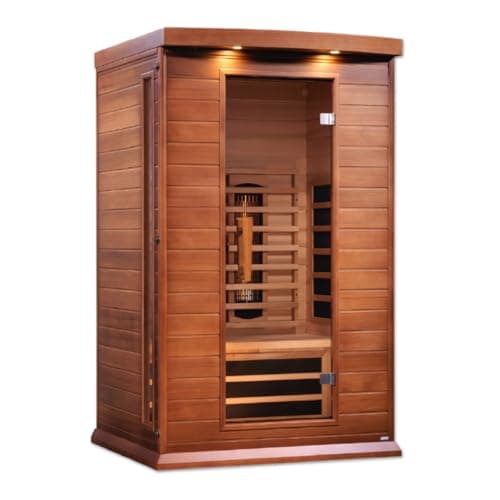
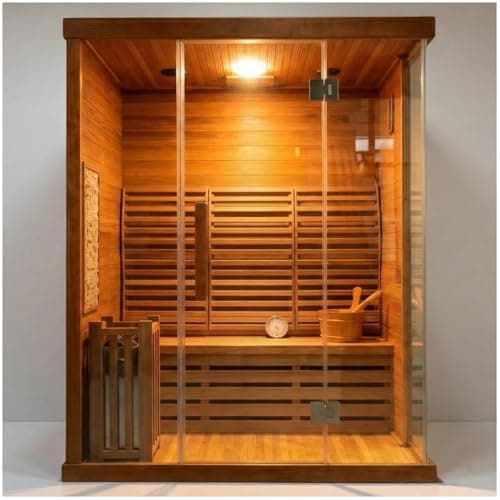
Buy red cedar for the aroma, the moisture resistance and the way the cabin ages — not because it makes a hotter sauna, because it doesn't. Our pick of the three is the ZONEMEL 3-person red cedar with a 6kW Harvia rock stove: real cedar, a genuine throw-water stove and WiFi pre-heat, for a lot less than a premium kit. The ZONEMEL 2-person red cedar is the smaller traditional cabin for a couple, and the Maxxus Full Spectrum is the red-cedar option for buyers who want infrared heat rather than loyly. All three are cedar; only two of them are the classic, water-on-the-stones kind.
Why red cedar is the premium sauna wood
Cedar earns its price for reasons you feel rather than read on a spec sheet. Western red cedar carries the warm, resinous aromamost people picture when they think of a sauna — it's the smell of the room, released a little more each time the wood heats. It is naturally rot- and moisture-resistant, which matters in a box that gets hot and humid several times a week: the oils that give cedar its scent also help it shrug off the damp that would swell and check a cheaper wood over years of use. And it is dimensionally stable— it moves relatively little as it heats and cools, so boards stay flat, joints stay tight and the cabin doesn't develop the creaks and gaps that cycling through 180F can open up. Cedar also stays comfortable against bare skin at temperature, which is the everyday reason sauna benches and backrests are so often built from it. None of this is exotic; it's just a wood that is unusually well-suited to the job, which is why it sits at the top of the range. If you want the wood decision on its own, our cedar vs hemlock guide lays it out in full.
There's a practical way to think about the premium: you're buying it once and using it for a decade or more. Spread over the life of a cabin you'll heat several times a week, the gap between hemlock and cedar is small per session — and cedar is the part of the sauna you see, smell and lean against every single time. That's why buyers who can stretch to it rarely regret the wood, even though it changes nothing about the heat. It's the one upgrade that's purely about the pleasure of the room rather than the performance of it, which makes it easy to justify and easy to overpay for in equal measure — so know why you want it.
Two traditional cedar cabins, and one full-spectrum
The important split here is not the wood — all three are cedar — but the heat. Two of the picks are traditional rock-stove cabins: the ZONEMEL 3-person 6kW and the ZONEMEL 2-person 3.5kW both ship a genuine Harvia stove with stones, so you can ladle water on for loyly and run the room hot the way a Finnish sauna is meant to run (Finnish Sauna Society). The third, the Maxxus Full Spectrum, is a red-cedar infraredcabin: near-, mid- and far-infrared panels heat your body directly rather than heating the air and stones, so there is no steam and no loyly — a genuinely different experience in the same premium wood. Decide which heat you want first, because it changes the install as much as the feel. If you're weighing the whole indoor field, start with our best indoor saunas roundup; for the rock-stove kits specifically, the best Harvia sauna kits page is the deeper cut.
Why the ZONEMEL 3-person cedar 6kW leads
It gives you the most real sauna for the money. You get red cedar instead of hemlock, a properly sized 6kW Harvia that heats a three-person room fast, and a WiFi controller that lets you pre-heat the cabin before you walk down to it — a genuinely useful feature when a traditional sauna takes time to come up to temperature. It's a real, hot, throw-water sauna in the premium wood, at a price that undercuts the boutique kits. The honest catch is the electrical: a 6kW stove needs a substantial dedicated 240V circuit, which is a real job for a licensed electrician and, in many places, a permit and inspection — so confirm your panel can spare the load before you fall for it. It also asks for more floor space and proper ventilation than a two-person cabin. Size the stove to the room with Harvia's own guidance rather than buying the biggest heater you can.
The cedar 2-person, and the Maxxus infrared alternative
The ZONEMEL 2-person red cedaris the same real-Harvia formula in a compact cabin: a 3.5kW stove, genuine loyly, and cedar's aroma and rot resistance, sized for a couple. Because 3.5kW draws less than 6kW, it can run on a lighter 240V circuit — but it is still a 240V install, not a plug-in, and two seats is the honest ceiling. It's the pick if you want cedar and steam without the bigger room and heavier wiring the 6kW asks for. We compare it directly against its hemlock twin in the ZONEMEL hemlock vs cedar head-to-head.
The Maxxus Full Spectrumis here for the buyer who wants cedar but not steam. Its full-spectrum panels add near-infrared — the band associated with red-light and skin claims — which the far-infrared-only cabins can't do, all wrapped in real red cedar on the well-supported Golden Designs platform. Two honest cautions: full-spectrum heaters typically need a 240V dedicated circuit, so this is not the plug-in-and-go option a smaller far-infrared cabin would be, and it is meaningfully more expensive than the entry-level far-infrared cabins. Buy it because you specifically want full-spectrum infrared in cedar, not as a cheaper way into the wood. The upside is a genuinely different sauna in the same premium material: gentle, dry radiant heat you can sit in for longer at a lower air temperature, plus the near-infrared band the traditional cabins can't produce. If you already know you prefer infrared to steam, this is how you get it without giving up the cedar.
Reading a cedar listing honestly
One caution before you spend: the wood named on an Amazon listing is a manufacturer claim, and "cedar" is a word marketers like. We take the stated species at face value here — western red cedar on both the ZONEMEL and Maxxus cabins — but it's worth confirming a listing actually specifies the wood on the visible surfaces rather than a thin cedar veneer over a cheaper core, and that the photos match the description. A genuine cedar sauna usually leans on its aroma and grain in the listing, because those are the reasons to pay for it. If a listing is vague about the wood but loud about chromotherapy lighting and Bluetooth, treat the cedar claim with more caution — you're paying the premium for the material, so make sure the material is really there.
What the cedar premium does not buy you
Be clear-eyed about this before you spend, because it's where money gets wasted. Cedar does not make a hotter or more effective sauna. A hemlock cabin with the same Harvia stove reaches the same temperature and throws the same loyly — the heat comes from the stove and the stones, not the paneling. What cedar buys is aroma, longevity and looks: a better-smelling room, a cabin that resists moisture and ages more gracefully, and a wood that simply reads as the premium article. Those are real, worthwhile things over the decade-plus life of a sauna — just don't pay the premium expecting a performance upgrade, because there isn't one. If aroma and longevity aren't worth the extra to you, the hemlock version is the smarter money, and nobody in the room will get a worse sweat.
The verdict
Buy the ZONEMEL 3-person cedar 6kW for the most real, throw-water cedar sauna per dollar, if you have room for three and a panel that can carry the 6kW circuit. Buy the ZONEMEL 2-person cedar if a couple-sized cabin on a lighter 240V circuit fits your space better. Buy the Maxxus Full Spectrum only if you want infrared heat in cedar rather than steam. Whichever you choose, the wood is the easy part — the prefab vs custom decision and the wiring are what actually shape the project, so settle those before you checkout.
How to choose a red cedar sauna
Decide traditional or infrared before the wood
Cedar is available in both, so the wood isn't the first question — the heat is. A traditional rock-stove cabin (the two ZONEMEL picks) runs hot and lets you throw water for loyly, but needs a 240V circuit and ventilation. A full-spectrum infrared cabin (the Maxxus) heats your body directly with no steam. They're different experiences that happen to share a wood — pick the heat you actually want, then buy it in cedar.
Match the heater to the room, then to your panel
A stove that's too small never reaches temperature; one that's too big overshoots and wastes power. The 3.5kW ZONEMEL suits a compact two-person room and the 6kW suits three, which is why the kits pair them that way. If you ever size a stove yourself, run the room's cubic footage through the manufacturer's guidance rather than guessing — and check your electrical panel can actually supply the circuit the heater needs.
Budget for the electrician, and possibly a permit
Every rock-stove cabin here, and the full-spectrum Maxxus, needs a dedicated 240V circuit. That is licensed-electrician work — not a job to improvise — and in many jurisdictions it means a permit and an inspection. Price that into the project up front, because the wiring, not the cabin, is what most often stalls an install. Our indoor saunas hub links the install and cost detail if you want the full picture.
Size the cabin to the people and the space
A 2-person cabin heats faster, costs less to run and needs a lighter circuit than a 3-person. Unless you genuinely, regularly sauna with three, the smaller cedar cabin is the smarter buy — you'll spend less heating empty bench. Measure the floor, the door swing and the ceiling height before you commit to the larger 6kW room.
Don't confuse full-spectrum with a plug-in cabin
It's an easy mix-up: many small far-infrared cabins run on a standard 120V outlet, so it's tempting to assume the cedar Maxxus does too. It doesn't — full-spectrum heaters typically need a 240V dedicated circuit, the same electrical reality as the traditional cabins here. If a plug-in-and-go install is what you're after, a smaller far-infrared cabin fits that brief; the full-spectrum cedar does not. Buy it for the near-infrared and the wood, and plan the circuit in from the start.
Know what you're paying the cedar premium for
Cedar is an aroma-and-longevity upgrade, not a heat upgrade. Pay it if the smell of real cedar, better moisture resistance and a cabin that ages well matter to you over the long life of the sauna. If they don't, the equivalent hemlock cabin delivers the same heat and the same loyly for less — a completely legitimate choice.