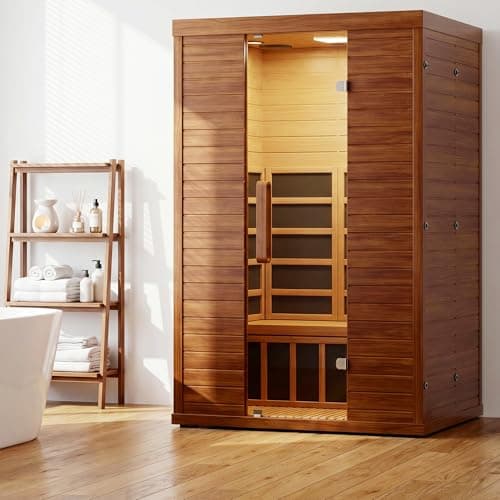
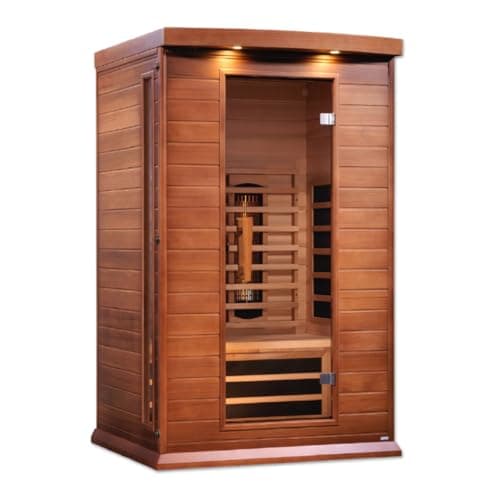
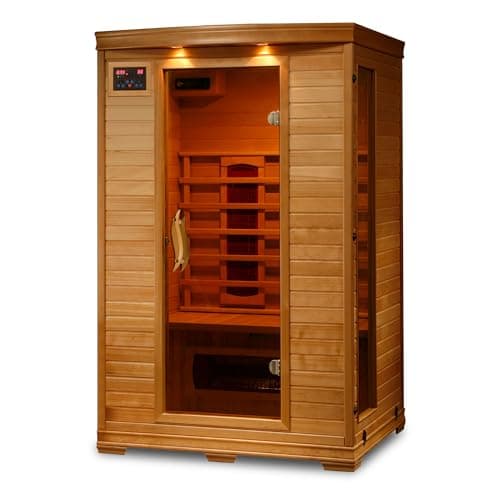
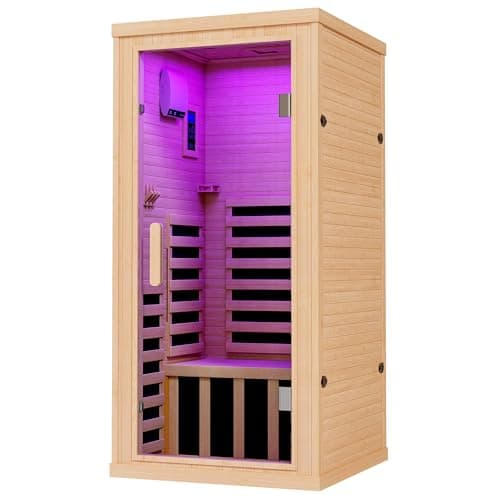
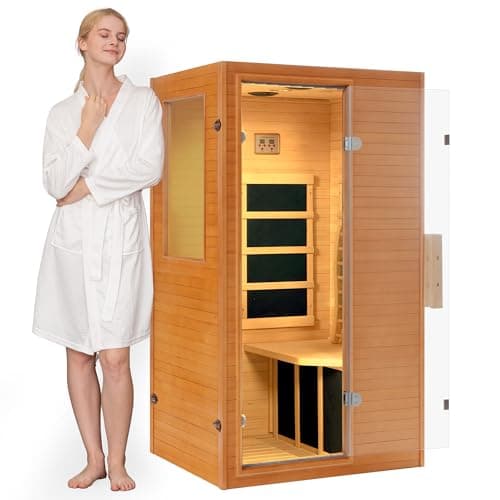
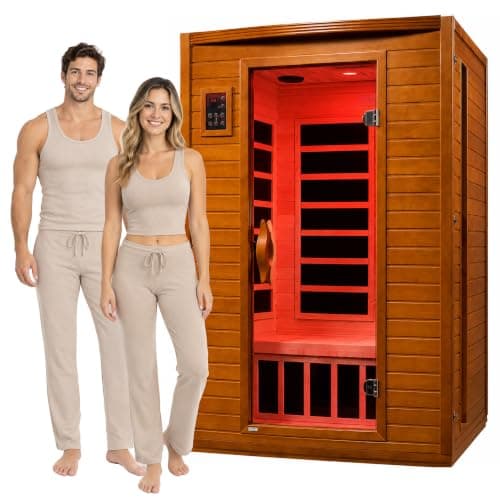
Buy the Dynamic Andora if you want the safe default, or the EASYHAWK if you want a 2-person cabin for a lot less money. Both are 2-person, low-EMF far-infrared cabins that run on a normal household outlet. If you specifically want full-spectrum heat and real cedar, step up to the Maxxus.
Infrared is the easiest home sauna to own
An infrared cabin heats your body directly with carbon or ceramic panels rather than heating the whole room, so it runs cooler (120-140F vs a traditional sauna's 170-190F) and, crucially, most 1-2 person models plug into a standard 120V outlet. No dedicated circuit, no electrician, no plumbing. That single fact is why infrared outsells every other home-sauna type — and why the category is the noisiest, with "full spectrum", "ultra-low EMF" and unreachable heat-up claims on every listing.
What we ranked on
- Capacity, honestly stated.A "2-person" cabin is genuinely two people; a "1-2 person" cabin is a roomy single. We call it as it is.
- EMF.We take the manufacturer's disclosed rating as a claim, not a measurement, and prefer brands that publish ultra-low figures.
- Heater type. Far-infrared covers the job for almost everyone; full-spectrum is a genuine upgrade only if near-infrared is the point.
- Wood and build. Hemlock is the value default, red cedar the premium upgrade for aroma and longevity.
- Value at the live price.The Value score moves with the price, because "is it worth it?" is a question about the money — and the money changes weekly.
How to actually choose an infrared sauna
Check your outlet before anything else
The best thing about a 1-2 person infrared cabin is that it runs on the 120V outlet you already have. The moment you go to 3-4 people or full-spectrum, you're usually into a 240V dedicated circuit and an electrician — which can add several hundred dollars and a permit. Decide whether you want that project before you fall for a bigger cabin.
Far-infrared is enough for almost everyone
Far-infrared is the band that produces the deep, sweaty heat people buy a sauna for. Full-spectrum adds near- and mid-infrared, marketed for skin and recovery. If those claims are why you're buying, get full-spectrum; otherwise far-infrared does the job for less money and on a lighter circuit.
Take EMF seriously, but not on faith
Infrared heaters produce electromagnetic fields, and low-EMF carbon panels are a real improvement over old ceramic rods. But "low EMF" is a marketing phrase with no single standard behind it — we treat each brand's number as a disclosed claim and lean toward the brands that actually publish one. Our EMF explainer lays out what the figures mean.
Don't pay for the gimmicks
Chromotherapy lighting, Bluetooth speakers and phone holders are pleasant and cost almost nothing to add — so don't let them drive the decision or the price. The sauna is the heaters, the wood and the fit. Everything else is trim.
This ranking judges cabins on quality. Two other cuts of the same field answer different questions: best infrared saunas for the money ranks on value — seats, panels and warranty per dollar — and best infrared saunas under $1,000 covers what is available when the budget is the binding constraint.
If your shortlist is down to two cabins, we have the head-to-heads: Maxxus vs HeatWave, JNH vs Maxxus, LifePro vs JNH and, if you are weighing the full-spectrum premium, Maxxus full spectrum vs Dynamic.
Two head-to-heads are worth reading if the Dynamic line is on your shortlist: HeatWave vs Dynamic and LifePro vs Dynamic, which take the comparison down to panels, wood and support.