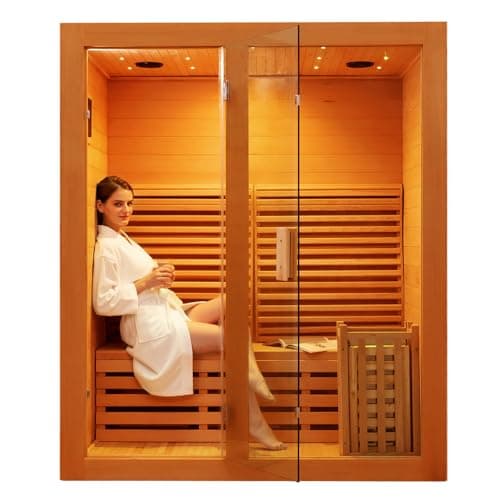
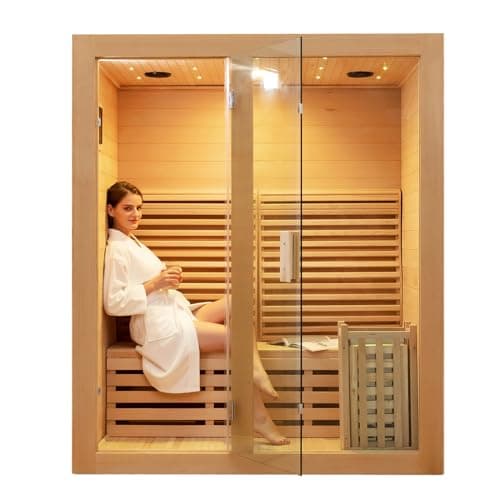
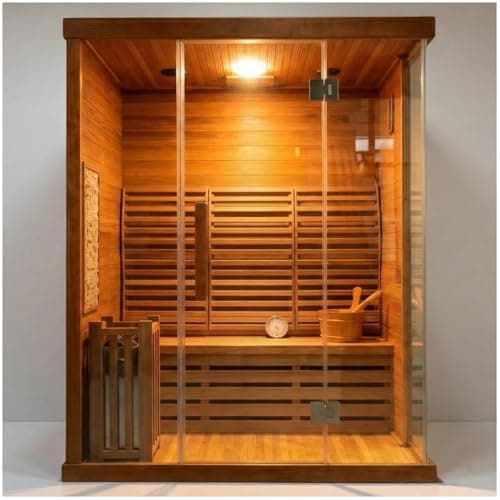
If you want a genuine, throw-water-on-the-rocks sauna indoors and your ceiling is $4,000, the ZONEMEL 3-Person Red Cedar with its 6kW Harvia stove is the most real sauna you can buy for the money. Every cabin on this list is a traditional sauna — it has a rock stove and hot stones, so you can ladle water over them for the burst of steam the Finns call loyly (Finnish Sauna Society). That is the one thing an infrared cabin can never do, and it is the whole reason to buy traditional. What makes these three stand out under four grand is that they do not cut the corner that matters most: they all ship with a real Harvia heater — the benchmark sauna-stove brand — rather than an anonymous factory element. Below are the three ranked, and the honest truth about what it takes to install one.
Why traditional, not infrared, if this is your budget
People shopping around $4,000 often assume an infrared cabin is the "serious" choice because it plugs into a normal outlet and asks nothing of your wiring. It is the easier install, no argument. But infrared and traditional are two different experiences, not two grades of the same one. An infrared cabin warms your body with radiant panels in a relatively cool, dry room; a traditional cabin heats the air to 170-190F and lets you throw water on the stones for steam that spikes the humidity and the heat on your skin. If you have used a sauna in Finland, a gym, or a hotel and loved it, that was almost certainly a rock-stove sauna. Under $4,000 you no longer have to give that up. For the full comparison of the two formats and where each one wins, our best indoor saunas guide lays it out.
How we ranked these
The scores on each card are judgments from documented research — manufacturer specs, listing data and aggregated owner reviews — against our published rubric, not lab measurements. For traditional indoor cabins under a set budget we weighted heat and loyly (does it make real steam, and is the heater sized for the room), build and wood (cedar over hemlock, joinery and finish), wiring and install (how big an electrical job it is), and value at the live price. All three share the thing that matters most — a genuine Harvia stove — so the ranking comes down to how much real sauna each one gives you for the outlay.
The picks, ranked
1. ZONEMEL 3-Person Red Cedar (6kW Harvia, WiFi) — the most sauna for the money. This is our top pick because it is the biggest step up in what actually matters without breaking the budget. You get red cedar instead of hemlock — the premium sauna wood, aromatic and naturally rot-resistant — a larger 6kW Harvia that heats a three-person room properly and fast, and a WiFi controller so you can pre-heat the cabin before you walk in. For a couple who wants room to stretch out, or a household of three, it is the one that will not feel small a year later. The honest cons are real: 6kW is a substantial 240V load, so this is a genuine electrical job, and the bigger cabin needs more floor space and proper ventilation. It is not the cheapest here, but it is the most complete sauna under the ceiling — and if cedar is specifically your goal, our best red cedar saunas guide has the wider field.
2. ZONEMEL 2-Person Red Cedar (3.5kW Harvia) — the compact cedar.If a three-person cabin is more room (and more heater) than you need, this is the same aromatic red cedar and the same genuine Harvia loyly stove in a tidy two-person footprint. The 3.5kW heater is the practical bonus: it draws less than the 6kW, so it can run on a lighter 240V circuit, which can make the wiring job smaller and cheaper. You are paying a modest premium over the hemlock version for the cedar's aroma and longevity — a comfort-and-durability upgrade, not a performance one, since the loyly is identical. It ranks below the 6kW cabin only on size and heater output; for a couple in a spare room or basement corner, it may genuinely be the smarter buy. See our best 2-person indoor saunas for the full two-seat field.
3. ZONEMEL 2-Person Hemlock (3.5kW Harvia) — the value pick.Do not read third place as a knock. This cabin scores highest of the three on pure value, and if your priority is getting genuine steam heat indoors for the least money, it is the one to buy. It is the same real-Harvia formula — a 3.5kW rock stove, hot stones, actual loyly — in Canadian hemlock rather than cedar. Hemlock lacks cedar's natural aroma and rot resistance, which is the whole trade, and it is why it sits below the cedar models here rather than above them on our overall ranking. But it is far cheaper than a premium traditional kit for a genuine steam sauna, and it fits indoors in a basement or spare room just as easily. If you are torn between the two woods, our cedar vs hemlock sauna comparison is the page to read before you decide.
The install caveat that applies to all three
Be clear-eyed about this before you order any traditional cabin: a rock-stove sauna is a real electrical job. Every heater here runs on 240V — the same class of circuit as an electric range or dryer — which means a dedicated circuit run from your panel, and realistically a licensed electrician to install it. In most places that work also needs a permit and an inspection, and skipping either can void insurance and create a real hazard. The bigger 6kW heater in our top pick draws more than the 3.5kW stoves, so it needs a heavier circuit; match the heater to what your panel can spare before you buy, not after. None of this is a reason to avoid a traditional sauna — it is simply the honest cost of real heat, and our how to install a home sauna guide walks the whole job through. If the cabin is going below grade, the basement sauna installation guide covers the extra moisture and drainage steps.
Heat, ventilation and what the room needs
A traditional sauna runs hot — 170-190F is normal — and it needs to breathe. Every one of these cabins should have fresh-air intake near the heater and an exhaust on the far wall so air actually circulates; that airflow is what keeps the room comfortable to sit in, keeps oxygen fresh, and keeps the wood drying out between sessions so it does not develop mold. It is not an optional extra, and it is easy to get wrong. Our dedicated sauna ventilation guide explains how intake and exhaust are supposed to work, and the best wood for a sauna guide covers why cedar and hemlock are used for the interior in the first place. Plan the airflow before the cabin arrives, not after you notice condensation on the walls.
What you are not getting at this price
Honesty cuts both ways, so here is what a sub-$4,000 traditional cabin is not. It is not a custom-built, tiled hot room designed into your house — these are prefabricated cabins you assemble, and while they use real Harvia stoves, the joinery and hardware are good rather than heirloom. It is not a large-group sauna; even the three-person model is sized for a small household, not a party. And the price you see is for the cabin, not the finished, wired, ventilated installation — the electrician, the permit and any ventilation work are real costs on top. Knowing that going in is the difference between a happy buyer and a surprised one. If you would rather compare a prefab kit like these against a fully custom build, that trade-off is its own decision, and none of it changes the core point: for genuine loyly under four grand, a matched Harvia-equipped cabin is the honest sweet spot.
The honest bottom line
Under $4,000 you do not have to settle for an infrared box if what you actually want is a real Finnish sauna. All three cabins here give you a genuine Harvia stove and true loyly; the choice between them is mostly size and wood. Buy the ZONEMEL 3-Person Red Cedar if you want the most complete sauna — cedar, a bigger 6kW heater and WiFi — and can handle the heavier wiring. Step down to the 2-Person Red Cedar for the same cedar and loyly in a smaller, lighter-wiring package. And take the 2-Person Hemlockif your goal is real steam heat for the least money and you can live without cedar's aroma. Whichever you pick, budget for the electrician, the permit and the ventilation up front — that is the part the listings gloss over, and the part that decides whether the sauna is a pleasure or a problem.
How to buy a traditional indoor sauna under $4,000
Insist on a real rock stove and a named heater brand
The entire point of a traditional sauna is loyly — water thrown on hot stones for steam. That only works with a genuine rock stove, and the quality of that stove sets the quality of the sauna. A cabin that ships with a real Harvia heater (Harvia) gives you a stove you can get stones and parts for years down the line, which an anonymous factory element rarely does. If a listing hides the heater brand, treat that as a warning sign.
Size the heater to the room, not the other way around
Heater output has to match the cabin's volume. A 3.5kW stove suits a compact two-person room; a 6kW stove is right for a larger three-person cabin. An undersized heater never reaches temperature, and an oversized one wastes energy and overshoots. The good news with these matched kits is the pairing is done for you — but if you ever swap the stove, our indoor sauna hub covers sizing.
Confirm your electrical before you order
This is the make-or-break step. Every traditional cabin here needs a dedicated 240V circuit and, realistically, a licensed electrician plus a permit and inspection. The 6kW model needs a heavier circuit than the 3.5kW models. Check what your panel can spare first — an undersized supply is a non-starter, and finding out after delivery is an expensive way to learn. Our install guide details the job.
Choose your wood: cedar for aroma and longevity, hemlock for value
Red cedar is the premium sauna wood — aromatic, naturally rot-resistant, and it looks the part. Hemlock is stable and stronger on price but low on aroma. Neither changes how the loyly feels; the difference is comfort, scent and long-term durability. Decide whether that is worth the premium to you before you rank the models. The cedar vs hemlock guide goes deeper.
Plan ventilation and space from the start
A traditional sauna runs at 170-190F and needs fresh-air intake near the heater and exhaust on the opposite wall to stay comfortable and to keep the wood dry. A bigger cabin also needs real floor space — measure the room, including the clearance the manufacturer specifies around the heater. Sorting airflow and footprint before the cabin arrives saves a lot of grief later.