HUB / INDOOR · Indoor Saunas
Prefab vs Custom Sauna
Buy a room-in-a-box or build one from studs? The honest trade-offs — cost, time, skill, portability and the electrical reality — for a considered four-figure-plus purchase.
We earn a commission when you buy through our Amazon links, at no extra cost to you. It never affects our rankings, and we say so when the cheaper product is the better buy. How this works.
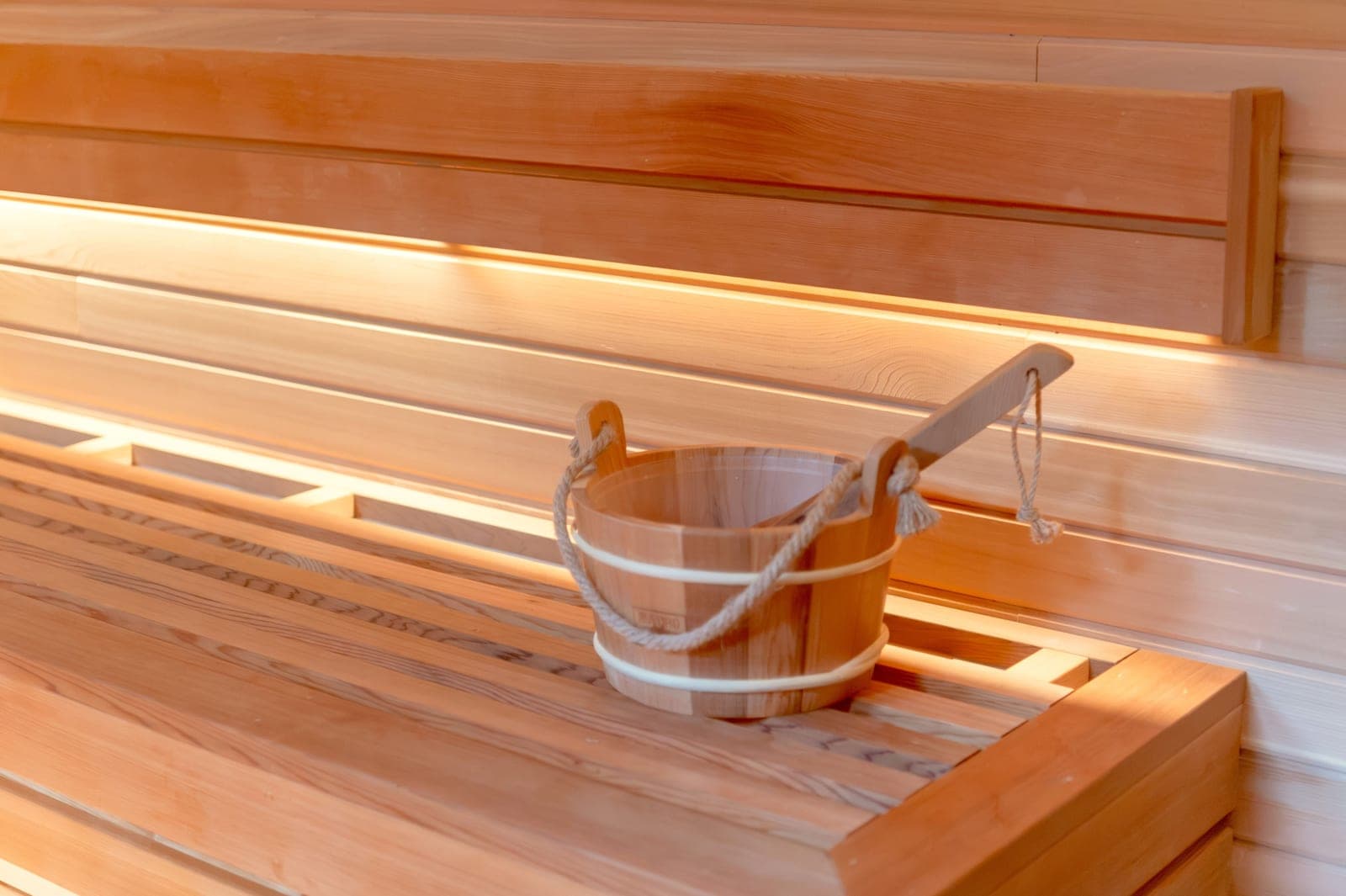
A prefab kit is a room-in-a-box you assemble in a weekend; a custom sauna is a small construction project you build from studs. Both can end up as an excellent sauna, and both, if traditional, need the same licensed electrical work. The right choice comes down to your budget, your time, your skill with tools, how permanent you want it, and how precisely the space needs to be filled. Here's the honest comparison for what is, either way, a considered four-figure-plus purchase.
What "prefab" and "custom" actually mean
A prefab kit arrives as pre-cut, interlocking wall and ceiling panels, benches, a door, floor duckboards and — on a traditional kit — a matched rock stove with stones. You assemble it, more or less like flat-pack furniture, and hand the wiring to an electrician. A custom build means you (or a contractor) frame a room, insulate it, line it with a foil vapor barrier, clad it in cedar or hemlock, build the benches, add ventilation, and install and wire a separately bought heater. One is a product; the other is a project. Most people buying their first indoor sauna are better served by a kit — see the best indoor sauna kits — but a custom build wins in specific situations worth knowing.
Cost: the sticker versus the true build
A prefab kit has the more predictable price: one crate, one number, plus delivery and the electrician. A custom build's cost is the sum of many line items — lumber, insulation, the foil vapor barrier, tongue-and-groove cladding, a door, a separately purchased heater and stones, fasteners, ventilation hardware — and it's easy to underestimate. Done carefully, a custom room in a space you already have cancome in cheaper than an equivalent kit, because you're not paying for pre-cut convenience; done casually, it often costs more once the trips to the hardware store add up. If budgeting certainty matters, a kit is the safer number. The wood you choose moves either budget — our red cedar saunas guide covers what the premium wood adds over hemlock.
Time and skill
A prefab kit is a weekend for two reasonably handy people: the panels are cut to fit and lock together, and the manual walks you through it. A custom build is measured in real carpentry — framing to square, insulating, stapling and taping a continuous vapor barrier, furring out and nailing cladding, building benches, cutting ventilation. If you're comfortable with a circular saw and a level and enjoy the work, custom is rewarding and gives you exactly the room you want. If you're not, a kit removes almost all of the skill from the equation and gets you to first loyly far faster. Be honest about which describes you before you commit.
The electrical reality is the same for both
This is where the honesty matters most. A traditional sauna — prefab or custom — runs a rock stove that needs a dedicated 240V circuit, sized to the heater's wattage, run from your panel on the correct breaker and wire gauge, and hard-wired at the heater. That is licensed-electrician work, not a DIY step, and in most jurisdictions it means pulling a permit and passing an inspection; the work is generally expected to comply with the National Electrical Code (NFPA publishes the standards jurisdictions adopt, along with clearance-to-combustibles rules for the heater). Building the room yourself doesn't change this — a custom build still hands the 240V circuit to a pro. The rule of thumb holds for both paths: DIY the carpentry, hire out the electricity. Don't improvise a high-amperage circuit to save money; it's a fire risk and can void the heater warranty and your home insurance.
Heater sizing to room volume
A kit takes this decision off your plate — its stove is already matched to its cabin (roughly 3.5kW for a compact two-person room, 6kW for a three-person one). A custom build makes heater sizing yourjob, and it's the one number you can't fudge: too small and the room never reaches temperature, too big and it overshoots, wastes energy and can trip the circuit. Size the heater to the room's volume— a common rule of thumb is about 1kW per 45-50 cubic feet — using the manufacturer's guidance rather than eyeballing it (Harvia publishes heater-to-room tables). Get this right and everything else about the sauna works; get it wrong and the nicest custom room disappoints.
Portability and resale
A prefab kit is, within reason, demountable — the panels can often be taken apart and moved, which matters if you might relocate or want to take the sauna with you, and it gives the unit a resale value of its own. A customsauna is a permanent alteration of the room: it doesn't move, and its value is baked into the house rather than the sauna. That permanence is a feature if you're staying put and want a built-in that suits the space exactly, and a drawback if you rent, might move, or want the option to sell the sauna separately later. Weigh how settled you are before you build something you can't take with you.
The hybrid path: a kit in a prepared room
The two options aren't strictly either-or, and the smartest builds often sit in between. A common middle path is to buy a prefab cabin but set it into a room you've prepared first — a moisture-tolerant floor, a nearby drain if you can manage one, a wall you can route a vent through, and the 240V circuit already run to the right spot. You keep the kit's predictable price, matched heater and weekend assembly, while solving the placement, drainage and airflow problems that a bare corner would otherwise leave you fighting after the cabin is already in. It's frequently the best version of "prefab" for a basement or garage: let the electrician and any drainage or ventilation work happen first, then drop the cabin into a space that's genuinely ready for it. You get most of the tailoring of a custom build with most of the convenience of a kit.
When each one makes sense
Choose a prefab kit if you want the most predictable budget and timeline, a matched heater with the sizing already solved, a lower skill bar, and the option to move it later — which describes most first-time indoor buyers. Choose a custom buildif you have an awkward or specific space a boxed kit won't fill, you enjoy and are good at the carpentry, and you want a permanent, exactly-tailored room and don't mind that it stays with the house. Either way, plan the install before you fall for a look: our how to install a home sauna guide walks the build and wiring in order, and the best indoor saunas roundup covers the kits worth starting from. Get the room and the electrical right first — the rest is the easy, enjoyable part.
Questions
Frequently asked
Is a prefab sauna kit or a custom build cheaper?
Can I build a custom sauna myself?
Does a custom sauna need a permit?
How do I size the heater for a custom sauna?
Can you move a prefab sauna but not a custom one?
Keep reading
Related
More in Indoor Saunas
Receipts
Sources
- Harvia — electric sauna heater specifications and room-size guidance (manufacturer)
- NFPA — codes and standards (electrical, clearances to combustibles)
We do not run a testing lab, and we do not pretend to. Product specs are transcribed from the manufacturer's own listing and cited as claims; health figures come from peer-reviewed studies, named and linked. Where we could not verify something, we say so on the page rather than quietly leaving it out. Read our full method.