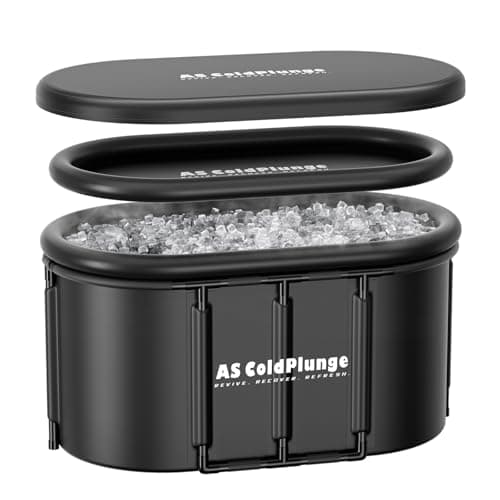
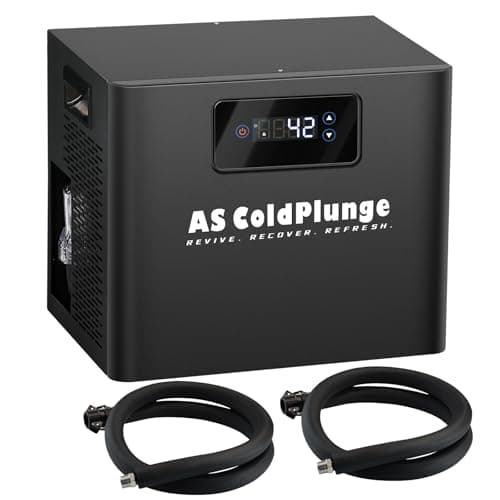
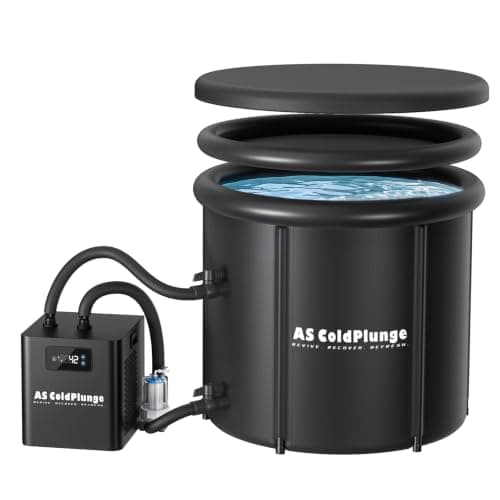
If you want cold water on demand for under a thousand dollars and you want to stop thinking about it, buy the AS ColdPlunge 1/3 HP chiller-and-tub bundle. It is one order, the fittings already match, and at current prices it leaves well over half the budget unspent. If you are not sure the habit will stick, spend a tenth of the ceiling on a covered tub and bagged ice, find out, and keep the rest. The expensive mistake under $1,000 is not buying the wrong tub — tubs are cheap. It is buying a chiller for a routine that never formed, or buying a tub so cheap it cannot take a chiller when the routine does.
Informational only, not medical advice. Cold-water immersion and rapid hot-cold swings put real stress on the heart and circulation. If you have a heart or blood-pressure condition, are pregnant, or are unsure, talk to your doctor before plunging — and never plunge alone. Our
sauna safety guide has the full list of who should be cautious.
Why this page ranks total setup cost, not sticker price
Search for a cold plunge under $1,000 and you will be shown tubs. That is the wrong unit of analysis, because a tub is not a cold plunge. A tub is a container; a cold plunge is cold water in a container, and the cold is the part that costs money. Every page that ranks shells by price is quietly leaving the expensive half of the purchase off the bill.
So the ceiling here applies to the whole thing: tub plus whatever makes it cold plus a lid, all in, under $1,000 at today's prices. That reframing changes the answer completely. A $70 tub is not a better buy than a $400 bundle if the $70 tub commits you to several bags of ice a week forever. And a chiller is not a luxury at this budget — it is affordable, and it is the difference between a plunge you use and a plunge you plan around a supermarket trip.
We have deliberately kept this separate from best cold plunge tubs, which ranks shells on their own merits, and from best cold plunge tubs for beginners, which is about habit formation rather than budget. This page answers one question: what is the most cold water you can have, reliably, for a thousand dollars?
The three routes under $1,000
There are exactly three, and they are not equally good. Picking the right one is most of the decision; which brand you then buy is a detail.
- Route 1 — the matched bundle. A tub and a chiller sold together, one order, one set of fittings. At current prices this comes in at under half the ceiling, which is why it wins. The catch is that the tub in a bundle is whatever the brand pairs with its compressor — usually around 100 gallons, which is enough but not generous.
- Route 2 — buy the shell, add the chiller. Buy a big chiller-ready tub cheaply, then size a chiller to its volume. This gets you substantially more water than a bundle for roughly the same total, and it is the right route if you are tall or want to sit with your shoulders fully under. The catch is that you are now responsible for matching a compressor to a volume, and for the fittings.
- Route 3 — ice only. Buy a covered tub and nothing else. Costs under a tenth of the ceiling, works immediately, and is the correct answer if you plunge once or twice a week or if you genuinely do not know yet whether you will keep doing this. The catch is a recurring ice bill and the fact that the water is never cold when you want it, only when you have planned for it.
The failure mode we see most often is a hybrid of 2 and 3 that nobody intends: a cheap tub with no published chiller ports, bought to test the habit, which then has to be thrown away and rebought when the habit sticks. If there is any chance you will add a chiller, pay the few extra dollars for a shell that publishes chiller compatibility. That is the single highest-leverage decision on this page.
How we ranked them
Criteria first, and the criteria are different from a straight tub roundup because the budget is the organizing constraint. Everything below is a judgment from documented research — published listing specs, manufacturer figures and aggregated owner reports. We have not put a thermocouple in anybody's tub, and our methodology says so in those words.
- What does a complete working setup cost?Not the item's price — the price of the item plus everything it forces you to buy. A chiller with no pump in the box is not the price on its card. A tub with no lid is not either, because an uncovered tub costs you ice.
- Does the published capacity match the published volume rating? This is where sub-$1,000 setups fail silently. A 1/3 HP compressor rated to 79 gallons on a 148-gallon tub does not hold your set point in August; it just runs. Every chiller here is scored against the tub volumes it actually publishes.
- Is the upgrade path real?Published chiller ports and a published fitting size, not a vague "chiller ready" badge. A tub you can add a compressor to in two years is worth more than a slightly nicer tub you cannot.
- Can you sit in it properly? Length and shape over raw gallons. An oval you can extend your legs in beats a round tub of the same volume, every time.
- What is the running cost? A chiller is a compressor and it draws power. A tub on ice has no electricity cost and a large consumable one. Which is cheaper depends entirely on your cadence, and we do that arithmetic below rather than asserting an answer.
Which one is for you
- You want cold on demand and one order — the overall pick: the AS ColdPlunge 1/3 HP chiller and 100-gallon tub bundle. Matched fittings, pump included, comfortably inside the ceiling.
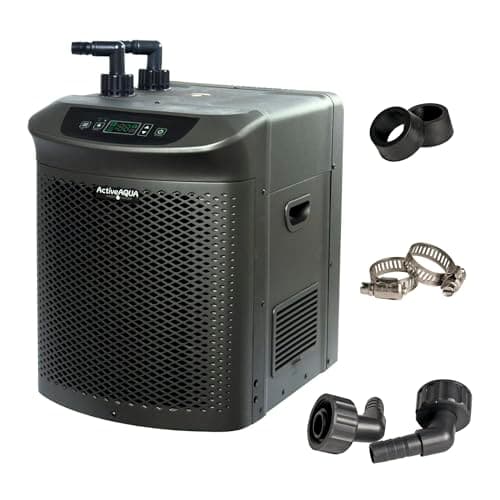
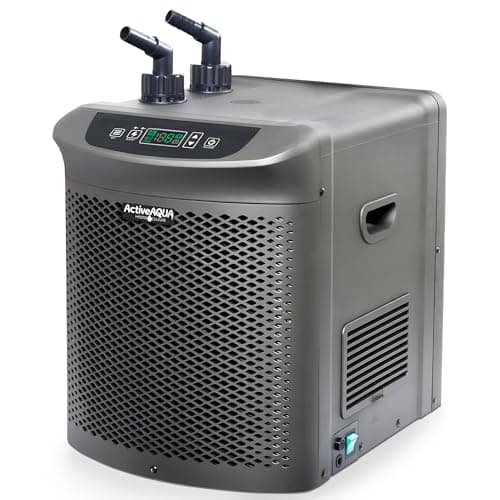
- You are tall, or you want the most water for the money: the AS ColdPlunge XXL 148-gallon oval plus the Active Aqua 0.5 HP with Boost, whose published 90-172 gallon range actually covers that tub. Two orders, still under the ceiling, and a lot more water.
- You already own a chiller-ready tub: the AS ColdPlunge 1/3 HP chiller on its own — pump, filter and insulated hoses in the box, so a retrofit is not a plumbing project.
- You want the chiller to outlive the tub: the Active Aqua 0.25 HP pure titanium, for a tub in the 40-92 gallon band. Budget a circulation pump on top; it is not included.
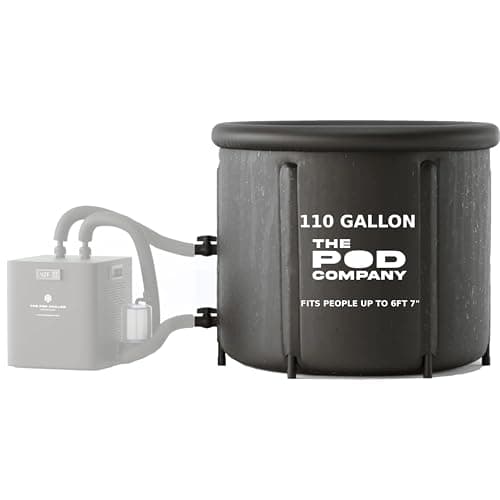
- You are over six feet and plunging on ice: the Pod Company Ice Pod Pro — one of the very few listings in this category that publishes a height rating.
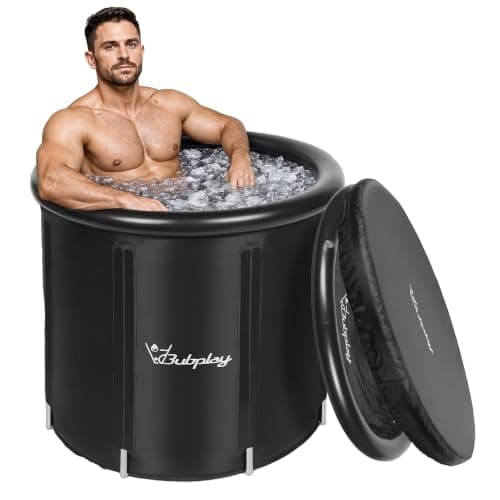
- You do not know yet whether you will keep this up — the budget pick: the Bubplay Ice Bath XL. A covered 105-gallon tub for roughly the price of a sauna hat. Find out, then spend the rest.
- Your budget is higher than this: cold plunge tubs with chillers has the systems above the ceiling, and best cold plunge pools covers pool-scale water.
Already have the tub and the chiller? The cheap parts that decide whether you keep using them are on best cold plunge accessories under $50.
The arithmetic that decides ice versus chiller
This is the only calculation that matters at this budget, and nobody publishes it because the answer depends on you. So here is how to do it yourself in two minutes.
The ice side. Count the bags you buy per session and the sessions you want per week. A 100-gallon tub starting at tap temperature in summer takes a serious amount of ice to reach a plunge temperature, and an uncovered tub takes more the next day. Multiply bags by your local bag price by sessions by 52. That is your annual ice cost, and for anyone plunging three or more times a week it is usually a larger number than they expect — frequently more in one year than a chiller costs once.
The chiller side.A chiller does not run constantly; it cycles to hold a set point. Its cost is its purchase price plus the electricity for the hours it actually runs, and you can bound that: take the unit's rated input power, assume a pessimistic duty cycle, and multiply by your electricity rate from the EIA residential average (or your own bill, which is better). For a fractional-horsepower unit this lands in the range of a household appliance, not a space heater. What makes the difference is insulation and a lid: a covered, insulated tub cycles far less than a bare one.
The honest conclusion. Below roughly two sessions a week, ice wins on money and wins on simplicity. Above roughly three, the chiller usually wins within the first year and wins permanently after that — and it also wins on the thing money does not measure, which is that cold water is simply there when you want it. Our chiller roundup goes deeper on sizing, and cold plunge temperature covers what set point you are actually trying to hold.
What you give up at $1,000
Being clear about this is more useful than pretending the ceiling costs you nothing. Four things are genuinely out of reach at this budget, and one thing that sounds like a compromise is not.
A hard shell. Everything under $1,000 is a fabric or inflatable tub. Those are good — insulated walls, reinforced frames, lids that fit — but they are multi-season gear rather than furniture. A rigid, plumbed, permanent plunge is a different and much larger purchase.
Integrated filtration. At this budget, filtration is either whatever filter the chiller ships with or an add-on. That is worth knowing because water care is the quiet maintenance job on any plunge you do not drain weekly — see best cold plunge water treatment for the chemicals, cartridges and ozone units that handle it for the price of a few bags of ice.
A sub-35F set point. The fractional-horsepower chillers in this bracket publish floors in the high 30s to low 40s. That is a genuine plunge temperature and well inside what the research protocols use, but it is not an ice bath. If you specifically want the mid-30s, you are shopping above this page.
Pool-scale volume with a chiller that keeps up. You can have 200-plus gallons under $1,000, or you can have chilled water under $1,000. Having both at once is where this budget breaks, because the compressor that holds that much water costs more than the ceiling on its own.
And the thing that is not a compromise: capacity. A 100-to-148 gallon tub is plenty for one adult to sit in with shoulders under and legs out. Bigger is nicer to look at and considerably more expensive to cool. Do not pay for volume you will not sit in.
The hidden line items
These are what push a "$1,000 setup" over $1,000, and all four are avoidable if you plan for them.
An outdoor outlet.A chiller needs power where the tub is. If that means a new exterior receptacle, it is an electrician's visit and it is governed by NFPA 70 as adopted locally — outdoor receptacles near water need GFCI protection and a weather-resistant cover. Budget for it before you buy the compressor, not after. Extension cords are not the answer for a permanently sited appliance.
A circulation pump. Two of the chillers on this page do not include one. That is not a flaw — they came out of hydroponics, where you already own a pump — but it is a real line item and the most commonly missed one in this category.
A lid, if the tub ships without one. An uncovered outdoor tub gains heat through its open surface all day, which means more ice or more compressor hours. Our cold plunge covers page separates the fabric covers from the genuinely insulated lids; the cheap canvas one pays for itself in a month on an ice-only tub.
Somewhere for the water to go.A hundred gallons weighs over 800 pounds and has to drain somewhere that is not your foundation or your neighbor's lawn. Work this out before siting, not on the first water change.
Where the plunge fits beside a sauna
Most people reading this already have the hot half, or are buying both. The order matters: heat first, then cold. A sauna works on its own; a plunge next to a sauna is contrast therapy, which is the pairing most of the interesting evidence is about.
On what the cold itself does, be calibrated rather than enthusiastic. The 2026 umbrella review in Sports Medicine - Open pools fifteen systematic reviews on post-exercise cold-water immersion and finds real but context-dependent effects, with timing relative to training mattering a great deal — cold immediately after resistance work is not obviously a good idea. The 2025 PLOS ONE meta-analysis on health and wellbeing outcomes is more modest still. Our cold plunge benefits page walks both in detail, and contrast therapy covers the protocol. If you have not bought the hot half yet, sauna vs cold plunge is the order-of-purchase argument, and sauna and cold plunge combo covers siting the two together.
One practical note that is worth more than any spec on this page: put the lid back on the plunge while you are in the sauna. Fifteen minutes of covered water is the cheapest cold you will ever buy, and on an ice-only setup under $1,000 it is the single habit that makes the third round as cold as the first.