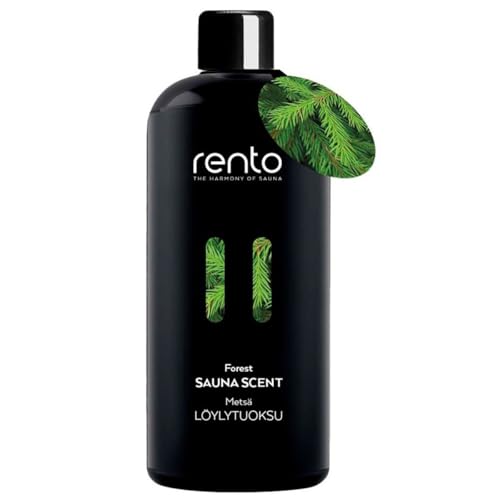
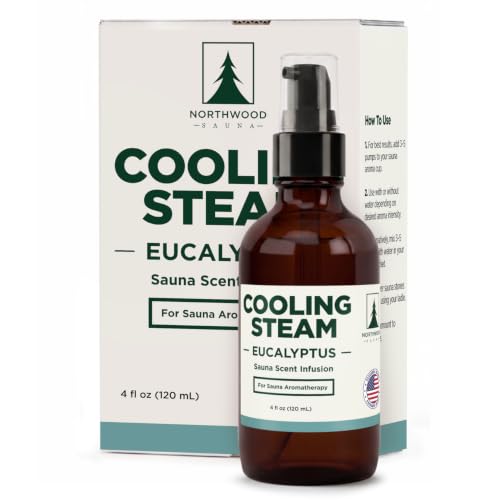
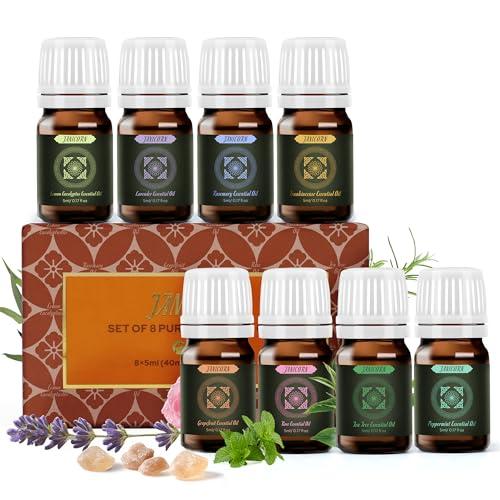
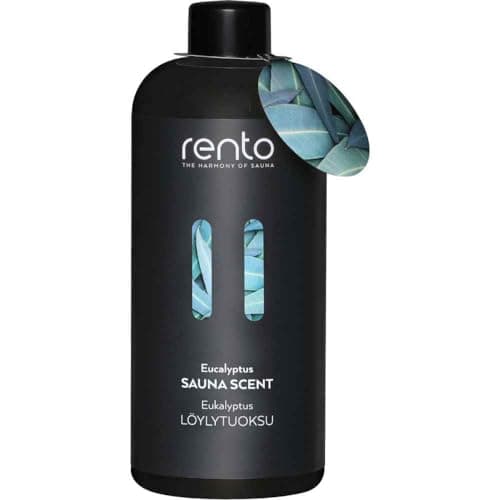
Buy the 400 ml Rento eucalyptus and stop reading. It is a purpose-made Finnish sauna essence, it costs less than most 4 oz bottles, and it holds roughly three times as much liquid — which makes it both the best pick here and the cheapest per session by a wide margin. If eucalyptus is not your scent, the Rento forest blend is the same product in a different bottle. If you have never used scent in a sauna at all, an eight-bottle sampler is the cheapest way to find out which one you want before committing to half a liter of it. And if you own an infrared cabin, almost nothing on this page works the way you want it to — there is no water and no stone, so skip to the last section.
The one rule: never pour oil directly onto hot stones. Neat essential oil on rock at several hundred degrees can flare, and at best it scorches and wastes the oil instead of scenting the room. Scent goes into the water in the bucket, the diluted water goes onto the stones. Every product on this page is used that way.
Sauna essence and essential oil are not the same product
This is the distinction the whole category blurs, and it is the reason people buy the wrong bottle. Search "sauna essential oil" and you will be shown two completely different things at similar prices.
A sauna essence(the Finns call it loyly or saunatuoksu) is a concentrate formulated to be diluted in the water you ladle onto the stones. It is sold in large bottles, typically a few hundred milliliters, because the dose per bucket is tiny and the maker assumes you will use it weekly for a year. Rento is the archetype, and Northwood's "sauna scent" line is the same idea.
A neat essential oilis a small bottle of undiluted plant extract sold for a diffuser, a massage carrier or candle making — with "sauna" added to the keyword list because the search volume is there. It can be used in a sauna, diluted into the bucket like anything else, but the maker has not thought about that use, the listing publishes no dilution guidance, and the cost per session is far higher because you are buying a tenth as much liquid for a similar price.
Neither is dishonest. But they are priced as if they were comparable and they are not, which is why this page ranks on cost per session rather than on the number on the card. Once you do that arithmetic the order changes completely: the smallest bottle on this page currently costs more than the biggest one, and has by far the worst cost per use.
What scent is actually doing in a sauna
Worth being calibrated about, because this is a category where the marketing runs well ahead of the evidence.
What scent reliably does is change the experience of the room. Eucalyptus reads as cooling and opens the airway sensation; birch and forest blends are what a Finnish sauna traditionally smells of; cedarwood reads as the wood the cabin is built from. The Finnish Sauna Society treats scent as part of the ritual rather than as a therapy, and that is the right register.
What the evidence does not support is treating sauna scent as a medical intervention. The US National Center for Complementary and Integrative Health summarizes the aromatherapy research as limited and mostly small-study, with no established clinical benefit for the claims that get attached to these products. So buy scent because the sauna is nicer with it, not because a listing implies it detoxifies anything. Our sauna aromatherapy guide goes further into that, and do saunas help you detox deals with the broader claim.
One genuine caution: a small hot room concentrates whatever is in the air. Strong menthol or eucalyptus vapor can irritate eyes and airways, and it is the wrong thing to spring on someone with asthma. Start with less scent than you think you want — in a sauna, under-dosing is easy to fix and over-dosing means opening the door.
How we ranked them
Criteria first, in weighted order. Everything below is a judgment from documented research — the listings' own published volumes, formats and origins plus aggregated owner reports. We have not had any of these in a lab, and our methodology says so in those words.
- Does the maker expect it in loyly water? A product sold as a sauna essence or a sauna infusion has been formulated for dilution into hot water. A diffuser oil has not. Both can be used, but only one of them has had the thought put in, and that is the heaviest-weighted criterion here.
- What is the cost per session, not per bottle? Published volume is the number that matters. A 400 ml bottle holds roughly three times a 4 fl oz one and more than thirteen times a 1 fl oz one, and scent concentrate keeps — so the big bottle is rarely the expensive choice.
- Is there dosing guidance? A stated dose per bucket, or at minimum a label that addresses sauna use. Listings that publish nothing leave you guessing, and in a product where over-dosing is unpleasant that is a real mark against.
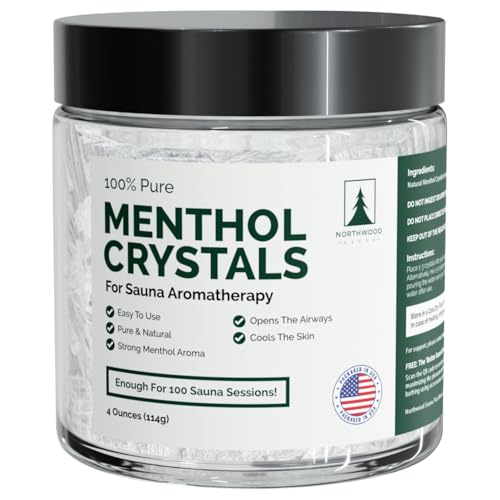
- Does it do something the others do not? Menthol crystals are not a fragrance — they produce a cold sensation on the skin and in the airway that no liquid scent reproduces. A sampler set is not really a scent either; it is research. We ranked those on their own terms.
- Is the format honest about its limits? Every liquid on this page is useless in an infrared cabin, and we would rather say that six times than let someone buy a bucket additive for a sauna with no bucket.
Which one is for you
- Almost everyone with a rock stove — the overall pick: the Rento Sauna Scent, 400 ml eucalyptus, made in Finland. The cheapest sticker here AND the cheapest per session, which is a rare combination and the reason it wins outright.
- You want forest rather than eucalyptus: the Rento Forest Essence, 400 ml. Same format, same volume, woodland scent — the enthusiast's second bottle.
- You want a sauna-specific brand with a matching bucket and thermometer: the Northwood Cooling Steam eucalyptus, 4 fl oz. Sold as a sauna infusion, from a brand whose buckets and thermometers we already rank. Costs considerably more per milliliter than the Rento bottles.
- You want the cold hit, not a smell: Northwood menthol crystals, 4 oz. Dissolves in the bucket and registers as cold in the throat and on the skin. Use far less than you think.
- You have never used scent and want to find your scent: the JANICORN eight-bottle sampler. Eight scents for less than two single bottles. Treat it as research rather than supply — 40 ml total does not last.
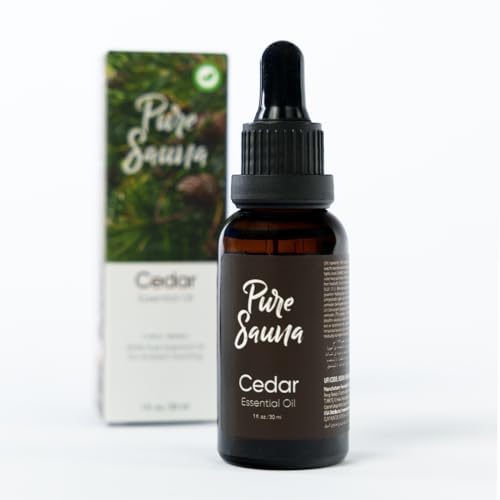
- You want cedarwood and only cedarwood: Pure Sauna cedarwood, 1 fl oz. Honest caveat on the card: it is a diffuser oil with sauna in the keywords, so you are responsible for the dilution.
- You have an infrared cabin:none of the bucket products apply, because there is no bucket. The sampler's small bottles are the only sensible buy — a drop on a towel or in a bowl outside the cabin. Infrared vs traditional explains why.
How to use scent properly, in four steps
The method matters more than the bottle, and it is simple enough to get right the first time.
1. Fill the bucket with warm water, not cold. Warm water mixes the concentrate better and is gentler on hot stones than a ladle of cold. A wooden bucket and ladle is the traditional kit and the right tool; a plastic jug works but will deform eventually in a 190F room.
2. Add a very small amount of scent and stir. A capful in a full bucket is the order of magnitude for a concentrate, and less for menthol crystals. Follow the label on the bottle, and if the label is silent, start with half of what feels reasonable. You can always add more to the next bucket; you cannot take it out of this one.
3. Ladle the diluted water onto the stones, a little at a time. One ladle, wait, feel the loyly rise, then another. Dumping the bucket produces a wall of steam, a soaked heater and a room that then feels flat. Our how to make loyly page covers the rhythm.
4. Never apply anything neat to the stones, and never to your skin in there. Neat oil on rock at that temperature can flare — fire-safety references like the NFPA codes and standards library exist because flammable liquids and very hot surfaces are a known combination, and a sauna is a small wooden room. Undiluted oil on skin in a hot room is also the fastest way to find out you are sensitive to it.
Cost per session, worked out
This is the arithmetic that reorders the page, and it uses nothing but the volumes the listings publish.
A 400 ml bottle holds roughly 3.4 times what a 4 fl oz bottle holds (4 fl oz is about 118 ml), and roughly 13.5 times what a 1 fl oz bottle holds (about 30 ml). The 400 ml Rento eucalyptus is also the lowest sticker price on this page. So against the 4 oz infusion it is cheaper per bottle and holds more than three times as much; against the 1 oz cedarwood it is cheaper per bottle and holds more than thirteen times as much.
We are not going to convert that into a cents-per-session figure, because the dose per bucket is not published consistently across these products and inventing a number would be exactly the kind of fake precision this site exists to avoid. But the direction is not in doubt and it is large: if you use scent regularly, a 400 ml sauna essence is the cheapest way to do it by a wide margin, and the small bottles are for sampling or for an infrared owner who cannot use a bucket at all.
The one place the small bottle genuinely wins is the first purchase. Nobody should buy half a liter of a scent they have never smelled. Buy the sampler, work out whether you are a eucalyptus person or a birch person, then buy the big bottle of that.
Storage, shelf life and the things that go wrong
Scent concentrate keeps for a long time but not forever, and the failure modes are easy to avoid.
Keep it out of the sauna. The worst place to store a bottle of sauna scent is the shelf inside the sauna, which is exactly where everyone puts it. Heat and light degrade essential oils; a cupboard in the house is the right home. Glass bottles beat plastic for the same reason.
Cap it properly. The volatile top notes are the first thing to leave a half-closed bottle, which is why a two-year-old bottle smells flatter than a new one even when nothing is visibly wrong.
Do not pre-mix a bucket and leave it. Diluted scent in standing water in a warm room is a hospitable environment. Mix per session, and tip out what you do not use — the same reason we tell people to dry a wooden bucket rather than leave it full, in how to clean a sauna bucket.
Watch the benches. Oily residue builds up on wood over time and goes dark and sticky. If you use scent every session, it is one more reason to keep up the routine in sauna maintenance and cleaning, and a reason to be sparing rather than generous with the dose.
Scent, humidity and the rest of the loyly kit
Scent is the last thing you add to a sauna, not the first, and it works best when the two things underneath it are already right.
The first is humidity. Loyly is water on stones, and the amount of water you throw changes the room far more than any scent does — our ideal sauna humidity page covers the range and sauna temperature covers the other axis. A dry 190F room with eucalyptus in it is still a dry room.
The second is the stone. Scented water hitting a collapsed basket of dust produces a hiss and not much else, because there is no stored heat to flash it into steam. If your loyly has gone weak, the problem is almost always the rock rather than the scent — best sauna stones is the fix, and how often to replace sauna rocks is how to tell.
With those two right, scent is the cheap finishing touch — a few dollars a year on top of a cabin that cost thousands. The rest of the short list is in loyly accessories and sauna accessories under $50, and if you are still speccing the room, best indoor saunas under $3,000 covers which cabins at that budget can actually take water on stones in the first place.