The best-supported benefits of cold plunging are psychological: lower perceived stress and better mood in the hours after immersion, with the most recent meta-analyses finding real but time-limited effects. Recovery benefits are genuine but conditional — helpful after endurance work and competition, counterproductive straight after lifting. The claims about fat loss, immunity and "boosting" metabolism are the weakest, and the ones the internet repeats most. Below, each claim with the study type behind it, so you can tell which ones are worth building a habit on.
Informational only, not medical advice. Cold-water immersion puts real, sudden stress on the heart and circulation — the gasp reflex alone is a hazard in water. If you have a heart or blood-pressure condition, are pregnant, or are unsure, talk to your doctor before plunging, and never plunge alone. Our
sauna safety guide lists who should be cautious with heat and cold.
How to read the evidence in this category
Cold-water immersion research has a specific shape, and knowing it saves you from most bad advice. The studies are usually small, often in young trained men, rarely blinded — you cannot blind someone to cold water — and almost always measure outcomes in the hours or days after a single session rather than over years. Where sauna research has a famous 20-year Finnish cohort behind it, cold plunging has dozens of short trials pointing in broadly compatible directions.
That is why the 2025 PLOS ONE systematic review and meta-analysis of cold-water immersion on health and wellbeing is the honest starting point: it pools the human trials and finds effects that are real, modest and mostly short-lived, in a literature it describes as heterogeneous. A 2026 Frontiers in Physiology meta-analysis of psychological outcomes reaches the same kind of conclusion from the mental-health side. Neither reads like the headlines about cold plunging, and both are better news than the backlash.
One more framing point. Almost every trial uses water below about 15C (59F) for a few minutes. That is the dose the evidence is about. Colder and longer is not a stronger version of the same thing — it is an untested version with more risk. Our cold plunge temperature guide sets out the ranges actually used.
Benefit 1: Mood and perceived stress — the strongest case
This is the benefit most people actually notice and the one with the best support. Both recent meta-analyses find improvements in mood, perceived stress and quality-of-life measures following cold-water immersion, with effects appearing shortly after immersion and fading over the following hours.
The mechanism is not mysterious. Cold-water immersion triggers a large, abrupt sympathetic response — cold-shock gasp, elevated heart rate, a surge of catecholamines — and the subjective after-effect of surviving that intact is alertness and calm. People describe it as feeling switched on and unbothered. That is a genuine physiological event with a genuine psychological aftermath, and it is repeatable, which is precisely what makes a habit stick.
What the evidence does not support is cold plunging as a treatment for a mood or anxiety disorder. The trials are short, the samples are small, and "improved mood score for a few hours" is not clinical efficacy. Treat it as a reliable good hour, not therapy.
Benefit 2: Recovery — real, but timing is everything
Cold-water immersion reduces soreness and the perception of fatigue after hard exercise. The 2026 umbrella review of 15 systematic reviews supports it as a recovery tool, while being explicit that the application has to be strategic rather than habitual. A 2025 trial in runners found immersion did not change performance or perceived fatigability, but did improve measures of cardiac vagal modulation and cardiorespiratory recovery — which is a fair summary of the whole category: better recovery markers, not better next-day output.
The caveat that matters most, and the one almost no plunge marketing mentions: if you lift, immersion straight after your session appears to work against you. A Journal of Physiology study found cold-water immersion blunted inflammatory and cell-stress signaling in human muscle after resistance exercise compared with active recovery — the same signaling that drives adaptation. And a 2026 meta-analysis of strength recovery describes a measurable short-term strength decrement after immersion.
The practical rule: plunge on rest days, well away from lifting sessions, or after competition and endurance days where recovering fast matters more than adapting maximally. Do not plunge in the hour after a hypertrophy workout — that is the one scenario where the evidence says you are paying for the privilege of a smaller result.
Benefit 3: Inflammation — a mechanism, not a cure
Cold reduces acute inflammatory signaling. That is well established, and it is the same reason you ice a sprained ankle. The leap people make is from "reduces local inflammation after exercise" to "treats chronic inflammatory disease", and nothing in the cold-plunge literature supports that leap.
It cuts both ways, too. Blunting inflammation is useful when inflammation is the problem (a swollen joint, a brutal race) and counterproductive when inflammation is the signal (post-lifting adaptation). For heat-based approaches to joint pain, which have their own small but more disease-specific literature, see our sauna for arthritis and joint pain guide.
Benefit 4: Sleep and resilience — plausible, thin evidence
Plenty of people report sleeping better on days they plunge. The pooled evidence on sleep is thin and inconsistent, mostly self-reported, and tangled up with the exercise that typically precedes immersion. Mechanistically there is a reasonable story — a cold-driven drop in core temperature after the initial response, plus a shift in autonomic balance — and the 2025 running trial's finding on cardiac vagal modulation fits it. But "plausible with thin support" is where it sits.
The related claim, that regular cold exposure builds stress resilience that transfers to the rest of life, is appealing and genuinely under-tested. Repeated cold exposure does blunt the cold-shock response itself — that is habituation, and it is well documented. Whether it makes you calmer in traffic is an extrapolation.
If sleep is your actual goal, the heat side of a contrast setup has the better-studied case. Our sauna for sleep guide covers the evening-heat routine and the timing that matters.
Benefit 5: Metabolism and fat loss — the weakest claim on the list
Cold exposure recruits brown and beige adipose tissue, and reviews of that biology propose it as a therapeutic target for obesity and type 2 diabetes. That is a statement about research direction, not about your Tuesday. The energy cost of a three-minute plunge is small, the trials showing meaningful body-composition change from cold exposure alone are largely absent, and shivering afterward is not a workout.
Nothing here says cold plunging is useless for a metabolic goal. It says the mechanism has been oversold into a weight-loss claim the human data does not carry. The same applies to immune "boosting": the trials on sickness absence are few and confounded, and the most honest answer is that we do not know.
So what should you actually buy?
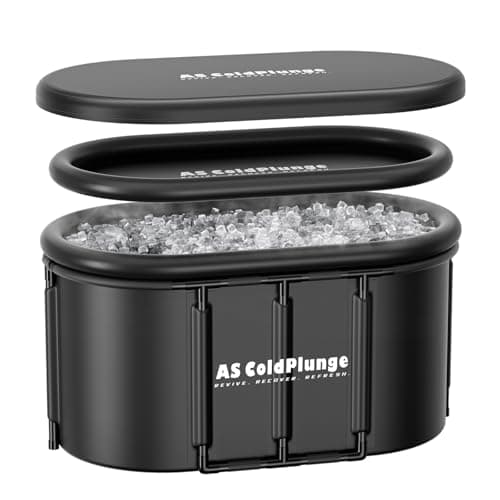
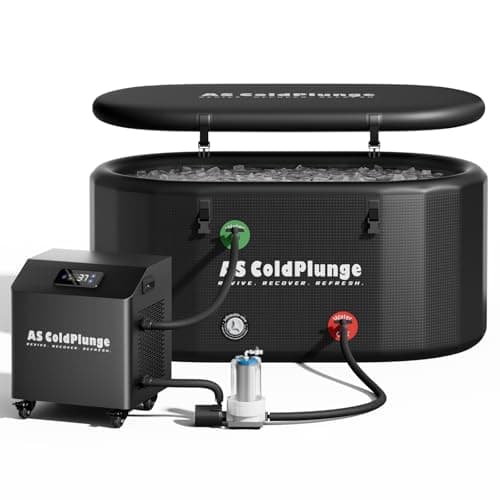
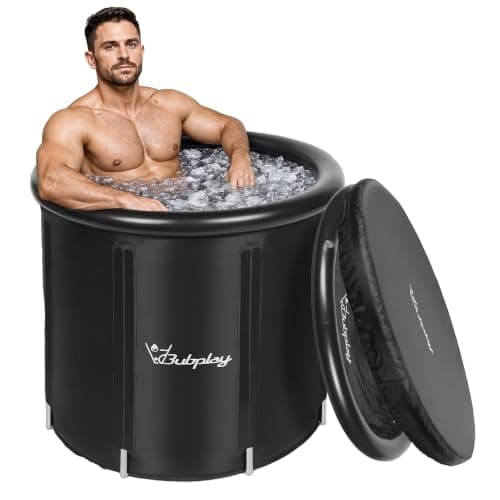
The evidence has a clear buying implication. The benefits with support are the ones you get from plunging consistently at a sane temperature, not from plunging colder, longer, or in a more expensive tub. So the correct first purchase is the cheapest setup that removes your excuses, and the correct upgrade is the one that removes the next excuse — almost always the ice run.
That is why the three picks below are ordered as a ladder rather than a ranking: find out whether you are a person who plunges, then make it frictionless, then make it permanent. The full field is in our cold plunge tub roundup, and the pool-scale chiller setups are in best cold plunge pools.
A protocol that matches the evidence
If the goal is the mood and stress benefit, this is roughly the dose the research uses — and it is less heroic than social media suggests.
- Temperature: below about 15C (59F). The high 50s Fahrenheit is enough for a beginner to get the full response. Colder is not a bonus; it is a risk multiplier.
- Duration: two to five minutes, from a base of 30 to 60 seconds. Get out while it still feels like your decision.
- Frequency: two to four sessions a week is the band most trials sit in. More is not better supported, and if you lift, cadence matters less than placement.
- Placement: away from resistance training. Rest days, mornings, or after endurance work and competition.
- Rewarming: dry off and move. Dress, walk, make coffee. Do not get back into the heat immediately if you feel lightheaded, and never plunge alone.
If you are pairing it with heat, sequence matters and so does safety — our contrast therapy guide walks through hot-to-cold rounds, and our how to cool down after a sauna guide covers the gentler options if a plunge is too much.
Who should be careful, and who should not plunge
Cold-water immersion is a cardiovascular event. The initial cold-shock response raises heart rate and blood pressure sharply and triggers an involuntary gasp — which is why the drowning risk in open water is real and why "never alone" is not boilerplate. If you have a known heart condition, uncontrolled hypertension, a history of arrhythmia, are pregnant, or have a condition affected by cold such as Raynaud's or cold urticaria, this is a conversation with your doctor before a purchase. The same applies to combining cold with alcohol, which our sauna and alcohol guide covers for the heat side and which is a worse idea on the cold side.
Where cold plunging sits next to sauna
It is worth being plain about the asymmetry, because this is a sauna site and we have no interest in pretending otherwise. The heat side of contrast bathing has the stronger long-term evidence: the 2015 JAMA Internal Medicine cohort analysis followed Finnish men for two decades and found sauna frequency associated with lower cardiovascular and all-cause mortality. Nothing on the cold side approaches that study design.
What the cold has is immediacy — the mood effect lands within minutes, every time, which is why plunge habits form fast. That is a real advantage for adherence, and adherence is the mechanism behind every benefit on this page. If you are deciding where to put your money first, we work through it in sauna vs cold plunge, and if you want the heat-side equivalent of this page, read sauna benefits.
Two terminology questions come out of this literature constantly, and both turn out to be questions about water temperature rather than about equipment — cold plunge vs ice bath and cold plunge vs cold shower.