If you have never plunged regularly, buy the Bubplay Ice Bath XL — 105 gallons with a cover, for less than a good sauna hat and bucket set — and find out whether you will actually do it twice a week before you spend more. If you already know you will, skip straight to the AS ColdPlunge XXL Oval, because it is chiller-compatible and you will not have to rebuy the shell when the ice runs get old. The expensive mistake in this category is not buying a cheap tub; it is buying a chiller-and-tub system for a habit that has not formed yet.
Informational only, not medical advice. Cold-water immersion and rapid hot-cold swings put real stress on the heart and circulation. If you have a heart or blood-pressure condition, are pregnant, or are unsure, talk to your doctor before plunging — and never plunge alone. Our
sauna safety guide has the full list of who should be cautious.
What a beginner actually needs
A cold plunge is a container of cold water. That is the entire technology. Everything you pay for above a stock tank is one of four things, and only two of them matter at the start.
- A cover — matters immediately. Not for modesty: for ice economics. Uncovered water beside a sauna warms up and collects leaves; covered between rounds, the same water holds its cold through an entire sauna session. A tub without a lid will cost you more in bagged ice in one summer than the lid is worth.
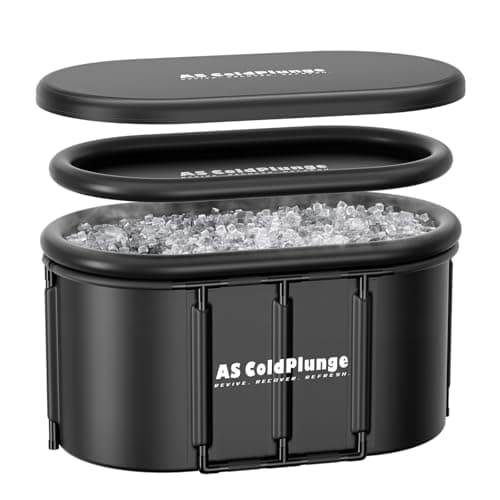
- A shape you can sit in — matters immediately. Two minutes in cold water is tolerable. Two minutes folded like a deckchair is not. Oval tubs let you sit with your legs out; narrow round ones make you tuck.
- Chiller compatibility — matters later, costs now. A chiller ends the ice runs, but it is a few hundred dollars and an outdoor-rated outlet. Buying a chiller-ready tub is cheap insurance; buying the chiller on day one usually is not.
- Insulation and build — matters if it lives outside. UV-resistant fabric and a reinforced frame are what separate a tub that survives a summer beside an outdoor barrel from one that does not.
What you do not need at the start: a chiller, ozone dosing, a filtration loop, or a hard-shell plumbed installation. Those are upgrades for people who plunge four times a week, and our chiller roundup is where to go when you are one of them.
The four, on what a beginner should compare
| Pick | Volume | Cover | Chiller-ready? | Who it is for |
|---|
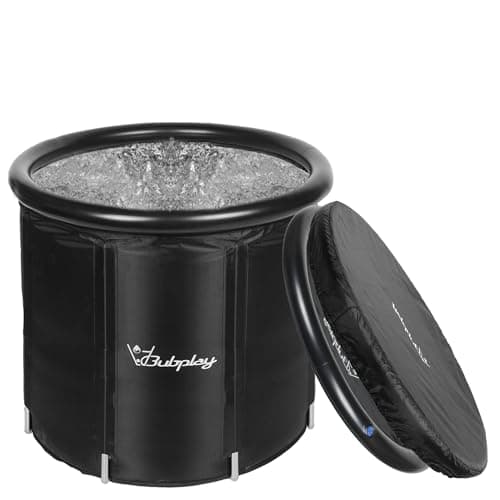
| Bubplay Ice Bath XL | 105 gallons | Included | Not published — treat as ice-only | Finding out whether you like it |
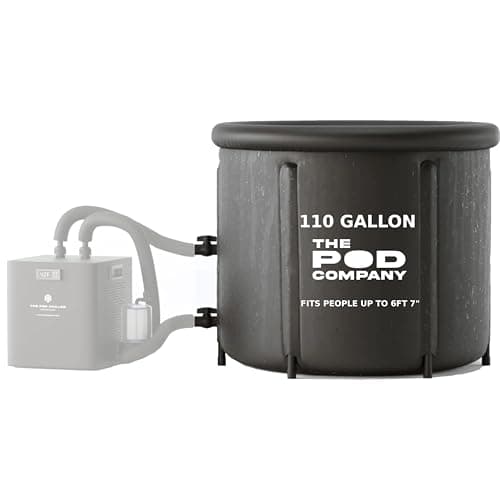
| The Pod Company Ice Pod Pro | 110 gallons (420L) | Insulated | Yes, chiller sold separately | Anyone over six feet, or siting it outdoors |
| AS ColdPlunge XXL Oval | 148 gallons | Insulated lid | Yes | Pairing with a sauna, with an upgrade path |
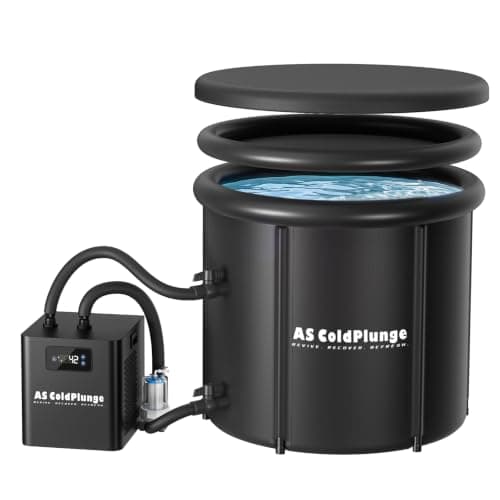
| AS ColdPlunge Chiller + Tub Bundle | 100-gallon tub | Included | Chiller included, pump included | People who already know the habit will stick |
Those are published listing figures rather than measurements of ours — including the Ice Pod Pro's 6ft 7in height rating, which is unusually useful and unusually rare. Our methodology sets out what our scores mean.
The first four weeks, honestly
Beginner advice in this category is usually about temperature and duration. It should be about friction. The three things that stop a new plunge habit are the water being warm when you want it, the water being dirty, and the tub being somewhere annoying. Solve those and the cold takes care of itself.
Site it within a hose length and a few steps of the sauna. Contrast therapy only works as a routine if the cold is where the hot is. A tub at the far end of a garden gets used in July and abandoned in October. Our contrast therapy guide covers the sequencing.
Work out your water change before you fill it. 148 gallons has to go somewhere, and "onto the lawn" is a decision, not an accident. Dual drain hoses, like the Ice Pod Pro's, turn this into a hose job rather than a bucket job.
Start with ice and arithmetic. For the first month, bagged ice in a covered tub is cheaper and simpler than any chiller. Count what you actually spend on ice over four weeks. If it is more than a few dollars a session and you are going three times a week, a chiller pays for itself in a season — and if it is not, you have just saved yourself four hundred dollars. The sizing rule is in our chiller roundup.
Do not plunge alone, and do not chase numbers. The research literature on cold-water immersion mostly studies water below about 15C (59F) for short durations, and recent umbrella-level reviews find the picture more nuanced than the internet suggests — including a measurable short-term strength decrement after immersion, which matters if you lift. Colder and longer is not better. Our cold plunge temperature guide has the detail.
Why the cheapest tub is the number one pick
We rank the Bubplay first knowing it is the least durable thing on the page, because the question a beginner is answering is not "which tub is best?" — it is "am I a person who plunges three times a week?". A large share of people who buy a cold plunge find out the answer is no, and it is far better to discover that having spent the price of a restaurant meal than the price of a chiller system. If the answer turns out to be yes, you will know exactly what you want next, and the tub you outgrow costs less than the mistake you avoided.
The one case for skipping it: if you are over about six feet, buy the Ice Pod Pro instead. Its published 6ft 7in rating is the spec that decides whether a tall person can get their shoulders under, and no price is cheap enough to fix a tub you do not fit in.
And if the plunge is going next to a sauna you already own, the 148-gallon oval is the pick we would make for ourselves: the shape you can actually sit in, the insulated lid that keeps the cold through a full session, and a chiller port for later. Hot-then-cold is the whole reason this page exists on a sauna site — the long-term sauna cohort work is about the heat, and the cold is what makes the habit feel finished.