Skip to content
Sauna & Slate

HUB / GUIDES · Sauna Guides

Sauna vs Cold Plunge: Which to Buy First

The heat has the stronger long-term evidence and the higher price. The cold is cheaper, faster and more immediately addictive. Here is how they compare on the six things that decide the purchase.

By Stephen V.Reviewed How we research

If you can only buy one, buy the sauna. The heat has the stronger long-term evidence, it is the half people are still using in five years, and a plunge beside a sauna is far better than a plunge on its own. If your budget is a few hundred dollars rather than a few thousand, buy the cold first — a covered tub costs less than a weekend away and delivers its effect on day one, while the cheapest honest heat is a sauna blanket. The worst outcome is splitting a small budget across a mediocre version of each.

Informational only, not medical advice. Cold-water immersion puts real, sudden stress on the heart and circulation — the gasp reflex alone is a hazard in water. If you have a heart or blood-pressure condition, are pregnant, or are unsure, talk to your doctor before plunging, and never plunge alone. Our sauna safety guide lists who should be cautious with heat and cold.

The six comparisons that decide it

 SaunaCold plunge
Strength of evidenceStronger: 20-year cohort data on cardiovascular and all-cause mortalityWeaker: many short trials, mostly mood, stress and recovery outcomes
Purchase priceFour figures for a cabin; low hundreds for a blanketLow hundreds for a covered tub; four figures with a chiller
Running costElectricity per session, every sessionIce, or chiller electricity; near zero in winter
Space and installA dedicated footprint; often a dedicated circuitA level pad and a drain plan; an outlet only if chilled
Time per sessionPreheat plus 20-40 minutesTwo to five minutes, no warm-up
AdherenceHigh once installed; the ritual carries itFast to start, easy to drop when logistics bite

Evidence: not close, but not the whole story

On study quality the sauna wins clearly. The 2015 JAMA Internal Medicine analysis followed more than 2,000 Finnish men for around two decades and found sauna frequency associated with lower cardiovascular and all-cause mortality. It is observational, and Finnish sauna culture is not a controlled intervention, but nothing in cold-water immersion research comes close to that design or duration.

The cold side's literature is a pile of short trials. Pooled, it is more encouraging than the backlash suggests: the 2025 PLOS ONE meta-analysis finds real improvements in stress and wellbeing measures, and the 2026 umbrella review supports strategic post-exercise use. But the effects are short-lived, and one of them points the wrong way: immersion straight after lifting looks like a cost rather than a benefit. We grade every claim individually in cold plunge benefits, and the heat-side equivalent is sauna benefits.

Money: the cold is cheaper to buy, the heat is cheaper to keep interesting

A covered plunge tub is the cheapest entry into either practice by a wide margin — less than the cost of a good sauna hat and bucket set, as we point out in the beginner tub picks. A sauna cabin is a four-figure purchase, and the cheapest credible heat is a sauna blanket, which is a real but much narrower experience.

Running costs invert in an interesting way. Every sauna session costs electricity — the arithmetic is in our home sauna running cost guide. A plunge costs nothing at all in a cold climate in winter and costs real money in a hot climate in summer, either in bagged ice or in chiller electricity. Over a year in a hot state the plunge can be the more expensive half to run; in a northern winter it is free.

One trap worth naming: the cold plunge upgrade path is where budgets quietly double. A tub is cheap; a chiller is not; a pool-scale chilled setup lands in sauna-cabin territory, which is the whole subject of our cold plunge pools roundup. Decide up front whether you are buying a tub or building a system.

Space, install and the hassle test

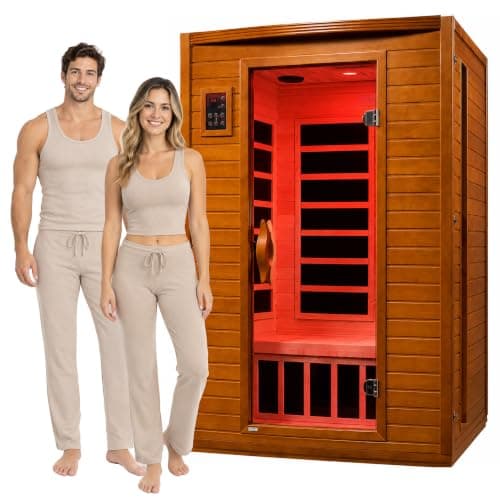
A sauna wants a dedicated footprint and often a dedicated circuit — a 2-person infrared cabin runs on a standard 120V outlet, but traditional heaters usually need hardwiring, which our electrical requirements guide covers. Once it is in, it is in: the install is the whole hassle, and after that you press a button.

A plunge is the opposite shape of problem. Trivial to install, permanently slightly annoying: water changes, ice runs, a cover to lift, somewhere for 150 gallons to drain. That recurring friction is why plunge habits die in autumn and sauna habits do not. If you want the cold to last, solve logistics first — site it beside the heat, within a hose length, with a lid.

Which to buy first, at three budgets

  • A few hundred dollars: buy the cold. A covered tub gets you a real daily practice now. A sauna at this budget means a blanket, which is worth owning but is not a sauna room.
  • One to three thousand: buy the heat. This is cabin money, and the sauna is the half with the long-term evidence and the higher ceiling of enjoyment. Our sauna buying guide narrows the field; add a cheap covered tub alongside it for the contrast rounds.
  • Beyond that: buy both, heat first. Cabin, then tub, then a chiller once you know your cadence. Sequencing it this way means the cold is never the thing you are waiting on.

Whatever order you buy in, the picks below are the four we would actually start from: a 2-person infrared cabin, the cheapest credible heat, the plunge tub designed to sit beside a sauna, and the tub that costs less than finding out the hard way.

The short answer

Quick picks

#SaunaBest forScorePrice
01
Dynamic Saunas Dynamic Andora (2-Person Low EMF FAR)
Dynamic Andora (2-Person Low EMF FAR)

The default 2-person infrared cabin. Low-EMF far-infrared heaters plus built-in red-light therapy, Canadian hemlock, and the widest support network in the category.

Most people buying their first 2-person cabin
7.8
$2,099.99Amazon
02
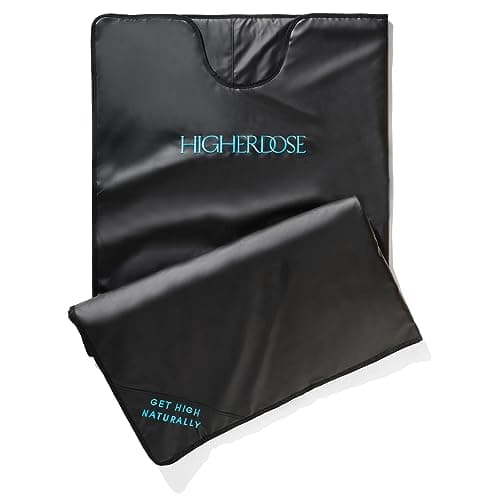
HigherDOSE HigherDOSE Infrared Sauna Blanket (Low EMF)
HigherDOSE Infrared Sauna Blanket (Low EMF)

The premium blanket, and the one you can actually buy on Amazon. Low-EMF far-infrared, well-made, and the anchor of the whole category.

The best sauna blanket
7.6
$699.00Amazon
03
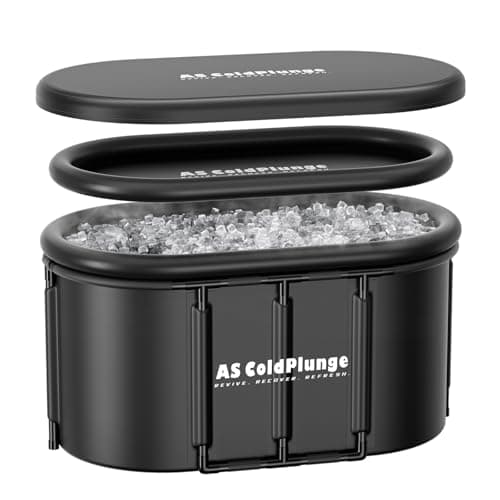
AS ColdPlunge AS ColdPlunge XXL Oval (148 Gal, Insulated Lid)
AS ColdPlunge XXL Oval (148 Gal, Insulated Lid)

The tub to put next to a sauna. An oval 148-gallon shell with an insulated lid and a reinforced frame, and it takes a chiller later if hauling ice gets old.

The best plunge to pair with a sauna
8.2
$99.99Amazon
04
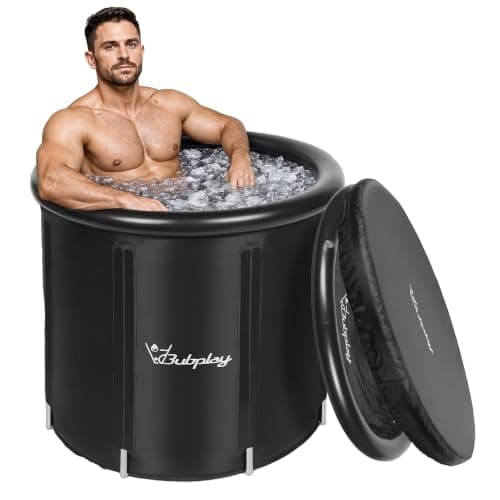
Bubplay Bubplay Ice Bath XL (105 Gal, with Cover)
Bubplay Ice Bath XL (105 Gal, with Cover)

The cheapest honest way to find out whether you actually like contrast therapy — 105 gallons and a cover, for less than a good sauna hat and bucket set.

Trying contrast therapy cheaply
7.4
$70.99Amazon

#ad · Live prices from the Amazon Creators API, as of October 21, 2026. Where we have no verified live price, we show none — we would rather leave a gap than print a number that has rotted.

In detail

The picks, in full

01
Dynamic Saunas Dynamic Andora (2-Person Low EMF FAR)

Most people buying their first 2-person cabin

Dynamic Andora (2-Person Low EMF FAR)

2-personFar infraredRed-light therapyLow EMF (rated)120V outlet
7.8/10

The default 2-person infrared cabin. Low-EMF far-infrared heaters plus built-in red-light therapy, Canadian hemlock, and the widest support network in the category.

Capacity
8
Heat & comfort
8
Low-EMF
8
Build & wood
7
Value
8

Pros

  • Runs on a standard 120V household outlet — no electrician, no dedicated circuit
  • Dynamic/Golden Designs is the largest mid-market brand, so parts, manuals and third-party reviews are everywhere
  • Carbon far-infrared panels rated low-EMF, plus red-light therapy LEDs built in

Cons

  • The heaters are far-infrared, not full-spectrum — no near- or mid-infrared HEAT like the pricier Maxxus models
  • Hemlock is the budget-to-mid wood; it lacks cedar's natural aroma and rot resistance

Don't buy this if…

…you want full-spectrum infrared HEAT (near, mid and far). The Andora's heating is far-infrared with red-light LEDs — step up to the full-spectrum Maxxus if near-infrared heat is the point.

$2,099.99View on Amazon

$2,399.9913% off

Price as of October 21, 2026. Prices change — Amazon's is the one that counts.

#ad · we may earn a commission from this link to Dynamic Andora (2-Person Low EMF FAR)

02
HigherDOSE HigherDOSE Infrared Sauna Blanket (Low EMF)

The best sauna blanket

HigherDOSE Infrared Sauna Blanket (Low EMF)

Full-body blanketFar infraredLow EMF (rated)Up to ~158F120V outlet
7.6/10

The premium blanket, and the one you can actually buy on Amazon. Low-EMF far-infrared, well-made, and the anchor of the whole category.

Heat
8
Low-EMF
8
Comfort
8
Ease of use
8
Value
6

Pros

  • HigherDOSE is the category benchmark and — unusually for the brand — the blanket is sold on Amazon even though its cabins are not
  • Low-EMF far-infrared with a clear temperature range and a proper controller
  • Lie-inside design heats the whole body, head excluded, in a compact rollout

Cons

  • The most expensive blanket by a distance
  • You lie still inside it — some people find that more confining than a tent

Don't buy this if…

…you're claustrophobic or want to move around. A blanket wraps you in place — a tent or cabin lets you sit up and shift.

$699.00View on Amazon

Price as of October 21, 2026. Prices change — Amazon's is the one that counts.

#ad · we may earn a commission from this link to HigherDOSE Infrared Sauna Blanket (Low EMF)

03
AS ColdPlunge AS ColdPlunge XXL Oval (148 Gal, Insulated Lid)

The best plunge to pair with a sauna

AS ColdPlunge XXL Oval (148 Gal, Insulated Lid)

148 gallonsOval shapeInsulated lidReinforced frameChiller compatible
8.2/10

The tub to put next to a sauna. An oval 148-gallon shell with an insulated lid and a reinforced frame, and it takes a chiller later if hauling ice gets old.

Size & fit
9
Cold performance
8
Setup & install
8
Build & durability
7
Value
9

Pros

  • Oval rather than round, so you sit with your legs out instead of folded — the shape most people can actually stay in for two minutes
  • The insulated lid is the part that decides your ice bill: covered between rounds, the water holds its cold through a whole sauna session
  • Chiller-compatible, so the same tub runs on bagged ice now and on a chiller later without rebuying the shell

Cons

  • 148 gallons is a lot of water to change — work out where it drains before you decide where it sits
  • Inflatable walls are a consumable next to a hard-shell plunge; treat it as multi-season gear, not a permanent fixture

Don't buy this if…

…you want a permanent, plumbed, hard-shell plunge. This is portable gear that packs down — a fixed installation is a different and far more expensive purchase.

$99.99View on Amazon

Price as of October 21, 2026. Prices change — Amazon's is the one that counts.

#ad · we may earn a commission from this link to AS ColdPlunge XXL Oval (148 Gal, Insulated Lid)

04
Bubplay Bubplay Ice Bath XL (105 Gal, with Cover)

Trying contrast therapy cheaply

Bubplay Ice Bath XL (105 Gal, with Cover)

105 gallonsCover includedIndoor or outdoorPacks down flatIce-only
7.4/10

The cheapest honest way to find out whether you actually like contrast therapy — 105 gallons and a cover, for less than a good sauna hat and bucket set.

Size & fit
7
Cold performance
6
Setup & install
9
Build & durability
6
Value
9

Pros

  • Low enough in price that a whole season of plunging costs less than a couple of recovery-studio visits
  • Comes with a cover, so it isn't sitting open to leaves and rain between sessions beside an outdoor sauna
  • Packs down flat, which makes it the sensible choice if you rent or aren't sure where the tub will end up living

Cons

  • The listing publishes no chiller compatibility, so treat it as an ice-only tub and budget for bags in warm weather
  • Basic construction; it's a starter tub, not the one you'll still be using in five years

Don't buy this if…

…you already know you'll plunge several times a week. Start with a chiller-compatible tub instead and you won't buy twice.

$70.99View on Amazon

Price as of October 21, 2026. Prices change — Amazon's is the one that counts.

#ad · we may earn a commission from this link to Bubplay Ice Bath XL (105 Gal, with Cover)

Why the answer is usually "both, in this order"

Contrast bathing — hot, then cold, repeated — is the practice both halves exist to serve, and it is also the reason the sequence matters for your wallet. The heat is what you will do for 30 minutes several times a week for years. The cold is a two-minute punctuation mark that makes the session feel finished. Buy the thing you will spend the time in first, then make the punctuation possible.

Our contrast therapy guide has the round structure, and the short version is: heat until you are properly hot, cold for long enough to reset, rest until you feel normal, repeat two or three times, finish warm and dry. You do not need a chiller for that. You need cold water within sight of the sauna door.

The cases where the cold really should come first

Three honest exceptions to "heat first":

  • You rent, or you are moving. A tub packs down into a bag. A sauna does not, and an infrared cabin is a two-person lift and a reassembly job.
  • Your goal is specifically post-competition recovery. That is the use case the immersion literature supports most directly, and a sauna is not a substitute for it.
  • Heat is contraindicated for you and cold is not, or the reverse. Both stress the cardiovascular system in different directions. This is a doctor conversation, not a budget one — our sauna safety guide lists who should be cautious with heat, and pregnancy, arrhythmia, uncontrolled hypertension and cold-sensitive conditions all change the answer.

What not to do

Do not split a small budget evenly. A cheap sauna plus a cheap plunge usually means a blanket you tolerate and a tub you drain. One good half beats two disappointing ones, and you can always add later.

Do not buy a chiller on day one. Bagged ice for the first month tells you your real cadence, and at two sessions a week a chiller is an appliance you do not need. Our chiller roundup has the break-even reasoning.

Do not plunge immediately after lifting, and do not plunge alone. The first costs you adaptation; the second is the one that actually hurts people. The gasp reflex is involuntary, and cold water is where it matters.

Do not site the cold away from the heat. It is the most common and most expensive mistake in this whole category, and it costs nothing to avoid at planning time.

If it is the cold half you are weighing up, the cheaper comparison is worth reading first: cold plunge vs cold shower explains how much of the dose a tap can actually deliver.
How we picked

We do not run a testing lab

We researched published manufacturer specifications, listing data and aggregated owner reviews, then scored each product against a published rubric. The scores are judgments from documented research — they are not measurements we took, because we don't have a lab and we're not going to pretend we do. Prices come live from the Amazon Creators API; where a spec came from a manufacturer we say so and link it in Sources.

Questions

Frequently asked

Is a sauna or a cold plunge better?
For long-term health evidence, the sauna — a 20-year Finnish cohort analysis in JAMA Internal Medicine associated frequent sauna use with lower cardiovascular and all-cause mortality, and cold-water immersion has no comparable study. For an immediate mood and alertness effect, the cold wins: it lands within minutes of every session. They are complements, not competitors, and the traditional practice uses both.
Should I buy a sauna or a cold plunge first?
Buy the sauna first if your budget reaches a cabin, because the heat is the half with the stronger evidence and the half you will still be using in five years. Buy the cold first if your budget is a few hundred dollars, because a covered tub gives you a real practice today while a sauna at that price is a blanket. Do not split a small budget across weak versions of both.
Which is cheaper to run, a sauna or a cold plunge?
It depends on your climate. A sauna costs electricity every session, all year. A plunge is close to free in a northern winter and genuinely expensive in a hot summer — either in bagged ice or in chiller electricity. Over a full year in a hot state the plunge can be the costlier half to run, and in a cold one it is the cheaper by a wide margin.
Do you need both a sauna and a cold plunge for contrast therapy?
You need hot and cold, not specifically a cabin and a chilled tub. A sauna plus a cold shower is real contrast bathing, and it is where most people should start. A plunge tub makes the cold half longer, colder and more controllable, which is worth money once the habit exists — but it is an upgrade, not a prerequisite.
Is it better to cold plunge before or after a sauna?
After. Heat first, then cold, then rest — that is the traditional sequence and the one that feels like a session rather than a shock. Going cold first mostly makes the heat harder to tolerate. Our contrast therapy guide has the round structure, including how long to rest between rounds and why you should finish warm and dry.
Can you put a cold plunge next to an outdoor sauna?
That is the ideal setup, and distance is the thing to get right. Site the tub within a hose length of the sauna door, on firm level ground, with a lid and a plan for where the water drains. A plunge more than a few steps away gets used in summer and abandoned in winter, which is the failure mode behind most unused tubs.

Keep reading

More in Sauna Guides

All sauna guides →

Receipts

Sources

We do not run a testing lab, and we do not pretend to. Product specs are transcribed from the manufacturer's own listing and cited as claims; health figures come from peer-reviewed studies, named and linked. Where we could not verify something, we say so on the page rather than quietly leaving it out. Read our full method.