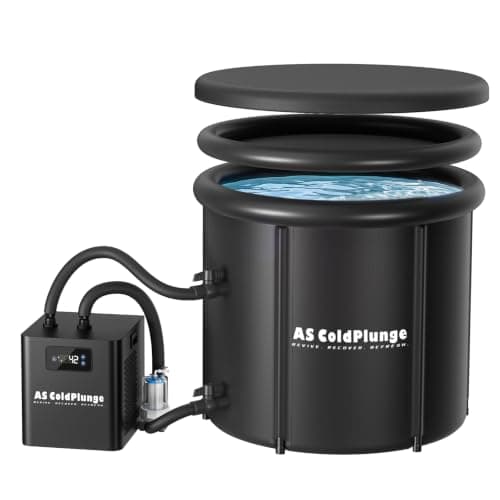
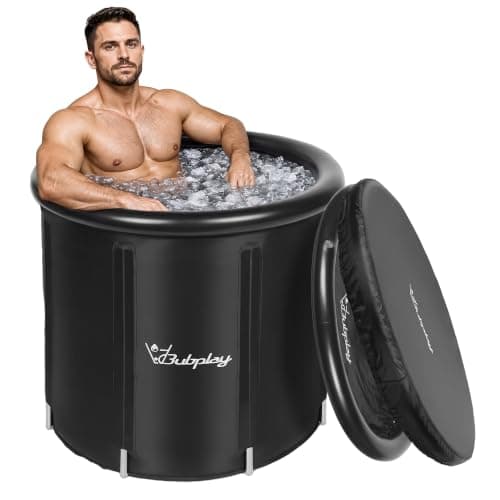
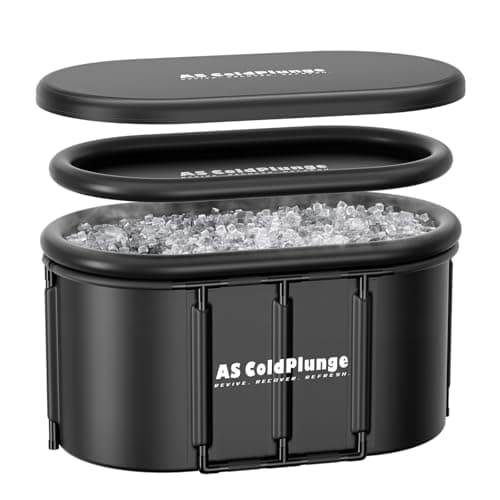
Buy the AS ColdPlunge 148-gallon oval if you want one tub that works next to a sauna and takes a chiller later, the chiller-and-tub bundle if you already know you'll plunge more than twice a week, and the Bubplay if you just want to find out whether you like it. Those three cover almost everyone pairing a plunge with a home sauna. This is the cold half of the setup — for the protocol, the rounds and the safety rules, read sauna and cold plunge contrast therapy first. If you have never plunged regularly, our beginner picks start cheaper and map the upgrade path; if you would rather build than buy, read DIY cold plunge before you order a stock tank.
Informational only, not medical advice. Cold-water immersion and rapid hot-cold swings put real stress on the heart and circulation. If you have a heart or blood-pressure condition, are pregnant, or are unsure, talk to your doctor before plunging — and never plunge alone. Our
sauna safety guide has the full list of who should be cautious.
Where we stand on the evidence
We'll say this plainly, because most pages selling plunge tubs won't. The sauna half of contrast therapy rests on solid observational ground — a 20-year Finnish cohort in JAMA Internal Medicine linked frequent sauna bathing with substantially lower all-cause mortality versus once-weekly use. The cold plunge half is a much newer and much thinner literature, and the combined hot-cold practice thinner still. Buy a plunge tub because you enjoy the ritual and because the sauna it's paired with is well-supported — not because a headline promised a specific outcome. We're not going to attach a number to the cold side, because there isn't a reliable one to cite.
What actually matters in a plunge tub
Once you strip out the marketing, four things decide whether a tub gets used past month two:
- An insulated lid. This is the spec that quietly decides your ice bill. Covered between rounds, a tub holds its cold through a whole sauna session; open to a warm afternoon, it doesn't. If a listing doesn't mention insulation, assume there isn't any.
- Chiller compatibility. Even if you start on bagged ice, buying a tub that can take a chiller later means you don't rebuy the shell when you get tired of the supermarket run.
- Shape, not just gallons. An oval lets you sit with your legs out; a narrow round barrel makes you fold up. Volume is the headline number, but the footprint is what you feel at 4 °C.
- How you drain it. A hundred-plus gallons has to go somewhere every time you change the water. Dual drain hoses turn that into a hose job; no drain at all turns it into a bucket job.
Ice or a chiller? Do this arithmetic first
This is the real fork, and it's a frequency question rather than a budget one. A tub on bagged ice has essentially no running cost but a real per-session cost and a real errand: in warm weather you're buying multiple bags each time to bring 100-150 gallons down to plunge temperature, and you're doing it before every session. A chiller flips that — a four-figure-adjacent upfront cost, then the water is simply cold whenever you want it, and the electricity is modest (a fractional-horsepower compressor cycling, priced at your local EIA residential rate).
The honest rule of thumb: plunging once or twice a week, ice wins— the tub is cheap, there's nothing to maintain, and the ice cost stays small. Three or more sessions a week, and the chiller pays for itself in ice you don't buy and, more importantly, in sessions you don't skip because you couldn't face the errand. Almost nobody abandons a plunge habit because the water was too cold; plenty abandon it because starting each session took a trip to the shop.
Siting it next to the sauna
Contrast bathing works best when the two are close enough that you go straight from one to the other — a walk across a cold lawn in a towel is a barrier at exactly the moment you need momentum. If you have an outdoor barrel, the natural layout is the plunge within a few steps of the door, on the same firm, level ground, with the sauna's bench and the tub's lid both reachable without crossing grass. Three practical constraints:
- Level ground and a load path. 150 gallons of water is over 1,200 pounds. That is fine on a slab, pavers or compacted gravel; it is not fine on a soft lawn or an undersized deck. The base thinking is the same as for the sauna itself in barrel sauna foundation.
- Somewhere for the water to go. Point the drain away from the sauna's base and away from the house. Repeatedly dumping a hundred gallons next to a timber structure is how you rot a cradle.
- Power, if you're chilling. A chiller needs its own outdoor-rated outlet within reach. If an electrician is already running the sauna's 240V circuit, that's the moment to add it — which is why it's on the barrel sauna buying checklist.
The picks, in short
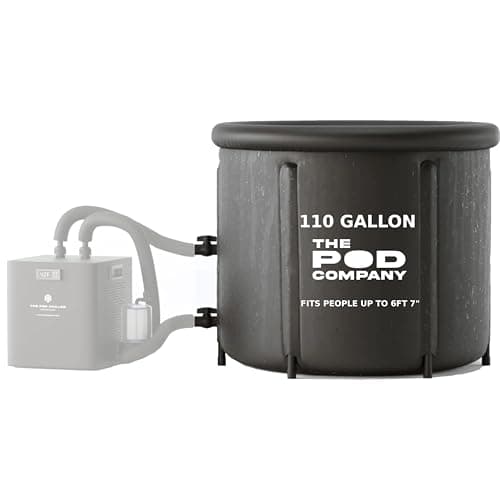
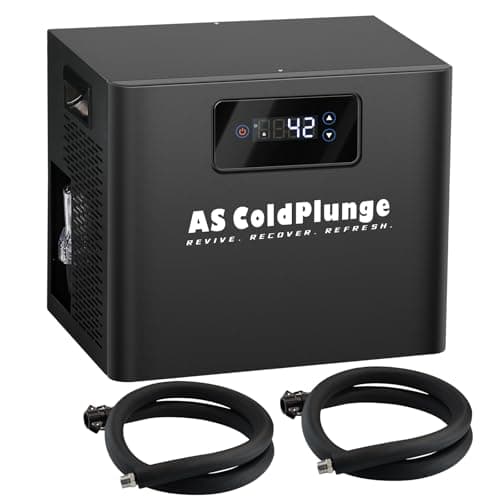
The AS ColdPlunge XXL Oval is the default: 148 gallons, an insulated lid, a reinforced frame and chiller compatibility, in an oval you can actually sit in. The chiller-and-tub bundle from the same brand is the upgrade for a real habit — matched fittings, cold on demand, no ice runs. The Pod Company Ice Pod Pro is the one to buy if you're tall: it publishes a 6 ft 7 in rating, which almost no other listing does, and its UV-resistant nylon suits a tub that lives outside. The Bubplay XL is the cheap way to test the ritual before committing. And the AS ColdPlunge 1/3 HP chiller is the retrofit if you already own a chiller-compatible tub and only want to be rid of the ice.
How to choose a cold plunge to pair with a sauna
Size it to the person, not the spec sheet
Gallons tell you how much water you're cooling; they don't tell you whether you fit. A tall bather in a short tub sits with knees under the chin, which is unpleasant enough to end the habit. Look for a published height rating where one exists, prefer an oval over a narrow round tub if you want to extend your legs, and remember that a bigger tub is more water to cool — every extra gallon is more ice or more chiller runtime. For most single-household setups, 100-150 gallons is the sweet spot. Above that you are shopping a different category: the pool-scale setups with chillers and filtration loops we rank in best cold plunge pools.
Insulation is the cheapest performance you can buy
An insulated lid and insulated walls do more for real-world cold retention than a bigger chiller does. Between sauna rounds the tub sits idle for ten or fifteen minutes at a time, and that's exactly when an uncovered tub gives its cold back to the air. If you buy nothing else on this list, buy the version with the lid.
Plan the water, not just the tub
Water gets changed — how often depends on use, temperature and whether you're treating or filtering it. Work out before you buy where 100-150 gallons will drain to, whether you can refill from a nearby tap, and where the tub will sit so both are easy. Setups that need a bucket brigade get abandoned. A cold tub in winter also needs a plan: either keep it running, or drain and store it, because a full tub left to freeze solid can split the shell.
Order of purchase
Buy the sauna first. It's the anchor of the ritual, it's the half with the stronger evidence behind it, and it's the far bigger install job — the plunge can be added the following week for a fraction of the price. If you're still choosing the hot half, start at best barrel saunas for an outdoor barrel or best infrared saunas for an indoor cabin, then come back for the cold.
What we're not claiming
We don't own these tubs, we haven't measured how fast any of them lose heat, and we won't write "in our testing." The specs above are what the manufacturers publish — volumes, insulation claims, chiller compatibility, height ratings — compiled and scored against our published rubric. Where a listing doesn't state something, we say so rather than filling the gap.
Two follow-on decisions sit on top of this ranking. Whether to buy the cold along with the vessel is covered in best cold plunge tubs with chillers; how to site a tub next to a hot room, and which sauna to pair it with, is sauna and cold plunge combo for home.