Skip to content
Sauna & Slate

HUB / ACCESSORIES · Sauna Accessories

The Best Cold Plunge Water Treatment

Cold slows biology down. It does not stop it. Eight picks sorted into the four jobs water care actually involves — dose, filter, oxidize, test — so you buy the one your tub is missing.

By Stephen V.Reviewed How we research
#ad

We earn a commission when you buy through our Amazon links, at no extra cost to you. It never affects our rankings, and we say so when the cheaper product is the better buy. How this works.

If your plunge water is going cloudy and you want one thing to buy, buy a bottle of 3-in-1 cold-plunge treatment and dose it weekly. The AquaDoc 32 oz is the one we would pick; the Durabasics 32 oz does the same job for less. If the water is going cloudy because there is visible debris in it, chemistry is the wrong answer and a 20-micron cartridge is the right one. And if you are plunging four or more times a week in a tub that circulates, an ozone injector replaces the weekly bottle entirely. Those are the three real answers; the rest of this page is about which one your tub actually needs.

Informational only, not medical advice. Cold-water immersion and rapid hot-cold swings put real stress on the heart and circulation. If you have a heart or blood-pressure condition, are pregnant, or are unsure, talk to your doctor before plunging — and never plunge alone. Our sauna safety guide has the full list of who should be cautious.

What actually goes wrong in plunge water

A cold plunge is the only piece of home water equipment people routinely run with no treatment at all, and the reason is a reasonable-sounding mistake: cold water does not grow things, so why bother?

Cold slows biological activity considerably. It does not stop it, and more importantly it does nothing about the thing that actually degrades plunge water, which is organic load. Every session puts skin cells, sweat, body oils, sunscreen and hair into the tub. None of that is removed by being cold. It accumulates, it feeds whatever is in the water already, and it is what you are looking at when the water goes from clear to hazy over a fortnight. A plunge gets a far higher bather load per gallon than a swimming pool does — one adult in 100 gallons, several times a week, is a concentration a pool would never run at.

Two more things make a plunge harder than it looks. It usually lives outdoors, so it also collects leaves, pollen, dust and rain. And it often has no circulation at all: a still tub stratifies, so whatever you add to it sits where you poured it. The CDC's Healthy Swimming guidance is written for pools and hot tubs rather than plunges, but its central principle carries exactly: contamination control is mostly about keeping things out and removing what gets in, not about dosing harder after the fact.

The practical consequence is that there are four jobs here, not one, and they are not interchangeable. Dissolved organics come out chemically or by oxidation. Suspended solids come out mechanically. And whether any of it is working is a question only a test strip answers.

The four jobs, and what does each

  1. Dose — a weekly chemical treatment. A clarifier-plus-treatment bottle, one ounce or so a week into the tub. This is the baseline almost every plunge owner needs, it costs about a dollar a week, and it is what extends the interval between water changes from days to weeks. Start here.
  2. Filter — a cartridge in a circulating loop. A 20-micron pleated cartridge pulls out the physical material: skin, hair, grit, biofilm flakes. Chemistry cannot do this and no amount of dosing substitutes for it. Needs water to be moving, which means a pump.
  3. Oxidize — ozone. Ozone attacks the organic load continuously and then reverts to oxygen, leaving no residue to accumulate. It is the closest thing to set-and-forget water care and the right upgrade for a high-cadence plunge. Two very different kinds exist — venturi-injected for plumbed tubs, air-stone for unplumbed ones — and buying the wrong one is the most common mistake in this category.
  4. Test — strips.Cheapest item here and the only one that tells you whether the other three are doing anything. pH is the pad that matters most: out-of-range water is harsher on skin and eyes, and harder on a chiller's wetted parts, than correctly balanced water.

If you only ever buy two of the four, buy a weekly bottle and a packet of strips. If you have a chiller, you already have circulation, so add the cartridge kit — that is the single biggest improvement available to a chilled tub.

How we ranked them

Criteria first, and the first criterion disqualifies most of what this category sells. Everything below is a judgment from documented research — the listings' own published claims, dose rates and ratings, plus aggregated owner reports. We have not run a water panel on any of these, and our methodology says so in those words.

  1. Is it actually meant for a cold plunge?A large share of what ranks for this query is pool or hot-tub product with the words "cold plunge" added to the title. Spa chemistry is designed for 100F water with a sanitizer residual; a plunge is cold, usually unchlorinated, and often uncirculated. We favored products whose listings are written for a plunge, and we say where a pick is really a pool product doing a plunge job.
  2. Does it publish a dose rate? This is the single most useful fact a treatment listing can give you, because it is what converts a bottle price into a cost per week. Exactly one of the three bottles here states it, and that is reflected in its score.
  3. What does it require that is not in the box? A filter needs a pump. A venturi-injected ozonator needs a venturi, which is a separate order. We scored setup difficulty on the full requirement, not on the item.
  4. What is the running cost? Chemistry is a consumable you rebuy; cartridges are semi-consumable and rinseable; ozone is almost free to run but needs a pump running with it. A circulation pump is a small continuous electricity cost, which you can size against your own rate from the EIA residential average.
  5. Is the claim checkable?"Keeps water fresh" is not a specification. A stated ounce-per-week dose, a micron rating, a milligram-per-hour ozone output and a named pad on a test strip are. We marked down vagueness and said so on the card rather than quietly ranking it lower.

Which one is for you

  • You have a plunge and you have bought nothing — start here: the AquaDoc 32 oz weekly treatment plus the AquaDoc 7-in-1 strips. Two items, a season of water care, less than the cost of a single week of bagged ice.
  • You want the same thing cheaper — the budget pick: the Durabasics 3in1 32 oz. Lowest cost per ounce of any plunge-specific bottle here. It does not publish a dose rate, which is the trade.
  • You want the cost per week in writing: the Ouster 3in1 32 oz, at a stated one ounce a week — roughly 32 doses in the bottle, so you can do the arithmetic before you order.
  • You run a chiller and the water still looks dirty: the BAOSHISHAN 20-micron cartridge kit. Your chiller already moves the water; this is what strains it.
  • Your tub has no circulation at all: the BAOSHISHAN 317 GPH pump and filter kit. Circulation is the step that makes everything else on this page work properly.
  • You plunge most days and want to stop dosing — plumbed tub: the Ambohr SPA-124 ozonator. Order the 3/4-inch venturi at the same time; it is not in the box.
  • Same, but your tub is inflatable and has no plumbing: the Lamudo 2-way ozonator with timer, which diffuses through air stones you simply drop in.
  • You do not own a plunge yet: start at best cold plunge tubs under $1,000 or best cold plunge tubs, and budget water care as a line item from day one rather than discovering it in week three.

Chemistry is only half of water care. For the hardware half — pumps, cartridges and the chillers that ship with filtration — see best cold plunge chillers with filters.

The short answer

Quick picks

#SaunaBest forScorePrice
01
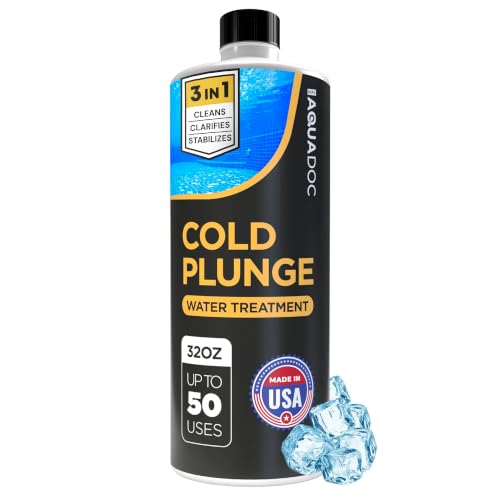
AquaDoc AquaDoc Cold Plunge Water Treatment (32 oz)
AquaDoc Cold Plunge Water Treatment (32 oz)

The default weekly bottle. A 3-in-1 cold-plunge formula in the size you actually get through, from the brand with the deepest spa-chemistry line on Amazon — and the only pick here that says where it is made.

Almost everyone with a plunge they do not drain weekly
8.6
$20.39Amazon
02
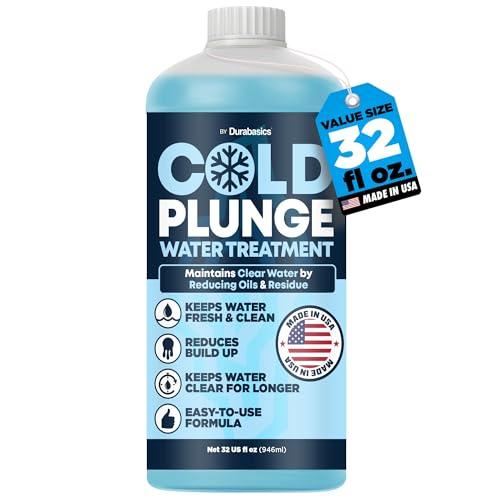
Durabasics Durabasics 3in1 Cold Plunge Water Treatment (32 oz)
Durabasics 3in1 Cold Plunge Water Treatment (32 oz)

The cheapest 32 oz bottle of plunge treatment from a named brand that we can find. Same job as the AquaDoc, less money, and a 64 oz size exists if you run a big tub.

The lowest spend on water care that still works
7.4
$18.69Amazon
03
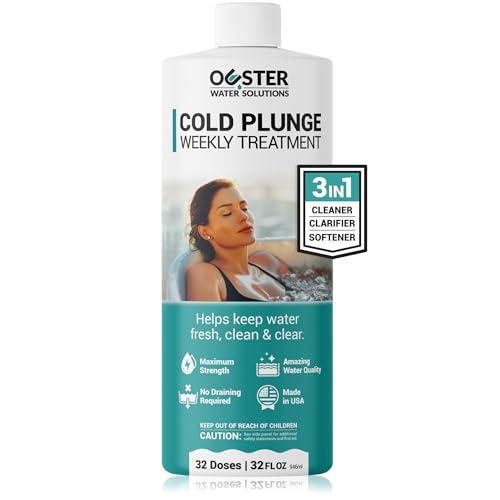
Ouster Ouster 3in1 Cold Plunge Water Treatment (32 oz)
Ouster 3in1 Cold Plunge Water Treatment (32 oz)

The one that publishes its dose. One ounce a week, 32 ounces in the bottle — so you can do the arithmetic before you buy instead of guessing how long it lasts.

Anyone who wants the cost per week in writing
7.6
$21.58Amazon
04
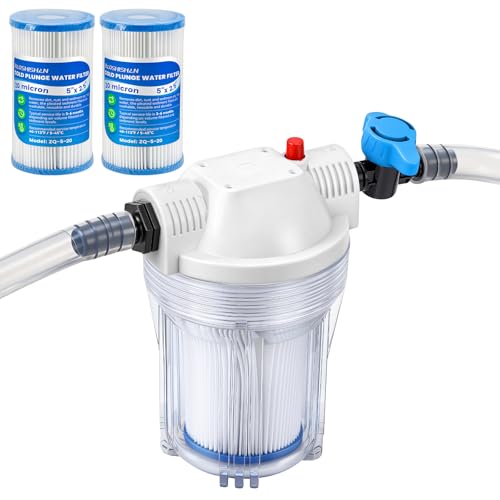
BAOSHISHAN BAOSHISHAN Cold Plunge Water Filter Kit (3 x 20-Micron)
BAOSHISHAN Cold Plunge Water Filter Kit (3 x 20-Micron)

The filter half of water care, for a tub that already has a pump. A clear housing and three 20-micron pleated cartridges, so you can see the water and see when the cartridge is loaded.

Adding filtration to an existing chiller loop
8.2
$45.00Amazon
05
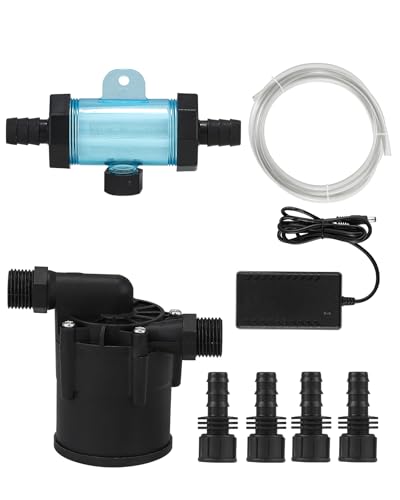
BAOSHISHAN BAOSHISHAN Ice Bath Accessories Kit (317 GPH Pump + Filter)
BAOSHISHAN Ice Bath Accessories Kit (317 GPH Pump + Filter)

Pump, filter and tubing in one box — the kit that turns a still tub into a circulating one, which is the step that makes every other kind of water care work.

A tub with no circulation at all
7.6
$50.99Amazon
06
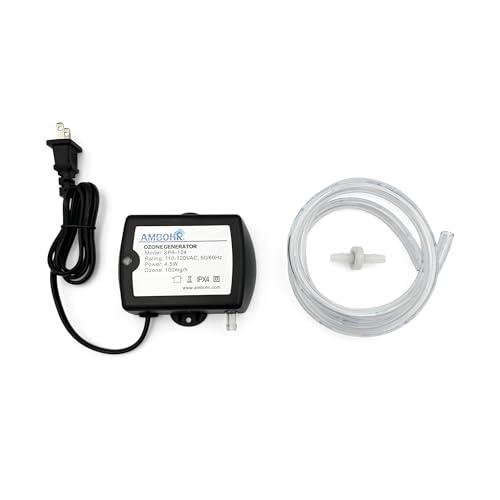
Ambohr Ambohr SPA-124 Ozone Generator (100 mg/h)
Ambohr SPA-124 Ozone Generator (100 mg/h)

The grown-up version of plunge sanitation: a low-output spa ozonator that oxidizes organics continuously instead of you dosing a bottle weekly. It needs a venturi and a circulating loop, and the listing says so.

A plumbed, circulating plunge you want to stop dosing
7.6
$76.95Amazon
07
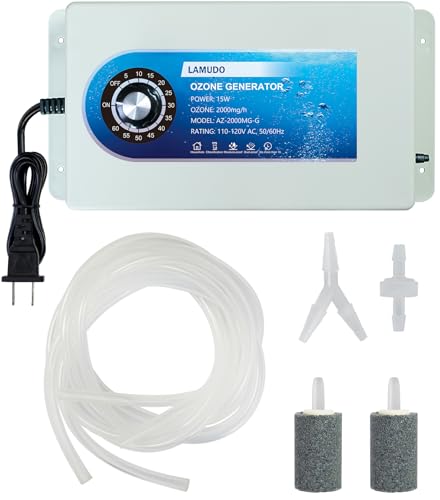
Lamudo Lamudo 2-Way Ozone Generator with Timer (2,000 mg/h)
Lamudo 2-Way Ozone Generator with Timer (2,000 mg/h)

Ozone without the plumbing. Two air lines into the tub on weighted stones, a built-in timer so it runs while you are not in it, and no venturi to cut into a pipe.

An inflatable or unplumbed tub
8.2
$58.99Amazon
08
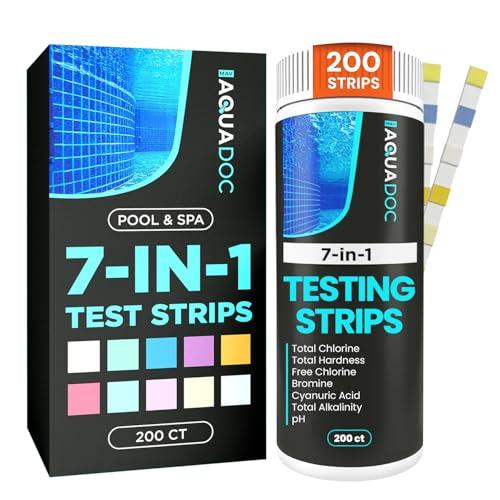
AquaDoc AquaDoc 7-in-1 Pool, Spa & Hot Tub Test Strips (200 count)
AquaDoc 7-in-1 Pool, Spa & Hot Tub Test Strips (200 count)

The cheapest way to stop guessing. Three of its pads — pH, total alkalinity and hardness — are the ones that decide whether your plunge water is kind to your skin and your chiller.

Knowing whether your water care is working
8.6
$13.59Amazon

#ad · Live prices from the Amazon Creators API, as of November 23, 2026. Where we have no verified live price, we show none — we would rather leave a gap than print a number that has rotted.

In detail

The picks, in full

01
AquaDoc AquaDoc Cold Plunge Water Treatment (32 oz)

Almost everyone with a plunge they do not drain weekly

AquaDoc Cold Plunge Water Treatment (32 oz)

32 oz bottle3-in-1 weekly formulaDosed between water changesMade in USASimple dosing (per listing)
8.6/10

The default weekly bottle. A 3-in-1 cold-plunge formula in the size you actually get through, from the brand with the deepest spa-chemistry line on Amazon — and the only pick here that says where it is made.

Fit for cold plunge
9
Cost per week
8
Dosing clarity
8
Brand depth
9
Value
9

Pros

  • Weekly dosing is the realistic cadence for a home plunge: you are not running a pool, you are keeping 100 gallons from going cloudy between changes
  • AquaDoc sells across pool, spa and plunge chemistry, so the support pages, dosing guidance and matching test strips all exist in one place
  • The 32 oz size is the one that lasts a season rather than a month, and it costs barely more than the 8 oz trial bottle

Cons

  • The listing does not publish the active ingredients, so you cannot check it against what your chiller manufacturer permits
  • 3-in-1 is marketing shorthand, not a specification — treat the clarity and freshness claims as the seller's, because we have not tested them

Don't buy this if…

…you drain and refill after every single session. Fresh water needs no chemistry at all, and dosing a tub you are about to empty is money poured down the hose.

$20.39View on Amazon

$23.9915% off

Price as of November 23, 2026. Prices change — Amazon's is the one that counts.

#ad · we may earn a commission from this link to AquaDoc Cold Plunge Water Treatment (32 oz)

02
Durabasics Durabasics 3in1 Cold Plunge Water Treatment (32 oz)

The lowest spend on water care that still works

Durabasics 3in1 Cold Plunge Water Treatment (32 oz)

32 oz bottle3-in-1 cleaner + stabilizer64 oz size also soldClarity and freshness claimsDose rate not published
7.4/10

The cheapest 32 oz bottle of plunge treatment from a named brand that we can find. Same job as the AquaDoc, less money, and a 64 oz size exists if you run a big tub.

Fit for cold plunge
8
Cost per week
9
Dosing clarity
5
Brand depth
6
Value
9

Pros

  • Lowest cost per ounce of any cold-plunge-specific treatment here, which matters because this is a consumable you rebuy rather than a one-off
  • Sold in both 32 oz and 64 oz, so a 200-gallon tub owner is not buying four small bottles a year
  • Does the same three jobs as the pricier bottles — clarify, treat, stabilize — against the same problem, which is organic load from skin and air

Cons

  • The listing publishes neither the dose rate nor the active ingredients, so you are following the label on arrival rather than planning around it
  • No matching test strips or dosing calculator from the same brand, which makes it harder to tell whether your dose is right

Don't buy this if…

…you want to know what you are putting in the water before you order. Pay the few dollars more for a brand that publishes a dose rate.

$18.69View on Amazon

$21.9915% off

Price as of November 23, 2026. Prices change — Amazon's is the one that counts.

#ad · we may earn a commission from this link to Durabasics 3in1 Cold Plunge Water Treatment (32 oz)

03
Ouster Ouster 3in1 Cold Plunge Water Treatment (32 oz)

Anyone who wants the cost per week in writing

Ouster 3in1 Cold Plunge Water Treatment (32 oz)

32 oz bottle1 oz per week stated doseCleaner + clarifier + softenerAbout 32 doses per bottleNo draining claimed between doses
7.6/10

The one that publishes its dose. One ounce a week, 32 ounces in the bottle — so you can do the arithmetic before you buy instead of guessing how long it lasts.

Fit for cold plunge
8
Cost per week
7
Dosing clarity
9
Brand depth
6
Value
8

Pros

  • A published dose rate is the single most useful thing a listing in this category can give you, and this is the only one of the three bottles that states it
  • Thirty-two weekly doses in a bottle puts the running cost around a dollar a week, which is the number worth comparing against a weekly refill
  • The third function here is water softening rather than a vague stabilizer claim, which is checkable if your fill water is hard

Cons

  • Costs more than the Durabasics for the same volume, and the extra buys you disclosure rather than more product
  • The no-draining framing oversells it — every plunge needs a water change eventually, and nothing in a bottle changes that

Don't buy this if…

…price per ounce is what you care about. The Durabasics does the same three jobs for less; the premium here buys a label you can plan around.

$21.58View on Amazon

$29.9728% off

Price as of November 23, 2026. Prices change — Amazon's is the one that counts.

#ad · we may earn a commission from this link to Ouster 3in1 Cold Plunge Water Treatment (32 oz)

04
BAOSHISHAN BAOSHISHAN Cold Plunge Water Filter Kit (3 x 20-Micron)

Adding filtration to an existing chiller loop

BAOSHISHAN Cold Plunge Water Filter Kit (3 x 20-Micron)

3 x 20-micron cartridgesTransparent housingFull fitting kit includedFor ice bath + chiller systemsNo pump included
8.2/10

The filter half of water care, for a tub that already has a pump. A clear housing and three 20-micron pleated cartridges, so you can see the water and see when the cartridge is loaded.

Fit for cold plunge
9
What it removes
8
Setup difficulty
7
Running cost
8
Value
9

Pros

  • Chemistry treats what is dissolved; a 20-micron cartridge removes what is floating, and the two jobs are not interchangeable — skin cells, hair and grit come out mechanically or not at all
  • The clear housing is a useful feature rather than a styling one: a loaded pleated cartridge is visible, so you change it on evidence instead of on a guess
  • Three cartridges in the box is most of a season, and pleated cartridges can be rinsed between changes

Cons

  • You need a pump already — a chiller's circulation pump, or a separate one — because nothing in this kit moves water
  • Twenty microns is a coarse-to-medium rating: it catches debris and biofilm flakes, not bacteria, so it supplements a sanitizer rather than replacing one

Don't buy this if…

…your plunge has no circulation at all. A filter in a still tub does nothing — buy the pump kit instead, or keep up the water changes.

$45.00View on Amazon

$49.9910% off

Price as of November 23, 2026. Prices change — Amazon's is the one that counts.

#ad · we may earn a commission from this link to BAOSHISHAN Cold Plunge Water Filter Kit (3 x 20-Micron)

05
BAOSHISHAN BAOSHISHAN Ice Bath Accessories Kit (317 GPH Pump + Filter)

A tub with no circulation at all

BAOSHISHAN Ice Bath Accessories Kit (317 GPH Pump + Filter)

317 GPH external pumpFilter and housing includedTubing and connectors includedFor connecting a chiller to a tubExternal pump, not submersible
7.6/10

Pump, filter and tubing in one box — the kit that turns a still tub into a circulating one, which is the step that makes every other kind of water care work.

Fit for cold plunge
9
What it removes
8
Setup difficulty
6
Running cost
7
Value
8

Pros

  • Circulation is the unlock: a still tub stratifies, and chemistry, ozone and filtration all depend on water actually moving past them
  • Buying the pump, filter and tubing as a set avoids the usual cold-plunge accessory trap, which is three orders and two fitting sizes that do not match
  • 317 GPH turns over a 100-gallon tub several times an hour, which is ample for filtration duty

Cons

  • An external pump has to live somewhere dry and plugged in, which on a patio tub means an outdoor-rated outlet and a cable you will trip over if you do not plan it
  • A pump running adds a small constant electricity cost and a noise floor that a still tub does not have

Don't buy this if…

…you already run a chiller. Your chiller has a pump and almost certainly a filter port — buy the cartridge kit and save the money.

$50.99View on Amazon

$65.9923% off

Price as of November 23, 2026. Prices change — Amazon's is the one that counts.

#ad · we may earn a commission from this link to BAOSHISHAN Ice Bath Accessories Kit (317 GPH Pump + Filter)

06
Ambohr Ambohr SPA-124 Ozone Generator (100 mg/h)

A plumbed, circulating plunge you want to stop dosing

Ambohr SPA-124 Ozone Generator (100 mg/h)

100 mg/h rated outputCheck valve included3/4 in venturi requiredVenturi not includedFor spa, ice bath, stock tank
7.6/10

The grown-up version of plunge sanitation: a low-output spa ozonator that oxidizes organics continuously instead of you dosing a bottle weekly. It needs a venturi and a circulating loop, and the listing says so.

Fit for cold plunge
8
What it removes
9
Setup difficulty
4
Running cost
9
Value
8

Pros

  • Ozone breaks down the organic load — skin oils, sweat, bacteria — and then reverts to oxygen, so it does not accumulate in the water the way chemical residue does
  • A continuous low dose beats a weekly spike: the water is treated when you use it, not three days after you remembered the bottle
  • 100 mg/h is a sane, spa-scale output for a plunge rather than the four-figure industrial numbers some listings advertise at this price

Cons

  • The 3/4-inch venturi injector is required and is not in the box, so budget a second order and plan where it cuts into your plumbing
  • It only works while water circulates, which means a pump or chiller running — an unplumbed inflatable tub cannot use this at all

Don't buy this if…

…your plunge is a stock tank you bail out with a bucket. Ozone needs a loop; without one, a weekly bottle is the honest answer.

$76.95View on Amazon

Price as of November 23, 2026. Prices change — Amazon's is the one that counts.

#ad · we may earn a commission from this link to Ambohr SPA-124 Ozone Generator (100 mg/h)

07
Lamudo Lamudo 2-Way Ozone Generator with Timer (2,000 mg/h)

An inflatable or unplumbed tub

Lamudo 2-Way Ozone Generator with Timer (2,000 mg/h)

2,000 mg/h rated outputBuilt-in timer2 outlets with air stonesCheck valve + Y-tee includedNo venturi needed
8.2/10

Ozone without the plumbing. Two air lines into the tub on weighted stones, a built-in timer so it runs while you are not in it, and no venturi to cut into a pipe.

Fit for cold plunge
8
What it removes
7
Setup difficulty
9
Running cost
9
Value
8

Pros

  • Air stones mean it works on a tub with no plumbing whatsoever, which is most home plunges — drop the stones in, set the timer, done
  • A timer is the feature that makes ozone practical: you want it running between sessions and off while you are in the water
  • Two outlets let you treat a large or oddly shaped tub from both ends instead of hoping one stone reaches

Cons

  • Air-stone diffusion is far less efficient than a venturi — much of the ozone leaves at the surface rather than dissolving, which is why the rated output is twenty times the Ambohr's and not twenty times as effective
  • Ozone off-gasses at the surface, so it runs with the tub unoccupied and never in an enclosed space — that is a real operating constraint, not a footnote

Don't buy this if…

…you already have a circulating loop. A venturi-injected unit puts far more of its ozone into the water, and you have the plumbing to use one.

$58.99View on Amazon

$65.9911% off

Price as of November 23, 2026. Prices change — Amazon's is the one that counts.

#ad · we may earn a commission from this link to Lamudo 2-Way Ozone Generator with Timer (2,000 mg/h)

08
AquaDoc AquaDoc 7-in-1 Pool, Spa & Hot Tub Test Strips (200 count)

Knowing whether your water care is working

AquaDoc 7-in-1 Pool, Spa & Hot Tub Test Strips (200 count)

200 strips per bottle7 tests per strippH, alkalinity, hardnessAlso chlorine, bromine, cyanuric acidNo peroxide pad
8.6/10

The cheapest way to stop guessing. Three of its pads — pH, total alkalinity and hardness — are the ones that decide whether your plunge water is kind to your skin and your chiller.

Fit for cold plunge
6
What it tells you
8
Setup difficulty
10
Running cost
10
Value
9

Pros

  • Two hundred strips at this price makes testing a weekly habit rather than something you do once the water already looks wrong
  • pH is the pad that matters most on a plunge: out-of-range water stings eyes and skin and is harder on a chiller's wetted parts than correct water is
  • Same brand as our top-pick treatment, so the dosing guidance and the test readings speak the same language

Cons

  • It is a pool-and-spa strip, not a plunge-specific one: the chlorine, bromine and cyanuric-acid pads will read near zero on a plunge dosed with a non-chlorine treatment, and that is normal rather than a fault
  • There is no hydrogen peroxide pad, so if you dose peroxide you need a dedicated H2O2 strip instead of this one

Don't buy this if…

…you dose hydrogen peroxide and want to track its concentration. Buy a peroxide-specific strip — this one cannot read it.

$13.59View on Amazon

$15.9915% off

Price as of November 23, 2026. Prices change — Amazon's is the one that counts.

#ad · we may earn a commission from this link to AquaDoc 7-in-1 Pool, Spa & Hot Tub Test Strips (200 count)

A maintenance schedule you will actually keep

Water care fails for one reason: the routine is too complicated to sustain. Here is the minimum that works, written for a roughly 100-gallon plunge used by one or two adults.

Every session: rinse before you get in. This is the highest-value habit on the page and it costs nothing — most of the organic load you are treating arrives on your skin. Replace the cover afterwards once the surface has dried.

Weekly: one dose of treatment, and one test strip. The strip takes fifteen seconds and is the difference between dosing on a schedule and dosing on evidence. If you run ozone instead of a bottle, the weekly job is just the strip.

Monthly: pull the filter cartridge and look at it. A pleated cartridge that has gone gray is doing its job and can usually be rinsed; one that has gone brown and stiff wants replacing. If you have no filter, this is the month to scoop the bottom.

Every one to three months, or whenever the strip says so: drain and refill. No treatment makes water last forever, and a listing that implies otherwise is overselling. A full change is cheap, fast and the reset that keeps the rest of the routine honest. In a cold climate, drain fully before a hard freeze if you are not running the tub.

What not to put in a cold plunge

Three things, and the first one surprises people because it is what pools use.

Household bleach, and chlorine by guesswork.Chlorine chemistry is designed around a measured residual, a pH window and a stabilizer. In cold, unstabilized, uncirculated water dosed by eye, you get either nothing useful or a concentration that irritates skin and eyes and attacks metal. Several chiller manufacturers also restrict what can pass through their heat exchangers, and a plated exchanger is not as forgiving as a titanium one. If you want a sanitizer residual, use a product formulated for cold plunges and follow its label — and check your chiller's manual first.

Essential oils. They belong in a sauna, on the rocks, not in a plunge. Oils are exactly the kind of organic load you are trying to remove; they film the waterline, clog cartridges and feed biology. Our sauna aromatherapy guide covers where scent actually goes.

Ozone in an enclosed space, or with someone in the tub. Ozone is a lung irritant and the EPA's guidance on ozone generators is blunt about the health effects of breathing it at concentrations that do useful oxidizing work. In water care that is manageable, because the ozone is dissolving into water and the tub is outdoors, but the operating rules are not optional: run it with the tub unoccupied, run it where air moves, and never run an air-stone unit under a sealed cover in a small enclosed room. An indoor plunge in a basement is the worst case for ozone and the best case for a bottle.

Reading a test strip without becoming a pool technician

You need three of the seven pads, and you can ignore the rest. Here is what each is for.

pH — the one that matters. This is comfort and equipment protection in one number. Water that drifts low is aggressive toward metal parts and feels harsh; water that drifts high goes cloudy and scales. Pool and spa practice targets a slightly alkaline window, and a plunge is no different. If your fill water is consistently off, that is a water-source problem and worth knowing before you blame a product.

Total alkalinity — the stabilizer. Alkalinity is what stops pH bouncing around after every dose and every rainstorm. If your pH will not hold still, alkalinity is usually why.

Hardness — the one that explains scale.Hard fill water leaves deposits on a chiller's exchanger and a waterline ring on the tub. It is also why one of the bottles here includes a softening function. Knowing your number tells you whether that matters to you.

Chlorine, bromine, cyanuric acid — expect zero. On a plunge treated with a non-chlorine product these pads read near nothing, and that is correct rather than a fault. If you specifically dose hydrogen peroxide, note that none of the standard strips read it; that needs a dedicated peroxide strip.

What water care costs, and what it saves

The numbers here are small enough that the whole category is easy to justify, which is probably why so few people bother to do the arithmetic.

A weekly bottle at a stated ounce-per-week dose works out around a dollar a week. A set of cartridges is most of a season. Test strips at two hundred to a bottle are a rounding error. Ozone has essentially no consumable cost at all; its cost is the pump that has to run with it, which for a fractional-horsepower circulation pump is a modest continuous draw you can price against your own rate rather than ours.

Against that, consider what you are avoiding. A full water change on a 100-gallon tub is not expensive in water, but it is an hour of your evening and it means no plunge that night. Doing it weekly because the water went off is the real cost of no water care. On a chilled tub there is a second saving: clean water through a clean filter is easier on a compressor than debris-laden water is, and a chiller is by far the most expensive thing in a sub-$1,000 setup — see best cold plunge tubs under $1,000 for how that budget breaks down, and best cold plunge chillers for the hardware itself.

And there is a third saving that is not financial. The reason people stop plunging is almost never the cold — it is logistics. Water you have to think about is logistics. Water that is simply clear when you walk out to it is the difference between a habit and an experiment, which is the same argument we make for a lid in best cold plunge covers and for a chiller in tubs with chillers.
How we picked

We do not run a testing lab

We researched published manufacturer specifications, listing data and aggregated owner reviews, then scored each product against a published rubric. The scores are judgments from documented research — they are not measurements we took, because we don't have a lab and we're not going to pretend we do. Prices come live from the Amazon Creators API; where a spec came from a manufacturer we say so and link it in Sources.

Questions

Frequently asked

Do you really need to treat cold plunge water?
If you drain and refill after every session, no — fresh water needs no chemistry. If you leave water in the tub for more than a few days, yes. Cold slows biological activity but does nothing about organic load: skin cells, body oils, sweat and sunscreen accumulate every session, and a plunge carries a far higher bather load per gallon than a pool does. A weekly 3-in-1 bottle at around a dollar a week is what turns a three-day water change into a monthly one.
Can you put chlorine or bleach in a cold plunge?
We would not, and not because chlorine does not work. Chlorine chemistry depends on a measured residual, a controlled pH and a stabilizer, none of which you have in a cold, unstabilized, often uncirculated tub dosed by eye — so you get either no benefit or an irritating concentration that is hard on metal parts. Several chiller makers also restrict what may pass through their heat exchangers. Use a product formulated for cold plunges, follow its label, and check your chiller's manual before adding anything.
Is ozone better than chemicals for a cold plunge?
For a plumbed, circulating tub used several times a week, usually yes: ozone oxidizes the organic load continuously and then reverts to oxygen, so nothing accumulates and there is no weekly task. For a still inflatable tub, the picture is murkier — an air-stone unit works without plumbing but loses much of its ozone at the surface, which is why rated outputs in that style are an order of magnitude higher. And ozone has real operating rules: tub unoccupied, air moving, never under a sealed cover in an enclosed room. For most people a bottle is simpler and entirely adequate.
Do I need a filter if I already dose chemicals?
They do different jobs and neither substitutes for the other. Chemistry works on what is dissolved; a 20-micron cartridge removes what is floating — skin, hair, grit, biofilm flakes. If your water is chemically fine but looks dirty, you have a filtration problem, and if you have a chiller you already have the pump to fix it. A filter in a still tub with no circulation does nothing at all.
How often should you change cold plunge water?
With no treatment, every few days once you are using it regularly. With weekly dosing and a cover, most owners run one to three months. With circulation, filtration and ozone, longer again. Let the test strip and your nose decide rather than the calendar — and ignore any listing implying you never need to drain. You do. A full change is the cheap reset that makes everything else on this page honest.
Which test strips work for a cold plunge?
A standard pool-and-spa strip is fine, because the three pads that matter on a plunge — pH, total alkalinity and hardness — are on every one of them. Expect the chlorine, bromine and cyanuric-acid pads to read near zero on a tub dosed with a non-chlorine treatment; that is correct, not a fault. The exception is hydrogen peroxide: no general-purpose strip reads it, so if you dose peroxide you need a dedicated H2O2 strip.

Keep reading

More in Sauna Accessories

All sauna accessories →

Receipts

Sources

We do not run a testing lab, and we do not pretend to. Product specs are transcribed from the manufacturer's own listing and cited as claims; health figures come from peer-reviewed studies, named and linked. Where we could not verify something, we say so on the page rather than quietly leaving it out. Read our full method.