Skip to content
Sauna & Slate

HUB / GUIDES · Sauna Guides

Sauna for Arthritis and Joint Pain

Heat has been used for aching joints for as long as there have been saunas. The evidence is thinner and more interesting than either the enthusiasts or the sceptics suggest.

By Stephen V.Reviewed How we research
Informational only, not medical advice. Arthritis is a medical condition and this page is a summary of published research, not treatment guidance. Inflammatory arthritis in an active flare, joint infection, recent joint surgery and several common medications all change what heat exposure means for you. Talk to the clinician who manages your arthritis before adding sauna sessions, and read our sauna safety guide for who should be cautious about heat generally.

The honest summary: small studies and long clinical tradition suggest sauna heat can give short-term relief from pain and stiffness in rheumatic conditions, the effect on the disease itself is unestablished, and the evidence base is thin enough that anyone promising you more than that is overselling. If you want to try it, a far-infrared cabin at a moderate temperature is the format most of the relevant research used, and it is also the easiest on someone who finds 190F hard to tolerate.

What has actually been studied

There are three documents worth knowing about, and it is a short list because this is a small literature.

The infrared sauna pilot study (2009). A pilot study in Clinical Rheumatology put patients with rheumatoid arthritis and ankylosing spondylitis through a course of infrared sauna sessions. Its own stated findings were good tolerance, short-term improvement in pain and stiffness, and a trend towards longer-term benefit that did not reach statistical significance. Read that sentence carefully, because it is the most-cited study in this area and it is a pilot: small, and explicit that the longer-term signal was a trend rather than a result. The useful takeaway is tolerability plus short-term symptomatic relief, which is a real and worthwhile thing.

The 1992 trial on rheumatoid and neuropathic pain. A study in Pain examined the effect of sauna heat exposure on neuropathic and rheumatoid pain. It is old, it is small, and it is part of why the clinical tradition of using heat for rheumatic symptoms predates any of the current enthusiasm.

The 2025 review. A Rheumatology International review on sauna therapy in rheumatic diseases is the most recent synthesis, and the title tells you the shape of it: mechanisms, potential benefits, and cautions. The cautions are not decorative. Heat exposure in active inflammatory disease, in patients on particular medications, or alongside cardiovascular comorbidity is a clinical judgement, not a lifestyle choice.

Sitting behind all of that is the much stronger general evidence on regular sauna bathing — the Finnish cohort work and the Mayo Clinic Proceedings review. Neither is about arthritis. They are the reason we treat sauna bathing as a well-tolerated habit with plausible general benefit rather than as a therapy for a specific joint disease.

Why heat helps a sore joint, mechanically

No mystery is required for the short-term part. Heat raises local tissue temperature, which increases blood flow and makes connective tissue more extensible, so a joint moves more freely while it is warm. Warmth also modulates pain perception, which is most of why a hot bath has been the standard advice for a stiff morning for a century. The effect is real and it is temporary — it is a window of easier movement, which is why physiotherapy traditionally pairs heat with doing something in that window rather than with sitting still afterwards.

Notice what that mechanism does not promise: a change to the underlying inflammatory process. In inflammatory arthritis, an actively hot, swollen joint is the classic case where heat is the wrong choice and cold is the conventional one. "Heat for stiffness, cold for a flare" is a crude rule, but it is crude in the right direction.

Which kind of sauna suits sore joints

FormatTypical temperatureWhy it suits, or does not
Far-infrared cabin120-150FLower air temperature, long comfortable sessions, the format the RA/AS pilot used
Traditional rock stove150-195FBetter sauna, but a harder environment if heat tolerance is the limiting factor
Steam tent130-140FCheap and humid; your head stays outside on most, and getting in and out is awkward
Sauna blanketVaries by settingNo stepping over a threshold at all, which can matter more than the heat spec

One practical point that no study will tell you and that decides a lot of real purchases: getting in and out. A high threshold, a steep step up to a bench, a heavy door, or a tub-style unit you have to climb into is a genuine obstacle if your knees or hips are the problem. Look at the door, the bench height and whether there is anything solid to hold. Our sauna doors and bench guides cover the hardware, and a backrest is a small thing that makes a long warm sit comfortable.

The short answer

Quick picks

#SaunaBest forScorePrice
01
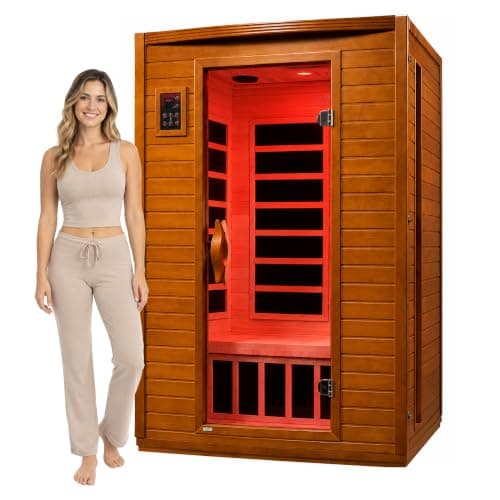
Dynamic Saunas Dynamic Andora (2-Person Low EMF FAR)
Dynamic Andora (2-Person Low EMF FAR)

The default 2-person infrared cabin. Low-EMF far-infrared heaters plus built-in red-light therapy, Canadian hemlock, and the widest support network in the category.

Most people buying their first 2-person cabin
7.8
$2,399.99Amazon
02
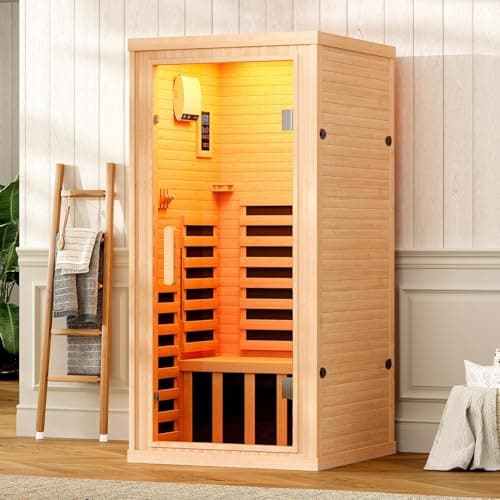
Albott Albott 1-Person Infrared Sauna (7 Carbon Panels)
Albott 1-Person Infrared Sauna (7 Carbon Panels)

The best single. Seven carbon panels plus a dedicated foot-heating zone in a Canadian hemlock box — the 1-person cabin that heats the part of you a single seat usually leaves cold.

The best 1-person cabin
7.2
$994.99Amazon
03
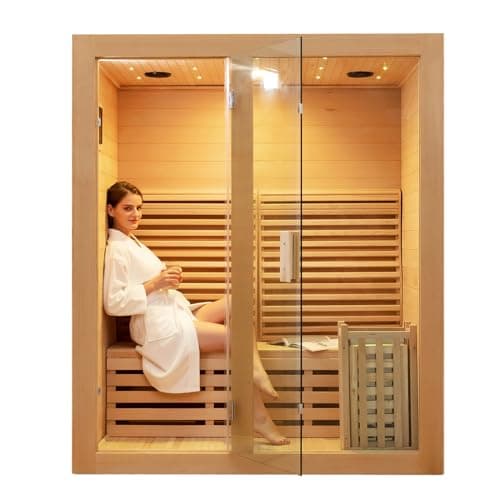
ZONEMEL ZONEMEL 2-Person Hemlock (3.5kW Harvia Stove)
ZONEMEL 2-Person Hemlock (3.5kW Harvia Stove)

The value real-loyly pick. A genuine Harvia rock stove in a compact indoor hemlock cabin — you can actually throw water and make steam.

The best value traditional indoor cabin
7.6
$3,099.99Amazon

#ad · Live prices from the Amazon Creators API, as of October 4, 2026. Where we have no verified live price, we show none — we would rather leave a gap than print a number that has rotted.

In detail

The picks, in full

01
Dynamic Saunas Dynamic Andora (2-Person Low EMF FAR)

Most people buying their first 2-person cabin

Dynamic Andora (2-Person Low EMF FAR)

2-personFar infraredRed-light therapyLow EMF (rated)120V outlet
7.8/10

The default 2-person infrared cabin. Low-EMF far-infrared heaters plus built-in red-light therapy, Canadian hemlock, and the widest support network in the category.

Capacity
8
Heat & comfort
8
Low-EMF
8
Build & wood
7
Value
8

Pros

  • Runs on a standard 120V household outlet — no electrician, no dedicated circuit
  • Dynamic/Golden Designs is the largest mid-market brand, so parts, manuals and third-party reviews are everywhere
  • Carbon far-infrared panels rated low-EMF, plus red-light therapy LEDs built in

Cons

  • The heaters are far-infrared, not full-spectrum — no near- or mid-infrared HEAT like the pricier Maxxus models
  • Hemlock is the budget-to-mid wood; it lacks cedar's natural aroma and rot resistance

Don't buy this if…

…you want full-spectrum infrared HEAT (near, mid and far). The Andora's heating is far-infrared with red-light LEDs — step up to the full-spectrum Maxxus if near-infrared heat is the point.

$2,399.99View on Amazon

Price as of October 4, 2026. Prices change — Amazon's is the one that counts.

#ad · we may earn a commission from this link to Dynamic Andora (2-Person Low EMF FAR)

02
Albott Albott 1-Person Infrared Sauna (7 Carbon Panels)

The best 1-person cabin

Albott 1-Person Infrared Sauna (7 Carbon Panels)

1-personFar infrared7 carbon panels + foot heaterCanadian hemlock1260W
7.2/10

The best single. Seven carbon panels plus a dedicated foot-heating zone in a Canadian hemlock box — the 1-person cabin that heats the part of you a single seat usually leaves cold.

Capacity
6
Heat & comfort
8
Low-EMF
7
Build & wood
7
Value
8

Pros

  • Seven carbon far-infrared panels plus a separate foot-heating zone, which no other single here publishes
  • Canadian hemlock, safety-tempered glass and a door seal strip rather than a budget shell
  • Modular, no-tools assembly the listing rates at under an hour

Cons

  • One upright seat in a 32.3 x 32.3 in footprint
  • The listing calls the panels low-EMF in its own words, but publishes no measured figure or rating

Don't buy this if…

…you'll want to stretch out or share. This is a single upright seat — a 2-person cabin is the honest minimum for two.

$994.99View on Amazon

$1,400.0029% off

Price as of October 4, 2026. Prices change — Amazon's is the one that counts.

#ad · we may earn a commission from this link to Albott 1-Person Infrared Sauna (7 Carbon Panels)

03
ZONEMEL ZONEMEL 2-Person Hemlock (3.5kW Harvia Stove)

The best value traditional indoor cabin

ZONEMEL 2-Person Hemlock (3.5kW Harvia Stove)

2-personTraditional (rock stove)3.5kW HarviaCanadian hemlock240V
7.6/10

The value real-loyly pick. A genuine Harvia rock stove in a compact indoor hemlock cabin — you can actually throw water and make steam.

Capacity
7
Heat & loyly
9
Build & wood
7
Wiring & install
6
Value
9

Pros

  • A real Harvia stove and stones — throw water for loyly, which no infrared cabin can do
  • Compact enough to fit indoors in a basement or spare room
  • Far cheaper than a premium traditional kit for a genuine steam sauna

Cons

  • Needs a 240V circuit and, realistically, an electrician
  • Traditional saunas run hot (170-190F) and need proper ventilation indoors

Don't buy this if…

…you can't add a 240V circuit or ventilate a hot room. Traditional saunas are hotter and more demanding to install than plug-in infrared.

$3,099.99View on Amazon

Price as of October 4, 2026. Prices change — Amazon's is the one that counts.

#ad · we may earn a commission from this link to ZONEMEL 2-Person Hemlock (3.5kW Harvia Stove)

How to use it, if your clinician is happy

  • Moderate temperature, longer session. The point is sustained warmth, not peak heat. A 120-150F infrared cabin for 20-30 minutes is the pattern most of the relevant research used, and it is easier to tolerate than a short blast at 190F.
  • Move in the warm window. Gentle range-of-motion work during or straight after a session is where heat earns its place in physiotherapy. Heat then immediately stiff again on the sofa wastes the window.
  • Regularity over intensity. Short, frequent sessions beat occasional long ones for symptom management, and they are also the pattern the general sauna evidence associates with benefit. See how often should you use a sauna.
  • Hydrate, and stand up slowly. Heat plus dehydration plus getting off a bench quickly is how people faint in saunas. Our dehydration guide covers the fluid side.
  • Stop during a flare. An actively hot, swollen, painful joint is the case where heat is conventionally the wrong tool. This is the single most important line in this section.

What we are not going to tell you

We are not going to tell you a sauna treats arthritis, slows joint damage, replaces medication or produces the outcomes a disease-modifying drug produces. The published work does not support any of that, the most-cited study is a pilot that said so itself, and a 2025 review of the field is explicitly titled around cautions as well as benefits. If a site tells you otherwise, check whether it cites anything.

What the evidence does support is modest and genuinely useful: heat is well tolerated by many people with rheumatic conditions, it tends to relieve pain and stiffness in the short term, and regular sauna bathing is associated with broader health benefits in large cohorts that have nothing to do with joints. For a lot of people, "my mornings are easier and I sleep better" is reason enough — see sauna for sleep and sauna for muscle recovery.

If cost is what is stopping you from trying it, do not start with a cabin. A sauna blanket or a portable unit for a few hundred dollars tells you whether regular heat helps your joints, and it does it without a 240V circuit or a four-figure commitment. Our is a home sauna worth it page works through that decision.
How we picked

We do not run a testing lab

We researched published manufacturer specifications, listing data and aggregated owner reviews, then scored each product against a published rubric. The scores are judgments from documented research — they are not measurements we took, because we don't have a lab and we're not going to pretend we do. Prices come live from the Amazon Creators API; where a spec came from a manufacturer we say so and link it in Sources.

Questions

Frequently asked

Is a sauna good for arthritis?
Small studies and long clinical practice suggest sauna heat can relieve pain and stiffness in the short term and is generally well tolerated in rheumatic conditions. The most-cited work — a 2009 pilot study of infrared sauna in rheumatoid arthritis and ankylosing spondylitis — reported good tolerance and short-term improvement, with only a non-significant trend towards longer-term benefit. It is not a treatment for the disease, and a 2025 review of the field is explicit about cautions as well as benefits. Ask the clinician who manages your arthritis first.
Is infrared or traditional sauna better for joint pain?
Infrared is usually the easier environment, and it is the format the main RA and ankylosing spondylitis pilot study used: 120-150F allows a longer, more comfortable session than a 190F traditional room. A traditional rock stove is the better sauna in general terms, but if heat tolerance is your limiting factor, lower and longer is the more usable combination.
Should you use heat or cold for arthritis?
The conventional rule is heat for stiffness and cold for an active flare. Heat increases blood flow and tissue extensibility, which makes a stiff joint move more freely while it is warm. An actively hot, swollen, inflamed joint is the classic case where heat is the wrong choice. It is a crude rule, and your clinician's advice for your condition overrides it.
How long should you sit in a sauna for joint pain?
Twenty to thirty minutes at a moderate temperature — the pattern used in the infrared research — rather than a short burst at a high one, and gentle movement during or immediately after the session so the warm window is actually used. Frequency matters more than duration: short, regular sessions beat occasional long ones.
Can a sauna make arthritis worse?
It can make an active flare feel worse, which is why heat is conventionally avoided on a hot, swollen joint. Heat exposure also interacts with cardiovascular conditions, pregnancy, alcohol and some medications, and the 2025 Rheumatology International review is explicit that cautions apply in rheumatic disease. That is a conversation to have with your own clinician rather than a risk to assess from a web page.
What should I look for in a sauna if I have bad knees or hips?
The hardware, not the heat spec. A low threshold, a door that is easy to open, a bench you can reach without a big step up, something solid to hold, and a backrest for a long warm sit. A cheap sauna you can get into easily will be used; an excellent one you have to climb into will not.

Keep reading

More in Sauna Guides

All sauna guides →

Receipts

Sources

We do not run a testing lab, and we do not pretend to. Product specs are transcribed from the manufacturer's own listing and cited as claims; health figures come from peer-reviewed studies, named and linked. Where we could not verify something, we say so on the page rather than quietly leaving it out. Read our full method.