Start with the cold shower. It is free, the one randomized trial in this area studied showering rather than plunging, and if you will not keep up a 30-second cold finish you will not keep up a tub. A plunge is the right upgrade when you want a known temperature and full immersion — and that difference in dose is real, not marketing. If you do upgrade, the Bubplay XL is the cheapest honest way to find out whether you like it, the 148-gallon insulated oval is the one to put beside a sauna, and the chiller bundle is what you buy when the ice runs have worn you down.
The physics: why these are different doses
Water conducts heat away from the body far faster than air, which is the whole reason cold immersion is a stimulus at all. But a shower and a tub differ on three axes that compound:
- Coverage. A shower wets whatever you turn into the stream, in sequence. Immersion puts your whole lower body and torso in contact with cold water at once, which multiplies the surface area doing the heat exchange.
- Temperature control. Your cold tap is whatever your cold tap is — roughly 50-70F depending on season, region and plumbing, and you cannot set it. A plunge is dialed to a number you choose and can repeat. The classic study of immersion into water of different temperatures is the reason that matters: the physiological response differs substantially across the range, so an unknown temperature is an unknown dose.
- Stillness. In a tub, the thin layer of water your body warms stays put unless you move. In a shower it is constantly replaced. That makes a shower feel sharper at the same temperature and makes a tub easier to stay in — which is why plunge sessions are measured in minutes and cold showers in seconds.
Practically: a two-minute plunge at a set 50F is a much larger cold exposure than two minutes of cold shower, and you cannot close that gap by turning the tap further. Our cold plunge temperature guide has the ranges and what each one feels like.
What the evidence says about each
Cold showers have the better trial. A randomized controlled trial published in PLOS ONE assigned adults to a routine of cold showering and followed health and work outcomes, including self-reported sickness absence. It is the largest randomized piece of evidence in the whole cold-exposure space, and it studied the free version. That is worth sitting with, given how much money the plunge category now moves.
Plunging has the larger literature and the weaker designs. The 2025 systematic review and meta-analysis of cold water immersion pools many small studies across wellbeing, inflammation and recovery outcomes, with substantial heterogeneity and small samples. There are real signals; there is not a settled case. We go through it in cold plunge benefits.
Neither literature supports the stronger claims made for the category — immunity, metabolism and fat loss in particular. What both support is modest and mostly about how you feel afterwards, which for most people is the honest reason they keep doing it.
What to look for if you upgrade
- A thermometer before a tub. If you cannot read the temperature, you are back to an unknown dose. This is the cheapest part of the setup.
- Shape over gallons. An oval or a long tub lets you sit with your legs out rather than folded, which is the difference between two minutes and twenty seconds.
- An insulated lid. It decides your ice bill. Covered between sessions, cold water holds through a whole sauna round.
- Chiller compatibility, published. Buy ice-only now if you like, but buy a shell that states its ports so stage two is not a rebuy — best cold plunge tubs with chillers covers that path.
- A water-care plan. Chilled water gets reused for weeks. Filtration, circulation and the CDC's healthy-swimming basics are the right mental model for a shared tub.
The short answer
Quick picks
#ad · Live prices from the Amazon Creators API, as of October 21, 2026. Where we have no verified live price, we show none — we would rather leave a gap than print a number that has rotted.
In detail
The picks, in full
Trying contrast therapy cheaply
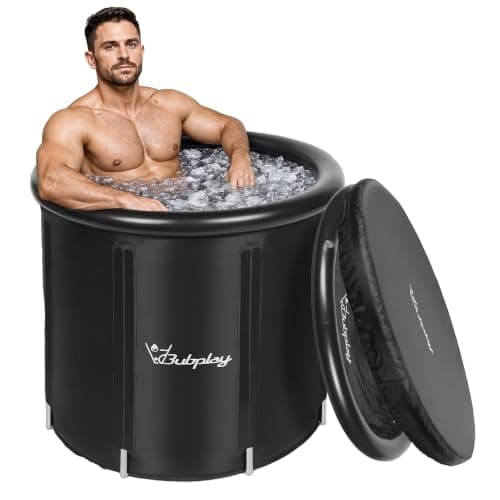
Bubplay Ice Bath XL (105 Gal, with Cover)
105 gallonsCover includedIndoor or outdoorPacks down flatIce-only
The cheapest honest way to find out whether you actually like contrast therapy — 105 gallons and a cover, for less than a good sauna hat and bucket set.
- Size & fit
- 7
- Cold performance
- 6
- Setup & install
- 9
- Build & durability
- 6
- Value
- 9
Pros
- +Low enough in price that a whole season of plunging costs less than a couple of recovery-studio visits
- +Comes with a cover, so it isn't sitting open to leaves and rain between sessions beside an outdoor sauna
- +Packs down flat, which makes it the sensible choice if you rent or aren't sure where the tub will end up living
Cons
- −The listing publishes no chiller compatibility, so treat it as an ice-only tub and budget for bags in warm weather
- −Basic construction; it's a starter tub, not the one you'll still be using in five years
Don't buy this if…
…you already know you'll plunge several times a week. Start with a chiller-compatible tub instead and you won't buy twice.
The best plunge to pair with a sauna
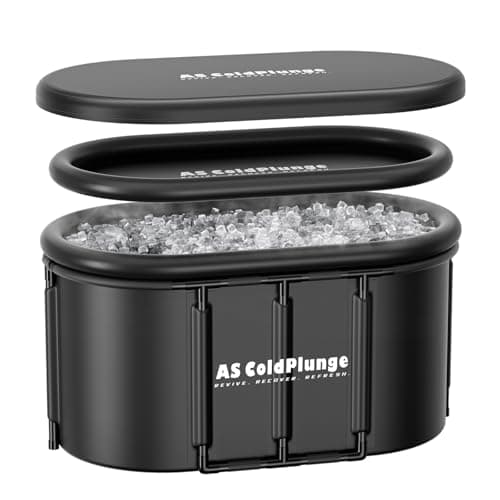
AS ColdPlunge XXL Oval (148 Gal, Insulated Lid)
148 gallonsOval shapeInsulated lidReinforced frameChiller compatible
The tub to put next to a sauna. An oval 148-gallon shell with an insulated lid and a reinforced frame, and it takes a chiller later if hauling ice gets old.
- Size & fit
- 9
- Cold performance
- 8
- Setup & install
- 8
- Build & durability
- 7
- Value
- 9
Pros
- +Oval rather than round, so you sit with your legs out instead of folded — the shape most people can actually stay in for two minutes
- +The insulated lid is the part that decides your ice bill: covered between rounds, the water holds its cold through a whole sauna session
- +Chiller-compatible, so the same tub runs on bagged ice now and on a chiller later without rebuying the shell
Cons
- −148 gallons is a lot of water to change — work out where it drains before you decide where it sits
- −Inflatable walls are a consumable next to a hard-shell plunge; treat it as multi-season gear, not a permanent fixture
Don't buy this if…
…you want a permanent, plumbed, hard-shell plunge. This is portable gear that packs down — a fixed installation is a different and far more expensive purchase.
Cold on demand, no ice runs
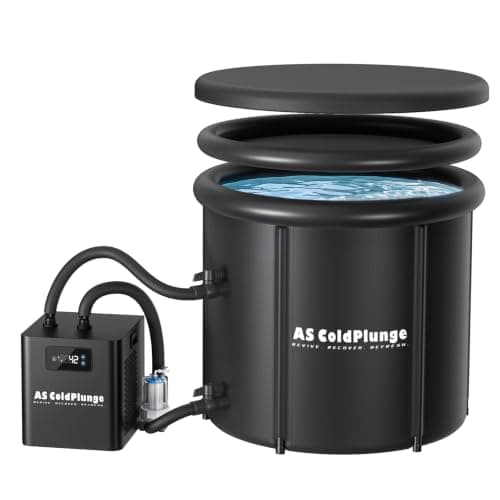
AS ColdPlunge 1/3 HP Chiller + 100 Gal Tub Bundle
100-gallon tub1/3 HP chillerMatched bundlePump includedChiller needs an outlet
Tub and chiller bought together. This is the version of contrast therapy where the cold is simply there every evening, instead of something you plan a supermarket trip around.
- Size & fit
- 7
- Cold performance
- 9
- Setup & install
- 6
- Build & durability
- 8
- Value
- 8
Pros
- +A chiller ends the single biggest reason people stop plunging: the cost and hassle of buying bags of ice several times a week
- +Bought as a matched set, so the fittings, hose sizes and tub volume already suit each other
- +Holds the water cold between sessions, which is what makes a sauna-and-plunge routine sustainable rather than an occasional event
Cons
- −Several times the price of a bare tub, and the chiller needs its own outdoor-rated outlet within reach of the plunge
- −A chiller is a compressor — one more appliance to site level, keep clear of debris and winterize
Don't buy this if…
…you plunge once or twice a week. At that cadence bagged ice in a plain tub is cheaper, and there is nothing to maintain.
Which one to pick, by what you want
Pick the shower if you are starting, if money matters, or if you are honest with yourself about adherence. Thirty to sixty seconds at the end of a normal shower, daily, is a habit you can run forever in any home, and it is the version with a randomized trial behind it. It is also the right cold step after a sauna if you live in an apartment — how to cool down after a sauna covers the sequencing.
Pick the plunge if you want a repeatable temperature, a bigger dose, and the hot-cold contrast that makes sauna sessions feel like an event. A tub is also easier to stay in than a cold shower, which sounds backwards until you have tried both: still water lets you settle and breathe, and most people manage longer in 50F water than under a 55F shower.
Pick both in the obvious order: shower every day, tub two or three times a week. That is what most people with a plunge in the yard actually do.
Cost, honestly
A cold shower costs nothing and saves a little hot water. A plunge is a tub, a cover, a thermometer and either a recurring ice bill or a chiller and an outdoor-rated outlet. The live prices under the picks above are the current figures with their own as-of date; the running cost of the ice route is the thing people underestimate, which is exactly why the chiller page exists. If you want the cheapest possible version of immersion, our DIY cold plunge guide uses a stock tank and a cover.
Safety, which is the same for both
Cold water causes an involuntary gasp and a sharp rise in heart rate and blood pressure on entry. Get in slowly, breathe out as you do, and never submerge your head or go in alone in deep or open water. If you have a heart condition, uncontrolled blood pressure, or you are pregnant, this is a clinician conversation before a purchase. And do not combine either with alcohol — see sauna and alcohol for why that specific combination does the damage. For the hot-side comparison, read sauna vs cold plunge, and cold plunge vs ice bath for the other distinction people ask about.
How we picked
We do not run a testing lab
We researched published manufacturer specifications, listing data and aggregated owner reviews, then scored each product against a published rubric. The scores are judgments from documented research — they are not measurements we took, because we don't have a lab and we're not going to pretend we do. Prices come live from the Amazon Creators API; where a spec came from a manufacturer we say so and link it in Sources.
Questions
Frequently asked
Is a cold plunge better than a cold shower?+
It is a larger and more controllable dose: full immersion, a temperature you set, and still water that lets you stay in for minutes rather than seconds. Whether that larger dose produces proportionally better outcomes is not established — and the only randomized trial in this space studied cold showering, not plunging.
How cold is a cold shower compared with a cold plunge?+
A cold tap runs roughly 50-70F depending on season, region and plumbing, and you cannot set it. A plunge is dialed to a chosen number, commonly in the 40s or low 50s. The shower often feels sharper because the water is constantly replaced, even when it is warmer.
Can a cold shower replace a cold plunge after a sauna?+
For most people, yes. The point of the cold step after a sauna is a rapid, pleasant drop in skin temperature, and a cold shower does that fine — it is the standard apartment solution. What it does not give you is the sustained immersion some people want from contrast rounds.
How long should a cold shower be?+
Thirty to sixty seconds at the end of a normal shower is the version most people sustain, and it is close to what the randomized cold-showering trial asked of participants. Longer is not obviously better, and daily consistency is the variable that distinguishes the people who keep it up.
Do cold showers have any proven benefits?+
The randomized trial of routine cold showering reported effects on self-reported outcomes including sickness absence. That is one trial with self-reported endpoints, which is both the best evidence in the category and a reason for modest expectations.
Receipts
Sources
We do not run a testing lab, and we do not pretend to. Product specs are transcribed from the manufacturer's own listing and cited as claims; health figures come from peer-reviewed studies, named and linked. Where we could not verify something, we say so on the page rather than quietly leaving it out. Read our full method.