Skip to content
Sauna & Slate

HUB / ACCESSORIES · Sauna Accessories

Cold Plunge Temperature

The number everyone argues about, settled as far as the evidence allows: what the research uses, what a beginner should set, and why the internet's race to the bottom is not an upgrade.

By Stephen V.Reviewed How we research
#ad

We earn a commission when you buy through our Amazon links, at no extra cost to you. It never affects our rankings, and we say so when the cheaper product is the better buy. How this works.

Set a cold plunge somewhere between about 50F and 59F (10-15C). That is the band the research literature overwhelmingly uses, it is cold enough to produce the whole response, and it is warm enough that a two- or three-minute immersion is not an endurance event. A beginner should start at the top of that band — high 50s — and build duration before touching the thermostat. Below about 50F you are not getting a better stimulus, you are getting a shorter tolerable exposure and a higher risk, and the research does not reward you for it.

Informational only, not medical advice. Cold-water immersion and rapid hot-cold swings put real stress on the heart and circulation. If you have a heart or blood-pressure condition, are pregnant, or are unsure, talk to your doctor before plunging — and never plunge alone. Our sauna safety guide has the full list of who should be cautious.

What the research actually uses

"Cold-water immersion" in the sports-science literature conventionally means water at or below 15C (59F), and the protocols that have been studied most are short immersions in that 10-15C range. The 2026 umbrella review of fifteen systematic reviews with meta-analysis is the most useful single document on this if you want to read one thing: it synthesises what the pooled evidence does and does not support for recovery and adaptation. It is worth noticing what it does not say — that colder is better, or that longer is better.

The evidence also contains a genuine trade-off that the enthusiast internet tends to leave out. A 2026 systematic review and meta-analysis found a measurable short-term reduction in muscle strength after acute cold-water immersion. If you are plunging straight after lifting because you believe it accelerates recovery, that is the finding to weigh. It does not mean do not plunge; it means think about when.

We are not going to pretend to more precision than exists here. Nobody has established an optimal temperature, the effect sizes in this field are modest and the protocols vary enormously. What the literature supports is a band, not a magic number.

The practical bands

Water temperatureWhat it feels likeTypical time inWho it suits
60-68F (15-20C)Bracing, easy to breathe through5-10 minutesFirst ever plunges; warm-climate tap water
55-59F (13-15C)Properly cold; the gasp is controllable2-5 minutesThe sensible starting point for most people
50-55F (10-13C)Hard; breath control is the whole task1-3 minutesExperienced plungers, the research's core band
Below 50F (10C)Severe; tolerance drops fastUnder 2 minutesNo added benefit established; added risk

Those durations are conventional practice rather than prescriptions, and the right answer for you depends on health, acclimatisation and whether anyone else is there. The rule that matters more than any row of that table: get out when your breathing stops being under your control.

Hitting the number, and holding it

There are exactly two ways to put a tub at a chosen temperature.

Ice, which is precise but temporary. Bagged ice into a covered tub will take 100-150 gallons down into the 50s reliably, and a thermometer plus a notebook will tell you how many bags you need within two sessions. Then it drifts back up. In summer, uncovered, it drifts up fast — which is why the insulated lid on a tub like the 148-gallon oval is not a luxury item.

A chiller, which holds a set point. A refrigeration loop with a thermostat keeps the water at a number indefinitely, which is the difference between a plunge you plan around and a plunge that is simply there. Most units bottom out in the high 30s to low 40s Fahrenheit — well below anything you should be using — so the useful spec is not how cold it goes but whether its horsepower matches your gallons. Our chiller roundup has the sizing rule, and running one costs what a small compressor costs at the residential rates the EIA publishes.

Either way, measure the water rather than trusting the dial. A cheap floating thermometer is a couple of dollars and it is the only way to know what you actually plunged into — the same principle as our sauna thermometers page applies at the other end of the temperature range.

The short answer

Quick picks

#SaunaBest forScorePrice
01
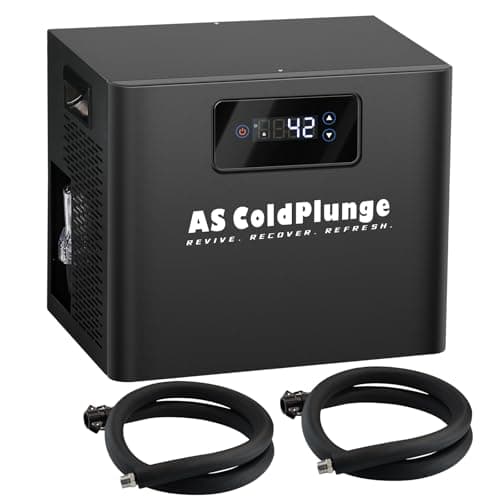
AS ColdPlunge AS ColdPlunge 1/3 HP Cold Plunge Chiller
AS ColdPlunge 1/3 HP Cold Plunge Chiller

The upgrade for a tub you already own. A 1/3 HP chiller rated to hold up to 79 gallons at 42F, shipped with the pump, filter, insulated hoses and fittings already in the box.

Adding a chiller to an existing tub
7.6
$399.00Amazon
02
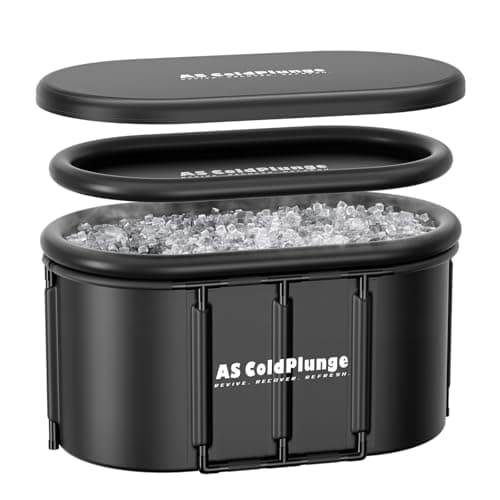
AS ColdPlunge AS ColdPlunge XXL Oval (148 Gal, Insulated Lid)
AS ColdPlunge XXL Oval (148 Gal, Insulated Lid)

The tub to put next to a sauna. An oval 148-gallon shell with an insulated lid and a reinforced frame, and it takes a chiller later if hauling ice gets old.

The best plunge to pair with a sauna
8.2
$99.99Amazon
03
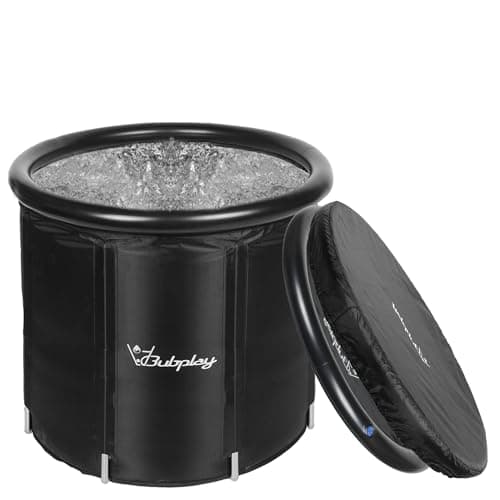
Bubplay Bubplay Ice Bath XL (105 Gal, with Cover)
Bubplay Ice Bath XL (105 Gal, with Cover)

The cheapest honest way to find out whether you actually like contrast therapy — 105 gallons and a cover, for less than a good sauna hat and bucket set.

Trying contrast therapy cheaply
7.4
$54.33Amazon

#ad · Live prices from the Amazon Creators API, as of October 5, 2026. Where we have no verified live price, we show none — we would rather leave a gap than print a number that has rotted.

In detail

The picks, in full

01
AS ColdPlunge AS ColdPlunge 1/3 HP Cold Plunge Chiller

Adding a chiller to an existing tub

AS ColdPlunge 1/3 HP Cold Plunge Chiller

1/3 HPCools to 42FRated up to 79 gallonsBuilt-in pump + washable filter1-year warranty
7.6/10

The upgrade for a tub you already own. A 1/3 HP chiller rated to hold up to 79 gallons at 42F, shipped with the pump, filter, insulated hoses and fittings already in the box.

Size & fit
7
Cold performance
9
Setup & install
7
Build & durability
8
Value
7

Pros

  • Retrofits a chiller-compatible tub you already own, so you aren't rebuying the shell to be rid of the ice runs
  • Ships complete — circulation pump, reusable metal mesh filter, insulated hoses, quick-connect fittings and a submersible pump for bathtub use
  • It connects to the 1/2in inlet and outlet ports the brand's own tubs use, which takes the fittings gamble out of a retrofit

Cons

  • It currently costs roughly what the brand's chiller-and-tub bundle does, so it only makes sense if you already own the tub
  • Rated to 79 gallons, so a bigger tub than that wants a bigger compressor — and it needs a protected, level spot with an outdoor-rated outlet in reach

Don't buy this if…

…you don't own a tub yet. The matched chiller-and-tub bundle avoids a fittings mismatch and usually lands cheaper than the two bought separately.

$399.00View on Amazon

Price as of October 5, 2026. Prices change — Amazon's is the one that counts.

#ad · we may earn a commission from this link to AS ColdPlunge 1/3 HP Cold Plunge Chiller

02
AS ColdPlunge AS ColdPlunge XXL Oval (148 Gal, Insulated Lid)

The best plunge to pair with a sauna

AS ColdPlunge XXL Oval (148 Gal, Insulated Lid)

148 gallonsOval shapeInsulated lidReinforced frameChiller compatible
8.2/10

The tub to put next to a sauna. An oval 148-gallon shell with an insulated lid and a reinforced frame, and it takes a chiller later if hauling ice gets old.

Size & fit
9
Cold performance
8
Setup & install
8
Build & durability
7
Value
9

Pros

  • Oval rather than round, so you sit with your legs out instead of folded — the shape most people can actually stay in for two minutes
  • The insulated lid is the part that decides your ice bill: covered between rounds, the water holds its cold through a whole sauna session
  • Chiller-compatible, so the same tub runs on bagged ice now and on a chiller later without rebuying the shell

Cons

  • 148 gallons is a lot of water to change — work out where it drains before you decide where it sits
  • Inflatable walls are a consumable next to a hard-shell plunge; treat it as multi-season gear, not a permanent fixture

Don't buy this if…

…you want a permanent, plumbed, hard-shell plunge. This is portable gear that packs down — a fixed installation is a different and far more expensive purchase.

$99.99View on Amazon

Price as of October 5, 2026. Prices change — Amazon's is the one that counts.

#ad · we may earn a commission from this link to AS ColdPlunge XXL Oval (148 Gal, Insulated Lid)

03
Bubplay Bubplay Ice Bath XL (105 Gal, with Cover)

Trying contrast therapy cheaply

Bubplay Ice Bath XL (105 Gal, with Cover)

105 gallonsCover includedIndoor or outdoorPacks down flatIce-only
7.4/10

The cheapest honest way to find out whether you actually like contrast therapy — 105 gallons and a cover, for less than a good sauna hat and bucket set.

Size & fit
7
Cold performance
6
Setup & install
9
Build & durability
6
Value
9

Pros

  • Low enough in price that a whole season of plunging costs less than a couple of recovery-studio visits
  • Comes with a cover, so it isn't sitting open to leaves and rain between sessions beside an outdoor sauna
  • Packs down flat, which makes it the sensible choice if you rent or aren't sure where the tub will end up living

Cons

  • The listing publishes no chiller compatibility, so treat it as an ice-only tub and budget for bags in warm weather
  • Basic construction; it's a starter tub, not the one you'll still be using in five years

Don't buy this if…

…you already know you'll plunge several times a week. Start with a chiller-compatible tub instead and you won't buy twice.

$54.33View on Amazon

$59.999% off

Price as of October 5, 2026. Prices change — Amazon's is the one that counts.

#ad · we may earn a commission from this link to Bubplay Ice Bath XL (105 Gal, with Cover)

Temperature when you are pairing it with a sauna

Contrast therapy changes the calculus slightly, in your favour. Coming out of a 180F sauna, water in the high 50s feels dramatically colder than the same water does on a cool morning, because the gradient is bigger. That means two things: you do not need to chase a lower number to get the effect, and you should be more conservative, not less, about duration.

The practical protocol most people settle on is a 10-15 minute sauna round, 1-3 minutes in the plunge, then several minutes of genuine rest before going again — and the rest is not optional. Our contrast therapy guide sets out the sequencing, and how to cool down after a sauna covers doing it without a plunge at all.

One thing to take seriously: the hot-to-cold transition is the moment that puts the most stress on the cardiovascular system. The long-running sauna cohort research is encouraging about regular heat exposure, but it is not a licence to shock yourself. If you have a heart or blood-pressure condition, are pregnant, or have been drinking, the plunge is the part to skip — see sauna and alcohol and sauna and blood pressure.

Three temperature myths worth retiring

"39F is the real cold plunge." It is a number a chiller can reach, not a target the evidence supports. Nothing in the literature establishes additional benefit below the 10-15C band, and tolerable duration falls off a cliff.

"If you are not shivering it is not working." Shivering is a thermoregulatory response to heat loss, not a dose meter. Plenty of effective immersions do not produce it, and plenty of over-long ones produce it well past the point you should have got out.

"Colder means shorter sessions, so it is more efficient." Efficiency is not the variable being optimised. Consistency is: the temperature you will get into three times a week beats the temperature you brag about and avoid.
How we picked

We do not run a testing lab

We researched published manufacturer specifications, listing data and aggregated owner reviews, then scored each product against a published rubric. The scores are judgments from documented research — they are not measurements we took, because we don't have a lab and we're not going to pretend we do. Prices come live from the Amazon Creators API; where a spec came from a manufacturer we say so and link it in Sources.

Questions

Frequently asked

What temperature should a cold plunge be?
Between about 50F and 59F (10-15C) — the band cold-water immersion research overwhelmingly uses. Beginners should start at the top of it, in the high 50s, and extend duration before lowering the temperature. There is no established benefit to going below 50F, and tolerable time in the water drops sharply when you do.
Is 39F too cold for a cold plunge?
It is colder than anything the research supports and colder than you need. Many chillers can reach the high 30s, which is a capability rather than a recommendation: no additional benefit has been established below roughly 10C (50F), while the risk of cold shock and the difficulty of controlling your breathing both rise. If you are new, treat sub-40F water as something to avoid rather than a goal.
How long should you stay in a cold plunge?
At 55-59F, two to five minutes. At 50-55F, one to three. Below 50F, under two. These are conventional practice rather than prescriptions, and the real rule overrides all of them: get out when your breathing is no longer under your control, and never plunge alone.
Does a cold plunge have to be freezing to work?
No. The studied protocols sit in the 10-15C band, not at the freezing point, and after a sauna round even water in the high 50s feels severe because the gradient is so large. Consistency at a tolerable temperature does more than occasional heroics at a brutal one.
How do you keep a cold plunge at temperature?
Either bagged ice in an insulated, covered tub — precise, cheap, and it drifts back up — or a chiller, which is a refrigeration loop with a thermostat that holds a set point indefinitely. The chiller spec that matters is horsepower against your tub's gallons, not how low it can go. Either way, measure the water with a floating thermometer rather than trusting a dial.
Should you cold plunge straight after lifting weights?
Think about the timing. A 2026 systematic review and meta-analysis found a measurable short-term reduction in muscle strength following acute cold-water immersion, which is a reason to separate a plunge from a strength session rather than finishing one with the other. For general recovery and for the sauna-and-plunge habit, it makes little difference.

Keep reading

More in Sauna Accessories

All sauna accessories →

Receipts

Sources

We do not run a testing lab, and we do not pretend to. Product specs are transcribed from the manufacturer's own listing and cited as claims; health figures come from peer-reviewed studies, named and linked. Where we could not verify something, we say so on the page rather than quietly leaving it out. Read our full method.