HUB / ACCESSORIES · Sauna Accessories
Do You Need a Sauna Backrest?
A backrest is comfort, not a requirement — a shaped strip of cool softwood that keeps your back off the hot vertical wall. Here's who really benefits, what to look for, and why you can add one anytime.
We earn a commission when you buy through our Amazon links, at no extra cost to you. It never affects our rankings, and we say so when the cheaper product is the better buy. How this works.
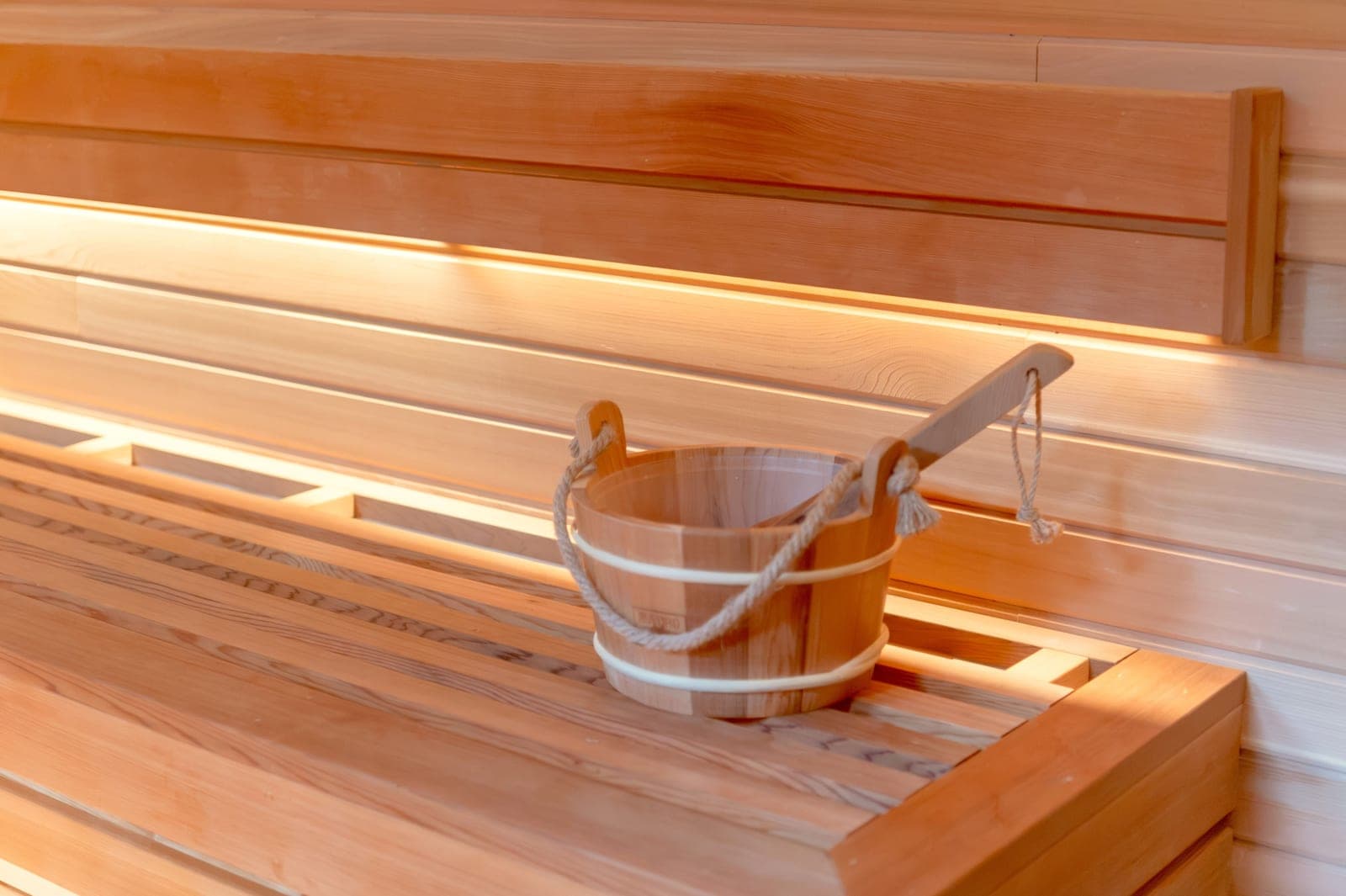
A sauna backrest is a comfort accessory, not an essential — nobody needs one to enjoy a sauna. What it does is keep your back off the hot vertical wall: a shaped, angled piece of wood (often hemlock) that sits behind you so you can lean back on cool, cool-to-touch slats instead of a hot surface. For anyone who leans back or sits for a while, it makes a real difference to comfort. If you sit upright for short, brisk sessions you may never miss one. But the moment you want to settle in and relax against something, the wall behind you is the problem — and a backrest is the fix. Here's who genuinely benefits, what a good one looks like, and why it's an easy thing to add later.
What a backrest actually does
In a sauna, the bench you sit on is comfortable enough, but the wall behind it heats up too — lean straight back and you press bare skin against a hot surface. A backrest solves that with a simple bit of geometry: it's a shaped, slightly angled panel of wood, usually mounted a little off the wall, that gives your back something cooler and better-angled to rest against. The slats sit proud of the hot wall so air moves behind them and they stay cool-to-touch, and the recline angle supports your back rather than forcing you bolt upright. It turns "sitting in the heat" into "relaxing in the heat," which for a lot of people is the whole point.
Who actually benefits
- Anyone who leans back. If you like to settle against the wall rather than sit forward, a backrest is the difference between comfortable and hot-on-the-shoulders.
- Longer sitters. The longer your sessions, the more a comfortable back position matters — a backrest makes a slow, relaxed session much easier to hold.
- Taller users,who often can't tuck neatly onto a bench and end up leaning, and anyone with a back that appreciates support rather than a flat vertical wall.
If none of those sound like you — you sit upright, you keep sessions short — you can happily skip it. That's exactly the kind of "nice, not necessary" call the sauna accessories checklist is built to help you make, ranking a backrest among the comfort extras rather than the must-haves.
The cheap alternative: a rolled towel
Before you buy anything, try the oldest trick there is: roll up a towel and tuck it behind your lower or mid back against the wall. It costs nothing, it insulates your skin from the hot surface, and it tells you quickly whether you even want back support in the first place. Plenty of people find a rolled towel is all they need and never fit a permanent backrest. If you find yourself reaching for the towel every session, that's your sign a proper backrest would earn its place — and it's one of the friendliest upgrades among the best budget sauna accessories.
What to look for in a good one
A backrest is simple, but a few things separate a good one from an uncomfortable one:
- Clear, knot-free softwood.Hemlock is a common choice, along with other clear softwoods, because it stays comparatively cool to the touch, resists warping in heat and humidity, and doesn't drip sap. Clear, smooth wood also means no rough knots against your back.
- No exposed metal fasteners. This is the one that catches people out: any screw or bracket on the face gets hot enough to burn. A good backrest hides its fasteners or fixes from behind, so nothing hot ever touches skin. It should be all cool wood where your back lands.
- An angle that reclines slightly and slats spaced for airflow, so it stays cool and supports your back rather than sitting dead flat and hot against the wall.
You can add one anytime
The best part of a backrest is that it isn't a decision you have to make up front. It doesn't wire in, it doesn't change the room, and most simply hang or lean against the wall — so you can run your sauna for months, decide you want to lean back more comfortably, and add one in an afternoon. That's why it lands squarely in the comfort column: no urgency, no commitment, just a small upgrade whenever you decide longer, lean-back sessions are how you like to sauna. If comfort is what you're optimizing, it pairs naturally with the rest of the kit in what to bring to a sauna.
The honest verdict
Do you needa sauna backrest? No. Will it make longer, lean-back sessions noticeably comfier, especially for taller users? Yes. Try a rolled towel first, and if you keep reaching for it, buy a clear softwood rest with no hot fasteners and enjoy the difference. It's comfort you can add whenever you want it — which is the nicest kind of accessory there is.
Questions
Frequently asked
Do you need a sauna backrest?
Who benefits most from a sauna backrest?
What can I use instead of a sauna backrest?
What should a sauna backrest be made of?
Keep reading
Related
More in Sauna Accessories
Receipts
Sources
We do not run a testing lab, and we do not pretend to. Product specs are transcribed from the manufacturer's own listing and cited as claims; health figures come from peer-reviewed studies, named and linked. Where we could not verify something, we say so on the page rather than quietly leaving it out. Read our full method.