HUB / GUIDES · Sauna Guides
Sauna for Muscle Recovery
Athletes use heat to recover, and there's real logic to it — more blood flow, relaxation, less perceived soreness. But it's a helpful tool, not a magic bullet. Here's the honest version.
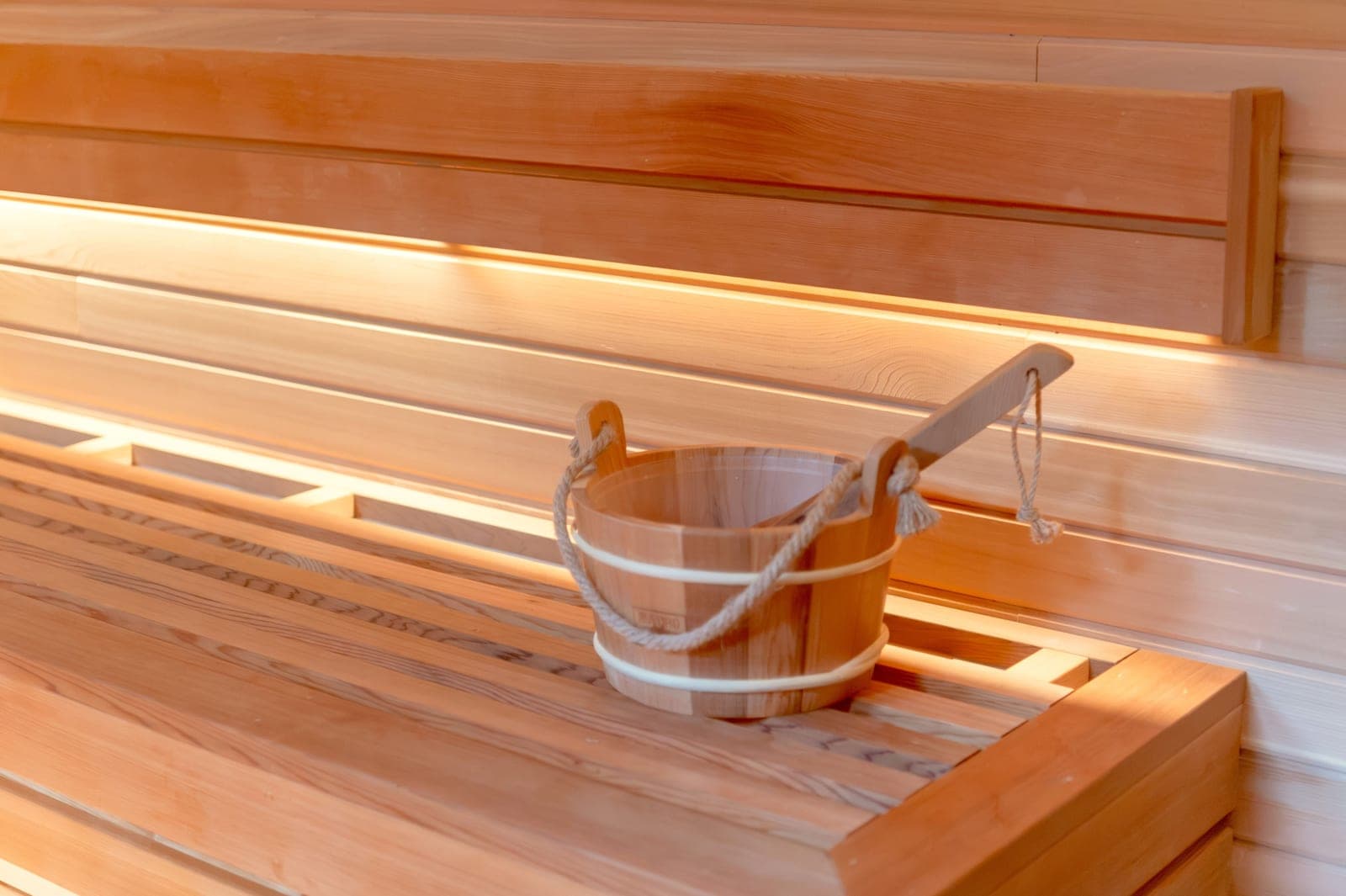
A sauna can genuinely support muscle recovery: the heat increases blood flow to your muscles, helps you relax, and eases the perception of soreness for a lot of people. There is also interesting research around heat and heat-shock proteins. But be honest about the ceiling — a sauna is a pleasant, helpful recovery tool, not a proven miracle that rebuilds muscle for you. Here is how athletes and gym-goers actually use heat for recovery, what the evidence does and doesn't support, and how to fit it around training. This is general information, not medical advice. If the soreness you are treating is joint rather than muscle, our sauna for arthritis and joint pain guide covers the rheumatology evidence instead.
How heat may help recovery
The core mechanism is circulation. Sauna heat widens your blood vessels and pushes more blood to the surface and through your tissues, and better blood flow is broadly associated with delivering oxygen and nutrients to muscles and helping clear the byproducts of hard exercise. On top of that, warmth is simply relaxing — it loosens tight, tired muscles and eases the whole-body tension that builds up after training. For many people that combination of increased blood flow and deep relaxation is the real value: you finish a session feeling looser, calmer and less beaten-up. That is a legitimate recovery benefit, even if it is more about how you feel and how your muscles relax than a dramatic change to the underlying repair process. This is distinct from the question of workout timing, which we handle separately in sauna before or after a workout.
Perceived soreness relief — the honest evidence
One of the most consistent things people report is that heat makes them feel less sore. That matters — perceived soreness affects how you move, sleep and train the next day — but it is important to be precise about what is being claimed. Feeling less sore is partly a real effect of relaxed, warmed muscles and partly the general comfort of the heat. It is not the same as proof that a sauna speeds up the actual repair of muscle tissue. The honest position is qualitative: many athletes find heat a comfortable, effective way to feel better after training, and that is a good enough reason to use it, without overclaiming that it measurably accelerates recovery in a way that a website could promise. Feeling recovered is valuable; just do not confuse it with a guarantee.
Heat-shock proteins: research, not a miracle
You will see "heat-shock proteins" cited a lot in sauna-and-recovery content, so here is a careful version. Heat exposure prompts the body to produce heat-shock proteins, which are involved in protecting and repairing cells, and this is a genuinely interesting area of ongoing research into how heat might support the body, including muscles. What it is not is a settled, proven mechanism that makes a sauna a performance-enhancing certainty. Treat it the way a careful reader should: a plausible and intriguing line of science that is still being worked out, not a finished result you can bank on. We will not attach specific numbers or promises to it. The broader, encouraging research on heat and health is reviewed generally in sources like Mayo Clinic Proceedings, but recovery-specific certainty is not there.
The honest evidence limits
Pulling that together, here is where the evidence honestly stands so you can use a sauna with clear eyes:
- Increased blood flow and relaxation are real and well understood. That is the solid part.
- Reduced perceived soreness is commonly reported — a genuine feel-better effect.
- Heat-shock proteins are a promising research area, not a proven recovery guarantee.
- A sauna does not replace the basics. Sleep, nutrition, protein and sensible training loads do the heavy lifting of recovery.
In short, a sauna is a nice addition on top of the fundamentals, not a substitute for them.
Sauna versus cold plunge for recovery
Recovery discussions almost always end up comparing heat with cold, so briefly: cold plunges and ice baths are used to blunt inflammation and soreness, while heat works the opposite way, through increased blood flow and relaxation. Both are popular, both have their advocates, and many athletes use them at different times for different purposes — cold to calm things down, heat to loosen up and relax. Some people even alternate them. There is nuance about when cold might interfere with certain training adaptations, which is beyond this page, but the practical takeaway is that heat and cold are different tools rather than rivals. If the hot-cold cycle interests you, we cover it in sauna and cold plunge contrast therapy. The nuance about cold interfering with training adaptations is graded claim by claim in cold plunge benefits, and the purchase decision itself is in sauna vs cold plunge.
Fitting sessions around training (and safety)
Practically, most people use a sauna as a recovery session after training or on a rest day, once they've cooled down and rehydrated from the workout itself — heat is for relaxing and recovering, not for stacking more strain onto an already-taxed body. Keep sessions to a comfortable length, hydrate well before and after (you have already lost fluid exercising, and the sauna adds to that), and do not use heat to push through when you feel wiped out or unwell. If you have a heart condition, blood-pressure issues, are pregnant, or take medication that affects hydration or heat tolerance, talk to your doctor before adding regular sauna sessions to your training. Listen to your body and get out if you feel dizzy or unwell. This is general information, not medical advice.
The honest bottom line
A sauna is a genuinely useful recovery tool: more blood flow, real relaxation, and less perceived soreness for many people, plus an interesting research angle in heat-shock proteins. But it is a helpful complement, not a magic bullet — it does not replace sleep, nutrition and smart programming, and the biggest, most reliable benefit is simply feeling looser and more relaxed after a hard session. Use it that way: hydrate, keep sessions sensible, fit them around your training, and check with your doctor first if you have any relevant condition. This is general information, not medical advice.
Questions
Frequently asked
Is a sauna good for muscle recovery?
Do saunas actually reduce muscle soreness?
What are heat-shock proteins and do they help recovery?
Sauna or cold plunge for recovery?
Keep reading
Related
More in Sauna Guides
Receipts
Sources
- Mayo Clinic Proceedings (2018) — health benefits of sauna bathing
- JAMA Internal Medicine (2015) — sauna bathing and mortality
We do not run a testing lab, and we do not pretend to. Product specs are transcribed from the manufacturer's own listing and cited as claims; health figures come from peer-reviewed studies, named and linked. Where we could not verify something, we say so on the page rather than quietly leaving it out. Read our full method.