HUB / ACCESSORIES · Sauna Accessories
Sauna Aromatherapy: Scents and How to Use Them
A little scent turns a sauna session into something more inviting. Here's how to add sauna oils safely, which fragrances suit the room, and an honest read on what aromatherapy does and doesn't do.
We earn a commission when you buy through our Amazon links, at no extra cost to you. It never affects our rankings, and we say so when the cheaper product is the better buy. How this works.
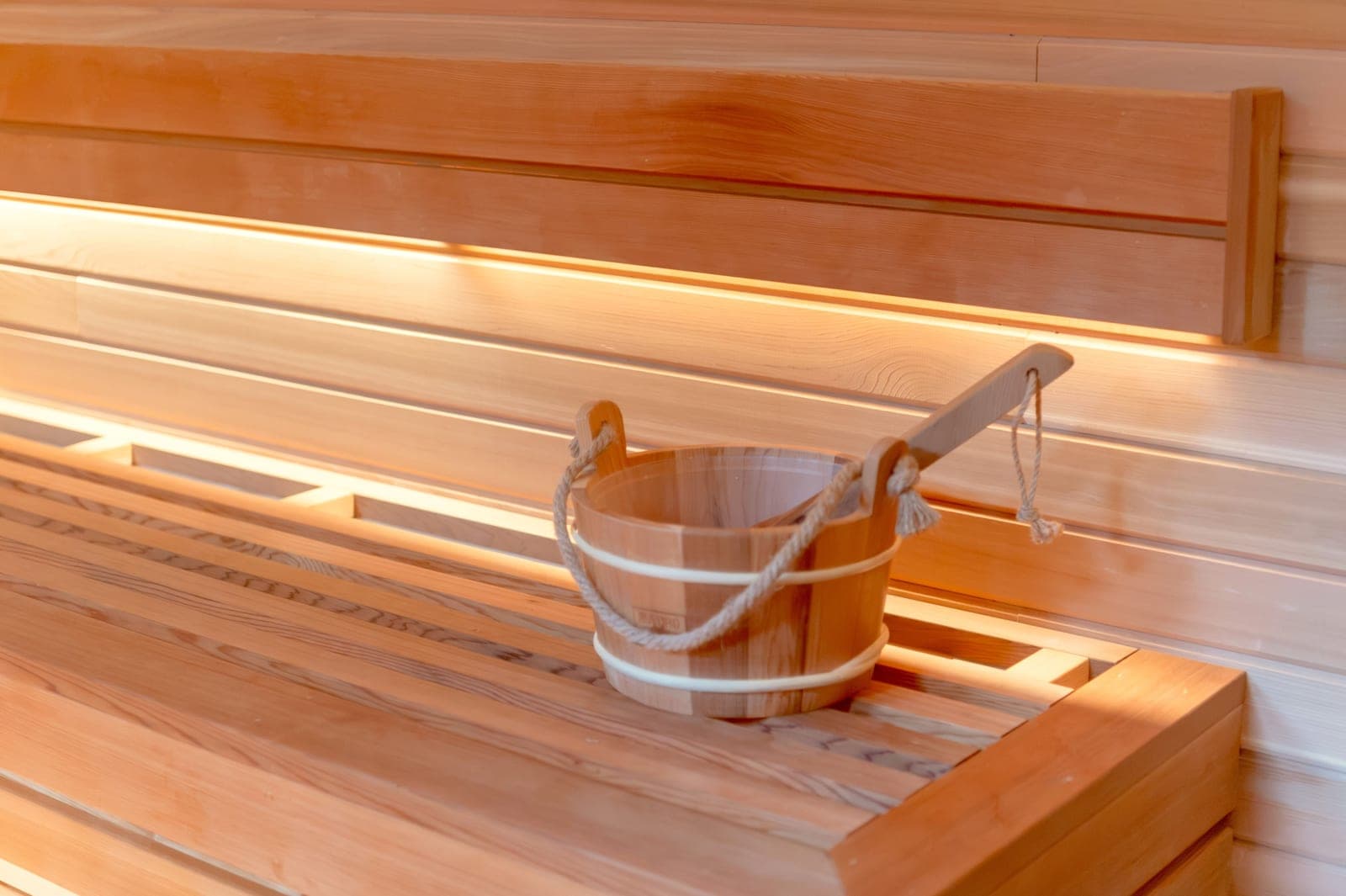
Sauna aromatherapy means adding a scent to your loyly — but the safe way is to mix a small amount of a sauna-specific oil or fragrance into the bucket water, never to pour concentrated oil straight onto the hot stones. Done right it makes a session more pleasant and inviting; done wrong it smokes, smells burnt, and can damage the heater. A subtle scent — eucalyptus, birch, pine — is one of the easiest ways to make a home sauna feel like more of a ritual. Here's how to do it safely, which fragrances work, and an honest take on the benefits.
The one safety rule: dilute it in the water
This is the part to get right. Never pour neat essential oil directly onto the sauna stones.Concentrated oil on a 300F+ rock can smoke, produce an acrid burnt smell, and isn't good for the heater — and in the worst case, some oils are flammable. The correct method is to add a small, label-directed amount of a sauna-specific scent to the bucket water, so it's heavily diluted, then ladle that scented water over the stones as normal for loyly. The steam carries the fragrance gently through the room. Use products made for saunas rather than random kitchen oils, and start with less than you think — you can always add more to the next pour. The pouring technique itself is in how to use a sauna bucket and ladle.
Which scents suit a sauna
The traditional, best-loved sauna fragrances are the woodland and resinous ones — they smell right in a hot wooden room:
- Eucalyptus — the classic. Fresh, cooling and sharp; the most popular sauna scent for a reason.
- Birch — deeply traditional in Finnish sauna culture, clean and green.
- Pine and spruce — resinous, forest-like, and at home in a wood cabin.
- Mint and menthol — cooling and bracing, good if you like a crisp session.
- Lavender — softer and calmer, for a wind-down session.
Authentic Finnish sauna scents (a genuine one made in Finland is a nice touch) are featured in our best sauna loyly accessories roundup. Keep whatever you choose subtle — a sauna scent should be a hint, not a wall.
Only on a rock stove
Aromatherapy through loyly only works on a traditional rock stove, because it relies on ladling scented water over hot stones. An infrared cabinhas no stones and makes no steam, so you can't make scented loyly in one — if you want fragrance in an infrared cabin, the safe options are a separate diffuser placed nearby (not on the heaters) or a scented towel, never oil on the panels. If steam and scent are important to you, that's a point in favor of a traditional sauna, which we cover in best traditional saunas. Match the method to your sauna type.
The honest take on benefits
Let's be straight about what aromatherapy is and isn't. The genuine, uncontroversial benefit is enjoyment: a pleasant scent makes the session more relaxing and inviting, and that's a perfectly good reason to use it. Some scents feel subjectively cooling (eucalyptus, mint) or calming (lavender), and people report they help them unwind. What we won't do is claim aromatherapy delivers specific medical outcomes — clears congestion as a treatment, cures anything, or provides proven clinical effects. Those claims run ahead of the evidence. Enjoy sauna scents for what they reliably are: a small, pleasant enhancement to the ritual. This is general information, not medical advice — and if you have asthma or a sensitivity to strong fragrances, go easy or skip scents, since steam and strong aromas can irritate some airways.
Practical tips
- Less is more. Start with a few drops in the bucket; over-scenting is overpowering and wasteful.
- Be considerate in a shared sauna. Scent is shared — ask before adding a strong fragrance others have to breathe.
- Store oils sealed and cool, away from the heat, so they keep.
- Keep the stove clean.If you ever get residue, clean the stones per the manufacturer's guidance; well-diluted scent in the water rarely causes buildup.
The honest bottom line
Sauna aromatherapy is a lovely, low-cost enhancement — as long as you add the scent to the bucket water and never pour neat oil on the stones. Choose a traditional woodland fragrance like eucalyptus, birch or pine, keep it subtle, be courteous in a shared room, and use it only on a rock stove (infrared cabins need a separate diffuser instead). Enjoy it for the genuine pleasure it adds to a session, and treat the bolder health claims with a pinch of salt. This is general information, not medical advice. Add it to the rest of your kit with the accessories checklist.
Questions
Frequently asked
How do you use essential oils in a sauna?
What is the best scent for a sauna?
Can you use aromatherapy in an infrared sauna?
Does sauna aromatherapy have health benefits?
Keep reading
Related
More in Sauna Accessories
Receipts
Sources
We do not run a testing lab, and we do not pretend to. Product specs are transcribed from the manufacturer's own listing and cited as claims; health figures come from peer-reviewed studies, named and linked. Where we could not verify something, we say so on the page rather than quietly leaving it out. Read our full method.