HUB / GUIDES · Sauna Guides
Where to Buy a Sauna
Five channels sell home saunas, they are not interchangeable, and the sticker price is maybe two-thirds of what you will actually pay. Here is how to read a sauna for sale before you pay for it.
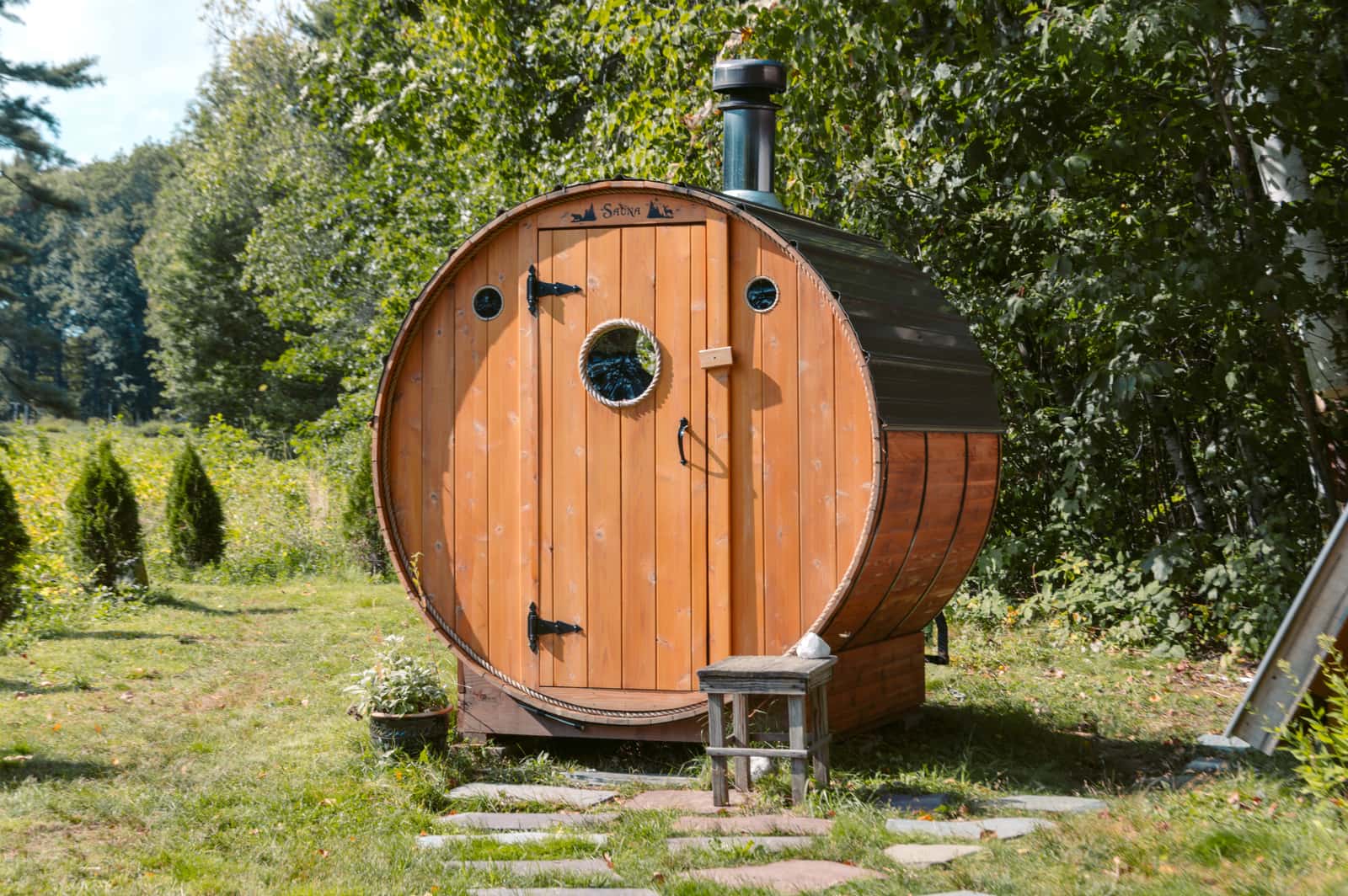
The sticker price on a sauna is roughly two-thirds of what you will actually spend, and which channel you buy from decides the other third. A $4,000 barrel kit that arrives on a semi you have to unload, needs a 240 V circuit run, and sits on a pad you have not poured yet is not a $4,000 purchase. Before you compare any two listings, you need to compare them on landed cost and on recourse — what happens when a panel arrives split, or the heater dies in month fourteen. Those two things vary enormously between the five places saunas are sold, and almost nobody selling you one will volunteer the difference.
The five channels, and what each is actually good at
1. Amazon and the big marketplaces
This is where most home saunas under about $6,000 now change hands, and it is genuinely the best channel for a specific set of buyers: anyone buying an infrared cabin, a portable unit, a sauna blanket or a mid-market barrel kit.
What it is good at: returns. A marketplace return window on a four-figure item is an enormous and underrated thing — it is the only channel where you can decide, after it arrives, that you have made a mistake. Pricing is also the most transparent and the most competitive, and freight is usually quoted inside the price rather than added at checkout.
What it is bad at: identifying who you are actually buying from. The same physical sauna frequently appears under several house brands at different prices, support is a third-party seller rather than a manufacturer, and the parts question — can I get a replacement door gasket in three years — often has no good answer. Read the seller name, not just the brand name.
2. Direct from the manufacturer
The established sauna companies — the Finnish and North American brands that have been doing this for decades — mostly sell direct from their own sites, and so do most of the newer direct-to-consumer brands.
What it is good at: the parts and support answer. A manufacturer that expects to be here in ten years stocks gaskets, elements, controllers and glass. You also get the real configuration options — wood species, heater sizing, bench layout, door handing — that a marketplace listing flattens into one SKU.
What it is bad at: price discipline and returns. Direct pricing is often higher than the same brand's marketplace listing, and sometimes lower — they move independently, which is why we tell you to check both. Returns on a freight-delivered sauna are typically restocking-fee territory or simply not offered. Note also that under the FTC's Mail, Internet, or Telephone Order Merchandise Rule, a seller has to ship within the time it promised (or within 30 days if it promised nothing) and has to offer you the choice of a refund if it cannot — worth knowing when a custom build slips.
3. Big-box and warehouse clubs
Costco, Sam's Club, Home Depot and Lowe's all periodically carry saunas, usually barrel kits or infrared cabins, often as seasonal buys.
What it is good at: return policy and price, in that order. A warehouse club's return policy on a large item is the most generous recourse available anywhere in this market, and the buying volume sometimes produces genuinely low prices.
What it is bad at: availability and depth. It is here until it is not, there is no configuration choice, in-store staff will not know the heater's kW rating, and once the season's buy sells through, parts come from whoever made it rather than from the retailer.
4. A local sauna dealer or installer
Specialist dealers exist in most metros, often alongside hot tub and pool businesses, and this is the channel people forget.
What it is good at: everything that goes wrong on site. A dealer who delivers, assembles, coordinates the electrician and pulls the permit removes the entire category of risk that actually ruins sauna purchases — which is not the sauna, it is the slab, the circuit, the access route and the inspection. If you are putting a traditional heater in a basement or a garage, this is frequently the cheapest route once you count the things you would otherwise hire separately.
What it is bad at: sticker price. You will pay more than the marketplace number, sometimes much more. Whether that is a markup or a bargain depends entirely on how much of the install you were realistically going to do yourself.
5. The used market
Facebook Marketplace, Craigslist and estate sales carry a steady trickle of barrels, cabins and prefab rooms, frequently at a third of new.
What it is good at: price, obviously, and occasionally you find a high-end Finnish room being removed by a renovator who just wants it gone.
What it is bad at: everything else. No warranty, no returns, no parts guarantee, and you are responsible for disassembly and transport of something that weighs as much as a small car. The two things to inspect are the heater and the wood — an old heater with pitted elements and crumbling stones may cost more to make safe than a new one costs, and a barrel that has sat uncovered through two winters may have rot where the staves meet the cradles. Read how long a barrel sauna lasts before you decide a ten-year-old one is a bargain.
Landed cost: the number you should actually compare
Take any listing price and add the following. This is the arithmetic that makes a "cheap" sauna expensive.
- Freight, and specifically the delivery type. Anything over about 150 lb ships LTL freight, which by default means curbside on a semi with a liftgate — the driver is not obliged to get it into your yard, and will not help you unload. A barrel kit arrives as several hundred-pound crates. If the truck cannot make your street, you are paying for a terminal pickup or a smaller truck. Ask before you buy: liftgate included, residential delivery, and what the reconsignment fee is.
- Electrical. An infrared cabin or a small plug-in unit runs on a 120 V outlet and costs nothing extra. A traditional heater above about 4.5 kW needs a dedicated 240 V circuit, and that is an electrician, a breaker, a run of cable and possibly a panel with no spare capacity. Our sauna electrical requirements guide and breaker sizing guide tell you what to ask for; the quote comes from a licensed electrician working to the NEC as adopted locally.
- The base it sits on. An outdoor barrel needs a firm, level, drained pad — gravel, pavers or concrete. See our barrel sauna foundation guide. This is the line item people discover after the crates arrive.
- Permits and inspection, where required. Varies by jurisdiction and whether the structure is permanent; check your local amendments against the adopted code and read sauna permit requirements.
- Assembly labor, honestly assessed. A barrel kit is a genuine two-person weekend — see how to assemble a barrel sauna. If that is not happening, it is a paid install.
- Running cost. Not purchase, but it belongs in the decision. Our running cost guide works it through.
Do this once and the channel comparison usually inverts. A dealer price that looked 40% high often lands within a few hundred dollars of a marketplace kit once freight, a pad and an electrician are in the column — and the dealer carries the risk.
Reading a sauna listing: the red flags
We look at a lot of these. The warning signs are consistent.
No heater kW rating, or kW with no room volume. A heater is sized to the cubic footage of the room. A listing that quotes one without the other is either careless or hiding an undersized stove. Our heater size guide has the sizing rule; if the numbers in the listing fail it, walk.
"Cedar" with no species named. Western red cedar, eastern white cedar and hemlock are different woods at different prices with different rot resistance. A listing that says only "cedar wood" frequently means hemlock with a cedar-toned finish. See cedar vs hemlock and best wood for a sauna.
No electrical certification mark. A sauna heater is a high-wattage appliance in a wet room. You want a UL, ETL or CSA listing mark, and you can check a claimed one in the UL Product iQ directory. An uncertified heater may also fail inspection and may void a homeowner's policy.
"Made in Finland" where only the heater is. Origin claims have a legal standard behind them — the FTC's Made in USA rule is the domestic analogue — and in this category the common move is a Finnish-brand heater in a room built elsewhere. That is not necessarily bad. It is bad when the listing lets you believe otherwise.
A warranty with no term, or no stated parts coverage. "Lifetime warranty" on a sauna usually means the structure, with one year on the heater and electronics — which is the part that fails. Make the seller state the heater term. Our sauna warranty guide covers what is normal.
Stock photos of a different sauna. Reverse-image the hero shot. If the listing photos are a render or belong to a competitor's product, the rest of the listing deserves the same suspicion.
So which channel should you use?
Short version, by what you are buying:
- Infrared cabin, portable unit or blanket: marketplace. The return window is worth more than anything the other channels offer, and these ship parcel or light freight. Start at best infrared saunas or best portable saunas.
- Barrel or outdoor kit you will assemble yourself: marketplace or direct, whichever is cheaper on the day, with freight terms confirmed in writing. Compare picks in best barrel saunas and run the barrel sauna buying checklist before you pay.
- Traditional indoor room, or anything needing a 240 V circuit and a permit: get at least one local dealer quote. Compare it on landed cost, not sticker. Our indoor sauna kits page covers the kit route if you still prefer it.
- You want the cheapest possible way to find out if you like saunas: do not buy a building. Buy a portable (the SaunaBox SmartSteam is the best-specified steam tent we have looked at) or a blanket for a few hundred dollars, use it for three months, and then spend five thousand knowing what you actually like. This is the single most money-saving piece of advice on this page.
And one closing note on timing, because it is a real lever: sauna pricing is seasonal. The deepest discounts in this category land in the Q4 holiday window — we track them on our Black Friday sauna deals page — and again at the end of outdoor season. If you are not in a hurry, waiting for a sale is worth more than haggling.
Questions
Frequently asked
Where is the cheapest place to buy a sauna?
Is it safe to buy a sauna on Amazon?
How much does it cost to have a sauna delivered?
Should I buy a used sauna?
What should a sauna listing tell me before I buy?
When is the best time of year to buy a sauna?
Keep reading
Related
- Sauna buying guideWhich type of sauna to buy, before you decide where to buy it.
- Barrel sauna buying checklistRun this against any barrel listing before you pay.
- How much does a home sauna cost?The price bands by type, so you know what a fair listing looks like.
- Sauna electrical requirementsThe biggest hidden line item in a traditional sauna purchase.
More in Sauna Guides
Receipts
Sources
- FTC — Mail, Internet, or Telephone Order Merchandise Rule (shipping deadlines, refund rights)
- FTC — Made in USA labeling standard (how origin claims must be substantiated)
- UL Solutions — Product iQ certification directory (verify a listing mark)
- NFPA 70 (National Electrical Code) — scope and adoption
- International Code Council — adopted residential codes by state
We do not run a testing lab, and we do not pretend to. Product specs are transcribed from the manufacturer's own listing and cited as claims; health figures come from peer-reviewed studies, named and linked. Where we could not verify something, we say so on the page rather than quietly leaving it out. Read our full method.