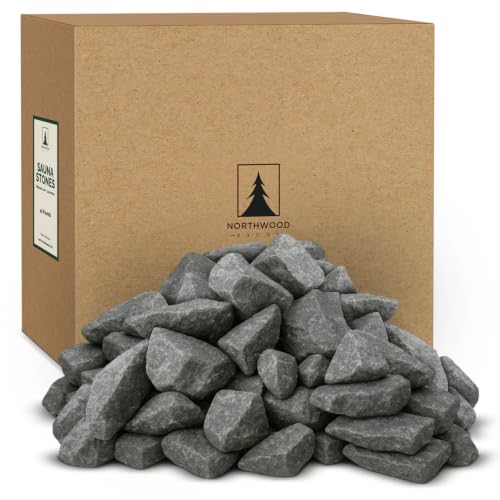
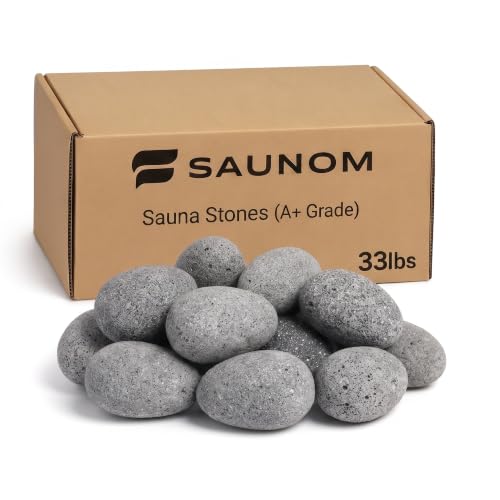
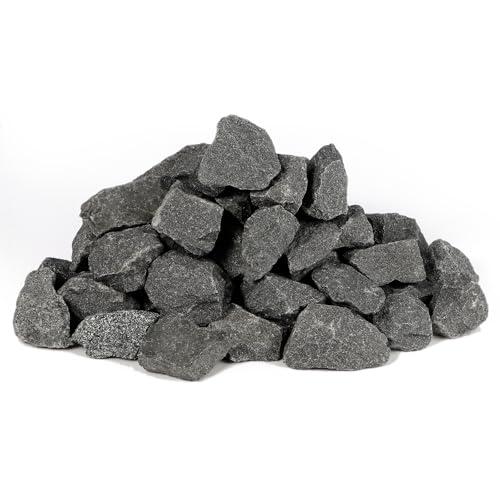
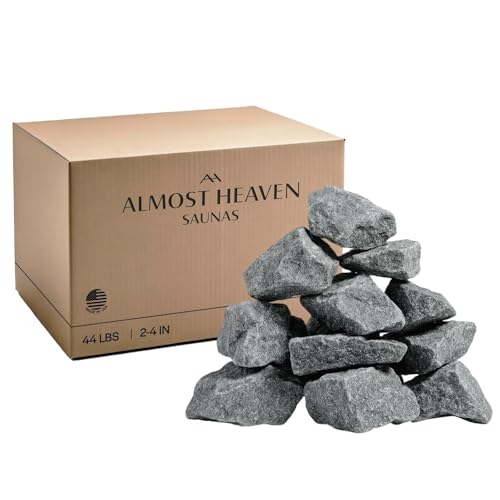
Buy the Harvia olivine diabase box if you own a Harvia heater, which on this site is most people — it is the stone the stove maker sells for its own stoves, at a published 5-10 cm size. If you want the same rock for slightly less, the Northwood diabase box publishes more detail than anything else in the category. If you are only replacing the handful of stones that crumbled at the top of the basket, do not buy 45 pounds of rock — buy the Leinousen top-up pack and keep the difference. And if you are about to put landscaping gravel or river rock in a sauna heater, please read the next section first.
Why the rock type is the whole specification
A sauna stone does one job and it is a brutal one. It gets heated to several hundred degrees, then has cold water poured over it, then cools, then does it again — hundreds of times a year. Rock that is not up to that cycle does one of two things: it crumbles into dust that blocks airflow through the basket, or it cracks, and a cracking stone in a hot heater can throw fragments.
What survives is dense, low-porosity igneous rock. Porosity is the killer: water trapped in pores flashes to steam inside the stone and splits it. That is why river rock, sandstone, limestone, granite with visible grain and anything from a garden center is the wrong answer — not because it is cheap, but because it holds water. The USGS primer on igneous rock is the plain-English version of why igneous rock behaves differently from sedimentary rock here.
Three rock names show up on legitimate listings, and they are close cousins:
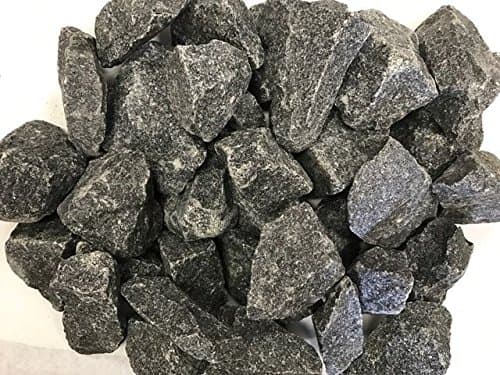
- Olivine diabase. The Finnish standard and what the stove makers ship. Dense, dark, high iron and magnesium content, and the rock sauna culture settled on after a very long time trying others. If a listing says this, it is telling you something real.
- Diabase. The same family without the olivine content stated. Behaves very similarly; quarried across Europe and North America. Treat it as near-equivalent rather than identical, because the listing is not claiming the olivine fraction.
- Vulcanite. A dense volcanic rock sold widely as a sauna stone, usually at a lower price than diabase. A named rock with a real specification behind it, which already puts it far ahead of the unnamed boxes.
Basalt also appears, and it is legitimate igneous rock, though quality varies much more by quarry than diabase does. What should make you stop is a listing that says only "sauna rocks", "premium stones" or "natural heater stones" with no rock name anywhere. That silence is the thing we rank on hardest, and two of the six picks here are marked down for exactly it.
Size is the second spec, and it is not cosmetic
Published stone size matters nearly as much as rock type, for a reason that is easy to miss: the gaps between the stones are the point.
An electric heater works by pushing hot air up between the stones. Pack it with small stones and you choke that airflow, the elements run hot against rock instead of air, and the heater's thermal cut-out starts tripping. Pack it with stones that are too large and you leave voids where the elements radiate into empty space, which wastes power and shortens element life. The 5-10 cm (2-4 inch) band the good listings publish exists because it is the size that stacks with the right amount of air between the pieces.
Wood-burning stoves are more forgiving and generally want larger stone, because the firebox is bigger and the stone sits above rather than between heating elements. If you are filling a wood stove — see best wood-burning sauna stoves or best sauna tent stoves — check what the stove manual asks for, because several of them specify a larger stone than an electric heater wants.
How much rock does your heater take?
Check the manual first; this is published for every real heater and guessing is how people end up with half a box spare or three boxes short. As a rough orientation while you are shopping, the small 3-4.5kW electric heaters this site ranks take on the order of 20-45 pounds, and the larger 6-9kW units take considerably more. Harvia publishes a stone capacity for every model in its heater range, which is the standard worth holding other brands to.
The practical upshot for this page: a 44-to-47 pound box is a full fill for most home electric heaters, a 33 pound box fills a small one, and an 11-13 pound pack is a top-up rather than a fill. Buy to the job you have. Our sauna heater roundup and the sauna heater rock guide cover which heater wants what.
How we ranked them
Criteria first, in weighted order. Everything below is a judgment from documented research — the listings' own published rock types, sizes and weights plus aggregated owner reports. We have not put a single one of these through a thermal-shock test, and our methodology says so in those words.
- Does it name the rock?Olivine diabase, diabase, vulcanite, basalt. A named rock is a checkable claim; "premium sauna stones" is not. This is the heaviest-weighted criterion on the page and it separates the top three from the bottom two.
- Does it publish a stone size band? 5-10 cm or 2-4 inches is what you want for an electric heater. A listing with a weight and no size leaves you sorting rock on the garage floor before you can fill the basket.
- Is the weight right for a real job? A full fill, a small fill, or a top-up — all three are legitimate purchases, and we score each box against the job its weight actually suits rather than against the biggest box available.
- Electric only, or wood too? Several listings state both. If you run a barrel or a tent stove, that line matters, because the stone that suits a 4.5kW cabinet heater is not automatically what a firebox wants.
- What does it cost per pound of usable rock? Last, not first. Stone is heavy, so shipping dominates the price, and the cheapest box per pound is a bad buy if nobody will say what is in it.
Which one is for you
- You own a Harvia heater — the overall pick: the Harvia olivine diabase, 44 lb. The stove maker's own stone at a published 5-10 cm, which takes the question out of the purchase entirely.
- You want the most published detail per dollar: the Northwood diabase, 45 lb from Germany. Rock named, size in inches and centimeters, weight in pounds and kilos, quarry country stated.
- You want a named rock at the lowest price: the SAUNOM vulcanite, 33 lb. About half the price of the diabase boxes, and it still tells you what the stone is. No size band published.
- You want the Finnish-sourced olivine standard: the Sauna Place olivine rocks, 45 lb from Finland, which has been our default stone recommendation across the site.
- You are filling a large stove, or two: the NetLea 47 lb box — the most rock in one order here, with a low-dust claim and, unfortunately, no rock type named.
- You are replacing a few cracked stones — the budget pick: the Leinousen 25-piece pack at 11-13.2 pounds. Sold explicitly as a top-up, and priced like one.
- You have an infrared cabin: none of this applies. There is no rock basket, you cannot throw water, and there is nothing on this page for you — see infrared vs traditional for why.
Loading the basket properly
Most of the value in a box of good stone is lost by stacking it wrong, and it takes five extra minutes to get right.
Rinse first. New stone arrives with quarry dust on it. That dust becomes a gritty smell on the first few heats and a film on the heater, so hose the stones off and let them drain before they go anywhere near the basket.
Big stones at the bottom, smaller at the top. The large pieces go in first, around and between the elements, which is where you most need airflow. The smaller pieces fill the top layer where they are in the steam path and will do the most work turning water into loyly.
Stack, do not pour.Place each stone so it rests on others with gaps between — think dry stone wall, not bucket of gravel. Tipping the box in produces exactly the dense, airflow-choking pack the heater's cut-out will object to.
Never cover the elements completely and never force a stone between them. Elements must be able to breathe. A stone wedged tight against an element is a dead element within a season.
Fill to the basket, not above it. Heaping stone over the rim looks generous and changes the airflow the heater was designed around.
The full procedure, including what to do with the leftover rock, is in the sauna heater rock guide, and how to make loyly covers the other half — what to actually pour on them once they are in.
When to replace them, and why people leave it too long
Sauna stones are a consumable, which surprises people who assume rock is permanent. Thermal cycling slowly breaks them down from the inside, and the symptoms arrive before the failure does.
The signs. Stones that have gone rounded and small where they were angular. Visible cracks. Dust or grit in the bottom of the basket. A heater that takes noticeably longer to come up to temperature than it used to, or one whose cut-out starts tripping — both are classic symptoms of a basket that has collapsed into a dense, airflow-blocking mass.
The cadence. Published advice for a home sauna lands around once a year for regular use, and we go into the detail in how often to replace sauna rocks. The honest version is that it depends almost entirely on how often you throw water: a dry sauna used twice a week is gentle on stone, and a wet one used daily is not.
The job is usually a top-up, not a replacement. The stones at the top take the water and fail first; the ones down among the elements often look fine for years. That is precisely why the small 11-13 pound pack earns a place here — it matches the maintenance most people actually do, and a yearly restack with a handful of fresh stones is both cheaper and better for the heater than ignoring it until something trips.
What not to put in a sauna heater
This is short, and it is the part of the page most worth sending to someone who is about to improvise.
River rock and beach stone. Smooth, rounded, water-worn and often porous. The rounding you find attractive is a sign it has spent a long time absorbing water.
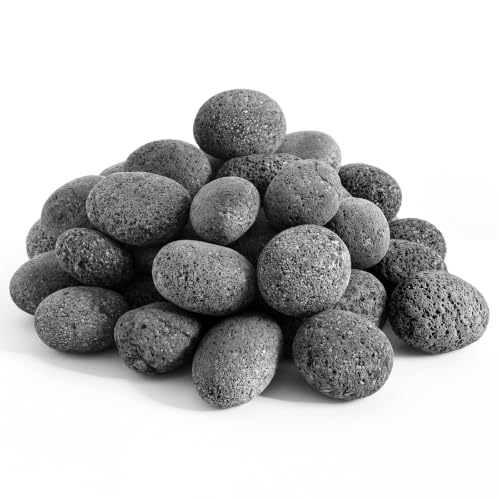
Landscaping gravel, lava rock for grills, and decorative stone. Sold for appearance or for drainage, graded for neither heat nor thermal shock, and frequently porous enough to split.
Sandstone, limestone and anything layered. Sedimentary rock has bedding planes, and bedding planes are where it comes apart under repeated heating.
Anything with a coating, a sheen or a smell. Sealed, dyed or oiled decorative stone will put whatever that coating is into the air of a small room at 190F.
And on Himalayan salt blocks: they are sold as a sauna accessory and they are not a heater stone. Do not pour water onto salt in a heater basket. If a cabin has a decorative salt panel on the wall, that is a separate thing from the rock that goes on the element.
The underlying rule is the one the Finnish Sauna Society has effectively been demonstrating for a century: the stone is part of the heater, not decoration on top of it. Buy rock sold for the job, from a listing willing to say what it is.
Where stones sit in the cost of a sauna
A box of proper stone costs a fraction of what the heater does and a tiny fraction of what the room does, and it is the component with the largest effect on how the sauna actually feels per dollar spent. A 3.5kW Harvia in a hemlock cabin with good stone makes excellent loyly; the same heater with a collapsed basket of dust and river rock makes a hot, dry room that disappoints everyone who sits in it.
So if you are speccing a sauna now, put stone on the budget line rather than treating it as an afterthought — along with a bucket and ladle and a thermometer that reads to 200F. Our best indoor saunas under $3,000 page builds that into the arithmetic for the two traditional cabins in that band, and loyly accessories covers the rest of the short list. If the heater itself is still undecided, how to choose a sauna heater is the place to start.