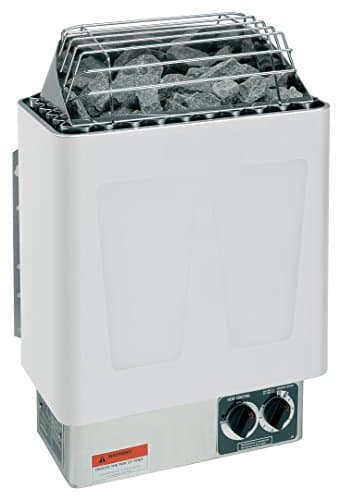
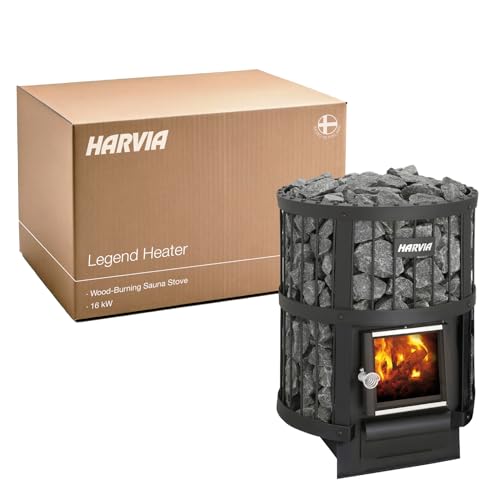
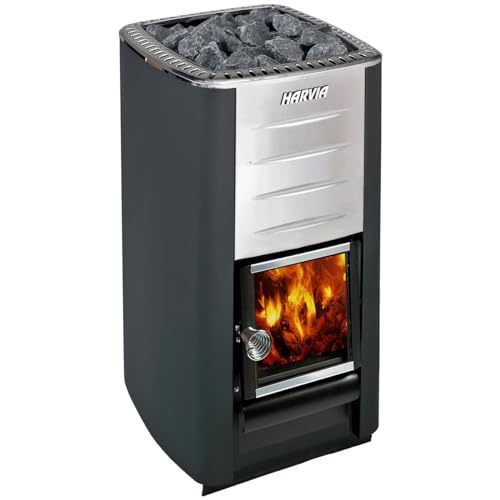
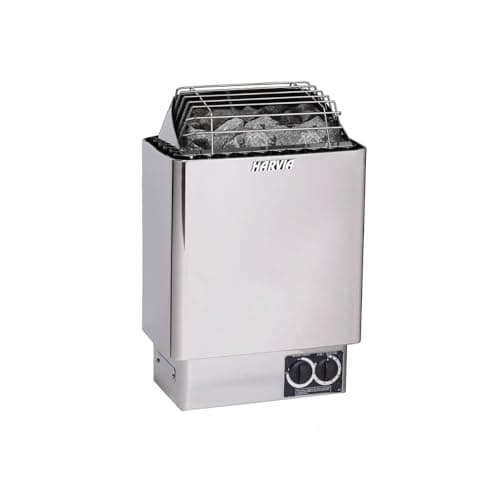
For most home sauna rooms the Harvia to buy is the KIP 8kW: 240V single-phase, built-in controls, stones in the box, and a published rating in the 350-450 cubic foot range, which is the size most home rooms actually are. If your room is a genuine small two-seater, step down to the KIP 4.5kW rather than up — an oversized heater buys you a heavier circuit and nothing else. If you are heating with wood, the M3 is the volume answer and the cast-iron Legend is the gentler, longer-burning one. The budget pick in the line is the KIP 4.5kW, which is the cheapest electric Harvia that will properly heat a real room. Live prices and their as-of date are in the table.
Why people search for the brand rather than the spec
Because the brand is doing real work here. Harvia is a Finnish manufacturer whose heaters turn up inside a large share of the kits this site covers — the Harvia-equipped cabins page exists for exactly that reason. When a $3,000 kit says "with a genuine Harvia stove", that line is the single most useful thing on the listing, because it means the heating element in the middle of your sauna comes from a company that publishes room-volume ratings, manuals and spare parts rather than from an unnamed factory.
That is also the honest limit of what the badge buys you. A Harvia will not make an undersized room heat faster or an uninsulated garage behave. What it buys is documentation you can check before you spend, and a service life backed by parts that still exist in five years.
How we ranked them
By room, not by price. Everything below is a judgment from documented research — Harvia's own published figures and listing data plus aggregated owner reports. We have not bench-tested a heater and our methodology says so plainly.
- Published room-volume rating. Harvia states a cubic-foot range for every heater it makes. That rating, matched to your room, decides the model. Everything else is secondary.
- Electrical load the room can realistically be given. A bigger heater means a bigger breaker and heavier cable. See breaker size.
- Controls: built in or separate? Built-in knobs are simpler and cheaper to install; a separate controller lets you put the panel outside the hot room. Controls guide.
- Stone capacity. More stone means more stored heat and better steam from each ladle. It also means a longer warm-up.
- Wood or electric. Not a ranking question so much as a fork in the road — we rank within each.
The range, side by side
| Model | Fuel | Output | Suits | Controls |
|---|
| KIP 8kW | Electric, 240V single-phase | 8kW | Mid to large rooms, roughly 350-450 cu ft | Built in |
| KIP 4.5kW | Electric, 240V single-phase | 4.5kW | Small rooms, roughly 200-250 cu ft | Built in |
| Legend (cast iron) | Wood | 16kW class | Full-size rooms, gentler and longer | A door and a damper |
| M3 | Wood | 16.5kW class | Full-size rooms, the volume model | A door and a damper |
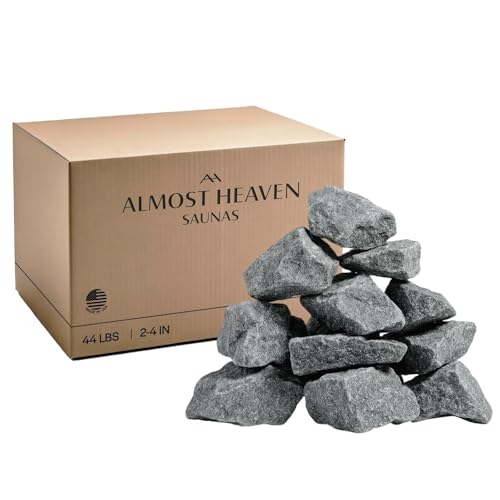
| Olivine diabase stones | n/a | 44 lb box | Filling any of the above as intended | n/a |
The row to read first is the one matching your room volume. Measure length times width times height in feet, then compare against the rating — and remember that a lot of glass, an uninsulated wall or a cold concrete floor all push you up a size. Our heater size guide uses roughly 1kW per 45 cubic feet as the working rule and explains when to break it.
Which one is for you
- Most home sauna rooms — the overall pick: the Harvia KIP 8kW. Built-in controls, stones included, 240V single-phase, and the rating that covers the size most people build. If you are unsure and your room is between sizes, this is the safe one.
- A genuinely small two-person room — the budget pick: the Harvia KIP 4.5kW. The cheapest electric Harvia that heats a real room, and the lighter electrical job of the two. Do not buy it for a room the 8kW is rated for; an underpowered heater never gets there and runs flat out trying.
- Wood, and you want the gentler heat: the Harvia Legend cast-iron stove. Cast iron takes longer to come up and gives it back more slowly, which is the quality wood-fired owners talk about when they say the heat feels softer.
- Wood, and you want the standard answer: the Harvia M3 — the model most wood-fired rooms in this category are built around, and the one with the widest supply of flue parts and spares.
- Whatever you bought, buy these too: the Harvia olivine diabase stones. Harvia's own rock, at the size its baskets are designed for. See best sauna stones for the full field and when to replace them.
Prices on individual Harvia models move with stock, and when a listing has no live buyable offer we show no number rather than a stale one. That is deliberate, and it is why the table above may read "check price" on a model that had a figure last week.
Sizing a Harvia properly, with the arithmetic
Harvia publishes a cubic-foot range per model, which makes this one of the few corners of the sauna market where you can do the sum before you spend.
Measure the room in feet and multiply: a 6 x 5 x 7 foot room is 210 cubic feet, which sits inside the KIP 4.5kW's stated range. A 7 x 6 x 7 room is 294 cubic feet and is asking for something between the two — in which case go up, not down, because an undersized heater runs continuously and still disappoints.
Then apply the corrections. Add effective volume for a large glass door or window, for an uninsulated exterior wall, for a concrete floor, and for a room that will be used in a cold garage rather than a warm basement. Each of these is a real heat loss and none appears in a listing. The Finnish Sauna Society treats proper insulation and a vapour barrier as part of the room rather than an upgrade, and so should you — see vapour barrier and ventilation.
The 240V part nobody prices
Every electric Harvia here is a hard-wired 240V appliance on a dedicated circuit. In the US that work falls under NFPA 70 as adopted locally, and it means an electrician, a correctly sized breaker and a cable run from the panel. The quote depends on the distance from your panel far more than on the heater. Get it before you order the heater, not after.
Two pages cover the detail: how to wire a sauna heater and do you need an electrician. The short answer to the second is yes.
Harvia versus the cheaper heaters
We also rank Turku and VEVOR, both of which cost considerably less and both of which heat a room. The difference is not mystical. It is documentation, parts availability and the probability that a replacement element exists in four years. If the sauna is a long-term fixture in a house you own, that gap is worth paying for; if you are heating a rental conversion you may not keep, it is reasonable to spend less. Our Harvia vs Turku and Harvia vs VEVOR comparisons put numbers against that, and the under-$500 page ranks the cheaper field on its own terms.
Stones: the component people neglect
A Harvia with the wrong rock in it is a worse heater than a cheap one with the right rock. Sauna stones are heated and doused hundreds of times a year, and porous stone splits when trapped water flashes to steam. Harvia ships and sells olivine diabase, at roughly 5-10 cm, because that is what its baskets are designed around: big enough to leave airflow gaps between elements, dense enough to survive the cycling.
Rinse quarry dust off before loading, put the larger stones at the bottom, stack rather than pour, never wedge a stone hard against an element, and fill to the top of the basket rather than above it. Replace when they look rounded, dusty or cracked — the rock guide covers it, and how to make loyly covers what to do once they are hot.