HUB / HEATERS · Sauna Heaters
Electric vs Wood-Burning Sauna Heater
One plugs into a 240V circuit and holds a thermostat; the other needs a chimney and a match. Here's the honest split, and which suits your room.
We earn a commission when you buy through our Amazon links, at no extra cost to you. It never affects our rankings, and we say so when the cheaper product is the better buy. How this works.
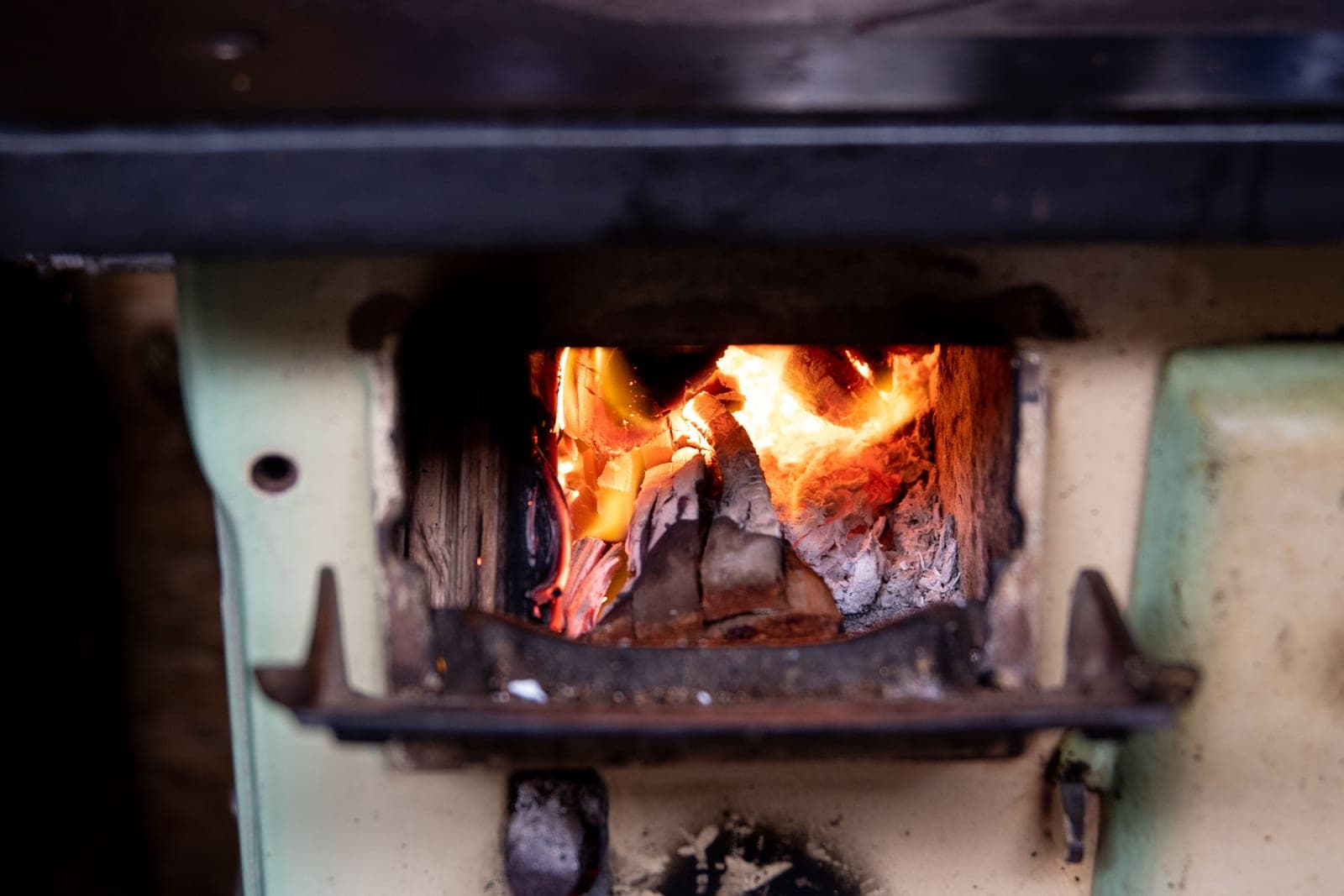
Choose electric for an indoor sauna and for set-and-forget convenience; choose wood-burning for an outdoor or off-grid sauna and for the fire itself. Both get you to a proper 175-190F. The difference is everything around the heat: how you control it, what it takes to install, what it costs to run, and how much it asks of you every session.
The difference in one table
| Factor | Electric heater | Wood-burning stove |
|---|---|---|
| Heat control | Thermostat and timer — set it and forget it | Manual — feed and tend the fire |
| Install | 240V circuit and an electrician | Chimney, roof penetration and safe clearances |
| Fuel | Electricity | Firewood |
| Ongoing attention | Push a button; walk in when it's hot | Light 45-60 min ahead; feed during the session |
| Best location | Indoors or outdoors with a wired supply | Outdoors, or anywhere without power |
| Experience | Clean, quiet, consistent | Crackle, wood smoke, live fire |
Control and convenience
This is the biggest practical gap. An electric stove holds a temperature on a thermostat: you set a target (and, with an external controller, a start timer), and it cycles itself to keep the room steady while you do nothing. A wood stove has no thermostat. You lay and light a fire, wait 45-60 minutes for the room and stones to come up to heat, and feed logs through the session to hold it there. If "walk over and it's already hot" is what you want from a home sauna, electric wins outright. If tending a fire is part of the ritual you're buying, wood is the point, not the chore.
Install: wiring vs a chimney
Neither is a casual install, but they demand different things. An electric heater needs a dedicated 240V circuitsized to its kW and, realistically, a licensed electrician — straightforward where you have panel capacity, a real cost where you don't. A wood stove needs a chimney and a safe roof or wall penetration, plus code-compliant clearances between the hot stove and the timber walls, and often a non-combustible hearth beneath it. That's why wood stoves live outdoors and in barrels: running a flue and holding clearances is far easier in a standalone outdoor sauna than in a finished basement. Check your local fire code and clearances before you commit to wood indoors — many jurisdictions make it impractical.
Running cost: electricity vs firewood
Electric running cost is easy to pin down: multiply the heater's average draw by the hours and by your electricity rate. A stove doesn't pull its full nameplate kW the whole time — once up to temperature it cycles on the thermostat — so real per-session cost is modest. We work the full kWh arithmetic on the home sauna running-cost guide. Wood cost is harder to generalize because it depends entirely on what you pay for firewood: free if you cut or scavenge your own, a few dollars a session if you buy seasoned hardwood by the bundle. The honest summary is that neither is expensive to run, so let convenience and location decide rather than a per-session cost that's close either way.
Maintenance
An electric stove is close to maintenance-free: check and re-stack the stones now and then, replace them when they crack down over the years, and that's about it. A wood stove asks more — you clear ash after sessions, sweep and inspect the chimney to prevent creosote buildup, and manage a supply of dry, seasoned firewood. None of it is hard, but it's recurring work an electric stove simply doesn't have.
The experience
This is where wood earns its keep. A wood fire brings a soft crackle, the smell of wood smoke, and a living heat that many purists insist feels different from an element — even though both heat stones you can throw water on for loyly. Electric heat is clean, silent and perfectly consistent, which is exactly what some people want and what others find a little clinical. If the sauna is as much about the fire and the ritual as the sweat, wood has something electric can't manufacture. If you just want reliable heat with no fuss, electric's consistency is the feature.
Indoor vs outdoor suitability
Location often decides this for you. Indoors — a basement, a spare room, a garage conversion — electric is almost always the answer: no flue to route through the house, no combustion or smoke to vent, no fire-clearance headache. Outdoors, both work, and wood comes into its own — it needs no electrical supply at all, so a barrel sauna at the bottom of the yard or a cabin with no power run can still get hot. For a deeper look at that trade-off in outdoor builds specifically, see electric vs wood-burning barrel saunas.
Which should you buy?
For most home saunas — anything indoors, and any outdoor sauna where you have or can add a wired supply — electric is the sensible default: thermostat control, push-button convenience, and a clean install once the circuit is in. Pick our top electric stoves on the best sauna heaters ranking. Choose wood-burningwhen the sauna is outdoors and off-grid, when you can't or won't run a 240V circuit, or when the live fire is genuinely part of why you want a sauna. It's the more romantic option and the more demanding one — go in wanting the fire, not just tolerating it.
Questions
Frequently asked
Is an electric or wood-burning sauna heater better?
Can you use a wood-burning sauna heater indoors?
Which is cheaper to run, electric or wood?
Do wood-burning sauna heaters need electricity?
Keep reading
Related
More in Sauna Heaters
Receipts
Sources
- Harvia — KIP series electric sauna heater, manufacturer product information
- U.S. Energy Information Administration — average residential electricity price
We do not run a testing lab, and we do not pretend to. Product specs are transcribed from the manufacturer's own listing and cited as claims; health figures come from peer-reviewed studies, named and linked. Where we could not verify something, we say so on the page rather than quietly leaving it out. Read our full method.