HUB / GUIDES · Sauna Guides
Infrared vs Traditional Sauna
Infrared is the easy, cheap, plug-in one; traditional is the real hot, steamy loyly experience. Here's the whole decision, laid out as a table with an honest verdict.
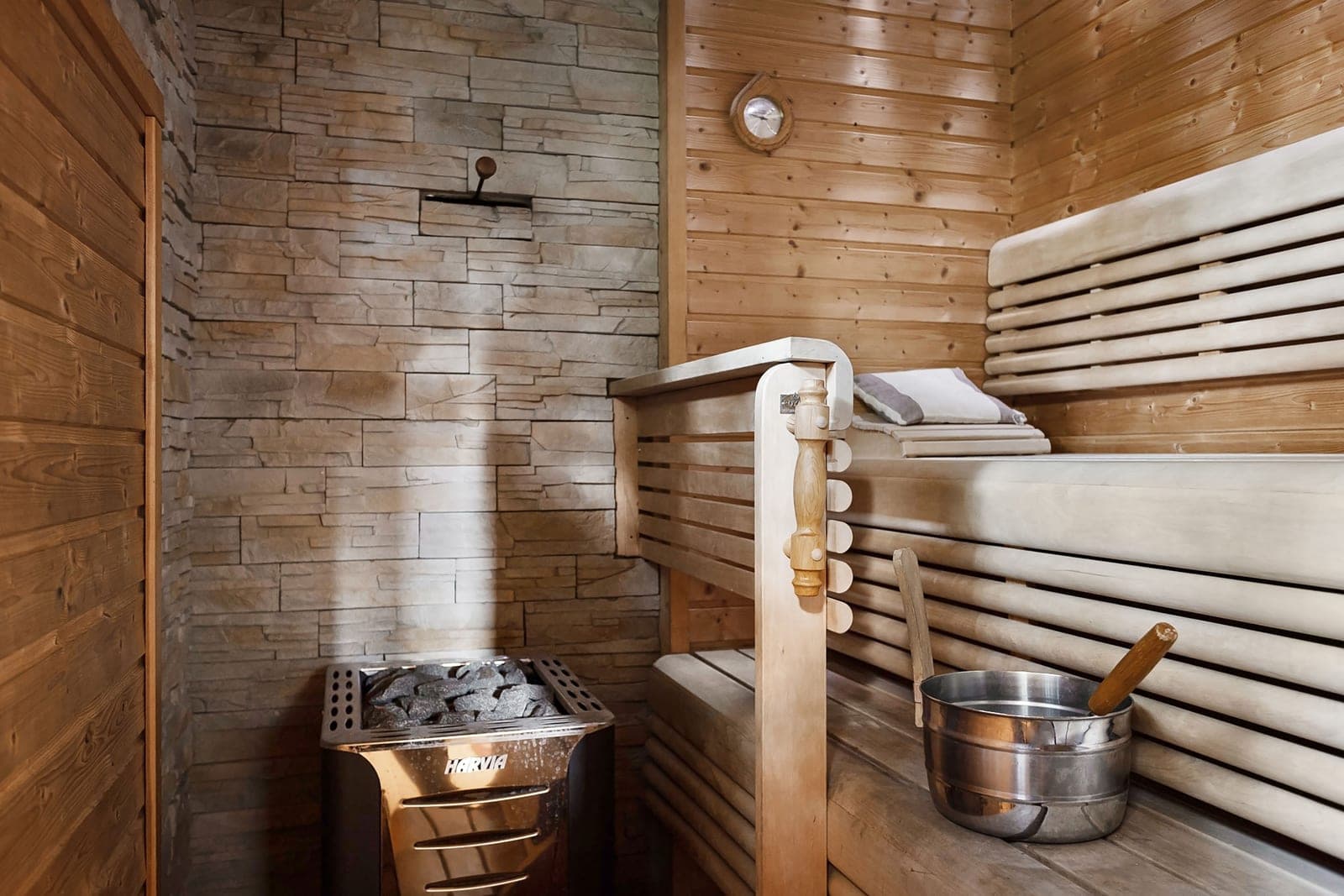
Short version: infrared heats your body directly, runs cooler (120-140F), plugs into a normal outlet and costs pennies a session — the easy, cheap choice. Traditionalheats the air to 150-195F with real rocks you throw water on for loyly steam — the classic, intense experience, but it needs a 240V circuit and costs more to buy and run. Neither is "healthier"; they're different experiences.
The whole decision in one table
| Factor | Infrared | Traditional |
|---|---|---|
| Heat mechanism | Panels warm your body directly (like sunlight) | A heater warms the air and stones, which warm you |
| Temperature | 120-140F | 150-195F |
| Warm-up time | A few minutes; get in as it comes up (10-15 min) | 30-40 minutes of preheat |
| Humidity / loyly | Dry only — no rocks, no steam | Dry with loyly — throw water on the rocks for steam bursts |
| Electrical / install | Most 1-2 person cabins plug into 120V | Dedicated 240V circuit, usually an electrician |
| Running cost | Lower — around $0.23 a session | Higher — about $0.81-$1.08 a session |
| Experience | Gentle, radiant, breathable | Intense, enveloping, the "real" hot sauna |
| Price | Lower to buy and install | Higher — the heater plus, often, a room build |
How they heat you — the core difference
Everything else follows from this. A traditional saunais a heated room: an electric or wood stove brings the air and a pile of stones up to 170-190F, and that hot air is what makes you sweat. Because you're relying on the air, the air has to be genuinely hot. An infrared sauna works the way the sun warms your face on a cold day — its panels emit infrared that your body absorbs directly, so you heat up and sweat while the surrounding air stays a gentle 120-140F. Same sweat, cooler room, completely different feel.
Loyly: the thing infrared simply can't do
If there's one feature that decides this for a lot of people, it's loyly — the burst of steam when you ladle water over hot stones. It spikes the humidity, makes the heat feel alive and intense, and it's the heart of the Finnish sauna ritual. Infrared cabins have no rocks and no water, so they can't do it, full stop. If loyly is what "sauna" means to you, that alone points you at traditional. If you've never particularly cared about steam and just want the sweat and the warmth, you won't miss it.
The install and running-cost gap
On paper and in your wallet, infrared is the easier animal. A 1-2 person infrared cabin plugs into the 120V outlet you already have — no electrician, no permit. A traditional heater wants a dedicated 240V circuit, which for most homes means paying an electrician and possibly pulling a permit. Running cost tips the same way: at the U.S. average rate an infrared session is about $0.23 while a traditional heater is $0.81-$1.08, largely because the traditional stove burns a big slug of energy on its long warm-up. The full arithmetic is on the running-cost guide, and the buy-side prices are in what a home sauna costs.
Is one healthier than the other?
Here's the honest answer: the strongest health evidence — the 20-year Finnish cohort and the Mayo Clinic Proceedings review — was gathered on traditionalsaunas, because that's what Finns use. That doesn't mean infrared is worse for you; it means the specific long-term outcome data happens to sit with traditional heat, and the cardiovascular mechanism (heat raising your heart rate, like light exercise) plausibly applies to both. What you shouldn't do is believe marketing that one type is dramatically healthier than the other — the evidence doesn't support that claim in either direction. The benefits guide lays out what the research actually shows.
The recommendation
Buy infrared ifyou want the easiest, cheapest path to a regular sauna habit: a cabin that plugs into the wall, warms up fast, runs cool and breathable, and costs pennies a session. That describes most home buyers, and it's why infrared outsells everything else. Start with the best infrared saunas.
Buy traditional ifthe real, hot, loyly-steam experience is the whole point, you want the classic ritual, and you're fine with a 240V circuit and a higher up-front cost. For an indoor build, the best indoor saunas are the handoff; for an outdoor one, look at barrels. The deciding question is usually simple: do you care about loyly, and do you have (or want to pay for) 240V? Answer those two and the choice makes itself.
Questions
Frequently asked
Is infrared or traditional sauna better?
Which is healthier, infrared or traditional?
Do infrared saunas make you sweat as much?
Which is cheaper to run, infrared or traditional?
Can you get loyly steam in an infrared sauna?
Keep reading
Related
More in Sauna Guides
Receipts
Sources
- Laukkanen T. et al., JAMA Internal Medicine 2015 — association between sauna bathing and fatal cardiovascular and all-cause mortality events
- Laukkanen J.A., Laukkanen T. & Kunutsor S.K., Mayo Clinic Proceedings 2018 — cardiovascular and other health benefits of sauna bathing (evidence review)
- U.S. Energy Information Administration — average residential electricity price
We do not run a testing lab, and we do not pretend to. Product specs are transcribed from the manufacturer's own listing and cited as claims; health figures come from peer-reviewed studies, named and linked. Where we could not verify something, we say so on the page rather than quietly leaving it out. Read our full method.