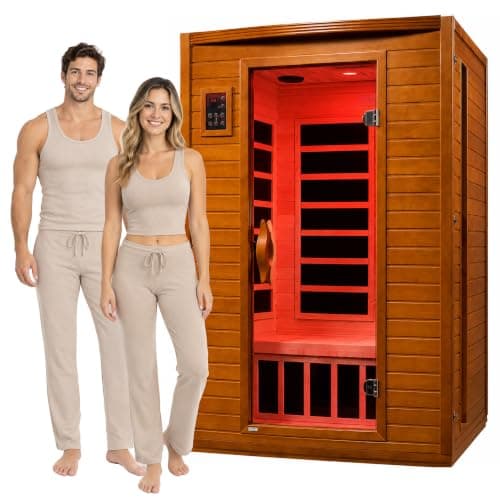
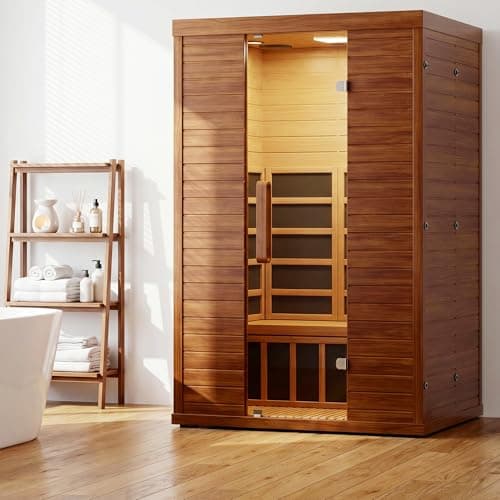
Buy the EASYHAWK 2-Person Infrared Sauna. It is the cheapest two-person wood cabin we track that still runs six low-EMF carbon far-infrared panels and 1,500W on a standard household plug, with a five-year warranty behind it — and it is for the buyer who wants the most sauna per dollar and can live with a newer brand. If you would rather pay a few hundred more for the deepest parts and manual network in the category, the Dynamic Andora is the one to buy and the reason this page is not simply a list of the cheapest cabins. Below those two, value splits by how many seats you actually need.
What "for the money" means here
"Best for the money" is a different question from "cheapest" and from "best", and it is worth being explicit about how we are answering it. Cheapest is a price list — that is best infrared saunas under $1,000. Best is a quality list, which is best infrared saunas. Value is the ratio between them, and in a category where the hardware is largely the same across brands, the ratio turns on four things:
- Seats per dollar. The single biggest step in infrared pricing is one seat to two, and it is also the step people most often regret skipping.
- Panels per cabin. Panel count and placement decide whether heat wraps around you or radiates at your back. More panels for the same money is real value; a higher total wattage spread over fewer panels often is not.
- What is in the box. Red-light LEDs, a foot heater, a sound system, a backrest. Some of these are worth money and some are listing decoration.
- What is behind the box. Warranty length, parts availability and whether a manual exists in five years. This is the one buyers discount at purchase and regret later.
Weighing those four is also why the top of this page is not the top of our main ranking. The EASYHAWK wins on the first three and is weakest on the fourth; the Dynamic wins on the fourth and is merely good on the first three. Which of those matters more is a judgment, and we think it is close enough that both belong at the top with the trade stated plainly rather than hidden in a score.
Where the money actually goes in a cabin
Three line items account for most of the price difference between a cheap cabin and an expensive one, and only two of them are things you feel.
The wood. Hemlock is the budget-to-mid standard; red cedar costs more and brings aroma and natural rot resistance. Indoors, where nothing is rained on, cedar is a comfort upgrade rather than a performance one — cedar vs hemlock is the honest accounting. The EASYHAWK, notably, names no species at all, which is the most substantive thing against it.
The heaters. Carbon panels are the mainstream; ceramic tubes run hotter in smaller spots; full-spectrum adds near- and mid-infrared and a large premium. For most buyers far-infrared carbon panels are the right answer and the cheaper one, which is a rare alignment — see carbon vs ceramic and full spectrum vs far infrared.
The brand behind it. This is the invisible line item. Dynamic (Golden Designs) and HeatWave (Radiant) have been selling the same cabin families for years, which means manuals, replacement panels and third-party reviews all exist. A brand that appeared last year may be selling an identical factory cabin — and may not be reachable when a controller dies in year three.
| Pick | Seats | Heating | Wood | The value case |
|---|
| EASYHAWK 2-Person | 2 | 6 low-EMF panels / 1500W | Not named in the listing | Cheapest two-seat wood cabin, 5-year warranty |
| Dynamic Andora | 2 | Far infrared + red-light LEDs | Canadian hemlock | The support network, for a modest premium |
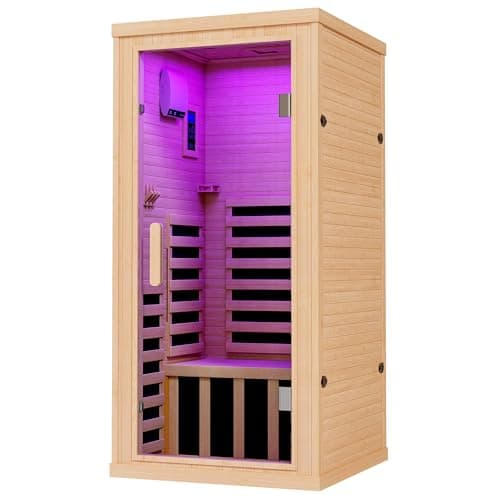
| Albott 1-Person | 1 | 7 carbon panels + foot heater | Canadian hemlock | Most panels per dollar, if one seat is enough |
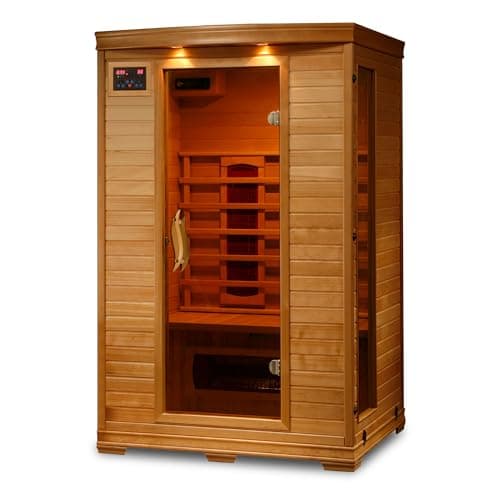
| HeatWave Coronado | 2 | 5-6 carbon heaters | Hemlock | Heater-dense and proven; dated styling |
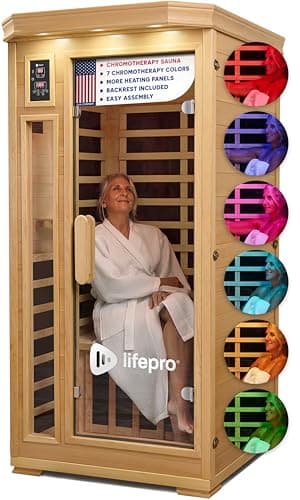
| LifePro Rejuvacure | 1-2 (really 1) | Carbon fiber | Hemlock | Modern looks at a budget price |
Those are manufacturer-published figures and listing claims, flagged as such throughout — the EASYHAWK's missing wood species is in that table because its absence is information too.
The value traps worth knowing
- Paying for full spectrum you will not use. Full-spectrum cabins cost substantially more and the near-infrared element is the part people use least. If the appeal is sweating in a warm wooden room, far-infrared carbon panels do that for much less money.
- Buying one seat to save money, then wanting two. The upgrade path does not exist — you cannot widen a cabin. If there is any real chance a second person will use it, the two-seat tier is the cheaper decision over five years, even though it is the dearer one today.
- Treating total wattage as a quality score. A higher number spread over fewer, worse-placed panels is not better heat. Panel count, placement and whether the feet get any heat matter more, which is exactly why the Albott punches above its price.
- Discounting the warranty. Five years on a $1,200 cabin is a meaningful part of what you are buying. It is also the one spec that costs the seller real money, which makes it one of the more honest signals on a listing.
- Forgetting the room. A cabin is permanent furniture with a door that swings out. Measure before you shop — our home sauna size guide and best infrared saunas for small spaces are the two pages that stop an expensive mistake.
Where infrared stops being the value play
Infrared wins on value for one specific reason: it runs on a normal outlet. No dedicated circuit, no electrician, no permit conversation — which can be a four-figure difference against a traditional room, as sauna electrical requirements sets out. That is the whole value argument, and it holds right up to the point where what you want is a rock stove.
If you want 180F, stones and steam, no amount of money spent on infrared gets you there, and a traditional indoor kit with a Harvia stove becomes the better buy despite costing more up front and needing 240V. The Finnish convention of dry heat at 150-195F with loyly is a genuinely different experience, not a better version of the same one. Our infrared vs traditional sauna comparison is the place to settle that before you spend, and best 2-person indoor saunas is the traditional equivalent of this page.
Running cost, since value includes the bill
A 1,500W cabin run for 45 minutes is a bit over a kilowatt-hour; at the residential rates the EIA publishes, that is small change per session, and a traditional 6kW room is several times it. Over a few hundred sessions the gap is real but it is not the reason to choose infrared — the install is. Our home sauna running cost guide puts the two side by side, and is a home sauna worth it takes the question one step further back.
The low-EMF question deserves one honest paragraph in a value discussion, because it is where premiums are most often charged for least evidence. Every cabin here describes its panels as low EMF; the mid-market brands rate theirs, the budget brands assert theirs, and almost nobody publishes a measured figure at bench height. The NIEHS EMF page is the neutral background. Our position, set out in best low-EMF infrared saunas, is that a rated panel is worth a small premium and an unmeasured claim is not worth a large one.