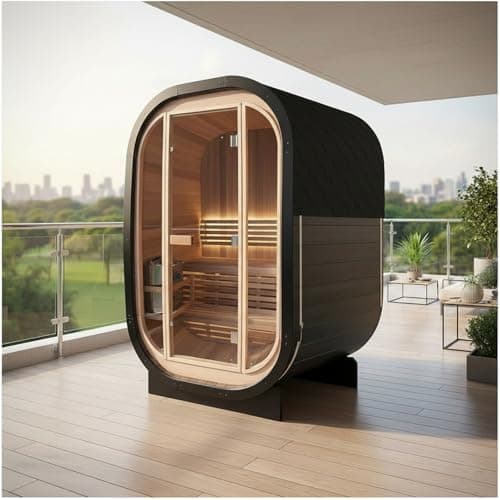
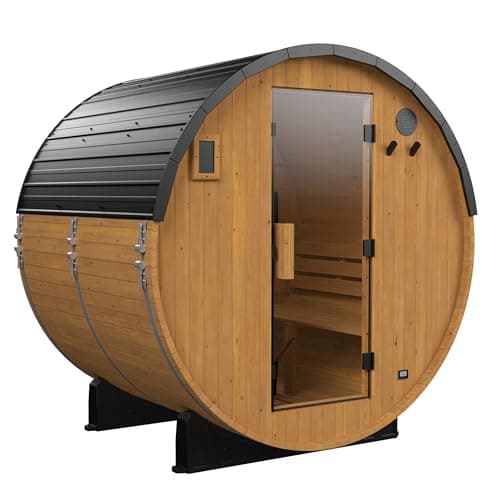
Buy the ZONEMEL 2-Person Barrel. It is the cheapest way into a genuine outdoor rock-stove sauna — an ETL-listed 4.5kW heater with volcanic stones, shingles, a tarp and a rubber base in the crate — and it is for the buyer who wants real loyly in the yard on the lightest electrical job in the category. If you want the aromatic cedar and a shape that sits flat against a fence, the ZONEMEL cube is the same heater in a better body for about a third more. If you want a finished, warrantied product rather than a factory kit, the Backyard Discovery Paxton is the one to buy. And if your yard has no power at all, the AURGOD wood-burner is the answer — bigger than you need, but it needs no electrician.
Why two people is the right size outdoors
Outdoor saunas are sold on seat count and bought on heat, and at two people those two things line up better than at any other size. A small barrel encloses little air, so a 4.5kW stove brings it to a proper Finnish 160-190F rather than merely warming it. That matters outdoors, where the shell is losing heat to the weather the entire time — a 4-6 person barrel with the same stove would never get there.
The second argument is electrical, and it is the one that saves real money. A 4.5kW heater is the smallest real rock stove in the category and runs on a lighter 240V circuit than the 6kW and 9kW stoves the bigger barrels need. The published room-volume ratings heater makers use are what tie those two facts together, and our sauna heater size guide converts a barrel's cubic feet into kilowatts. The difference between a 4.5kW and a 9kW circuit is a meaningful line on an electrician's quote — see sauna electrical requirements.
The third is simply that two is how many people use a home sauna on a Tuesday. A four-person barrel spends most of its life heating empty bench, and you pay for that air every session. If you genuinely host, size up — best 4-person barrel saunas and best large barrel saunas cover that — but buy for your ordinary week, not your best weekend.
Barrel or cube?
At two seats you get a real choice of shape, which you do not at larger sizes, and it is worth understanding before you compare prices.
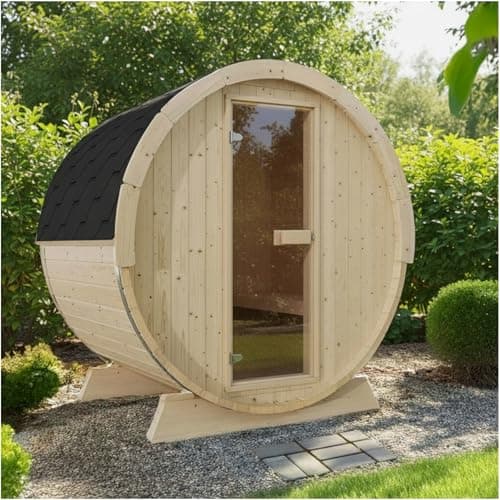
The barrel is the cheaper shape and the thermally cleverer one: a cylinder holds less air than a box with the same bench, and the curve pushes heat around the occupants rather than letting it pool in corners. The cost is headroom at the edges — you sit inboard — and a round body that wastes a rectangular yard.
The cube gives you full standing height at the walls, sits flush against a fence or house wall, and looks like architecture rather than a novelty. ZONEMEL's cube is also Canadian red cedar where the barrel does not name its species at all, which matters more outdoors than in: cedar is naturally rot-resistant and aromatic. You pay for the shape and the wood together, which is why the gap is about a third rather than a few percent. Our barrel vs cube comparison is the long version.
| Pick | Seats | Wood | Heater | Who it is for |
|---|
| ZONEMEL 2-Person Barrel | 2 | Not named in the listing | 4.5kW ETL TOULE, stones incl. | The cheapest real outdoor rock stove |
| ZONEMEL 2-Person Cube | 2 | Canadian red cedar | 4.5kW ETL TOULE, stones incl. | Cedar, flat walls, modern looks |
| Backyard Discovery Paxton | 2-4 | Tongue-and-groove cedar | 9kW + Wi-Fi, 240V / 50A | A finished product with a 5-year warranty |
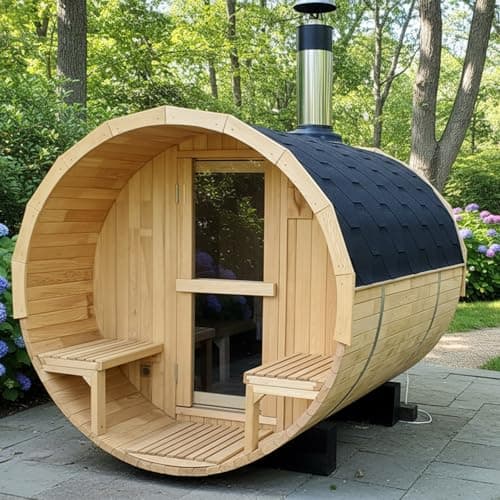
| AURGOD Hemlock Barrel | 4 | Canadian hemlock | Wood stove + chimney | Yards with no electrical supply |
The bottom two rows are larger than two seats, and they are here deliberately. The Paxton is the smallest premium barrel we track — 64 inches long, rated 2-4 — so it is the realistic upgrade for a couple who want tongue-and-groove cedar, a steel roof, HDPE cradles and a warranty covering every component. The AURGOD is the only pick that needs no electrician at all. Everything in this table is a manufacturer-published figure; see our methodology.
What to check before you buy
- Whether the listing names the wood. Outdoors this is not cosmetic. Cedar is naturally rot-resistant; unnamed softwood may not be. ZONEMEL's barrel calls itself a "wood sauna room" without a species, which is the strongest argument for its own cube sibling. Our best wood for a sauna guide explains what the species actually buys you.
- What keeps the weather out. A barrel needs a roof covering, a tarp or membrane under it, and something keeping the staves off wet ground. Both ZONEMELs ship shingles, a tarp and a rubber base; the Paxton uses 29-gauge galvanized steel over HDPE cradles. A kit without those is cheaper for a reason — cover and weather protection is the detail.
- The base. Barrels need a flat, level, draining surface — gravel, pavers or a slab. Not grass, not a slope. This is the most common install mistake and the most expensive to fix afterwards; barrel sauna foundation has what works.
- The circuit, sized to the stove. 4.5kW is a light 240V job; the Paxton's 9kW heater requires a 240V/50A connection and professional installation. Confirm your panel can carry it before choosing the sauna — and have the work done to NFPA 70. See sauna heater breaker size.
- Who assembles it. A two-person barrel is the one size two people can genuinely put together in a weekend, which is a real saving over the 4-6 person kits. Our assembly guide walks the sequence.
Electric or wood-fired, at this size
Electric is the default and the right answer for most people: set a thermostat, come back to a hot sauna, no tending. At 4.5kW the running cost is modest — the stove cycles once the barrel is up, so a session is a few kilowatt-hours at the residential rates the EIA publishes. The detail is in home sauna running cost.
Wood-fired wins in exactly two situations, and they are worth knowing because they are common. The first is a yard with no power, where running a 240V feed out to the sauna is the biggest line on the whole project — a wood stove removes it entirely. The second is deep cold, because a wood fire does not care how far below freezing it is and does not trip anything. The price is that you tend it: you light it, you feed it, and it is an hour of attention rather than a thermostat. Fire clearances and local rules apply, so check them before you site it. Our electric vs wood-burning sauna page is the full comparison, and best electric barrel saunas covers the electric field in depth.
Two seats outdoors versus two seats indoors
If you have both options, the outdoor one is usually the better buy at this size, and for unobvious reasons. An outdoor barrel does not consume a room you were using, does not need an indoor ventilation plan, does not have to be carried through a doorway, and can run a hotter, wetter session without pushing that moisture into your house. What it costs you is the walk out in the cold — which most owners report as part of the appeal rather than a drawback — plus a base to stand it on and weatherproofing to maintain.
Indoors wins when the climate is hostile for most of the year, when there is nowhere level to put a barrel, or when you want to use it daily in a bathrobe without a plan. Our outdoor vs indoor sauna comparison takes that decision seriously, and best 2-person indoor saunas is the indoor equivalent of this page. If the answer is outdoors but the climate is severe, go to best outdoor saunas for cold climates next — the picks shift once winter is the design constraint.