HUB / GUIDES · Sauna Guides
Cold Plunge vs Hot Tub
One costs more to run and is nicer to sit in. The other is cheaper, harder and has the more interesting evidence behind it. A side-by-side that does not pretend they do the same job.
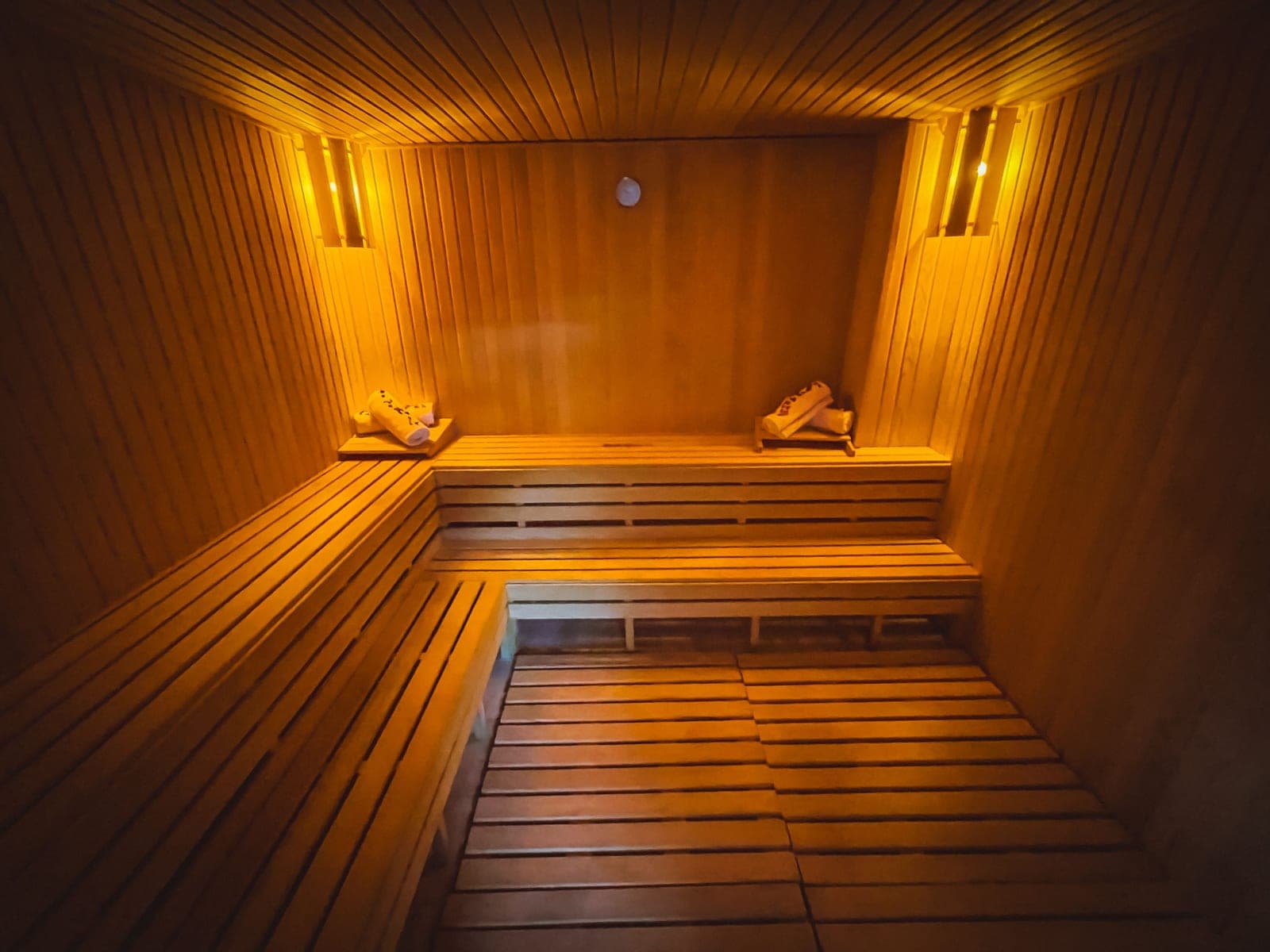
If you want to feel better after exercise and you are motivated by a challenge, buy the cold plunge: it is cheaper to buy, far cheaper to run, takes up a fraction of the space, and the research on short cold-water immersion is more interesting than the research on soaking in warm water. If you want somewhere to relax with other people and ease stiff joints, buy the hot tub — and accept that you are buying comfort, not a health intervention. They are not two versions of the same appliance. One is a 100-gallon container of 50-59F water you get into for three minutes. The other is a 400-gallon heated, chemically treated, continuously circulating body of 100-104F water you sit in for half an hour. Almost everything else follows from that.
Side by side
| Cold plunge | Hot tub | |
|---|---|---|
| Typical temperature | 50-59F (10-15C) | 100-104F (38-40C) |
| Typical session | 2-5 minutes | 15-30 minutes |
| Water volume | ~100-150 gallons | ~300-500 gallons |
| Energy profile | Chiller runs to remove heat; small volume | Held hot and circulating essentially 24/7 |
| Electrical | Often a standard outlet (chiller-dependent) | Usually a dedicated 240V circuit |
| Install | Level surface; movable in many cases | Reinforced pad, drainage, permanent |
| Maintenance | Filter or drain-and-refill; cover | Full water chemistry, filters, pump, cover |
| Social | Solo, by nature | Shared, by design |
| Entry cost | Lowest in home wellness | Highest of the two by a wide margin |
The core difference: removing heat versus adding it
A hot tub raises your body temperature by immersing you in water a few degrees above skin temperature. That is why it feels immediately soothing and why you can stay in it for half an hour — the gradient is small, the water supports your weight, and jets add massage. It is a pleasant place to be, and that is its honest primary function.
A cold plunge does the opposite and does it fast. Water at 50-59F pulls heat out of you roughly twenty-five times faster than air at the same temperature, which is why three minutes in cold water is an event and three minutes in a cold room is nothing. The classic immersion work on human responses across water temperatures documents the chain: immediate peripheral vasoconstriction, a sharp inspiratory gasp, a jump in heart rate and blood pressure, and a surge of catecholamines. That response is the product. It is also why cold plunging is uncomfortable in a way a hot tub never is, and why adherence — not efficacy — is the thing that decides whether a plunge was a good purchase.
Practically, that means the two have opposite failure modes. People stop using a cold plunge because it is hard. People stop using a hot tub because the chemistry is a chore. Be honest with yourself about which of those you are more likely to abandon.
What the evidence actually says — both directions
This is where most comparisons get sloppy, so we will be specific about what each side has.
On the cold side, a 2025 systematic review and meta-analysis of cold-water immersion in healthy adults found some benefits for stress, sleep and quality of life, with a notable pattern in the data: effects were often delayed rather than immediate, and the literature is dominated by small, short, heterogeneous studies. A separate 2024 meta-analysis and meta-regression on cold exposure and cardiovascular and cardiac autonomic control confirms the acute physiological response is real and measurable. So: a real, consistent acute effect, and modest, preliminary evidence on wellbeing outcomes. Not a mortality study.
There is also one well-replicated downside on the cold side that belongs in a buying decision: post-exercise cold-water immersion appears to blunt some of the anabolic signaling that drives muscle adaptation to strength training. If your goal is building muscle, plunging immediately after lifting is working against you — plunge on rest days or hours later instead. We cover the timing in when to cold plunge.
On the hot side, the picture is genuinely mixed, and it has moved recently. A 2026 systematic review and meta-analysis pooling studies of hot-water immersion in healthy adults frames it as a plausible way to support cardiovascular function and fitness. But a separate 2026 meta-analysis restricted to randomized controlled trials of passive heating interventions lasting two to fifteen weeks concluded that passive heating may not improve most cardiometabolic or vascular markers. Two meta-analyses, published the same year, pointing different ways. The honest read is that warm-water immersion plausibly does something for vascular function and the trial evidence does not yet pin it down.
What a hot tub does reliably deliver is warm-water relief for stiff joints and sore muscles, relaxation, and a shared space — all real and valuable, and none of them needing a study to justify the purchase.
And for context: the strongest long-term outcome evidence in this whole area is about neither of these. It is about saunas — the Finnish cohort work linking frequent sauna bathing to lower cardiovascular and all-cause mortality, which we lay out in sauna benefits. Those are observational associations, not proof of cause, but they are a different weight class of evidence than either side of this page. If your decision is primarily driven by documented long-term health outcomes, the honest answer is that you should be reading sauna vs hot tub instead.
Running cost and maintenance: the plunge wins, decisively
A hot tub is a body of hot water that never stops needing attention. You hold 300-500 gallons at 100-104F essentially around the clock so it is ready when you are, run a circulation pump, manage sanitizer, pH and alkalinity, and clean or replace filters. The CDC's healthy-swimming guidance covers hot tubs because warm treated water is a genuine disinfection problem. That is a continuous electricity cost and a real recurring chore.
A cold plunge inverts almost all of it. The volume is a third as large, and refrigeration only runs when the water needs heat pulled out — so on an insulated tub with a good cover it cycles intermittently rather than holding against a large gradient. Work your own numbers at the average residential rate published by the EIA, but the structural point holds regardless of your tariff: keeping 400 gallons 40 degrees above ambient is a much bigger job than keeping 120 gallons 20 degrees below it.
Maintenance is simpler too, though not free. Budget tubs without filtration mean draining and refilling; filtered plunges need the filter and a sanitizer regime. Either way it is a lighter routine than hot tub chemistry. The one place the plunge costs more is bagged ice, if you buy a tub without a chiller — that is the hidden subscription in the category and the reason we push people toward a chiller if they intend to keep it up.
Space, install and reversibility
A hot tub needs a permanent home: a level pad engineered for the weight of a filled tub plus occupants, usually a dedicated 240V circuit, and drainage nearby. Once it is in, it stays. If you move, it is a problem.
A cold plunge is far more forgiving. Many setups are a tub and a chiller on a patio or garage floor, with the chiller often running on a standard outlet — check the specific unit, because larger chillers vary — and the whole thing can be drained and relocated in an afternoon. For a renter, or anyone unsure about a permanent install, that reversibility is a decisive advantage. Our cold plunge pools page covers the larger, more permanent end if you do want a fixed installation.
Safety: different risks, both real
Cold plunge. The cold shock response raises heart rate and blood pressure sharply and triggers an involuntary gasp — which is dangerous if your face goes under. Never plunge alone if you are new to it, get in deliberately rather than jumping, and talk to a doctor first if you have cardiovascular disease, uncontrolled blood pressure, arrhythmia, or are pregnant. Our cold plunge temperature page explains why going colder than about 50F buys you nothing but risk.
Hot tub. The risks are heat-related and water-related: overheating, dizziness on standing, alcohol combining badly with vasodilation, and infection from poorly maintained water. Pregnancy is a specific contraindication for prolonged hot immersion. Supervise children closely.
Both: do not use either while drinking.
So which should you buy?
- Buy the cold plunge if you train and want a recovery and mood tool, you are budget-conscious, you rent or might move, you have limited space, or you want the lowest ongoing cost. It is the cheaper purchase and the dramatically cheaper thing to own.
- Buy the hot tub if you want a social, relaxing place to spend half an hour, you have stiff joints or chronic muscle tension that warm water genuinely eases, you have the outdoor space and the electrical capacity, and you are at peace with weekly chemistry.
- Buy neither yet if you have never done cold immersion. Spend under $150 on a basic tub and bagged ice, do it for a month, and then decide — see where to buy a cold plunge. The abandonment rate in this category is high and the cheap trial is the smartest money here.
- Consider a sauna instead if your motivation is long-term health evidence, you want something used year-round indoors, or you do not want standing water to maintain at all. Start at sauna vs cold plunge.
And if you are weighing the two because you actually want both hot and cold — that is contrast therapy, and a sauna plus a plunge is the cheaper and better-evidenced way to get there than a hot tub plus a plunge. We lay out the protocol in contrast therapy and the hardware pairing in sauna and cold plunge combo.
Questions
Frequently asked
Is a cold plunge better than a hot tub?
Which is cheaper to run, a cold plunge or a hot tub?
Can you use a cold plunge and a hot tub together?
Does a cold plunge help muscle recovery more than a hot tub?
How cold should a cold plunge be, and how hot should a hot tub be?
Which takes up less space, and can I move it later?
Keep reading
Related
More in Sauna Guides
Receipts
Sources
- PLOS ONE 2025 — Health and wellbeing effects of cold water immersion: a systematic review and meta-analysis (PubMed 39879231)
- J Therm Biol 2024 — Effects of cold exposure on cardiovascular and cardiac autonomic control responses in healthy individuals: systematic review, meta-analysis and meta-regression (PubMed 38663342)
- Eur J Appl Physiol 2000 — Human physiological responses to immersion into water of different temperatures (PubMed 10751106)
- J Physiol 2015 — Post-exercise cold water immersion attenuates acute anabolic signalling and long-term adaptations in muscle to strength training (PubMed 26174323)
- Experimental Physiology / PMC 2026 — The effects of hot-water immersion on cardiovascular and cardiorespiratory health of healthy adults: a systematic review and meta-analysis (PMC12848596)
- PMC 2026 — Non-acute effects of passive heating interventions on cardiometabolic risk and vascular health: systematic review and meta-analysis of randomized controlled trials (PMC12490526)
- CDC — healthy swimming: water quality and disinfection basics (pools, hot tubs and spas)
- U.S. Energy Information Administration — average residential electricity price
We do not run a testing lab, and we do not pretend to. Product specs are transcribed from the manufacturer's own listing and cited as claims; health figures come from peer-reviewed studies, named and linked. Where we could not verify something, we say so on the page rather than quietly leaving it out. Read our full method.