HUB / GUIDES · Sauna Guides
Sauna vs Hot Tub: The Honest Comparison
One is dry radiant heat, the other is warm-water immersion. Here's how they differ on feel, evidence, upkeep and cost — and which to pick for what you actually want.
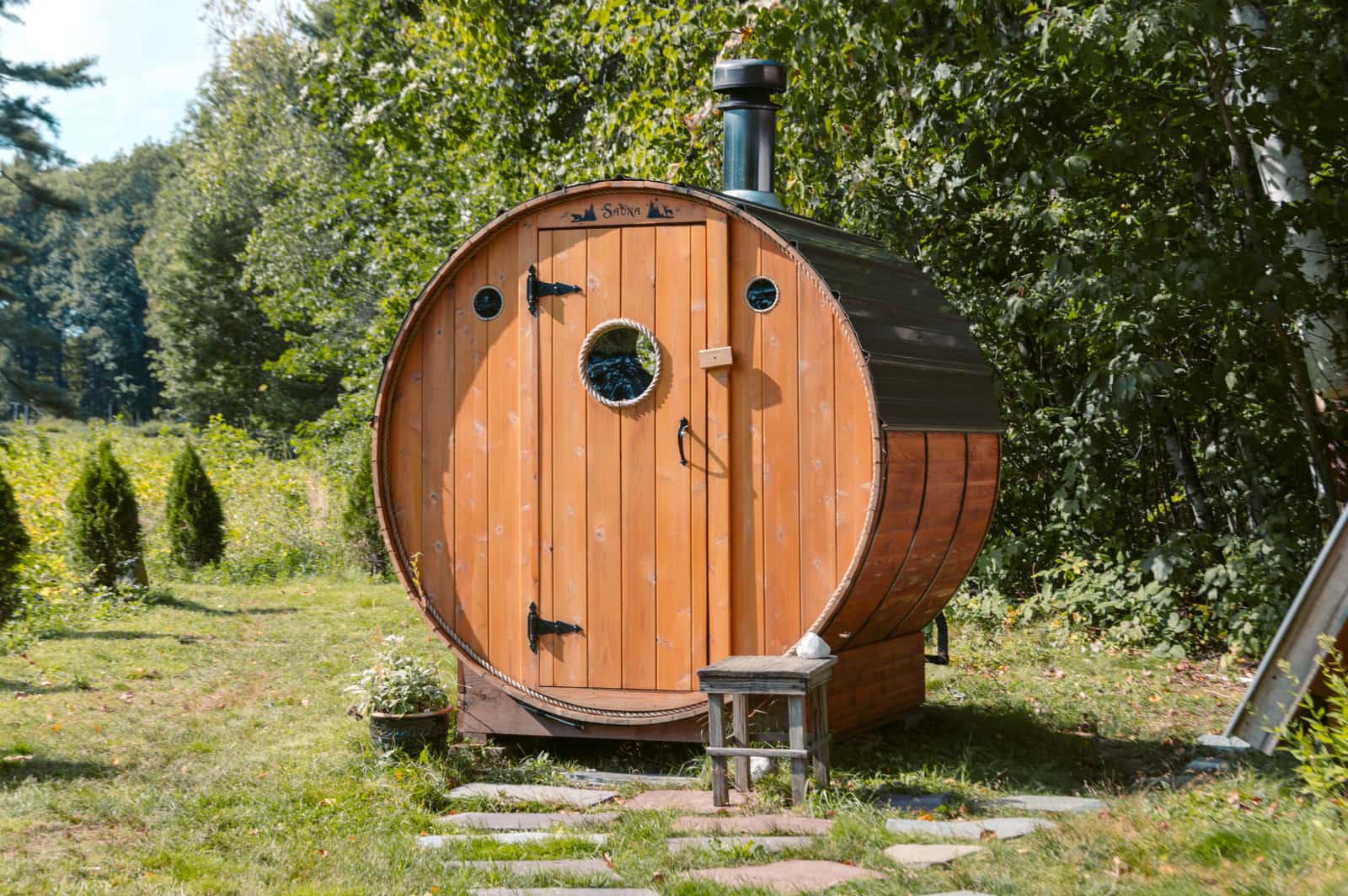
A sauna heats you with dry radiant heat in a wooden room; a hot tub immerses you in heated, jetted water. Both relax you and feel great, but they are different machines with different upkeep and different evidence behind them. The short version: the strong long-term cardiovascular association belongs to saunas, while a hot tub is the winner for warm-water muscle relief and a shared, social soak — and it is the more demanding one to own.
Sauna vs hot tub, side by side
| Factor | Sauna | Hot tub |
|---|---|---|
| Heat type | Dry radiant heat — hot air, or infrared warming you directly | Hot-water immersion — you sit submerged in heated, jetted water |
| Temperature | 120-140F infrared; 150-195F traditional (air) | Around 100-104F (water) |
| Experience | Dry heat and a heavy sweat; quiet, meditative | Buoyant, jetted warm soak; social and easy on the joints |
| Main benefits | Best-evidenced for cardiovascular health (JAMA/Mayo); relaxation | Relaxation and warm-water muscle and joint relief; thinner formal evidence |
| Install | Plug-in infrared, or a 240V heater for traditional; indoors or out | A filled, level, reinforced pad; often 240V; plumbing and drainage |
| Maintenance | Low — keep the wood dry, occasional heater and stone checks | High — ongoing water chemistry, filters, pump and regular cleaning |
| Running cost | Pennies a session for infrared; about a dollar for a big traditional heater | Higher and constant — a hot tub reheats and filters water around the clock |
| Space | A cabin footprint; barrels and cabins fit patios, garages or spare rooms | A heavy filled tub needs a permanent, load-rated outdoor or indoor spot |
The core difference: dry heat vs water
Everything follows from how each one heats you. A sauna raises your body temperature through hot air or infrared while you sit in a dry wooden room, and you sweat freely. A hot tub raises it by immersing you in water held around 100-104F. That immersion is why a hot tub feels so different: the water supports your weight, takes pressure off joints, and delivers gentle pressure and jet massage that a sauna simply can't. A sauna, in turn, delivers a deeper, drier heat and a heavier sweat that the tub can't match. Neither is a better version of the other — they are two distinct experiences. It also shows up in the numbers: a hot tub holds its water around 100-104F, close to skin temperature, while a sauna surrounds you with air far above it. That's why a hot tub feels immediately soothing and easy to linger in, whereas a sauna is a more active kind of heat that draws a real sweat and asks a little more of you each session.
What the evidence actually says
This is where honesty matters. The genuinely strong, much-cited research on heat and long-term health is about saunas. A 20-year study of Finnish men published in JAMA Internal Medicine linked frequent sauna use (4-7 times a week) with roughly 40% lower all-cause mortality compared with once-a-week use, and a Mayo Clinic Proceedings review reached a similar conclusion about cardiovascular and all-cause mortality risk. Those are observational associations, not proof of cause and effect, and they were gathered on traditional saunas — but they are real, consistent and specific to sauna bathing.
Hot tubs do not have anything like that body of long-term outcome evidence. What they clearly deliver is relaxation and warm-water relief for tired, sore muscles and stiff joints — real, valuable and easy to feel, but supported mostly by short-term and experiential evidence rather than decades-long cohort studies. So if part of your decision rests on documented long-term health benefits, the sauna is the one with the literature behind it. If your goal is a soothing soak and joint relief, the hot tub earns its place on comfort, not on a mortality study. Our sauna benefits guidespells out exactly what that sauna evidence does and doesn't show.
Maintenance and running cost: the part people underestimate
A hot tub is a body of hot water that never stops needing attention. You manage its chemistry (sanitizer, pH, alkalinity), clean or replace filters, run and maintain a pump, and keep the water heated and circulating essentially around the clock so it is ready when you are. That means a meaningful, continuous running cost and a real recurring chore. A sauna is the opposite kind of machine. There is no water to treat and no pump to babysit; you keep the wood dry, wipe the benches, and give the heater and (on a traditional unit) the stones an occasional check. On the electricity side it is only on when you use it — an infrared session costs pennies and even a big traditional heater is around a dollar at the U.S. average rate of roughly $0.18/kWh reported by the U.S. Energy Information Administration, as we work out in the running-cost guide. A hot tub, kept hot and filtered 24/7, is a much larger and more constant line on the bill.
Install and space
A hot tub needs a permanent home: a level, reinforced pad that can carry the enormous weight of a filled tub, usually a dedicated 240V circuit, and plumbing and drainage nearby. Once it is in, it stays put. A sauna is more flexible. A plug-in infrared cabin can go in a spare room or garage on a normal outlet, while an outdoor barrelsits on a simple pad and, if it's a traditional heater, wants a 240V circuit — closer to the tub's electrical needs but without the water. If your space is tight, awkward or indoors, the sauna is usually the easier fit.
Comfort, privacy and the year-round question
There's a lifestyle dimension worth weighing too. A hot tub is inherently social and shared — several people can soak together and talk, which is a big part of its appeal. A sauna can seat a group as well, but the experience is quieter and more meditative, and many owners use it solo. Weather changes the picture as well: an outdoor hot tub is lovely in cold air but a maintenance headache to keep clean through leaves and freezing temperatures, whereas an indoor saunais a sealed, dry room you can use identically in any season. And there's undressing to consider — a hot tub usually means swimwear, while a home sauna can be as private as you like. None of this decides the question on its own, but it's the kind of day-to-day detail that determines which one you'll actually use.
Longevity and what wears out
The two age very differently. A hot tub is a system of moving, wet parts — pump, heater, jets, seals and a shell holding treated water — and those components have a service life; chemistry that slips or a winter left uncovered shortens it. A well-built sauna is closer to a piece of furniture: quality cedar or hemlock and a solid heater, kept dry and wiped down, can last many years with little more than the occasional heater or stone replacement. Fewer moving parts and no standing water means fewer things to fail. If you want the lowest-fuss, longest-lived option, that simplicity tilts toward the sauna again.
So which should you buy?
Decide by what you most want:
- Choose a sauna if you want the best-evidenced long-term benefits, a deep dry-heat sweat, low upkeep, a small running cost, and flexible placement. Start with an indoor sauna for a spare room, or a barrel for the yard.
- Choose a hot tubif your priority is buoyant, jetted warm-water relaxation, relief for sore joints and muscles, and a social soak with other people — and you're prepared for the water chemistry, the constant heating cost and the permanent install.
Plenty of people would happily own both, and they don't compete so much as complement each other. But if it's one or the other and long-term health plus low hassle are what move you, the sauna is the more defensible buy — and it's far easier to live with.
Questions
Frequently asked
Is a sauna or a hot tub better for you?
What's the difference between a sauna and a hot tub?
Which costs more to run, a sauna or a hot tub?
Is a hot tub harder to maintain than a sauna?
Can you have both a sauna and a cold plunge or hot tub?
Keep reading
Related
More in Sauna Guides
Receipts
Sources
- Laukkanen T. et al., JAMA Internal Medicine 2015 — association between sauna bathing and fatal cardiovascular and all-cause mortality events
- Laukkanen J.A., Laukkanen T. & Kunutsor S.K., Mayo Clinic Proceedings 2018 — cardiovascular and other health benefits of sauna bathing (evidence review)
- U.S. Energy Information Administration — average residential electricity price
We do not run a testing lab, and we do not pretend to. Product specs are transcribed from the manufacturer's own listing and cited as claims; health figures come from peer-reviewed studies, named and linked. Where we could not verify something, we say so on the page rather than quietly leaving it out. Read our full method.