HUB / BARREL · Barrel Saunas
What a Barrel Sauna Really Costs
The sticker is only part of it. Here's the honest total — the barrel, the electrical, the foundation and the running cost — so nothing surprises you at hookup.
We earn a commission when you buy through our Amazon links, at no extra cost to you. It never affects our rankings, and we say so when the cheaper product is the better buy. How this works.
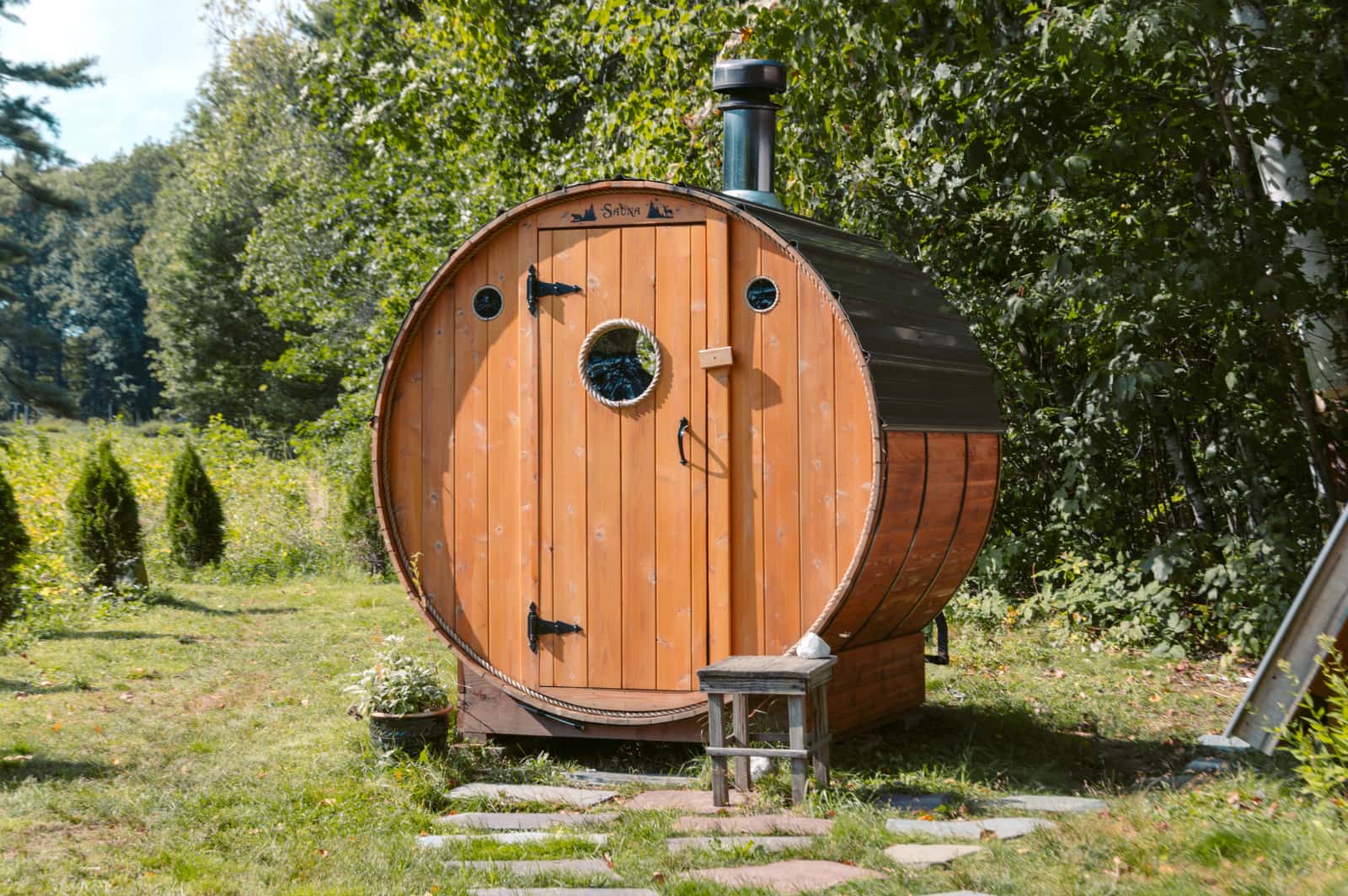
A barrel sauna's price tag is the start of the number, not the end of it. The four real line items are the barrel itself, the electrical work, the base it sits on, and what it costs to run — and the last three are the ones buyers forget. The live prices on this site carry the exact figure for each barrel; this guide is about the shape of the total so you budget for all of it, not just the crate.
1. The sauna itself
The kit is the biggest single line, and where it lands depends on two things: the wood and the size. The cheapest way into a real barrel is a small-to-mid Canadian-hemlock factory kit— the entry band. Add a bundled brand-name heater — a genuine Harvia stove rather than a generic emitter — and you step up a band, but you're getting a stove worth having. The top band is a finished cedar barrel like the Backyard Discovery Paxton: cedar instead of hemlock, its own heater and stones in the crate, and a warranty behind every component, which is what the premium buys. Capacity stacks on top of all of that — an 8-person tube is meaningfully more than a 2-person, because it's more staves, more heater and more wood. In rough order, cheapest to dearest: small hemlock kit, larger hemlock kit with a Harvia, then cedar.
2. The electrical work
This is the line the listings gloss over, and it's the most common surprise. Every electric barrel runs on 240V, which for most homes means an electrician pulling a dedicated circuit from the panel out to the yard where the sauna sits. That's labor, materials, often a run of buried conduit, and in many jurisdictions a permit and inspection on top. It's real money, and it's essentially fixed regardless of which electric barrel you buy — a cheap hemlock kit needs the same circuit as a premium cedar one. The one way to zero this line out entirely is to go wood-burning: a wood stove needs no wiring at all, only a chimney and safe clearances.
3. The foundation or pad
A barrel is heavy and it has to sit dead level, or the door binds and the staves stress unevenly. It cannot go straight onto grass or soft soil. The base can be as modest as leveled pavers or a compacted gravel pad, or as involved as a small poured concrete slab — the cost swings with which you choose and whether you do it yourself. It's usually the smallest of the four line items, but it is not optional, so it belongs in the budget from day one. While you're costing the base, add delivery: a barrel ships as a heavy crate, and freight for something this big and awkward is its own line.
4. The running cost
Finally, what it costs to actually use. An electric barrel's stove draws several kilowatts while heating and less once it's holding temperature, so a session's cost is that draw times how long you run it times your electricity rate. At the U.S. average residential rate, a single session is a modest, predictable figure — closer to the cost of running a clothes dryer than anything alarming — and we show the full arithmetic, so you can plug in your own kW and rate, on the home sauna running-cost guide. A wood-burning barrel has no electricity cost at all; its "fuel" is firewood, which is variable and often cheap or free, traded against the work of sourcing and storing it.
The four lines, side by side
| Cost line | What it covers | What moves it |
|---|---|---|
| The sauna | The barrel kit and its heater | Wood (hemlock vs cedar), size, and whether the stove is a brand-name Harvia |
| Electrical | 240V circuit, labor, permit | Distance to the panel; zero if you go wood-burning |
| Foundation | Level pad plus delivery | Pavers vs gravel vs slab; freight for a heavy crate |
| Running | Energy per session | Heater kW, session length and your electricity rate (or firewood) |
How to budget it, in one line
Take the barrel's live price, then add for the electrical circuit if it's electric, a level base and delivery for every barrel, and a small, predictable amount per session to run it. Decide electric or wood first, because that one choice adds or removes the entire electrical line — the single biggest variable in the whole budget. Then pick from the ranked barrels knowing the true total, not just the sticker.
Questions
Frequently asked
How much does a barrel sauna cost?
Are barrel saunas expensive to run?
Do you need a permit for a barrel sauna?
How long do barrel saunas last?
Keep reading
Related
More in Barrel Saunas
Receipts
Sources
- Almost Heaven Saunas — barrel sauna specifications and materials (manufacturer)
- U.S. Energy Information Administration — average residential electricity price
We do not run a testing lab, and we do not pretend to. Product specs are transcribed from the manufacturer's own listing and cited as claims; health figures come from peer-reviewed studies, named and linked. Where we could not verify something, we say so on the page rather than quietly leaving it out. Read our full method.