HUB / BARREL · Barrel Saunas
How to Insulate a Barrel Sauna
Barrels are designed to work without a stud-wall insulation layer — but a few honest moves keep the heat in, especially in winter. Here's what actually helps and what's a waste.
We earn a commission when you buy through our Amazon links, at no extra cost to you. It never affects our rankings, and we say so when the cheaper product is the better buy. How this works.
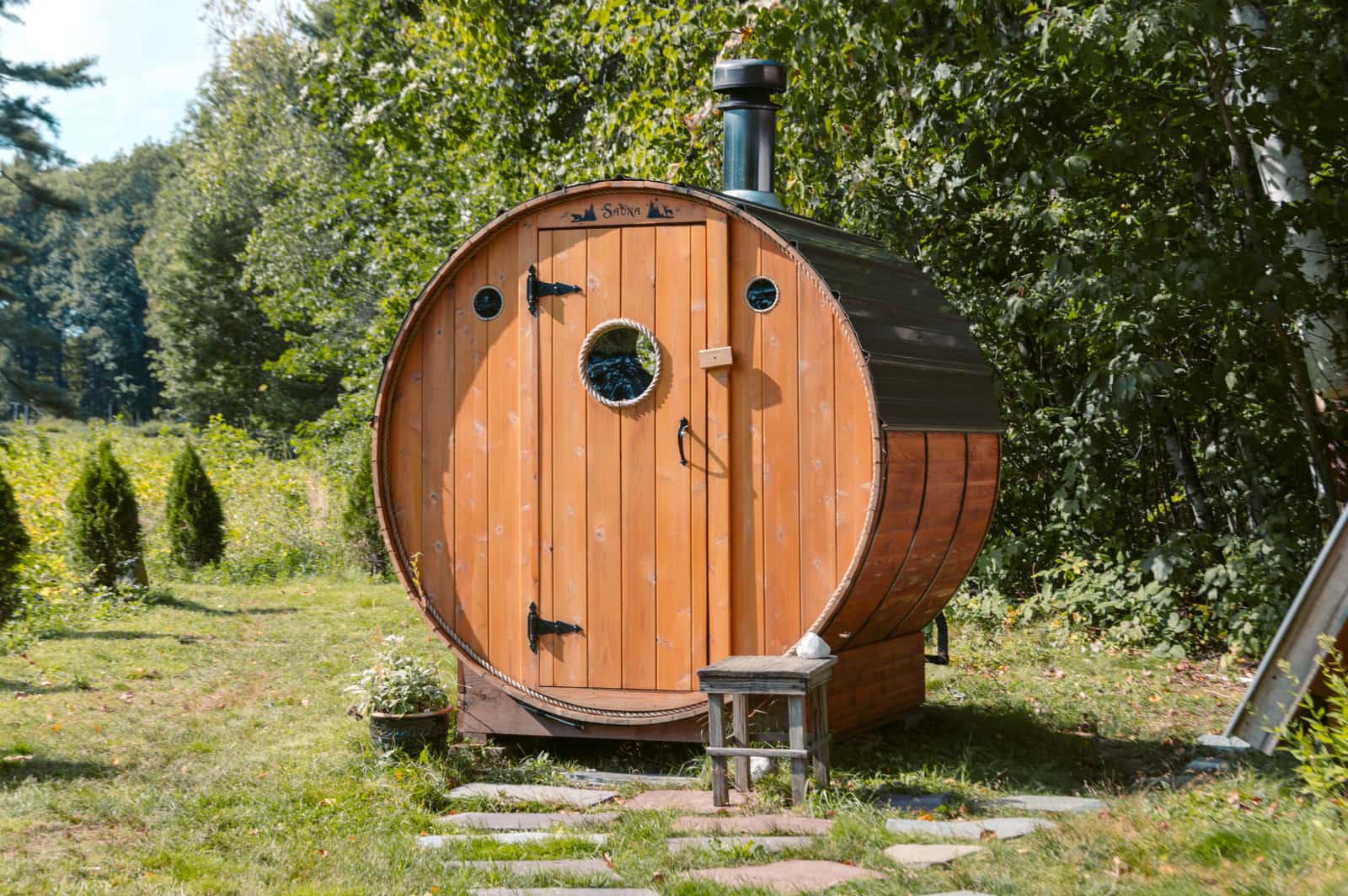
A barrel sauna is designed to work without the fiberglass-and-vapor-barrier insulation a square cabin needs — the thick solid-wood staves and the round shape do most of the job. But in a cold climate, a few targeted moves keep heat in and cut your pre-heat time, and none of them require gutting the barrel. "Do I need to insulate my barrel?" is one of the most common questions barrel owners ask, and the honest answer is: usually not the way you'd insulate a wall, but yes to a handful of practical steps. This guide separates what actually helps from what just costs money and spoils the look.
Why a barrel is largely self-insulating
The barrel shape isn't only aesthetic — it's thermally clever. Solid staves, typically an inch and a half or more of thick wood, are themselves a decent insulator, and wood doesn't conduct heat away the way metal or glass does. Just as importantly, the round profile encloses less air than a square room of the same seating, so there's less volume to heat and the curved ceiling rolls warm air back down onto the bench instead of stacking it dead against a flat roof. That's the same efficiency we describe in the barrel roundup: a barrel heats faster and holds heat better than a comparable box, which is exactly why manufacturers don't build a separate insulation layer into the staves. For most climates and most of the year, the wood is enough.
When insulation actually helps
There are real cases where adding to the barrel earns its keep — mostly about cold and wind:
- Hard winters. In a genuinely cold climate, an uninsulated barrel takes longer to reach temperature and the heater cycles more to hold it. Cutting heat loss shortens the pre-heat and lowers the running cost.
- Exposed, windy sites. Wind strips heat off the staves. A barrel tucked behind a fence or in a sheltered corner loses less than one standing alone in an open yard.
- Frequent, back-to-back use. If you sauna daily through winter, small savings in heat-up and hold add up over a season.
If none of those describe you — a mild climate, occasional use, a sheltered spot — the barrel as shipped is very likely fine, and the best "insulation" is simply a good pre-heat. The winter-specific tactics are in our barrel sauna winter use guide.
What actually works, from easiest to most involved
1. A roof or shingle kit.The single most effective add-on for most barrels is a proper roof over the top. It sheds rain and snow off the staves (protecting the wood) and adds an air gap and a shedding layer that cuts heat loss and weathering at once. Many manufacturers sell a matched shingle or metal roof kit — it's the first upgrade to consider.
2. Site it out of the wind. Free and underrated. Position the barrel where a fence, wall, hedge or the house itself breaks the prevailing wind, and you keep heat that an exposed barrel loses. Plan this at siting time, covered in the outdoor sauna guide.
3. Insulate the door and any glass. The door and any window are the weak points for heat loss and drafts. Make sure the door seals well and closes flush; if yours has a large glass panel, know that glass loses more heat than solid staves, so a tighter, smaller opening holds temperature better.
4. An insulated back wall or wrap (the involved option).Some owners in severe climates add an insulated layer to the flat back wall (where the heater and bench mounts are) or even a full exterior wrap under the roof. This is the most effective and the most invasive — it changes the look and the build, and it's only worth it if you genuinely fight the cold. If you go this route, keep a vapor-aware approach and don't trap moisture against the staves, which invites rot. For most owners this is more than the barrel needs.
What not to bother with
Skip the instinct to stuff fiberglass batts into a barrel like a stud wall — there's no cavity to fill, and doing it wrong traps moisture against the wood and causes the exact rot you're trying to avoid. Don't seal the barrel airtight either: a sauna needs a little fresh-air intake and an outlet to breathe and to move loyly around, so ventilation and insulation have to coexist. And don't insulate to fix a heater that's simply undersized for the barrel — that's a sizing problem, not an insulation one, and the answer is the right kW, which we cover in the heater size guide.
The honest bottom line
A barrel sauna doesn't need wall insulation to work — the solid staves and round shape are the insulation, by design. If you're in a cold, windy climate or you use it hard through winter, the highest-value moves are a roof kit, a sheltered site, and a well-sealed door, in that order; a full insulated wrap is a last resort for severe cold. Protect the wood while you're at it — an outdoor barrel lives in the weather, and barrel sauna maintenance is what keeps it lasting. Get the heater sized right, keep the barrel breathing, and most owners find the wood alone does the job.
Questions
Frequently asked
Do barrel saunas need insulation?
What is the best way to keep a barrel sauna warm in winter?
Can you insulate a barrel sauna with fiberglass?
Does insulating a barrel sauna save money?
Keep reading
Related
More in Barrel Saunas
Receipts
Sources
- Almost Heaven Saunas — barrel sauna specifications and materials (manufacturer)
- U.S. Energy Information Administration — average residential electricity price
We do not run a testing lab, and we do not pretend to. Product specs are transcribed from the manufacturer's own listing and cited as claims; health figures come from peer-reviewed studies, named and linked. Where we could not verify something, we say so on the page rather than quietly leaving it out. Read our full method.