HUB / BARREL · Barrel Saunas
How Long Does a Barrel Sauna Take to Heat Up?
A well-matched electric barrel warms in about 30-45 minutes; a wood-fired one usually takes 45-60 minutes-plus. Here's what sets the time, and why an outdoor barrel is at the mercy of the weather.
We earn a commission when you buy through our Amazon links, at no extra cost to you. It never affects our rankings, and we say so when the cheaper product is the better buy. How this works.
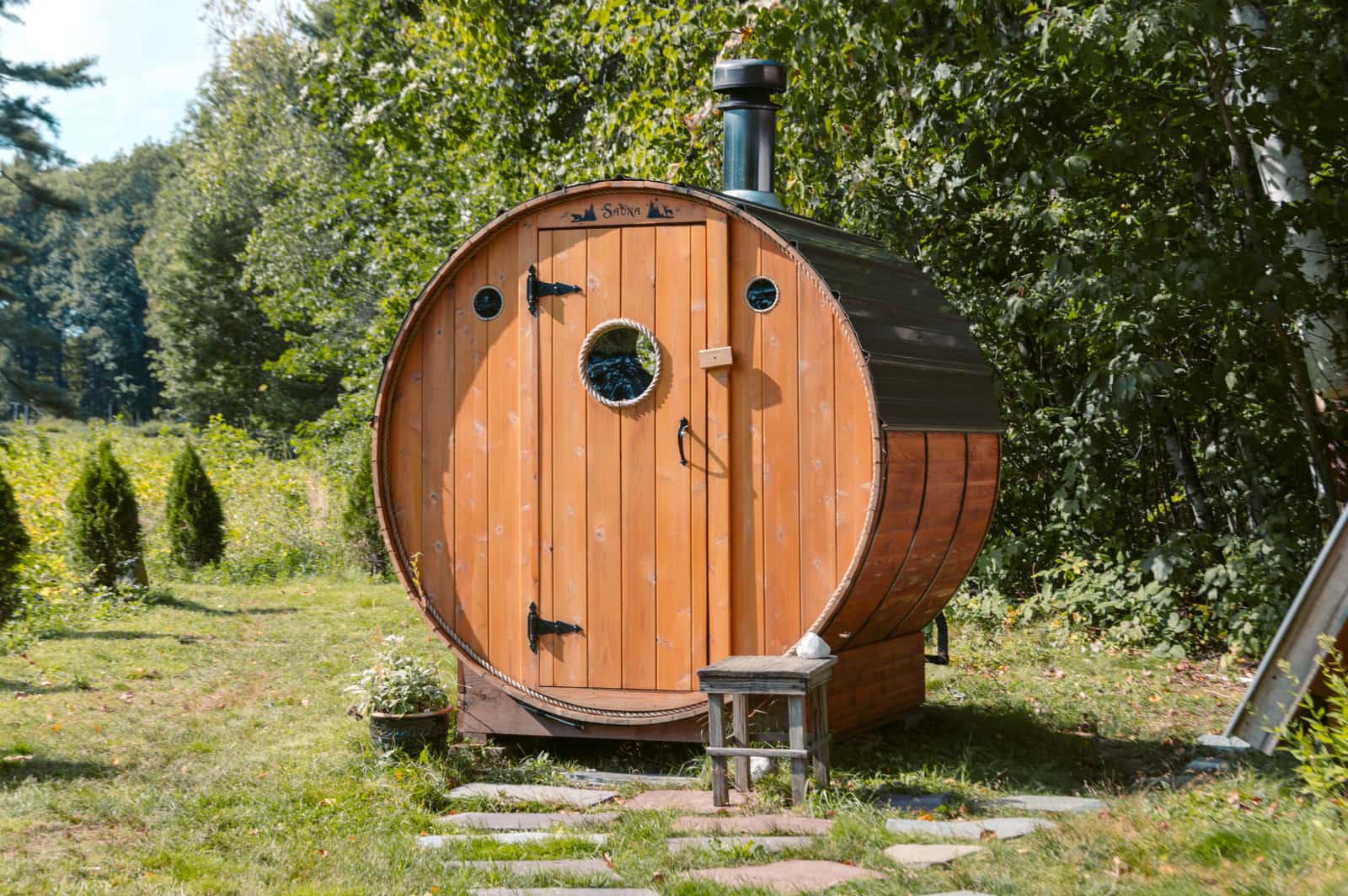
As a rule of thumb, a barrel sauna with a correctly sized electric heater reaches temperature in about 30-45 minutes, while a wood-fired barrel more often takes 45-60 minutes or more and depends a lot on how you build and tend the fire. The round shape helps — a barrel holds less air than a square cabin of the same length — but it sits outdoors and uninsulated, so cold, wind and winter push those times up. There isn't one number, because heat-up depends on the heat source, the weather and how well the heater is matched to the room. Here's how each factor moves the clock, so you can predict your own warm-up rather than guess.
Electric barrel: about 30-45 minutes
An electric barrel sauna with a properly sized rock heater usually gets to a comfortable bathing temperature in roughly half an hour to forty-five minutes in mild weather. You switch it on, it heats steadily, and you don't have to do anything else — which is the main convenience of electric over wood. The catch is the words "properly sized." An underpowered heater will crawl toward temperature and may never quite get there on a cold day, while the right kW for the cabin's volume warms it on schedule. Getting that match right is the single biggest thing you control, and the sauna heater size guidedoes the arithmetic for a barrel's volume. Pre-heating also matters: giving the heater and its stones the full warm-up before you climb in means the rocks are loaded with heat and ready for löyly, rather than you sitting in a room that's still catching up.
Wood-fired barrel: about 45-60 minutes-plus
A wood-burning barrel typically takes longer — commonly three quarters of an hour to an hour, and sometimes more — because you're building and growing a fire from cold rather than flipping a switch. The time swings with how you lay the fire, the dryness of the wood, and how attentively you feed it. Well-seasoned, dry hardwood lights fast and burns hot; damp or green wood smolders and drags the warm-up out. A wood stove also has to bring its own mass and the chimney up to temperature before the room really climbs. The trade-off is the experience many owners prefer — the ritual, the crackle, and no reliance on a 240V circuit — but it is a hands-on 45-to-60-minute-plus job, not a set-and-forget one. Which heat source suits you is the bigger decision behind heat-up time, and electric vs wood-burning sauna weighs it in full.
Why the round shape helps
The barrel design has a genuine head start. Because the walls curve up and over into a cylinder, a barrel encloses less air volume than a square cabin of the same footprint or length — there are no square upper corners of dead air to heat. Less air to warm, and a compact shape that circulates heat around the curve, means a barrel can come up to temperature efficiently for its size. That's a real part of why barrels are popular: they feel quick to warm relative to how roomy they are inside.
Why the weather works against it
The counterweight is that a barrel is an outdoor sauna, and most are built from solid cedar or hemlock staves without a separate insulation layer the way an indoor room has. That leaves warm-up at the mercy of the conditions:
- Outside temperature. A summer evening and a sub-freezing winter morning are two different heat-ups. The colder the air and the timber start out, the more energy and time it takes to reach bathing temperature.
- Wind. A breeze steals heat off the outside of the staves and around the door, effectively fighting the heater the whole time. A sheltered, wind-protected spot noticeably shortens warm-up in cold weather.
- The heat-source match. A heater sized for mild weather can struggle in deep winter; sizing with a little headroom, or expecting longer times in the cold, keeps expectations realistic.
- Stone mass and pre-heating.The rock basket has to warm through, not just the air. A full pre-heat loads the stones so the heat holds and the löyly is strong once you're inside.
This is exactly where a bit of insulation pays off. Adding an insulating layer or a proper roof and sheltering the barrel cuts winter heat-up time and holds temperature better once you're warm — the options are covered in how to insulate a barrel sauna. Uninsulated cedar in the wind will always ask more of the heater than a sheltered, partly insulated barrel.
How to get a faster, more reliable warm-up
The levers are simple. Size the heater correctly for the barrel's volume so it isn't fighting the room; pre-heat fully before you get in, especially in winter, so the stones are loaded and the timber has soaked up heat; site the barrel out of the prevailing wind; and, in a cold climate, consider insulating and roofing it. Do those, and an electric barrel settles reliably into that 30-45 minute window, while a wood-fired one becomes a predictable 45-60 minutes rather than an open-ended wait. The single most common cause of a barrel that "takes forever" is a heater that's too small for the cabin and the climate — fix the sizing first.
Questions
Frequently asked
How long does a barrel sauna take to heat up?
Does an electric or wood-fired barrel sauna heat up faster?
Why does my barrel sauna take so long to heat up in winter?
Should I pre-heat a barrel sauna before using it?
Keep reading