HUB / BARREL · Barrel Saunas
How to Move a Barrel Sauna
Whether you're shifting it a few feet or hauling it to a new house, here's when you can move a barrel in one piece, when to take it apart, and how to protect the wood and the wiring.
We earn a commission when you buy through our Amazon links, at no extra cost to you. It never affects our rankings, and we say so when the cheaper product is the better buy. How this works.
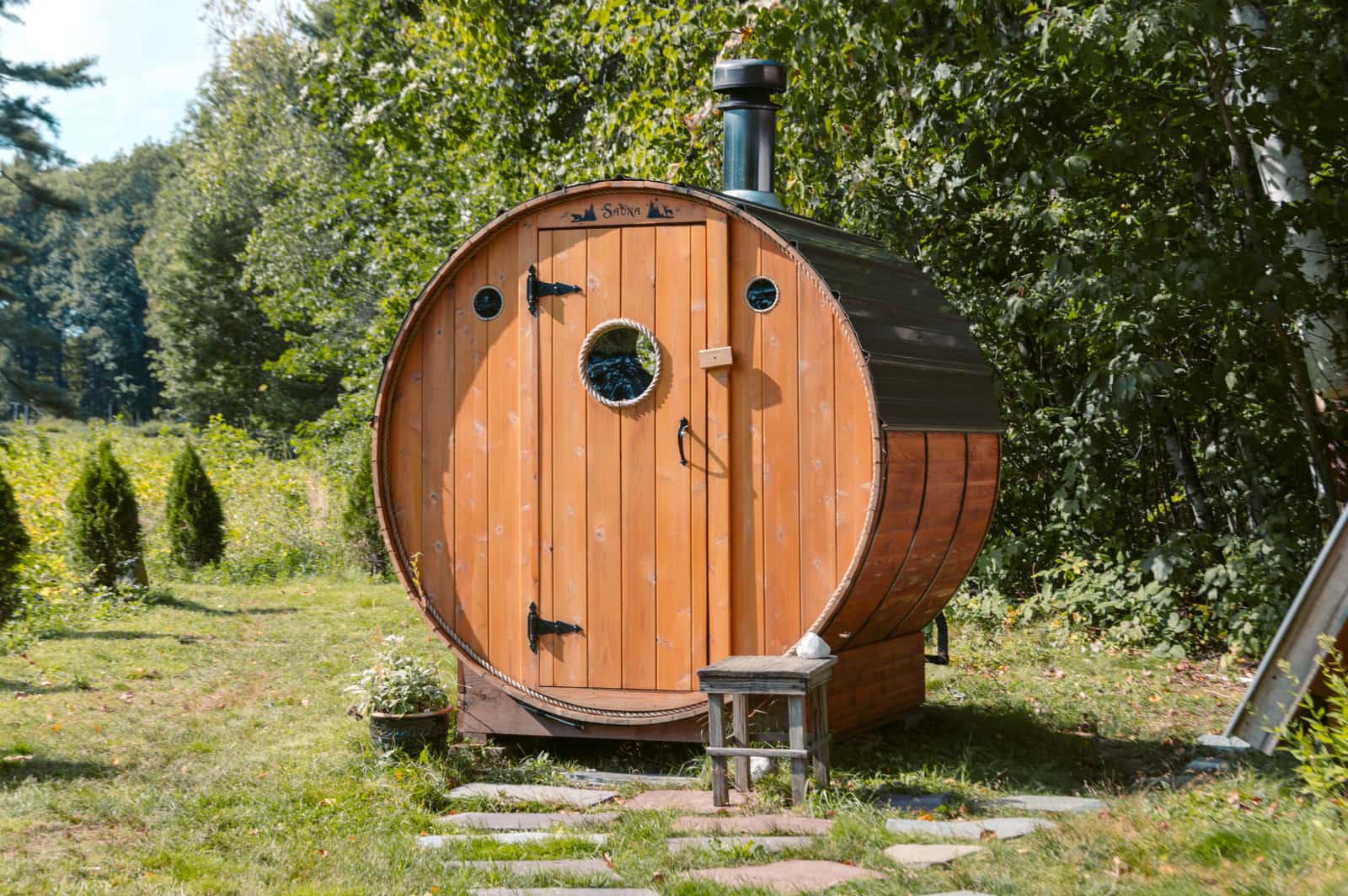
You can move a barrel sauna, but how you do it depends on the distance. A few feet across a patio, you can often skid or roll the assembled barrel in one piece with enough hands and the right rollers. Move it to a new house, and the honest answer is usually to take it apart, move the panels flat, and reassemble on a fresh, level pad at the other end. A barrel is heavier and more awkward than it looks, and the two things most likely to get damaged in a move are the wood and the heater. This guide walks through both routes — the short slide and the full teardown — plus the electrical disconnect that is genuinely not a do-it-yourself job, and how to set the barrel back down so it lasts.
First decision: move it whole, or take it apart?
The single question that shapes the whole job is distance and terrain. For a short, flat relocation — sliding a barrel to a better corner of the same yard, off a settling pad and onto a new one — you can usually keep it assembled and move it as a unit, provided you can get under it with rollers or a skid and you have real muscle or a machine. For anything involving a truck, a gate the barrel won't fit through, a slope, steps, or a new address, taking it apart is almost always the safer, cheaper choice. Barrel saunas are built from staves held under tension by steel bands, with end walls, a floor, benches and a heater bolted in; most kits are designed to come apart in reverse of how they went together. Reassembly is the same job as a first install, which we cover in barrel sauna installation. Trying to crane or drag a fully assembled barrel a long way is where people crack staves, bend bands, and strain backs.
Why a barrel is so heavy — and so awkward
Do not underestimate the weight. Barrel staves are thick solid wood — commonly an inch and a half or more — and a whole barrel is a lot of that wood wrapped into a dense tube, before you add the heater, stones, benches and floor. Even a modest two-to-four person barrel is a several-hundred-pound object, and a large tube runs heavier still. Worse than the raw weight is the shape: a cylinder has no natural handholds, it wants to roll unpredictably, and the load is high and rounded rather than low and flat. That combination is what makes a barrel dangerous to move casually. Manufacturers such as Almost Heaven Saunas publish shipping weights for their models — look yours up before you plan anything, because the number decides how many people, and what equipment, you actually need. Assume you will need more hands than you think.
Two parts hold a barrel together and hold it up, and both matter in a move. The steel bands that wrap the barrel keep the staves under compression; that tension is what makes a barrel rigid. If you drag or lever a barrel by the bands, or let it flex hard over uneven ground, you can loosen or distort them, and a slack band means a barrel that no longer seals or sits true. The cradles(the curved feet the barrel rests in) carry all that weight down to the pad. When you lift or slide, support the load through the cradles and the barrel body, not by hooking the bands. Before any move, check that the bands are snug; after the move and reassembly, check them again and re-tension per the maker's instructions, because wood shifts whenever a barrel is disturbed. Band checks are part of routine barrel sauna maintenance anyway.
Disconnect the heater first — and the 240V part is an electrician's job
Nothing on the barrel moves until the heat source is disconnected. If yours is an electric heater, it almost certainly runs on a dedicated 240V circuit, and disconnecting and later reconnecting that circuit is licensed-electrician territory — not a job to improvise so you can save a step on moving day. The National Electrical Code published by the NFPA governs how that hookup is done, and most areas require the work to be performed to code, often with a permit and inspection. Have a licensed electrician safely disconnect the heater at the panel and at the unit before the move, and have one reconnect it at the new spot; do not pull, cap, or re-land 240V conductors yourself. Our guide on whether you need an electrician for a sauna heater explains why this is non-negotiable. If yours is a wood-burning stove, there is no wiring, but there is a chimney: let the stove go fully cold, then remove the flue and chimney sections, clean out ash, and cap or wrap the openings so nothing rattles loose or gets bent in transit. Empty the sauna stones separately — they are heavy, they shift, and they can crack the heater or the wood if they ride along inside.
The short move: rolling or skidding it in one piece
For a genuinely short, flat relocation, moving the barrel assembled is reasonable if you plan it. The common methods:
- Pipe or roller skid. Lift one end just enough to slide sturdy rollers (steel pipe, or heavy-duty furniture dollies rated for the weight) underneath, then walk the barrel forward, moving rollers from back to front as it travels. Slow and controlled beats fast and heroic.
- Furniture dollies and straps. On smooth, hard ground, dollies under the cradle ends with ratchet straps to keep the barrel from rolling can work for a short push.
- A machine. A small tractor, skid-steer, or engine hoist with proper slings can lift a barrel — but rigging a rounded, top-heavy load is easy to get wrong, so this is best left to someone who rigs loads for a living.
Whatever the method, keep the path flat and clear, never move a barrel across a slope where it can get away from you, and keep hands and feet out from under it. If the route has steps, soft ground, tight gates, or any grade, that is your signal that a whole-barrel move is the wrong plan and disassembly is safer.
Protecting the wood in transit
Whether you move it whole or in panels, the cedar or hemlock is what you are really protecting, because the staves are the one thing you cannot simply buy a replacement part for. Wrap the barrel or the stacked panels in moving blankets, not bare tarps against the wood, and use foam or cardboard on corners and the door. Never ratchet a strap directly onto a soft cedar surface without padding under it — the strap will crush and mark the wood. Keep the door secured so it cannot swing and rack the frame. If the barrel rides on an open trailer, remember that highway wind and grit weather wood fast, so cover it, but leave enough airflow that you are not sealing damp wood into a hot, wet bag for hours — the same breathe-don't-suffocate principle we cover in barrel sauna cover and weather protection. Load the heaviest pieces low and strap everything so nothing shifts; a sliding bench or a loose stone can gouge a stave in one hard stop.
Re-level the pad at the new spot — this is not optional
A barrel must sit dead level on a firm base, and the most common mistake in a move is setting it back down on whatever ground is handy. If the cradles rock or the barrel tilts, the door binds, the bands work unevenly, water pools where it shouldn't, and the wood is stressed. Prepare the new location the same way you would for a first install: a compacted gravel bed, leveled pavers, or a small slab — never bare grass or soft soil that will settle. Our barrel sauna foundation guide covers what a good pad looks like. Set the cradles on the level base, confirm the barrel sits true with a spirit level end to end, re-tension the bands after everything has settled, and only then have the electrician reconnect the heater and test it before you use the sauna. Give a barrel that has been apart a gentle first firing to let the wood re-acclimate.
When to hire movers — and the honest cautions
There is no shame in paying professionals, and for a long-distance move it is usually the right call. Furniture movers who handle heavy, awkward items — or the sauna dealer, who may offer or recommend a disassembly-and-reassembly service — will have the straps, dollies and hands to do it without cracking the barrel or hurting anyone. The honest cautions are simple: barrels are heavier and rollier than they look, so never move one shorthanded; the 240V heater is always a licensed electrician's job at both ends; the wood damages easily under bare straps and on open trailers; and a barrel set back down out of level will slowly wreck itself. Plan the pad before the barrel arrives, not after. Do those four things right and a relocated barrel picks up its life exactly where it left off.
Questions
Frequently asked
Can you move a barrel sauna without taking it apart?
How heavy is a barrel sauna to move?
Do I need an electrician to move a barrel sauna?
What do I need to do at the new location before setting the barrel down?
Keep reading
Related
More in Barrel Saunas
Receipts
Sources
We do not run a testing lab, and we do not pretend to. Product specs are transcribed from the manufacturer's own listing and cited as claims; health figures come from peer-reviewed studies, named and linked. Where we could not verify something, we say so on the page rather than quietly leaving it out. Read our full method.