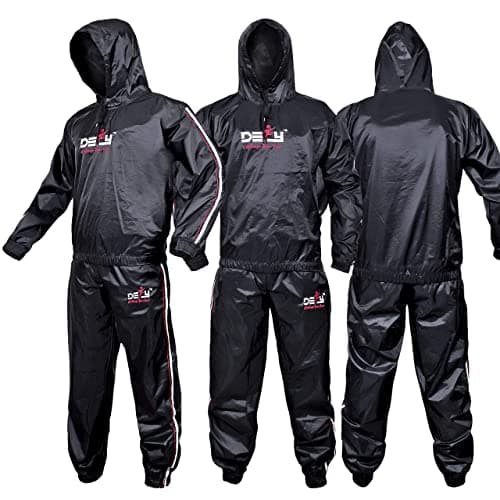
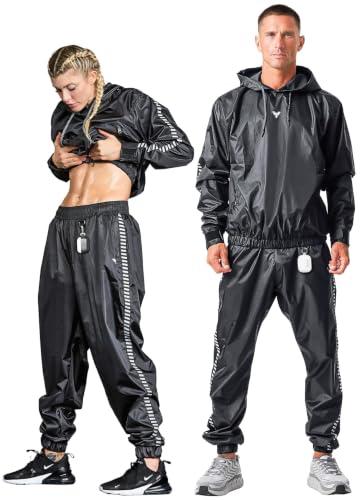
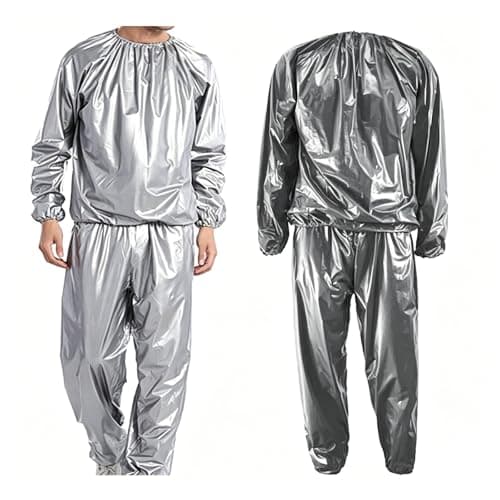
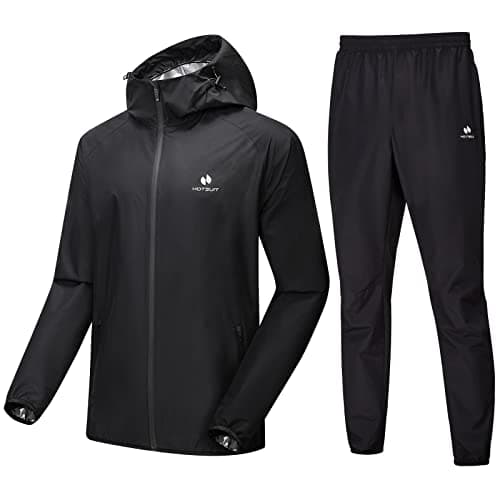
The best sauna suit for most men is the HOTSUIT two-piece jacket and pants: it is the one brand in this category with a named fabric line and a decade of visibility in combat sports, and the two-piece cut means you can wear the top alone when the full set is too much. If your last suit split at a seam, the DEFY hooded full-body wrap is sold specifically on an anti-rip claim at around two-thirds of the brand-name price. The budget pick is the DawnBreak PVC top-and-pants set — the cheapest honest way to find out whether you can stand training in one, and, oddly, the only suit here that names its material. Prices in the table are live and carry their own as-of date.
What a sauna suit is and is not
It is a non-breathable garment that stops sweat evaporating. Because evaporation is how your body sheds heat, trapping it raises your skin and core temperature during exercise and makes you sweat considerably more. That is the whole mechanism.
What it is not is a sauna. A sauna heats the room; a suit prevents you cooling. And the weight that disappears on the scale afterwards is water, which returns with your next few drinks — something the literature on rapid weight loss in combat sports is unambiguous about. Our do sauna suits work page handles that question properly, and sauna weight loss does the arithmetic. We are ranking suits here, not making claims for them.
The legitimate uses are narrow and real: making a weight class under supervision, and training in heat deliberately as part of acclimatization. Outside those, a suit is a way to sweat harder in a workout you were doing anyway.
How we ranked them
On construction and fit, because that is what separates a suit you wear twenty times from one you wear twice. Judgments from documented research — listings and aggregated owner reports — never testing we did ourselves; see our methodology.
- Seams. The failure point, universally. A suit that splits under the arm on session three is a wasted purchase regardless of price.
- Fit through the shoulders and chest.Most of these are cut generously and boxily. A men's two-piece with real sizing moves better than a unisex wrap in the same nominal size.
- One piece or two. A two-piece lets you wear half of it, which matters more than it sounds when you are twenty minutes in.
- Hood or no hood. A hood retains substantially more heat and is substantially less pleasant. It belongs on the heavy-duty picks, not on a first suit.
- Does the listing say what the fabric is?Almost none of them do. We rank disclosure up, because a suit that names PVC is telling you something a suit calling itself "premium sauna fabric" is not.
The four, side by side
| Pick | Cut | Hood | Material stated | Best for |
|---|
| HOTSUIT men's set | Two-piece, men's sizing | No | Named fabric line | Most men, most sessions |
| DEFY heavy duty | Full-body wrap, unisex | Yes | Anti-rip claim only | Replacing a suit that split |
| Elite Sports | Full-body wrap, to XX-Large | Yes | Not stated | Making weight under supervision |
| DawnBreak PVC | Two-piece, unisex | No | PVC, stated | Trying the format cheaply |
Which one is for you
- Most men — the overall pick: the HOTSUIT sauna suit for men. Jacket and pants, men's sizing, from the maker combat sports actually uses. Wear the jacket alone to start.
- Your last suit tore — the durability pick: the DEFY heavy-duty hooded wrap, sold on an anti-rip claim at well under the brand-name price. A hooded full-body wrap is the deep end; do not make it your first.
- You are cutting to a weight class: the Elite Sports hooded suit, from a brand selling to wrestlers and MMA fighters, in sizes to XX-Large. Do this under a coach's supervision, not from a web page.
- Finding out whether you can stand it — the budget pick: the DawnBreak PVC top and pants, about a third of the brand-name price and the only listing here that names its material. Most people abandon this category after two sessions; this is the rational first purchase.
Looking for a women's cut instead? Our main sauna suit roundup includes a women's jumpsuit alongside these four.
Sizing: go by your real measurements, not your usual size
Sauna suits are cut boxy and they are not stretchy. Two consequences follow. First, a size that is too small does not just feel tight — it loads the seams, which is where these fail. Second, a size that is far too large flaps and chafes, and the loose fabric at the armpit is the first thing to split.
Measure your chest and your inseam, and use the listing's chart rather than your T-shirt size. If you are between sizes and plan to move in it — skipping, bag work, a bike — size up. If you plan to use it for steady-state walking only, take the closer fit.
Hydration, and the part that genuinely matters
This is the only safety advice on this page and it is not optional. A suit increases sweat rate substantially, and sweat is water and electrolytes. Drink before, drink during, and drink after; the CDC's hydration guidance is the baseline, and our sauna and dehydration page goes further.
Stop if you feel dizzy, nauseated, confused or stop sweating. Do not wear one in an already hot environment — a suit inside an actual sauna removes your ability to shed heat in a room designed to add it, which is a genuinely bad combination. And if you have a cardiovascular condition or are on medication that affects thermoregulation, ask a clinician rather than a roundup. Our sauna safety page sets out the general rules.
Care, because this is where suits die
Rinse it out after every session. Sweat is salty and corrosive to coatings and zips, and a suit left rolled up in a gym bag will smell within two uses and degrade within a month. Hang it inside out until it is dry — not in a tumble dryer, and not in direct sun, both of which attack the coating. Do not iron it, for obvious reasons.
Zips are the second failure point after seams. Rinse the zip specifically, and do not force it closed over a size it was not cut for.
Alternatives worth considering first
If what you actually want is heat rather than sweat, a suit is the wrong tool. A sauna blanket heats you deliberately, at a temperature you can read and stop, and costs more but does something a suit cannot. A portable sauna does the same in a format you sit in. And if you have access to a real sauna, use it — our sauna before or after a workout page covers how to fit it around training.
A suit earns its place when you need to train in heat while actually training — moving, striking, skipping — which is exactly the use case the combat-sports brands here were built for.