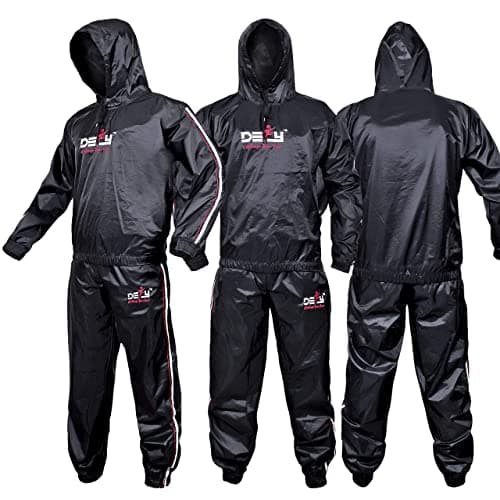
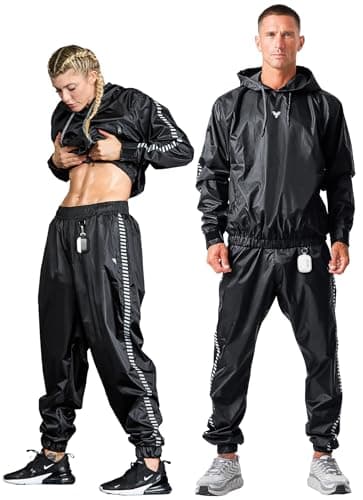
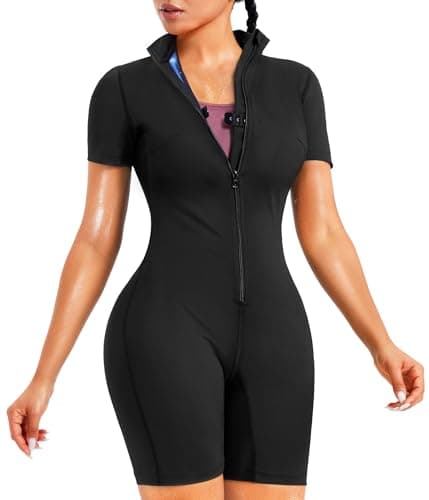
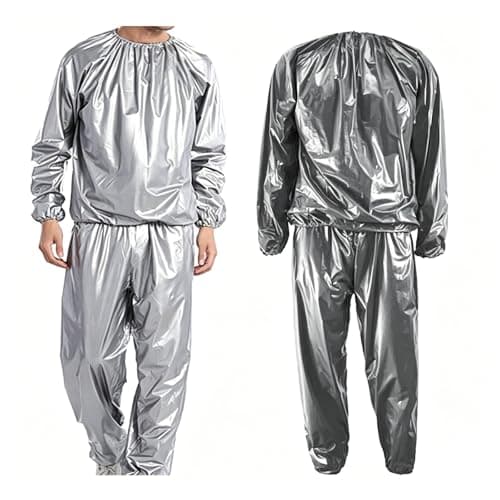
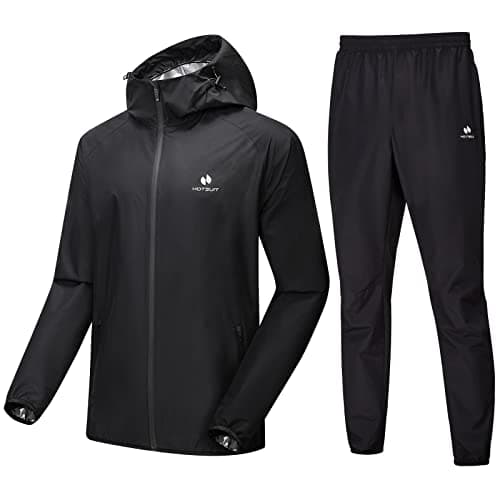
Buy the HOTSUIT two-piece. It is the only established name in a category otherwise made of nameless listings, the jacket-and-pants format lets you take half the dose on a day you want less, and a full-length zip is the fastest way out when you have had enough — which in heat-loss attire counts as a safety feature. If you want maximum heat and your last suit split at a seam, the DEFY hooded wrap is the durability play. If you are cutting weight in a fight gym, Elite Sports builds for that room. If you are a woman tired of unisex suits cut for a man, the Junlan jumpsuit is the only shaped option here. And if you have never worn one, spend seventeen dollars on the DawnBreak PVC set first — most people discover in two sessions that they hate this, and finding that out cheaply is a real result.
Read this before you buy any of them
We sell sauna gear and we still have to say it plainly: a sauna suit does not do most of what it is marketed to do. It is a sealed garment. It stops sweat evaporating, so the sweat cannot cool you, so your core temperature and heart rate climb faster during exercise and you lose body mass quickly. That mass is water. It comes back with your next few drinks, every time, which is exactly why hydration-testing research in combat sports exists at all — acute sweat loss is so reliable and so completely reversible that the sports which depend on it had to build testing around the practice.
The research on suits specifically is thin but pointed. A 2022 study in the Journal of Strength and Conditioning Research measured energy expenditure and post-exercise oxygen consumption during high-intensity intervals in a sauna suit — the design that would catch a metabolic bonus if one were there. A 2018 study in Temperature measured both the physiological and the perceptual cost of training in restrictive heat-loss attire, and the second word is the one buyers miss: a suit makes the same work feel harder. Effort spent tolerating heat is effort not spent on the training.
So there are two honest reasons to own one. The first is heat acclimation — repeated heat exposure produces real, measurable adaptations, as the crossover study of three acclimation methods shows, and a suit is a cheap if crude way to raise core temperature during a session you were doing anyway. The second is making weight for a weigh-in, under a coach, on a planned timeline. If your reason is fat loss, the suit is the wrong purchase and our do sauna suits work page goes through why in detail. If your reason is that you want to sit in heat and sweat, you want a sauna blanket, where the temperature is a number you can read and a switch you can turn off.
How we ranked them
Four criteria, in this order. Nothing here is a lab measurement — we do not run a lab, and our methodology says so in those words.
- Heat retention, by construction. Nobody in this category publishes a temperature or an insulation figure, so the honest proxy is coverage and closure: a hood and a sealed wrap trap more than an open-collar two-piece, and a two-piece traps more than a vest. We rank on what the garment physically covers, not on a marketing adjective.
- Seam and tear durability. This is how suits die. They do not wear out gradually; a seam opens at the shoulder or the crotch, usually inside the first month, usually while you are bending. Brands that make a durability claim at least invite the comparison.
- Fit and sizing honesty. Suits run small across the board and reviewers routinely tell each other to order up a size or two. A garment cut for the body actually buying it — women's patterns, sizes past XL — is worth more than a point of heat retention.
- Value against how long you will use it. Abandonment rate is the real cost driver here. A $17 suit you use twice is more expensive per session than a $54 suit you use weekly for a year, and the reverse is also true.
One thing we could not rank: material. We checked the listings and the brands' own pages, and four of these five publish no fabric composition at all. The cheapest one — the PVC set — is the only product here that names what it is made of, which tells you something about the category. Where a spec is not published we say "not published" rather than filling the gap.
How the five compare
Published listing details only, as of our last check. Prices move, so the live figure on each pick below is the one to trust.
| Pick | Format | Hood | Material | Who it is for |
|---|
| HOTSUIT (men's) | Jacket + pants | No | Not published | Most buyers; the established name |
| DEFY Heavy Duty | Full-body wrap | Yes | Not published | Maximum heat, anti-rip claim |
| Elite Sports | Full-body wrap | Yes | Not published | Fight gyms; sizes to XX-Large |
| Junlan (women's) | One-piece jumpsuit | No | Not published | A women's cut, not a unisex sack |
| DawnBreak | Top + pants | No | PVC (listed) | Finding out if you can stand it |
The pattern in that table is the whole category: five products, one published material, no temperature claims, and price differences that buy you construction and fit rather than performance you can verify. That is unusual on this site — our heater rankings compare published kilowatt ratings, and our infrared cabins compare published EMF classes. Here there is nothing to compare but the garment.
What to check before you buy a sauna suit
- How fast you can get out of it. The single most useful feature on a suit is a full-length zip. Overheating in heat-loss attire is not a theoretical risk — the NATA position statement on exertional heat illness names restrictive clothing among the factors that raise it, and the practical consequence is that a pullover hooded wrap takes longer to escape than a zipped jacket. If you train alone, buy the zip.
- Size up, then size up again. Consistent advice across every suit here, and the reason is construction: these are not stretchy garments, and a suit that binds at the shoulder is a suit whose seam will go. Order the size above your usual, and the size above that if the chart puts you at a boundary.
- Two pieces beat one, for most people. A jacket-and-pants set gives you a half dose. That matters more than it sounds, because the usual arc with a suit is enthusiasm, then one genuinely unpleasant session, then the garage. Being able to wear only the top is what keeps a suit in use.
- Plan the water before the session, not during. You cannot drink your way out of a suit mid-workout as easily as you think, and the mass you lose is fluid you now owe back. Weigh before and after if you want to see the real number; our sauna and dehydration guide covers the replacement arithmetic, which is the same whether the heat came from a stove or a plastic jacket.
- Expect to wash it by hand, every time. Trapped sweat against a non-breathable lining is how a suit starts to smell permanently, usually by week three. Rinse it inside out after every session and hang it fully open. No listing here publishes machine-wash instructions we would rely on.
- Skin, honestly. Hours of sweat held against skin under plastic irritates it. If you have eczema, active acne or any broken skin, this is the wrong garment, and the skin section of our sauna benefits work explains why evaporation matters to skin in the first place.
What the price brackets actually buy
Three brackets, and the jump between them buys something different each time. Live prices sit on each pick above, because numbers typed into prose go stale within a week.
Under about twenty dollars gets you a PVC two-piece. It traps heat as well as anything here — physics does not charge extra — and it is stiff, loud and structurally temporary. This bracket exists to answer one question: can you tolerate exercising inside a sealed garment? A large share of people cannot, and nobody should learn that at the top of the range.
Around forty dollars is where hoods and durability claims appear. You are buying coverage and seam strength: a wrap that closes over your head retains more than an open-collar jacket, and brands in this bracket at least market tear resistance, which invites a comparison the cheap sets cannot survive. It is also where unisex sizing stretches far enough to fit athletes above XL.
Fifty dollars and up buys a name, a zip and a garment that feels less like packaging. That is a real purchase if you will wear it weekly for a year — a suit you keep using is cheaper per session than two cheap suits you abandon. It is a waste if you are still deciding whether you like this. Note what the extra money does not buy: no brand in this category publishes a fabric composition, a thickness or a temperature figure, so nothing in the top bracket can be verified against anything in the bottom one. On a heater you can check kilowatts against room volume. Here you are buying construction you can only judge by handling it.
Which of the five, in one line each
Buy the HOTSUIT if you want the suit most likely to still be intact next year, with the zip and the two-piece flexibility, and you accept paying for a name instead of a spec.
Buy the DEFY if heat retention is the whole point and you have worn a suit before. The hood is the difference, and the hood is also why this is the one we would not hand to a beginner.
Buy the Elite Sports if you are in a wrestling or MMA room and your coach is running the weight cut. It is built for that use and sized for bigger athletes than most of this category bothers with.
Buy the Junlan if you are a woman and every suit you have tried was a men's pattern in a smaller size. Ignore the waist-trainer marketing; buy it for the cut.
Buy the DawnBreak if you have never done this. Seventeen dollars to learn whether you can tolerate training in a sealed bag is the best-value purchase on this page, and if the answer is no you have lost almost nothing.
Buy none of them if what you actually want is heat. This is the honest end of the page: a suit is a workout accessory, not a sauna. For the same money as two suits you can have a budget sauna blanket that heats you to a temperature you set, lets your head stay out, and does not require you to exercise while suffering. For a bit more there are portable saunas you sit upright in.
Sauna suit vs sauna blanket vs sauna
These three get confused constantly, and the difference is where the heat comes from. A suit adds no heat at all — it traps yours, so it only works while you exercise, and its ceiling is set by how hard you are willing to work. A blanket adds heat with infrared panels at a temperature you select, so it works while you lie still; see infrared sauna vs sauna blanket for where that sits against a cabin. A sauna heats the air around you, which is a different sensation and the only one of the three with a serious research base behind it — our sauna benefits page grades that evidence honestly, including where it is weaker than the enthusiasts claim.
If you came here from a weight-loss search, read sauna and weight loss before you spend anything. It is the same arithmetic in a different garment, and the conclusion does not change.