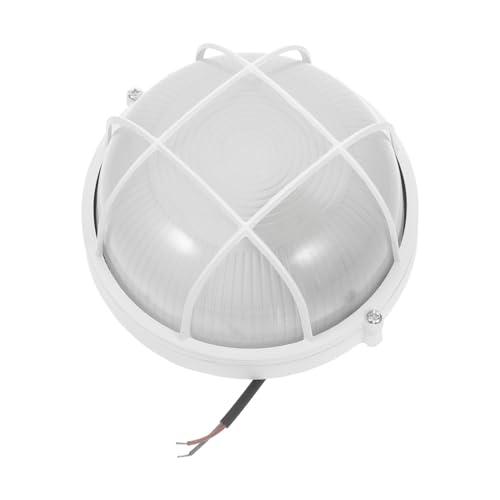
If you are replacing a dead sauna light, buy the MAGICLULU E27 bulkhead: a gasketed glass lens in a cage with an ordinary screw socket, which is the format sauna fixtures have used for decades and the one a wooden shade is designed to sit in front of. If your sauna already has a working light and what you actually want is for it to look like a sauna, buy the HAMRVL 24V COB strip and hide it under the bench lip — it is the budget pick on this page and the one that changes the room most per dollar. If the problem is glare rather than darkness, the answer is not a different light, it is the cedar shade. Prices in the table are live and carry their own as-of date.
Sauna lighting is three separate purchases
Almost everybody searching for a sauna light is actually in one of three situations, and they need different products. We have a full sauna lighting guide that covers the reasoning; this page is the shopping list.
- The light is dead or there is no light. You need a fixture: a sealed, gasketed lamp rated for damp service, with a socket you can buy bulbs for. Two on this page.
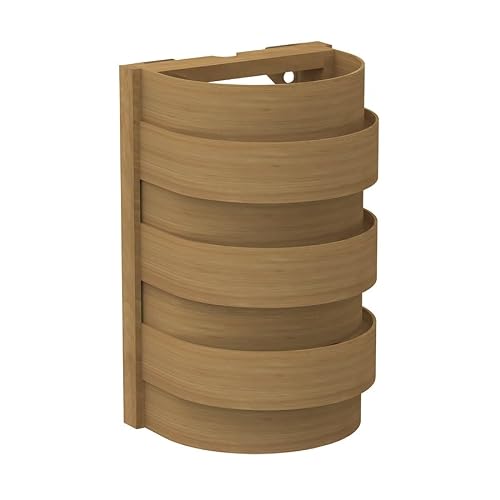
- There is a light and it is unbearable to look at. You need a shade — a wooden frame or slatted cover that goes in front of the fixture. Two on this page, and this is the purchase people skip and then regret.
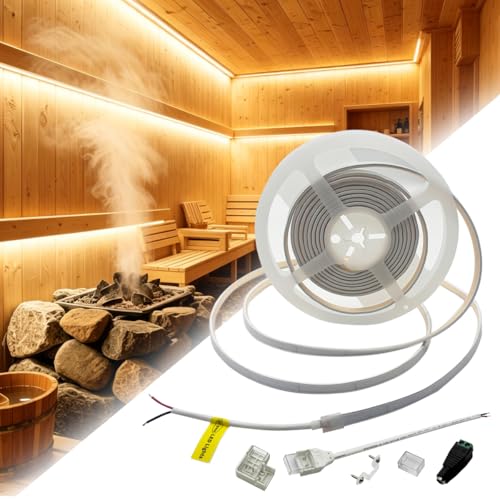
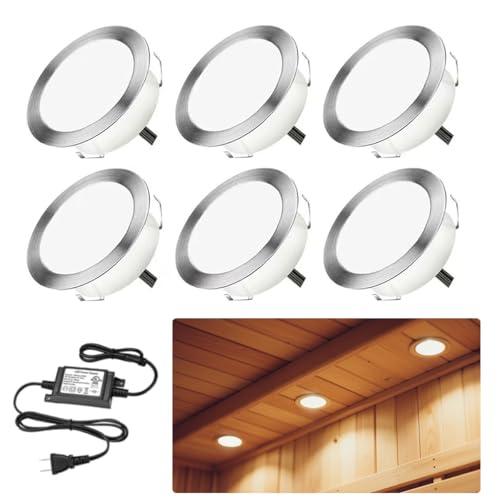
- The light works and the room still feels like a closet. You need indirect light: low-voltage LED strip under the bench lip or behind the backrest, or recessed pucks in the footwell. Three on this page.
Those are not competing products. A finished sauna usually ends up with a fixture plus a shade, and increasingly a strip as well. Buying a second fixture when what you needed was a shade is the most common mistake in this category.
How we ranked them
Judgments from documented research — listings, maker specifications, published standards and aggregated owner reports — not lab testing. We do not have a lab, and our methodology says so plainly.
- Is it the right format for a hot, wet room? A gasketed lens, a sealed silicone jacket or a solid wooden shade. Open fittings and fabric shades are not on this page at all.
- Is the voltage sensible? Anything inside the room that can be low voltage should be. All three strip and puck options here run on 24V or similar, with the driver living outside the sauna.
- Does the listing publish what it claims?An IP number is a real, standards-defined claim. “High temperature resistant” with no number is not. We score documentation separately for exactly this reason.
- Does it install in the sauna you already have? Recessed pucks mean cutting cladding; a shade means measuring a fixture. We say which purchases are build-time and which are an afternoon.
- Does it fix glare? A bare bulb at eye level from the top bench ruins an otherwise good room, and nothing in the specification sheet tells you that.
The spec almost nobody publishes
Here is the honest state of this category: of the seven products on this page, not one publishes a numeric maximum ambient temperature. Several claim to be “high temperature resistant” and several carry an IP rating, and those two things are not the same claim.
An IP number comes from IEC 60529, and it describes protection against solid objects and water — the first digit is dust, the second is water. IP67 means dust-tight and protected against temporary immersion. IP68 is the same plus continuous immersion to a depth the maker states. Neither digit says anything at all about heat. A strip can be perfectly IP68 and still fail at 190F.
What follows from that is a placement rule rather than a product rule, and it is the single most useful thing on this page: in a traditional sauna the air at the ceiling above the stove is the hottest place in the room, often dramatically hotter than at bench height. Put the fixture on a wall, below the top bench line where you can, and keep strip under a bench lip rather than along a ceiling edge. If you want a certified rating rather than a format argument, the place to buy is your sauna maker's own parts catalog, and we say so on each pick.
The wiring is not a product decision
Lighting inside a sauna is electrical work in a wet, hot room, and in the US that means local code and, for anything hard-wired, an electrician. We cover the real requirements in sauna electrical requirements and when you need an electrician. Nothing on this page changes that. What low-voltage strip does change is the part of the job that happens inside the room: a 24V run and its driver mounted outside the sauna is a much simpler, safer thing to put behind cladding than line-voltage cable.
Which one is for you
- Your sauna light died — the overall pick: the MAGICLULU E27 bulkhead. Glass lens, cage, standard screw socket, wall or ceiling mount. Fits behind most wooden shades.
- You want the room to look like a sauna — the budget pick: the HAMRVL 24V COB strip, IP67 in a silicone jacket. Continuous light rather than dots, so a bench-lip glow reads as lighting. You will need a 24V driver, mounted outside the room.
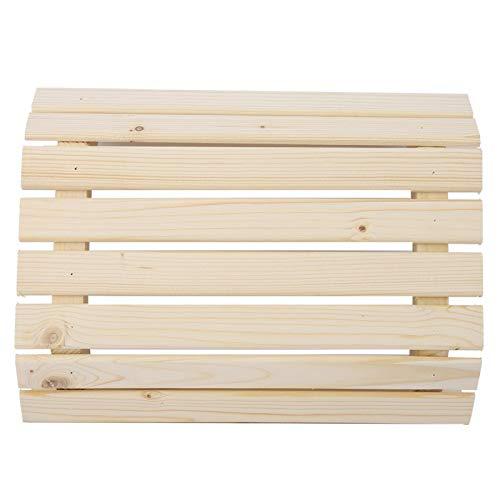
- The bulb glares from the top bench: the cedar sauna light shade, sized for a rectangular vapor-proof wall light. Measure your fixture first. The cheaper wood guard cover does the same job without naming its species.
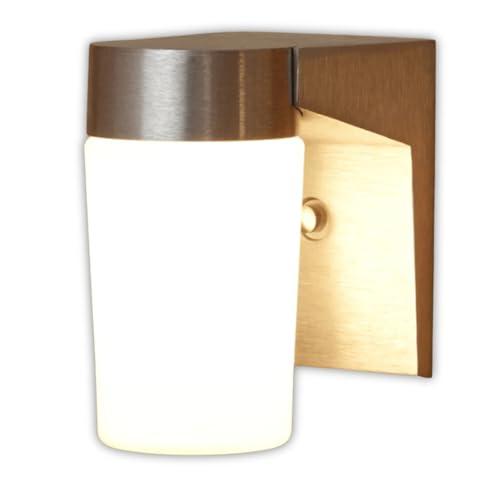
- You want a fixture you can leave uncovered: the vapor-proof wall light with a glass globe. The globe diffuses enough to look at, which is what you are paying the premium for.
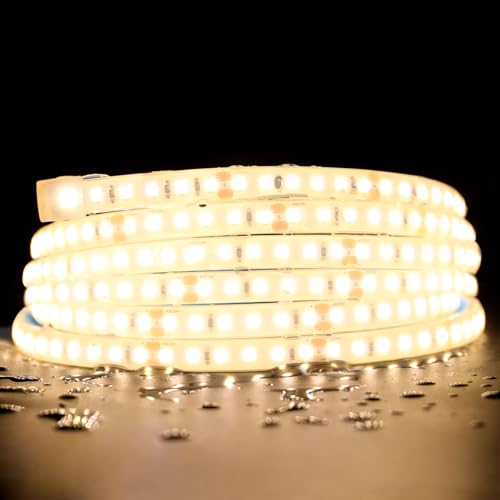
- The strip will sit where ladle water lands: the SuperlightingLED IP68 reel. One ingress class up, cuttable, discrete emitters rather than COB.
- You are building or re-cladding and want step lighting: the SKYMVAO recessed 6-pack, IP67 and low voltage. Solves the step down from the top bench, which no wall fixture can.
One thing this page is not about: red light therapy. Infrared and red-light panels are a heat and wavelength product, not a lighting product, and they live on saunas with red light therapy. If you came here from “best sauna red light,” that is the page you want.
Color temperature: why sauna light is warm
Every strip we picked is 2700K to 3000K, which is warm white, and that is not an aesthetic accident. A sauna is a room you sit in with your eyes half shut, at the end of the day, in order to stop thinking. Cool white light at 5000K or 6000K in that room reads as a bathroom or a garage. The same strip in 3000K reads as firelight.
There is a second reason, which is that the wood does the work. Cedar, hemlock and aspen are all warm-toned timbers; light at 3000K brings the grain up, and light at 6000K flattens it to grey. If you have paid for a cedar room, lighting it in daylight white throws away what you bought.
The one exception worth knowing: a few owners deliberately run a cool or daylight strip in an infrared cabin used for morning sessions, on the same logic people use a bright lamp at a desk. Both products we picked are sold in several color temperatures, so that choice is available without changing anything else.
Where light can and cannot go
The practical layout of a traditional sauna, from best to worst:
- Wall, below the top bench line, on the side away from the stove. The default position for the fixture, and the coolest usable spot in the room.
- Under the bench lip, facing the floor or the back wall. The best place for strip. You see light, not emitters, and the bench itself shields the run.
- Behind the backrest. Same idea, and it is what makes the upper bench glow in every sauna photograph you have ever liked.
- Footwell, risers and the step down. Recessed pucks. This is a safety improvement more than a design one — see our bench guide for how far the step actually is.
- The ceiling, anywhere near above the stove. The hottest air in the room, and the one place we would not put anything on this page.
Behind the cladding, any cable run has to be compatible with your vapor barrier. If yours is foil and you are cutting into it, patch and tape it properly rather than hoping — our flooring and build-up page explains why that layer matters.
Strip is a component, not a kit
Both strip picks ship without a power supply, and that is normal for 24V tape rather than a trick. To finish the job you need: the reel, a 24V driver with enough headroom for the length you actually install, a route for the low-voltage cable out of the sauna, and the driver mounted somewhere dry and cool outside the room. Many people put the driver in the same place as the heater controls.
Two practical notes. First, buy more length than the bench run you are lighting; strip is cuttable, offcuts are not. Second, silicone-jacketed COB strip cannot be bent sideways around a corner — it bends in one plane only, so an L-shaped bench run is two pieces and a solder joint or a connector, not one continuous reel.
Bulbs, if your fixture takes one
Both fixtures here are sold without a bulb, and the bulb is where people get into trouble. The traditional choice is a low-wattage incandescent, which tolerates heat well and produces a very warm light; the modern choice is an LED, which runs cooler but whose driver electronics are the part that dislikes a hot room. Neither listing publishes a wattage ceiling, so the honest advice is to stay well below any ceiling you can find, prefer the lowest wattage that lights the room, and treat a bulb that fails early as information about the position rather than about the bulb.
What not to buy
Smart bulbs: the radio and the driver are both in the hot part. Fabric or paper shades: no. Anything with a visible gap between lens and housing, whatever the IP claim on the box. Salt lamps sold as sauna lighting — a block of salt in a humid room becomes a wet block of salt. Fairy lights and generic 12V tape not jacketed for the environment, which is the most common thing we see go into a sauna and the most common thing to fail inside a season.
And one more: a second fixture, when what you have is a glare problem. Buy the shade. Our accessories checklist sets out what a room needs in what order, and accessories under $100 covers the rest of the fit-out at this price.