If you want a genuine 240V rock stove and not a plug-in toy, the Turku 9kW is the most heat for the money under $500 — a wet/dry heater sized for a large room, for a fraction of what a Harvia costs. Here is the honest news for anyone shopping the bottom of the heater market: the budget brands sell real sauna heaters. They are 240V, they hold a basket of stones, they get a traditional room to temperature, and the wet/dry ones let you throw water for steam. What you give up for the low price is longevity, parts depth, and the reassurance of a name that has been in Finnish saunas for a century — not the ability to heat a room. Below are the four budget stoves worth buying, ranked, each with a live price. First, the two rules that matter more than which heater you pick: size it to your room, and pay a licensed electrician to wire the 240V circuit.
Budget does not mean fake — but it does mean trade-offs
A cheap heater and a premium heater do the same physics: resistance elements glow, they heat a pile of stones, and the stones radiate steady heat into the room. At the same kW rating, a budget 9kW and a premium 9kW will both get the same room hot. The difference is everything around that: the grade of the elements and steel, how long the whole thing survives hard, wet use, and whether you can still buy a replacement element or a bag of matching stones in five years. A Harvia earns its premium on that support network and build life, not on raw heat. So the budget question is not "will it work" — it will — but "how long will it last, and can I get parts." Buy budget with your eyes open and it is a genuinely good value; buy it expecting a decade of daily loyly and you will be disappointed. Our Harvia vs Turku comparison lays out exactly what the premium buys.
How we ranked these
The scores on each card are judgments from documented research — manufacturer specs, listing data, and aggregated owner reviews — against our published rubric, not lab measurements. For a budget-heater roundup we weighted four things: heat for the money (kW delivered at the price), whether it is wet/dry (can you make loyly, or dry heat only), controls and install (built-in knob vs external digital, and how hard the hookup is), and value at the live price. Every heater here is a real 240V residential stove, and every one comes in under $500 at the prices we tracked. They are ranked in the order most people should consider them, which is heat matched to the most common room sizes — not by price alone.
The picks, ranked
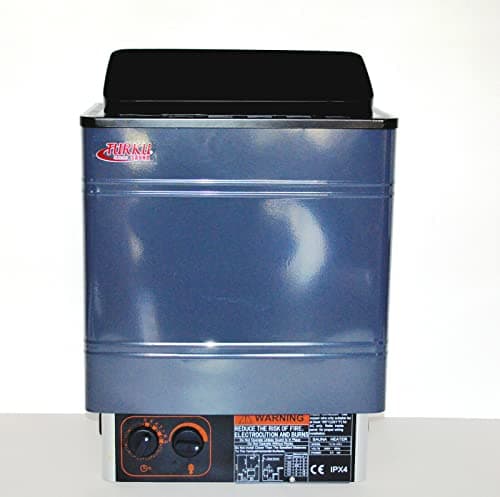
1. Turku 9kW (240V, wet/dry) — the most heat for the money.This is our top budget pick and the one to buy if your sauna is on the larger side. At 9kW it comfortably heats a large room that the popular 8kW premium stoves would be stretched by, and it is wet/dry rated, so you can ladle water over the stones for real steam. It sits at a sensible middle price — clearly cheaper than a Harvia, a step up in build from the rock-bottom VEVOR. The honest cons are the ones you would expect at this tier: Turku's parts and replacement-stone network is not as deep as Harvia's, and 9kW is a heavy 240V load, so confirm your panel can supply the circuit before you buy. If your room is small this is simply too much heater — an oversized stove overshoots temperature and wastes energy. Size first with our sauna heater size guide, then buy the kW that matches.
2. Turku 4.5kW (240V, wet/dry) — the value pick for a small room.The 9kW's little sibling, and the right call for a compact 2-person cabin of roughly 200 to 250 cubic feet. It undercuts the Harvia KIP 4.5kW while doing the same job, it is wet/dry rated for loyly, and its lighter 4.5kW draw means it can run on a smaller 240V circuit than the big stoves — a real saving on the electrical side, not just the heater. The trade-offs are the same shorter track record and thinner parts support as the 9kW, plus built-in-knob controls only (no external digital panel). It ranks below the 9kW only because it suits fewer rooms — most people shopping budget heaters are heating a mid-to-large sauna — but for a genuinely small room it is the smarter, cheaper, correctly sized choice. Do not undersize: a 4.5kW stove in a large room never reaches temperature.
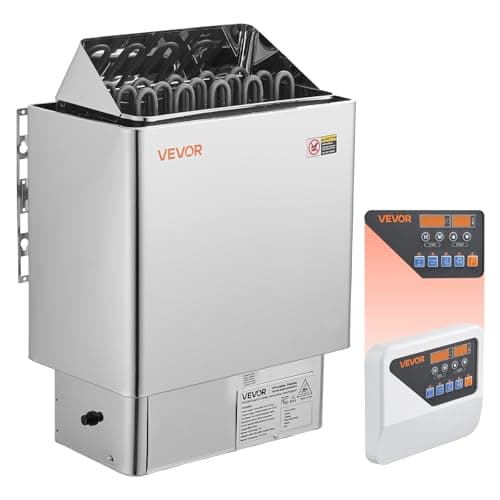
3. VEVOR 9kW (240V, external digital controller) — the cheapest way to 9kW. If your priority is maximum heat at the absolute lowest price, this is it: 9kW for less than anything else here, with an external digital controller so you set temperature and a timer from outside the hot room — genuinely nicer to use than an internal knob. It is widely stocked and ships fast. The catch is exactly the catch you would expect from the budget-of-the-budget: the build is basic, longevity and support are the price you pay for the price you pay, and stones are often not included, so budget for a separate bag. It ranks behind the Turku 9kW because the Turku is a real step up in build for a modest amount more — but if the lowest 9kW number wins the day, the VEVOR is honest about what it is. See how the two stack up in our Turku vs VEVOR comparison.
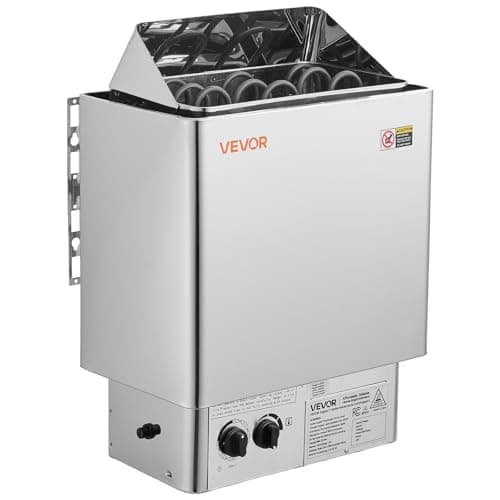
4. VEVOR 4.5kW (240V, internal controller) — the cheapest small-room stove. The lowest price on this list, for a heater VEVOR rates at 105 to 210 cubic feet — a compact 2-to-3-person cabin. Built-in knobs for temperature and a 3-hour timer keep the install straightforward, and the shell and element are 304 stainless rather than painted steel. It carries the same budget-build caveats as the rest of the VEVOR line — basic materials, basic support and parts — so it is the pick when the sticker price matters more than outlasting a decade of hard use. If your room is that compact and you want the cheapest real stove that fits it, this is the one; if you want a heater to rely on for years, the Turku or a Harvia is the safer money. It ranks last only because it serves the narrowest slice of buyers, not because it is a bad heater for the price.
The rule that beats price: size the heater to the room
The single most expensive mistake in this whole category is buying the wrong kW, and it is far more common than buying the wrong brand. Heaters are rated by kilowatts to a range of room volume in cubic feet, and the stated ranges on these cards — roughly 200 to 250 cu ft for a 4.5kW, 300 to 400 for a 6kW, 450 to 550 for a 9kW — are the manufacturers' own guidance. Get it wrong in either direction and you have wasted the money you were trying to save. An undersized heater runs flat out and still never reaches a proper sauna temperature — the most disappointing outcome there is, because the sauna is technically working and simply never gets hot. An oversized heater overshoots, cycles hard, and burns more electricity than the room needs. Measure length by width by height, compare against the range, and if you fall between two sizes, factor in glass doors and any uninsulated walls, which both push you toward the larger heater. Do this before you look at price. Our sauna heater size guide walks the whole calculation.
The one job you must pay a professional for
Every heater on this list is 240V and hardwired — there is no plug on the end of the cable. Wiring a 240V sauna heater is a licensed-electrician job, not a weekend DIY, and in most places it legally requires a permit and an inspection. The heater needs a correctly sized dedicated circuit and breaker for its amperage draw, wiring rated for the heat and humidity of a sauna, and proper GFCI protection, all done to the National Electrical Code (NFPA / NEC). This is where the "9kW is a heavy load" caution becomes real: a big stove may need a circuit your existing panel cannot spare, and finding that out after the heater arrives is an expensive surprise. Get an electrician to confirm your panel can supply the circuit before you buy the heater, not after. Doing the electrical wrong does not just risk a tripped breaker — it is a genuine fire and shock hazard, and it can brick the heater. If you want to understand the job before you call, our main sauna heaters guide covers install expectations across the range.
The honest bottom line
You can buy a real, water-throwing, 240V sauna heater for well under $500 — the budget brands are not selling a lesser experience of heat, they are selling a shorter warranty and a thinner parts shelf. For a large room, the Turku 9kW is the most heat for the money and our pick of the list. For a small 2-person cabin, the Turku 4.5kW is the correctly sized value choice. If the lowest possible price is the whole point, the VEVOR 9kW gets you the most power for the least cash and throws in an external digital controller, while the VEVOR 4.5kW is the cheapest stove for a compact room. Whichever you choose, size it to the room first and budget for a licensed electrician second — those two decisions matter more than the badge on the front. When you are ready to compare budget against premium, our Turku vs VEVOR and Harvia vs Turku head-to-heads make the trade clear.
How to buy a sauna heater under $500
Size the heater to the room before anything else
Match kilowatts to room volume in cubic feet — length by width by height — using the manufacturer ranges: roughly 200 to 250 cu ft for 4.5kW, 300 to 400 for 6kW, and 450 to 550 for 9kW. Undersize it and it never reaches temperature; oversize it and it overshoots and wastes power. If you fall between sizes, a glass door or any uninsulated wall pushes you up to the larger heater. This one decision matters more than which brand you pick.
Decide whether you need wet/dry
A wet/dry heater is rated to have water ladled over the stones for loyly — the burst of steam that defines a traditional sauna. A dry-only heater is not, and throwing water on one can damage it and is unsafe. Both Turku stoves here are wet/dry; if loyly is the reason you want a rock stove at all, make sure the heater you buy is rated for it, and never throw water on a heater that is not.
Weigh internal knobs against an external digital controller
Budget heaters split two ways on controls. A built-in knob (both Turkus, the VEVOR 4.5kW) is simple and cheap but lives inside the hot room, so you set it and wait. An external digital controller (the VEVOR 9kW) mounts outside and lets you set a target temperature and a timer without opening the door — more convenient, and it means you can pre-heat. Neither is wrong; decide whether the convenience is worth it to you.
Check whether stones are included
The stones are not optional — the heater does its work through them, and running a rock stove without a proper, well-stacked basket of stones is bad for the elements. Budget heaters, the VEVOR line especially, often ship without stones, so read the listing and budget for a bag of proper sauna stones if they are not included. It is a small cost, but a real one, and it belongs in your total.
Confirm the electrical before you buy
Every heater here is 240V and hardwired by a licensed electrician, usually with a permit and inspection, to the National Electrical Code (NFPA / NEC). A 9kW stove draws a lot of amperage — confirm your panel can supply a correctly sized dedicated circuit before you order, not after. Getting an electrician's quote and a look at your panel first is the step that turns a heater purchase into a working sauna instead of an expensive surprise.
Know when it is worth spending more
Budget is the right call for a room you will use a few times a week and a wallet that would rather not pay premium. If you plan to run the sauna hard, daily, for years, or you want the deepest parts and replacement-stone support and the longest build life, that is exactly what a Harvia premium buys — and it may be the cheaper choice over a decade. Match the heater to how hard you will use it, not just to today's price.