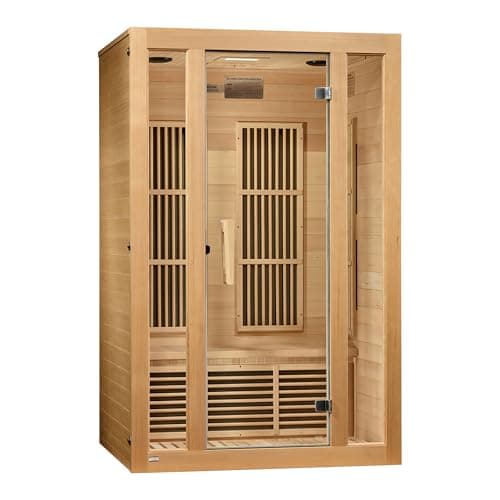
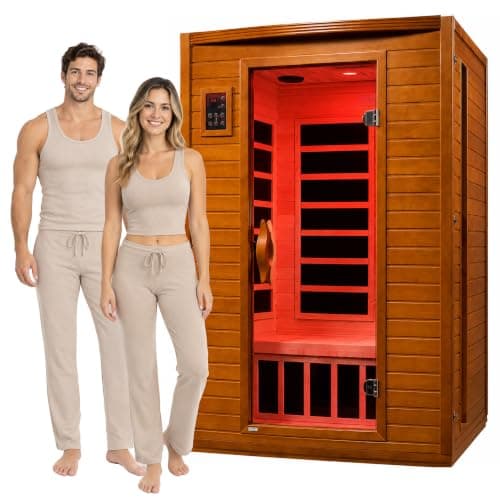
These are two badges on the same platform — buy the Dynamic Andora as the mainstream default, or the Maxxus Seattle if it's cheaper or you want the slightly more finished cabin. Both are 2-person, low-EMF far-infrared cabins from the Golden Designs group that plug into a standard household outlet. We rank the Andora first because it's the version with the widest support network and built-in red-light therapy, but this is close enough that price should usually settle it. Neither is a mistake.
The most important fact: same company
Before you agonize over the choice, know that Dynamic Saunas and Maxxus are both Golden Designs brands — the same engineering, the same support, the same parts. This is not two rival manufacturers going head to head; it's two trim lines of one platform. That reframes the whole decision: you're not choosing a better-built sauna, you're choosing a badge, a set of standard extras, and whatever the price happens to be on the day. Once you internalize that, the pressure comes off.
Where the Dynamic Andora wins
The Andora is the default for three reasons. First, support: Dynamic/Golden Designs is the largest mid-market brand, so parts, manuals and third-party reviews are everywhere — if anything ever needs sorting, this is the easiest cabin in the category to sort. Second, it ships with built-in red-light therapy LEDs alongside its carbon far-infrared panels, a nice extra at no real cost to the sauna experience. Third, it's the version most people already own, which is exactly why it's the safe recommendation. Its carbon panels are rated low-EMF and it runs on a standard 120V outlet — no electrician, no dedicated circuit.
The honest con: the Andora is far-infrared only, not full-spectrum, so there's no near- or mid-infrared heat; and its cabin is hemlock, the budget-to-mid wood that lacks cedar's aroma and natural rot resistance. If full-spectrum heat is the point, neither of these two is your cabin — but for the classic infrared sweat, the Andora is the sane default.
Where the Maxxus Seattle wins
The Seattle's case is finish and features. It's the same Golden Designs engineering in a slightly more finished cabin, and chromotherapy lighting and Bluetooth are standard on most Seattle listings. If you cross-shop on trim and want the marginally nicer-feeling box — and you're the kind of buyer who's also weighing low-EMF ratings closely — the Seattle is the one to look at. It carries the same low-EMF rating as the Andora and the same 120V plug-in convenience.
The honest con is blunt: it's genuinely hard to separate the Seattle from the Andora on anything but price and trim, and it's far-infrared only, just like the Andora. That's not a knock on the cabin — it's a reason not to overthink it. If the Andora is cheaper when you look, take the Andora; don't pay a premium for the name difference.
EMF: rated the same, kept in proportion
Because EMF is often the tiebreaker buyers reach for, here's the honest read: both cabins carry a low-EMF rating on their carbon far-infrared panels, and it's the same rating — neither is meaningfully lower than the other. All electric heaters produce low-frequency EMF, the fields from modern carbon panels sit in the range of everyday appliances, and the science at these levels is unsettled rather than alarming (NIEHS). So EMF is not the thing that decides between these two. If EMF is genuinely your headline concern, the ultra-low-EMF-rated option is a different cabin — see our best low-EMF infrared saunas roundup, where the ultra-low-EMF-rated Dynamic Saunas Elite takes the top spot.
Red-light therapy vs chromotherapy — the one real feature split
The clearest difference on the spec sheets is the extras, and the names get muddled, so it's worth being precise. The Andora ships with built-in red-light therapy LEDs; the Seattle leans on chromotherapy lighting with Bluetooth standard on most listings. Chromotherapy is colored mood lighting — pleasant, but decorative. Red-light therapy is a specific LED band marketed for skin and recovery, the same territory as standalone red-light panels. Neither changes the infrared sweat itself, and neither is a reason to overpay, but if the red-light extra genuinely interests you, that tilts to the Andora; if you just want mood light and music, the Seattle has both built in.
The support network is the underrated tiebreaker
Buyers obsess over specs and forget support, but over years of ownership it's what you'll actually lean on. Golden Designs is the largest mid-market brand in the category, and the Andora is its most common cabin — which means manuals, replacement parts, how-to videos and third-party reviews are everywhere. The Seattle sits on the same support platform, so you're covered either way; the edge, if there is one, goes to the Andora simply because it's the more common cabin and therefore the easier one to find answers for. For a first-time buyer nervous about assembly or a future fault, that reassurance is worth more than a trim upgrade.
Who each one is for
Buy the Andoraif you're a first-time buyer who wants the safest, most-supported choice, values the built-in red-light LEDs, and would rather not overthink it — it's the cabin the most owners and reviewers already stand behind, so help is never far away. Buy the Seattleif you cross-shop on finish, want the marginally nicer cabin with chromotherapy and Bluetooth as standard, and it's priced at or below the Andora when you check. Both suit the same core buyer: someone who wants a plug-in 2-person far-infrared cabin from a big, well-supported brand and isn't chasing full-spectrum heat or an ultra-low-EMF rating.
Install and living with either is identical
There's no install advantage between them. Both are hemlock 2-person cabins that plug into a standard 120V outlet, both assemble as a two-person job, and both run the cooler, sustainable far-infrared heat you can sit in regularly. You sweat onto the bench and wipe it down after, same as any cabin. In other words, the ownership experience is a wash — which is exactly why this comes down to price, trim and the red-light-versus-chromotherapy question rather than anything structural.
The verdict
Buy the Dynamic Andoraif you want the mainstream default with the widest support network and built-in red-light therapy — it's the version we'd hand most first-time buyers. Buy the Maxxus Seattleif it's cheaper on the day, or if the slightly more finished cabin and standard chromotherapy/Bluetooth appeal to you. What you should notdo is agonize: these are two trims of one Golden Designs platform, so the price tag is a perfectly good tiebreaker. And remember the reason you're buying at all — the regular heat habit is the part with a real health association behind it (JAMA Internal Medicine) — general information, not medical advice. If you're still torn between the two big infrared brands rather than these two siblings, our Dynamic vs JNH comparison settles that one, and the best infrared saunas roundup ranks the whole field.
How to choose between them
Let price decide — genuinely
Because these are two badges on one Golden Designs platform, the price is not a lazy tiebreaker, it's the correct one. Check both on the day and buy whichever is cheaper, unless the Seattle's standard chromotherapy and Bluetooth are worth a small premium to you specifically. You will not get a better-built sauna by paying more between these two.
Check the outlet — both are plug-in
Both cabins run on a standard 120V household outlet, so neither needs an electrician or a dedicated circuit. That's a shared strength, not a differentiator — but it does mean you can rule out the wiring worry entirely and focus on price and trim. Bigger and full-spectrum cabins are where 240V enters the picture; these two don't.
Weigh trim against substance
The Seattle's edge is finish and standard extras; the Andora's edge is the biggest support network and built-in red-light therapy. Neither changes the core sweat, which is identical. Decide whether a slightly nicer cabin or the reassurance of the most-supported badge matters more to you, then let price break the tie.
Don't use EMF as the tiebreaker here
Both carry the same low-EMF rating, so EMF can't separate them. Keep the spec in proportion — the fields are in the everyday-appliance range and the science at these levels is unsettled — and if a documented ultra-low-EMF rating is your real priority, look outside this pair at the low-EMF roundup instead.
Think about the extras you'll actually use
The Andora's red-light LEDs and the Seattle's chromotherapy-and-Bluetooth are the only features that really differ, and both cost the brand little to include. Don't let them balloon the price in your head — decide whether you'd genuinely use red-light or prefer mood lighting and music, treat it as a small tiebreaker, and keep the bulk of the decision on price and support.