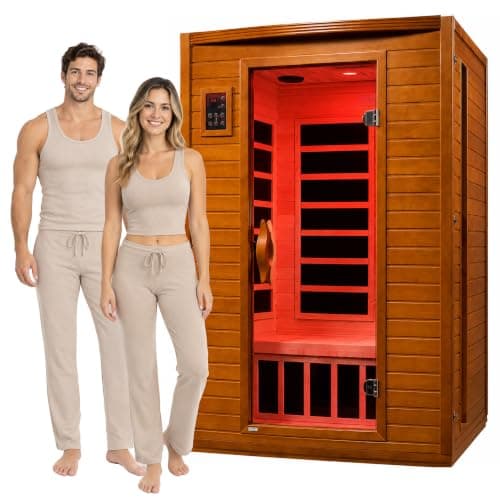
The Dynamic Andora is the infrared cabin most people should buy under $3,000 — a proven, low-EMF 2-person cabin that runs off a standard household outlet and is backed by the widest support network in the category. The sub-$3,000 tier is the sweet spot in home infrared. You get a real wood cabin for one or two people, not a fabric tent, without paying for the full-spectrum, 240V rooms that start higher up. Below are the five worth your money, ranked, with live prices — and every one is far-infrared and plugs into the wall you already have. If your budget is tighter, our best infrared saunas under $2,000 covers the entry tier; if it stretches, the best infrared saunas under $5,000 adds full-spectrum and cedar.
Why under $3,000 is the sweet spot
Home infrared cabins roughly sort into three tiers. Under $2,000 you're shopping the entry models and the smallest cabins, where corners get cut on wood, heaters and support. Above roughly $5,000 you reach the full-spectrum, red-cedar, 240V rooms that add near- and mid-infrared heat and premium finish. The tier in between — the one this page covers — is where a first-time buyer gets the most for the money: a genuine 1-2 person hemlock cabin, low-EMF-rated carbon far-infrared heaters, and a brand with a real parts-and-reviews trail, all running on a normal 120V outlet. You're not overpaying for features most people never use, and you're not buying so cheap that support and heaters become the story. For a wider view across every price, see our best infrared saunas hub.
They're all far-infrared — and that's fine
Every cabin here uses far-infraredheaters, and it's worth being clear about what that means before you buy. Far-infrared is the longest, gentlest band of infrared; it warms your body directly at a comfortable air temperature and is the standard for plug-in home cabins. Full-spectrum cabins add near- and mid-infrared heat as well, which is the band marketers tie to skin and deep-tissue claims — but those cabins cost more and usually need a 240V circuit and an electrician. If far-infrared warmth and sweat is the goal, nothing on this list is holding you back. If near-infrared heatis specifically the point, that's a step up in price and wiring — read our under $5,000 guide and our are infrared saunas worth it explainer before you spend more. Note that several cabins here, including the Andora, add red-light therapy LEDs — that is a light feature, not full-spectrum heat, and the two are easy to confuse.
How we ranked these
The scores on each card are judgments from documented research — manufacturer specs, listing data and aggregated owner reviews — against our published rubric, not lab measurements. We do not have a lab. For a sub-$3,000 cabin we weighted the things that actually decide satisfaction: real capacity (is it honestly a 2-person, or a roomy single), heat and comfort, low-EMF rating, build and wood, and value at the live price. The ranking is the order most people should buy in, not price alone.
The picks, ranked
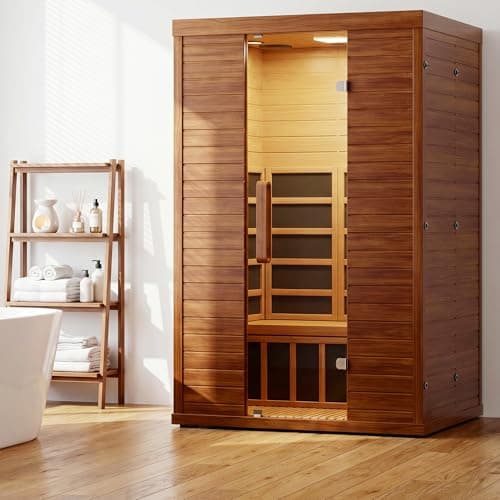
1. Dynamic Andora (2-Person Low EMF FAR) — the default.This is the cabin to buy if you want the safe, well-supported choice and move on with your life. It's a genuine 2-person hemlock cabin with low-EMF-rated carbon far-infrared panels and built-in red-light therapy LEDs, and it runs on a standard 120V outlet — no electrician, no dedicated circuit. The real advantage is behind the product: Dynamic (part of the Golden Designs group) is the largest mid-market brand, so manuals, parts and third-party reviews are everywhere, which matters years from now when you need a heater or a hinge. The honest cons are the ones on the card: the heaters are far-infrared, not full-spectrum, and hemlock is the budget-to-mid wood — it lacks cedar's aroma and natural rot resistance. Don't buy it if full-spectrum near-infrared heat is the whole point; otherwise it's the easiest cabin in the tier to recommend.
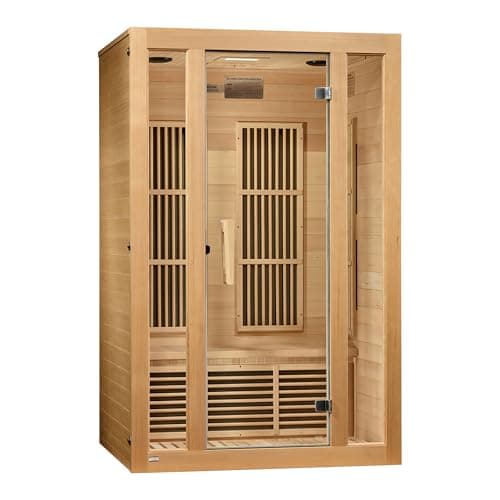
2. EASYHAWK 2-Person (6 low-EMF panels, 1500W) — the value runner-up. The EASYHAWK is what you buy to save money without feeling like you did. It is an independent, Amazon-direct seller rather than a big group, and the cabin is genuinely roomy at 47.2 x 39.3 x 72.8 inches, with six carbon far-infrared panels on a 1,500W system and an adjustable 64-149F range. It runs on a standard 15A / 120V plug and carries a 5-year limited warranty, and it lands well below the equivalent Dynamic. Be clear about the trade: the listing never names its wood species and puts no figure behind its "low EMF" wording. It's far-infrared only, and assembly is a two-person job with heavy panels, but for the money this is the most cabin on the list. If you want the head-to-head, we compare the two brands directly in Dynamic vs JNH.
3. Maxxus Seattle (2-Person Low EMF) — the sibling, buy whichever is cheaper. The Seattle comes off the same Golden Designs platform as the Andora, with the same engineering and support and a slightly more finished cabin — chromotherapy lighting and Bluetooth are standard on most listings, and it's a 120V plug-in like the rest. It ranks below the Andora for one honest reason: the two are genuinely hard to separate on anything but price and trim. Don't pay a premium for the name difference — check both on the day and buy the cheaper one. It's far-infrared only, same as its sibling.
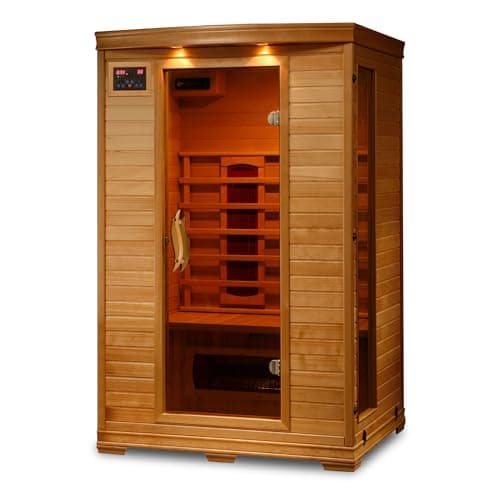
4. HeatWave Coronado Hemlock (2-Person) — the heater-dense alternative.The Coronado's pitch is warmth: five to six carbon emitters, more than the typical 2-person layout, so the heat wraps around you rather than radiating from behind. It runs on a standard outlet and comes from the long-running Radiant Saunas line, so availability is wide. The trade-offs are honest — it's a hemlock build with dated cabin styling, it's far-infrared only, and its EMF rating sits a touch behind the ultra-low-EMF leaders here rather than at the very front. Buy it if you want a proven, well-heated cabin and don't care about having the most modern-looking box in the room.
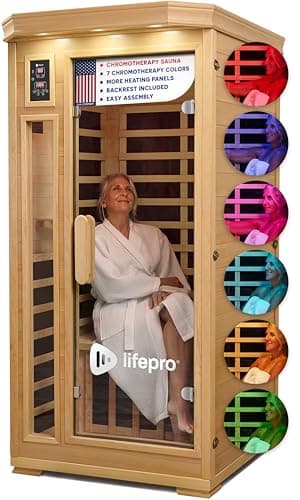
5. LifePro Rejuvacure (1-2 Person, Carbon Fiber) — the modern-looking budget entry. The Rejuvacure is the best-looking cabin here for the least money: cleaner, more contemporary styling than the older mid-market boxes, plug-in operation, and a lower entry price, with a fitness-recovery brand's support behind it. It ranks last on this 2-person list for one reason we won't soften — the "1-2 person" billing is generous. It's a comfortable single and tight for two adults together, and LifePro is a newer name in cabins specifically. If it's just you, it's excellent, and it's actually our top pick for one bather over in best 1-person infrared saunas. If two of you will use it regularly, size up to one of the true 2-person cabins above.
How to choose between the top three
The Andora, EASYHAWK and Seattle are close enough that most buyers will be happy with any of them, so let the details decide. Choose the Dynamic Andoraif you want the safest default — the deepest support network, easy-to-find parts and manuals, and built-in red-light LEDs — and you're willing to pay a small premium for that peace of mind. Choose the EASYHAWK if value and room matter most: six carbon panels on a 1,500W system, a 5-year limited warranty and a price that undercuts the Dynamic by a wide margin, from an independent seller that tells you less about the cabin than the big brands do. Choose the Maxxus Seattleif it happens to be the cheapest of the siblings on the day, or if its slightly more finished cabin and standard chromotherapy and Bluetooth appeal — it shares the Andora's Golden Designs platform, so you lose nothing structural. The one honest rule across all three: don't pay more for a name when the cabin underneath is nearly identical. The HeatWave earns its place if you specifically want a heater-dense cabin, and the Rejuvacure only if you're really buying for one.
What to expect from setup and your first sessions
These are flat-pack cabins that clip together with tool-light connectors, but they're not a one-person, ten-minute job — the wall panels are heavy, so plan for two people and an hour or two. Once it's built, siting is simple: a level indoor floor near a standard outlet, with the clearance the manual asks for around the cabin for airflow and cable access. Expect a far-infrared cabin to feel different from a hot rock sauna on your first go — the air stays cooler, around 120-140F, and the warmth builds gradually as the heaters work on your body rather than blasting the room. Give it a proper pre-heat, start with a shorter session, and hydrate before and after. If you're coming from a traditional sauna, read our worth-it guideso the gentler heat doesn't catch you off guard, and don't judge the cabin by the thermometer number alone — infrared feels warmer on the skin than the air temperature suggests.
Who should size up, down, or wait
A few honest redirections. If two adults will bathe together often, treat the Andora, EASYHAWK or Seattle as your real shortlist and skip the Rejuvacure — a genuine 2-person cabin is the honest minimum for a pair. If it's only ever you, save the money and the floor space with a purpose-built single from our 1-person guide. And if near-infrared heat, red cedar or a big group are what you're really after, don't force it into this budget — step up to full-spectrum in the under $5,000 tier. Buying the right size and heat type the first time is cheaper than buying twice.
How to buy an infrared cabin under $3,000
Far-infrared vs full-spectrum — know what you're buying
Everything in this tier is far-infrared, which warms your body directly at a comfortable air temperature and is exactly what most home buyers want. Full-spectrum adds near- and mid-infrared heat, costs more, and typically needs a 240V circuit. Decide which you actually need before you shop: if you don't have a specific reason to want near-infrared heat, far-infrared is the sensible, cheaper choice. Don't confuse full-spectrum heat with red-light therapy LEDs — several far-infrared cabins, including the Andora, add the LEDs, and that is a separate lighting feature.
Capacity: "2-person" is the honest default
A real 2-person cabin fits two adults sitting upright and gives one person room to stretch — it is the most flexible size and the one to default to. Watch the "1-2 person" wording: that usually means a roomy single that's tight for two, like the Rejuvacure. If two people will ever use it together, buy a true 2-person. If it's only ever one of you, a dedicated 1-person cabin saves money and floor space.
EMF ratings are a spec, not a health verdict
Most cabins here advertise a low- or ultra-low-EMF rating, and it's a reasonable thing to prefer. But be clear on what the label is: a manufacturer rating of how much electric and magnetic field the heaters emit, not a clean bill of health or a measured guarantee. For the actual science on electric and magnetic fields, the neutral reference is the NIEHS, which treats everyday low-level EMF as an area of ongoing research rather than established harm. Treat "low EMF" as a tie-breaker between otherwise similar cabins, not as the one number that decides the purchase.
Power: 120V plug-in is the whole point of this tier
The reason these cabins are attractive is that they run on the standard household outlet you already have — no electrician, no dedicated circuit, no permit conversation. That's a real cost saving over full-spectrum and traditional saunas, which usually need 240V. It also keeps running costs modest; a plug-in far-infrared cabin draws about as much as a couple of space heaters. We break the numbers down qualitatively in our infrared sauna electricity cost guide.
Wood, warranty and support
In this tier the wood is almost always hemlock, which is fine — cedar is a higher-tier upgrade for aroma and rot resistance, not a performance one. What matters more at this price is the brand behind the cabin: a long parts-and-reviews trail (Dynamic/Golden Designs), an active long warranty document (EASYHAWK), or an established line (Radiant/HeatWave) all mean you can get a replacement heater or a manual years later. Read the warranty terms, and favor a brand you can still reach when something needs fixing.
Assembly, delivery and the room around it
Two practical things buyers underestimate. First, delivery: these cabins ship as heavy, bulky boxes, sometimes on a pallet, so check the delivery terms and have a second person on hand for the carry-in. Second, assembly: the panels connect without much tooling, but they're weighty and awkward for one person, so budget an hour or two with a helper rather than an evening alone. Leave the clearance the manual specifies around the cabin, keep it on a level indoor floor away from splashing water, and don't box it into a corner where you can't reach the back panel if a heater ever needs service. Getting the placement right at install time saves a lot of shuffling later.