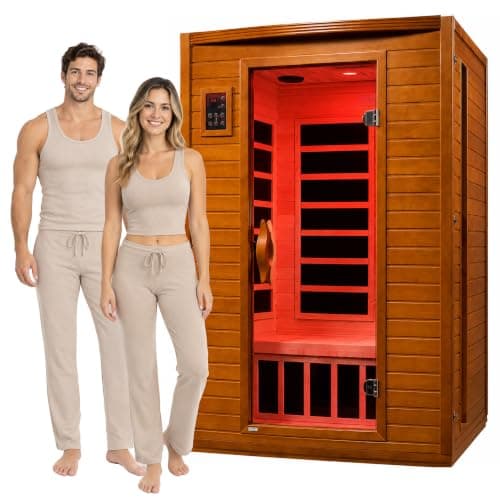
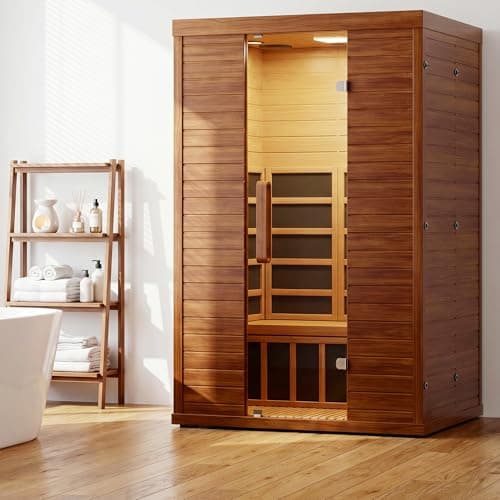
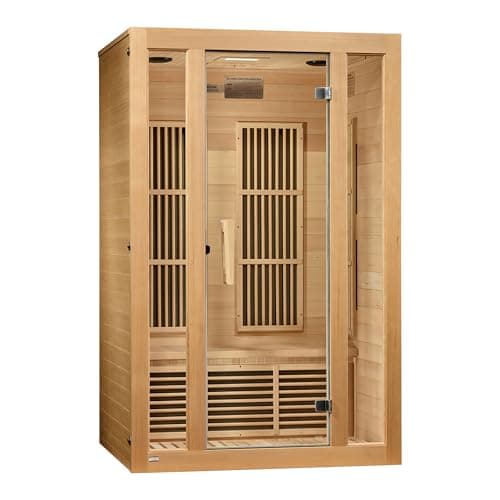
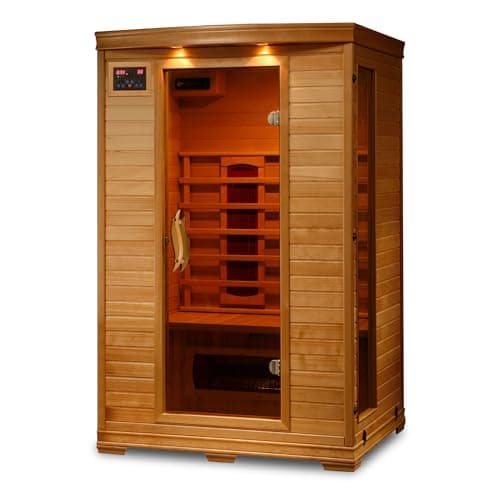
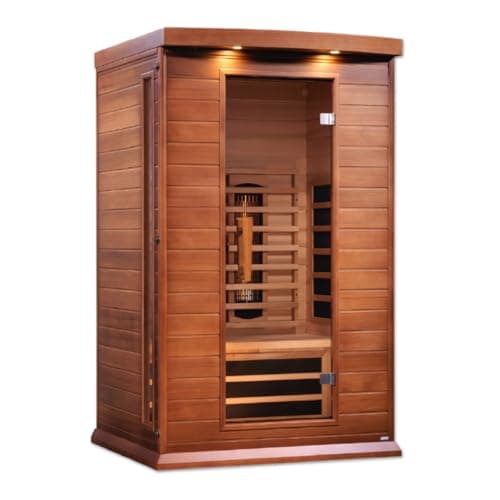
Under $5,000, the interesting question isn't which cabin — it's how much to spend. The whole point of a five-figure-adjacent budget in infrared is that you don't have to use it: the far-infrared 2-person cabins that most people should buy land closer to $2,000, and the top of this bracket only makes sense if you specifically want what the extra money buys — full-spectrum heat and real red cedar. Our top pick spends the budget; three of the five show you how to keep it in your pocket.
What another $1,000 actually buys in infrared
Infrared is unusual among big-ticket home purchases in that the cheap version is genuinely good. A $1,800-2,300 far-infrared hemlock cabin from a major brand heats you to a comfortable 120-140F, plugs into a standard outlet, and does the core job — the sweat, the wind-down, the habit — as well as a cabin costing twice as much. So the money above that floor does not buy "better sauna" in the way a bigger heater buys a hotter room. It buys two specific upgrades, and you should only pay for them if you want them by name.
- Full spectrum. Near- and mid-infrared on top of the far-infrared that does the heating. The near-infrared band is the one tied to red-light-adjacent skin and recovery marketing. It is a real difference in the emitters, but it usually comes with a 240V install requirement. Weigh it honestly with our full spectrum vs far infrared guide before you pay the premium.
- Red cedar. The premium sauna wood — aromatic, naturally rot-resistant, and it simply looks and smells the part in a way hemlock does not. This is a comfort and longevity upgrade, not a performance one. If it matters to you, it is worth real money; if it does not, hemlock is no obstacle to a great sauna.
The ranking, and why the top pick isn't the default
We rank the full-spectrum red-cedar Maxxus first because it is the most sauna a $5,000 budget buys — if you have the budget and you want both upgrades, this is where it goes. But "most sauna" is not the same as "right for most people," and we want to be straight about that. The Dynamic Andora and the EASYHAWK below it are the cabins the majority of buyers should actually purchase: far-infrared 2-person cabins on a standard outlet, at a fraction of the price, and no compromise on the part of the experience most people care about. Ranking the premium pick first is a statement about the ceiling of the budget, not a nudge to spend it all.
Below the two value anchors sit the Maxxus Seattle — a near-twin of the Andora from the same parent company, worth buying only if it is the cheaper of the two on the day — and the HeatWave Coronado, a heater-dense alternative that wraps more emitters around you for fast, even warm-up. None of the five is a bad cabin. The spread is deliberately wide so you can see the whole shape of the budget: what the floor gets you, what the ceiling adds, and how little separates the middle.
If you have less than $5,000 to spend
Most people do, and that is fine. If your real budget is nearer $2,000, start with our best infrared saunas under $2,000 roundup instead — it is the same value cabins without the premium picks. If space is the constraint rather than money, the compact-cabin picks are the place to look, and if you are choosing between the two dominant brands, the Dynamic vs JNH head-to-head settles it. The regular health case for sauna bathing does not scale with price — the cardiovascular associations in the long-running Finnish cohort study came from ordinary sauna use, not expensive cabins.
Spending an infrared budget well
Decide on full-spectrum before anything else
This is the one choice that reshapes the whole shortlist and the install. If you want near-infrared, you are buying a full-spectrum cabin and almost certainly wiring a 240V circuit — plan for an electrician and factor that cost in. If you do not, you can stay far-infrared, plug into the wall you already have, and spend the saved money on cedar or nothing at all. Do not back into full-spectrum because it was on the more expensive model; buy it because you specifically want the band.
Match the cabin to your circuit, not your wish list
A standard 120V outlet caps you at the far-infrared 2-person cabins — which, again, are the ones most people should buy. Moving to full-spectrum or to a 3-person-plus cabin means 240V. Confirm what your room can supply before you shortlist, so you are choosing among cabins you can actually power. The electrical requirements guide covers the difference.
Pay for wood only if you'll notice it
Red cedar is genuinely nicer than hemlock — but it is a sensory and longevity upgrade, not a heat one. If you are the sort of person who will appreciate the aroma every session, it is worth the premium. If you mostly care about getting hot and sweating, hemlock does that identically for less. Be honest about which buyer you are.
Don't overpay for lighting and Bluetooth
Chromotherapy LEDs, speakers and app control pad out spec sheets and add little to the actual sauna. They are fine if they come along; they are not a reason to move up a price tier. The things that change a session are heat, wood and comfort — spend there first.
Leave room in the budget for the room
The cabin is not the only cost. Budget for delivery of a heavy, awkward crate, for a possible electrician if you go 240V, and for the small accessories — a backrest, a thermometer — that make the cabin comfortable to actually use. A $4,000 cabin with a $200 buffer for the rest is a better plan than a $4,300 cabin and nothing left over.