HUB / INFRARED · Infrared Saunas
Infrared Sauna vs Red-Light Therapy: The Difference, Honestly
They sound like the same thing and they're not. An infrared sauna heats your body; red-light therapy uses specific wavelengths aimed at skin and tissue, and isn't primarily about heat. Here's how they differ, and why some cabins blur the line.
We earn a commission when you buy through our Amazon links, at no extra cost to you. It never affects our rankings, and we say so when the cheaper product is the better buy. How this works.
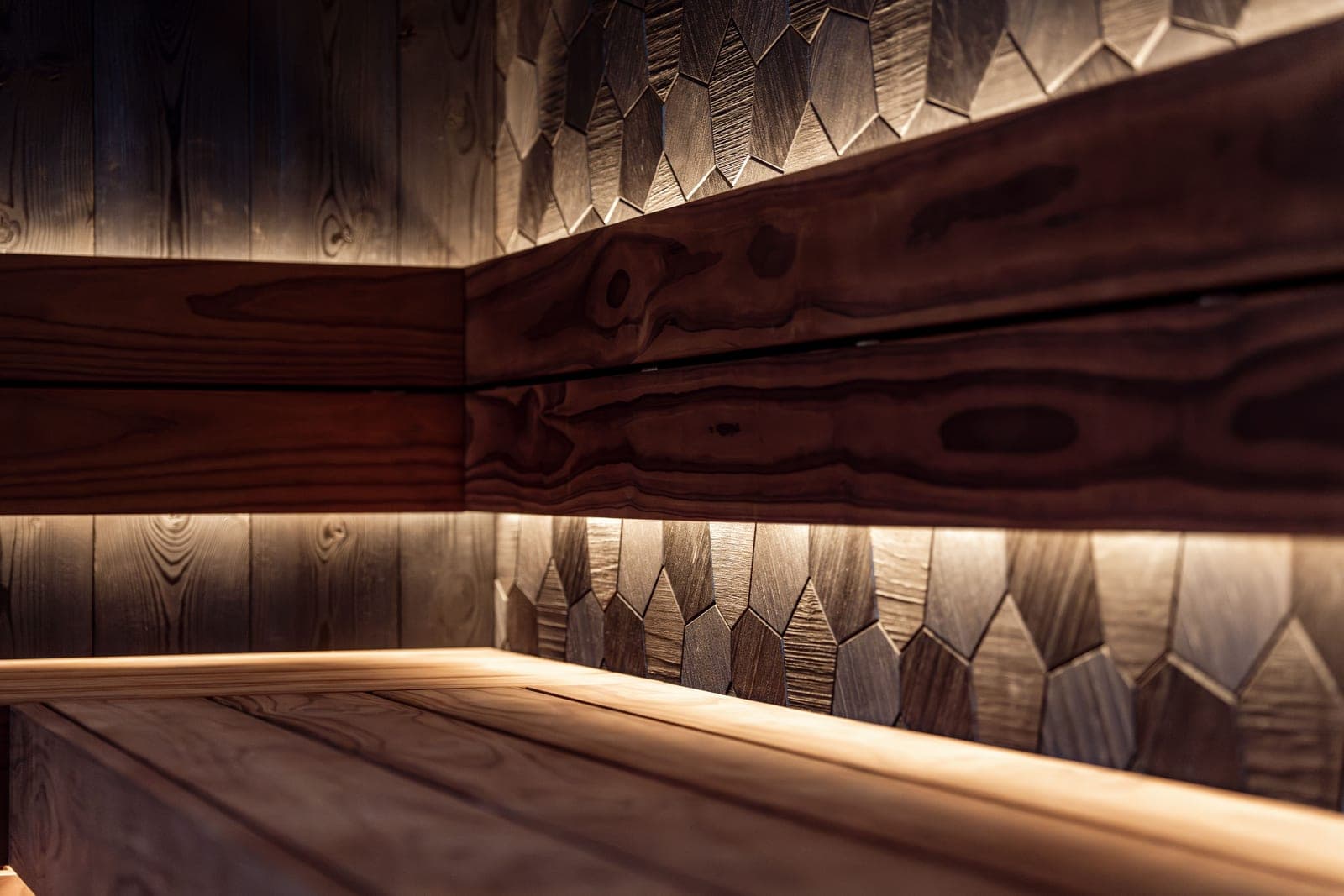
They aren't the same thing: an infrared sauna is a heat therapy that warms your body, while red-light therapy uses specific visible and near-infrared wavelengths aimed at skin and tissue and isn't primarily about heating you at all. The two get tangled together constantly — partly because both involve "infrared," and partly because some infrared cabins now include red-light LEDs, which genuinely blurs the line. This page untangles it: what each one actually does, where they overlap, and how to think about buying either or both. This is general information, not medical advice. If what you are trying to decode is a specific listing, our sauna with red light therapy guide shows which claims come with a published wavelength and irradiance and which are mood lighting.
What an infrared sauna does
An infrared sauna is, at its core, a heat therapy. Its heaters emit infrared radiation — usually far-infrared in plug-in home cabins — that warms your body directly at a comfortable air temperature, making you sweat and giving you the calm, recovery-focused sauna experience. The goal is thermal: raise your body temperature gently, relax, and sweat. The benefits are the ones we cover honestly in infrared sauna benefits — relaxation, recovery, and a cardiovascular association carried over (cautiously) from traditional-sauna research. It is a whole-body heat experience, not a targeted light treatment.
What red-light therapy does
Red-light therapy (sometimes called photobiomodulation) is a different idea. It uses specific wavelengths of red and near-infrared light — delivered by LED panels or devices held close to the skin — aimed at the skin and tissue underneath, and it is not primarily about heating you. The proposed mechanism is that certain light wavelengths are absorbed by cells rather than simply warming the body, which is why red-light devices are marketed for skin and localized recovery rather than for a whole-body sweat. Be honest about the evidence: research on red-light therapy is active but still developing and mixed across applications, so it's best treated as promising-but-unsettled, not proven. This is general information, not medical advice.
Where the two overlap — and why it's confusing
Two things create the confusion. First, the word infrared: red-light therapy often includes near-infrared wavelengths, and infrared saunas emit infrared too — but a sauna uses infrared to heat your body, while red-light therapy uses particular wavelengths as light aimed at tissue. Same family, different purpose. Second, and more practically, some infrared cabins include red-light LEDs. The Dynamic Andora, for example, pairs its far-infrared heaters with built-in red-light therapy LEDs — which is a nice bonus, but it's important to see it for what it is: a heat sauna that adds a light feature, not a clinical-grade red-light panel. A near-infrared heat band (as in a full-spectrum cabin) is also different again from red-light LEDs — we separate those in full-spectrum vs far-infrared.
Are they the same? No — they're complementary
The clean way to hold it in your head: an infrared sauna is for a whole-body heat-and-sweat session; red-light therapy is for targeted light on skin and tissue. They aren't substitutes, and buying one doesn't give you the other unless the hardware explicitly provides both. They can, however, be complementary— plenty of people enjoy a heat session and use a separate red-light device for skin or recovery. If a cabin's red-light LEDs are a genuine draw for you, treat them as a pleasant extra rather than the reason to buy, and don't assume they match a dedicated red-light panel in output or coverage.
Which should you choose?
Start from what you actually want. If you want to relax, sweat and recover with a whole-body heat session, you want an infrared sauna — browse our best infrared saunas. If your interest is specifically skin or localized light treatment, that's a red-light device, which is a separate purchase category. If you like the idea of both, a far-infrared cabin with built-in red-light LEDs gives you a taste of each in one box — just buy it primarily as a sauna, since that's what it does best. And if the deciding factor is the heat experience itself, our sauna benefits guide covers what the heat side genuinely offers.
The wavelengths, briefly and honestly
A little detail helps the distinction stick, without overclaiming. Infrared is usually described in three bands: near, mid and far. A far-infrared sauna leans on the longer, far band to warm your body; a full-spectrum sauna adds near- and mid-infrared heat as well. Red-light therapy, by contrast, targets specific wavelengths in the red and near-infrared range and delivers them as lightto the skin, not as whole-body heat. So a sauna and a red-light device can both involve near-infrared and still be doing different jobs — one is warming you through, the other is shining particular wavelengths at your skin at close range. The band overlaps; the purpose, intensity and delivery don't. That's why "it's all infrared" is a half-truth that causes most of the confusion.
Near-infrared heat vs red-light LEDs — a third distinction
There's one more layer worth untangling, because marketing rarely does. A full-spectrum cabin's near-infrared heatersare still there to heat you — that's a heat feature. A cabin's red-light therapy LEDs, like the Dynamic Andora's, are a separate lighting feature bolted onto a far-infrared heat cabin. And a dedicated red-light panelis a standalone device built purely for light therapy. These three are easy to blur into one because they all wave the words "red" and "infrared" around, but they differ in what they're for and how much they deliver. We keep near-infrared heat separate from far-infrared in full-spectrum vs far-infrared; the short version is that built-in LEDs are a bonus, not a clinical red-light setup.
What the research does and doesn't show
Being fair to both: sauna heat has the stronger, longer-running body of observational research, largely from traditional Finnish saunas, associating regular use with relaxation and cardiovascular benefit — association, not proof, and mostly not on infrared specifically, as we cover in infrared sauna benefits. Red-light therapy has an active but younger and more mixed research base, with results that vary a lot by application, dose and device. Neither justifies miracle claims, and anyone selling a cabin as a proven cure for skin, pain or aging is going past what the evidence supports. Treat both as promising wellness tools with genuine upsides and real limits, and keep your expectations honest. This is general information, not medical advice.
Buying: don't pay twice for the overlap
The practical takeaway for your wallet: decide what you actually want before a listing decides for you. If you want to sweat and relax, buy a sauna and treat any red-light LEDs as a pleasant extra — don't pay a big premium for them. If you specifically want light therapy for skin or a targeted area, a dedicated red-light device will do that job better than a cabin's bundled LEDs. And if you want both, that's fine — just buy the cabin primarily for its heat and add a separate light device if the built-in LEDs don't satisfy you, rather than overpaying for a "two-in-one" that half-does each. Clear about the goal, you'll spend once and well.
The honest bottom line
Infrared sauna and red-light therapy are related but distinct: one warms your whole body as a heat therapy, the other aims specific light wavelengths at skin and tissue without primarily heating you. The overlap is real — both involve infrared, and some cabins bundle red-light LEDs — but bundling isn't equivalence. Buy an infrared sauna for the heat-and-sweat session it does well; if red light specifically is your goal, that's a different device. Treat any product that promises a sauna and a full clinical red-light treatment in one with healthy skepticism, and remember this is general information, not medical advice.
Questions
Frequently asked
Is an infrared sauna the same as red-light therapy?
Why do some infrared saunas include red light?
Can you use an infrared sauna and red-light therapy together?
Which is better, an infrared sauna or red-light therapy?
Keep reading